If your coffee maker’s producing weak coffee, first check your coffee-to-water ratio—aim for 1 to 2 tablespoons of coffee per 6 ounces of water. Verify your grind size matches your brewing method; fine for espresso, medium for drip, and coarse for French press. Also, confirm your water temperature is between 195°F to 205°F for ideal extraction. Regular maintenance of your machine and grinder will enhance flavor consistency. There are more vital tips to explore for better brews.
Key Takeaways
- Check the coffee-to-water ratio; aim for 1:15 to 1:17 for optimal flavor extraction.
- Ensure your coffee beans are fresh; stale beans can lead to a flat taste.
- Adjust grind size; coarser grinds may cause under-extraction and weak coffee.
- Verify water temperature is between 195°F to 205°F for effective extraction.
- Regularly maintain your coffee maker by cleaning and descaling to ensure consistent brewing quality.
Common Causes of Weak Coffee
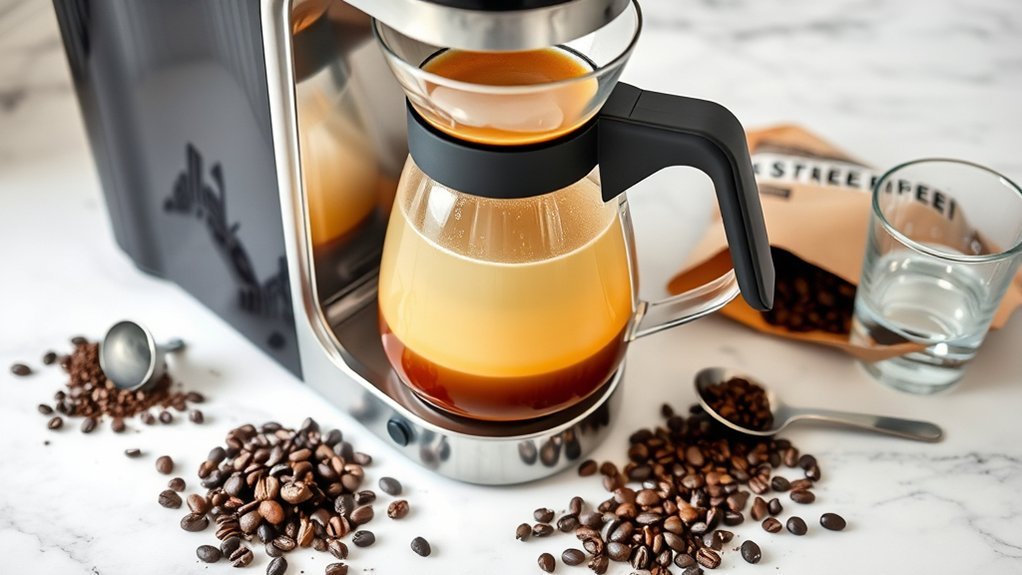
When you brew coffee, several factors can contribute to a weak final product. Freshness factors play an important role; using stale coffee beans, roasted over a month ago, can result in a flat taste due to the loss of oils and aroma.
Additionally, the grind size matters—too coarse a grind can lead to under-extraction, leaving your coffee lacking in flavor. Insufficient brewing time also prevents proper extraction, making your brew watery and weak.
Finally, the quality of your coffee beans is essential; low-quality beans often lack the complexity needed for a rich flavor. Verify your brewing equipment is calibrated correctly, and pay attention to these elements to enhance your coffee experience.
How to Fix Weak Coffee: Coffee-to-Water Ratio
Weak coffee often results from an improper coffee-to-water ratio, which can dilute flavors and diminish the overall quality of your brew.
Weak coffee stems from an incorrect coffee-to-water ratio, leading to diluted flavors and reduced brew quality.
To achieve a balanced cup, adhere to these guidelines for coffee measurement and brewing techniques:
- Use a ratio of 1:15 to 1:17 for ideal flavor extraction.
- Start with 1 to 2 tablespoons of coffee per 6 ounces of water.
- Weigh your coffee and water on a kitchen scale for accuracy.
- For a stronger brew, adjust the ratio to 1:14 or 1:13.
Master Your Grind Size for Optimal Extraction
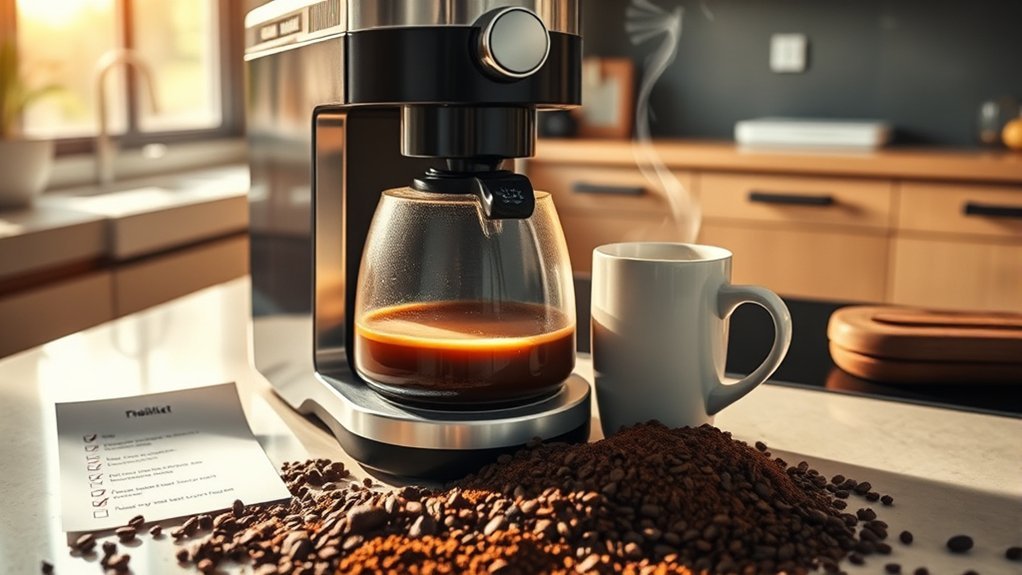
To achieve ideal coffee extraction, mastering your grind size is essential, as it greatly influences flavor and strength. Finer grinds increase surface area, enhancing extraction, while coarser grinds often lead to under-extraction and weak coffee.
For espresso, opt for a fine grind; for drip coffee makers, a medium grind is best; and for French press, use a coarse grind. Consistent grind size, achievable with a quality burr grinder, promotes even extraction and better flavor.
If your brewing time is shorter, a finer grind can help enhance flavor extraction. Experiment with small increments in grind size to find the best extraction balance tailored to your brewing method and personal taste preferences. Your coffee’s quality depends on it.
Why Water Temperature Matters for Strong Coffee?
Understanding the significance of water temperature in coffee brewing can dramatically enhance your cup’s strength and flavor. The ideal temperature range of 195°F to 205°F (90°C to 96°C) is critical for effective extraction of soluble compounds.
The right water temperature, between 195°F and 205°F, is essential for maximizing coffee flavor and strength.
- Water that’s too cool leads to weak coffee due to ineffective flavor extraction.
- Water that’s too hot causes over-extraction, resulting in bitterness.
- Fresh, filtered water improves water chemistry and avoids impurities that compromise flavor.
- Consistent temperature is key, as fluctuations can diminish the quality of your brew.
Investing in quality brewing equipment that maintains this temperature range will elevate your coffee experience, ensuring you enjoy a robust, flavorful cup every time.
Maintenance Tips for Consistent Brewing Quality
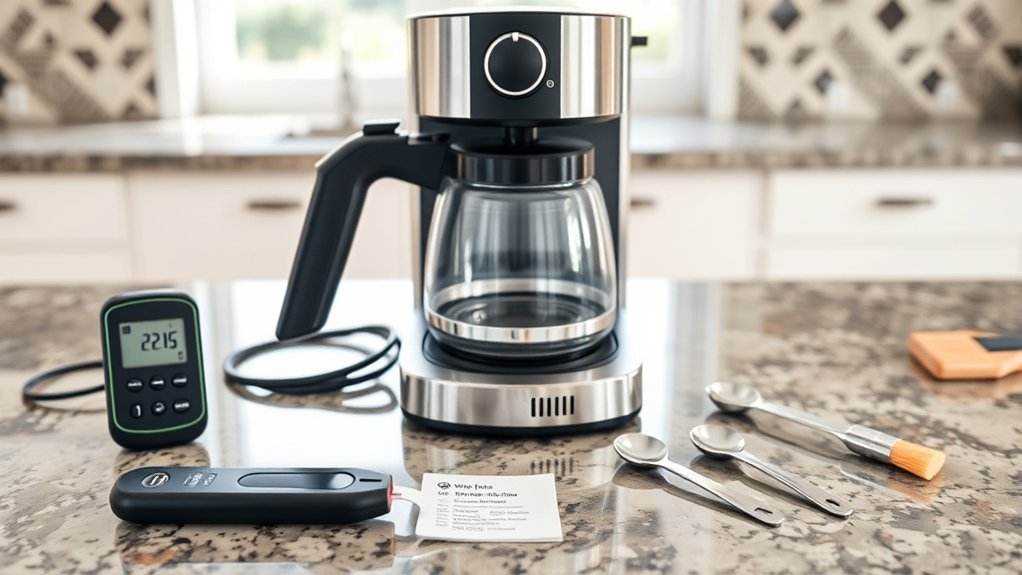
Consistent brewing quality hinges on effective maintenance of your coffee maker. To guarantee your coffee tastes great every time, follow these essential tips:
| Maintenance Task | Frequency |
|---|---|
| Clean the brew group | Weekly |
| Descale the machine | Monthly |
| Replace the water filter | Every 2-3 months |
| Inspect grinder burrs | Every 6 months |
Regularly clean the brew group with warm water to prevent residue buildup. Descale your machine monthly to mitigate mineral deposits affecting extraction. Always replace the water filter as needed for peak flavor. Additionally, inspect and replace worn grinder burrs to maintain grind consistency. Store coffee beans in an airtight container for maximum freshness.
Frequently Asked Questions
Can Old Coffee Beans Cause Weak Coffee?
Yes, old coffee beans can cause weak coffee. Freshness impacts flavor and strength, and improper bean storage accelerates staleness. Always use freshly roasted beans and store them in airtight containers for ideal brewing results.
How Often Should I Clean My Coffee Maker?
You should clean your coffee maker every month for peak performance. Regular maintenance tips include descaling every three months and washing removable parts to prevent buildup, ensuring your coffee stays flavorful and your machine functions efficiently.
Does the Type of Water Affect Coffee Strength?
Yes, the type of water does affect coffee strength. Water quality and mineral content can enhance or diminish flavor extraction, impacting your brew’s richness. Using filtered water often yields better results than tap water with impurities.
Can I Use Pre-Ground Coffee for Stronger Flavor?
Yes, you can use pre-ground coffee for stronger flavor, but choose a finer coffee grind. Different brewing methods, like espresso or Aeropress, can enhance strength, extracting more oils and compounds for a richer taste.
What Is the Best Brewing Time for Strong Coffee?
For strong coffee, aim for a brewing time of 4 to 5 minutes. Adjust your coffee grind to a coarser texture and experiment with brewing techniques, ensuring ideal extraction for a robust flavor.
Conclusion
By addressing the common pitfalls in your brewing process, you can transform your weak coffee into a robust, invigorating experience. Imagine savoring each sip, the rich aroma enveloping you like a warm hug on a chilly morning. With the right coffee-to-water ratio, precise grind size, and ideal water temperature, you’ll reveal the full potential of your beans. Regular maintenance guarantees that every cup consistently delivers that bold flavor you crave, turning your morning ritual into a moment of pure delight.