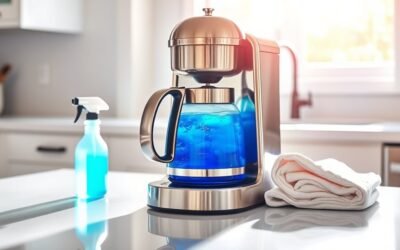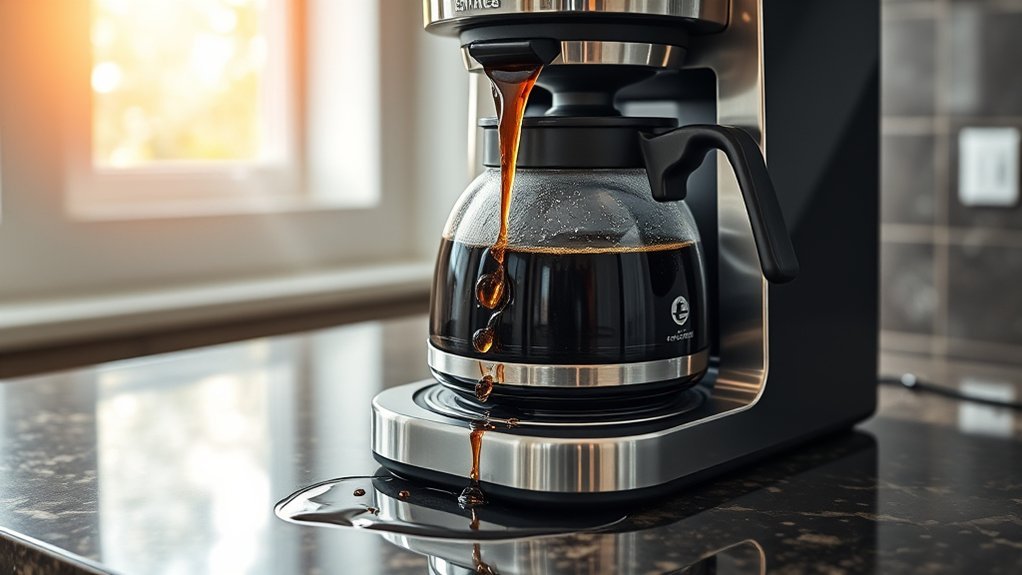
If your coffee maker’s overflowing back into the reservoir, it likely stems from a few common issues. Check for clogged brew baskets or filters, as mineral buildup and overfilled coffee grounds can block water flow. Confirm you’re using the correct filter size and placement. Descaling your machine with a vinegar solution can often resolve mineral buildup. For more detailed fixes and maintenance tips, continue exploring how to keep your coffee maker running smoothly.
Key Takeaways
- Clogged brew baskets or filters often cause water to flow back into the reservoir instead of brewing properly.
- Ensure the correct filter size and placement to prevent water flow restrictions and overflow issues.
- Overfilled coffee grounds can block water flow, leading to overflow back into the reservoir; reduce the amount used.
- Regularly descale your coffee maker with a vinegar solution to eliminate mineral buildup that may cause clogs.
- If overflow persists, check for blockages in the outlet spout or consult a professional for internal issues.
Common Causes of Coffee Maker Overflow
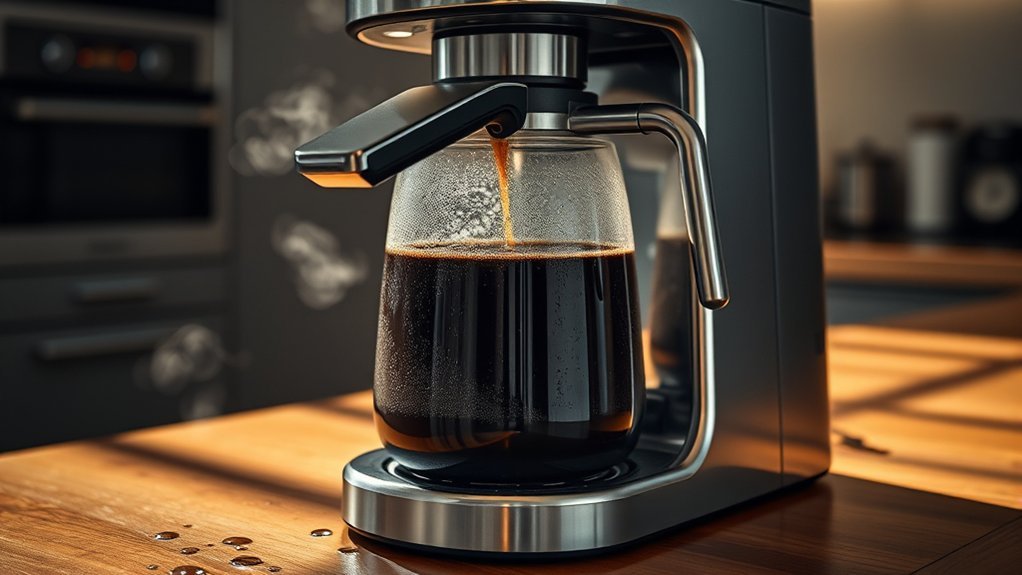
When your coffee maker overflows, it can be frustrating, but understanding the common causes can help you troubleshoot the issue effectively.
One major culprit is clogged brew baskets or filters, often caused by mineral buildup and improper coffee ground techniques that restrict water flow. Using the wrong size filter or placing it incorrectly can further exacerbate the problem.
Overfilling the coffee grounds can block water flow, leading to overflow back into the reservoir. Additionally, a blocked one-way valve or spray head—usually due to scale or residue—can prevent proper brewing.
Finally, make sure your water reservoir isn’t overfilled, as this can leak before brewing starts, heightening the chance of overflow. Addressing these issues will improve your brewing experience.
Recognizing Overflow Symptoms in Your Coffee Maker?
How can you tell if your coffee maker is experiencing overflow issues? Look for hot water draining back into the reservoir instead of brewing through the K-cup or coffee grounds.
If you notice coffee grounds spilling into the pot, that’s another red flag, often linked to overfilled coffee grounds or improper filter placement.
Water dripping from the overflow vent may indicate a check valve issue or a blockage in the spout that pierces the K-cup foil.
Additionally, monitor for consistent overflow, as this suggests potential blockages in the outlet spout or the piercing needle.
Finally, be aware of air pressure issues that can cause backflow, helping you catch overflow problems early for effective maintenance.
How to Fix Coffee Maker Overflow: Quick DIY Solutions
Addressing coffee maker overflow requires a systematic approach to identify and resolve the underlying issues.
Start by cleaning the brew basket to remove any clogs from coffee grounds or mineral buildup that restrict water flow. Make sure you’re using the correct size filter, placed properly to avoid restrictions that can lead to backflow.
Next, reduce the amount of coffee grounds; overpacking can block water flow, causing overflow during brewing.
Additionally, run a vinegar descaling cycle with a 50/50 mix of vinegar and water to eliminate scale buildup.
Finally, regularly clean the outlet spout and check for blockages to maintain ideal water flow, especially when using different coffee types and brewing techniques. This will help prevent future overflow issues.
Properly Clean Your Coffee Maker
To prevent your coffee maker from overflowing, establish a regular descaling routine to eliminate mineral buildup that disrupts water flow.
Clean the brew basket frequently to remove coffee grounds and guarantee the outlet spout is free from clogs.
Regular Descaling Routine
While you’re enjoying your daily cup of coffee, neglecting a regular descaling routine can lead to serious overflow issues in your coffee maker.
To prevent mineral buildup, you should descale your machine every 1–3 months using effective descaling techniques. A simple and efficient method involves a 50/50 mix of vinegar solutions and water. This combination effectively removes scale and residue from internal components, guaranteeing peak performance.
Additionally, cleaning the brew basket and spray head holes regularly maintains proper water flow, further reducing overflow risk. Using filtered water also minimizes mineral deposits, enhancing your coffee maker’s longevity.
Finally, routinely check your filter size and placement to guarantee correct water flow and prevent any potential clogs.
Clean Brew Basket Frequently
Cleaning the brew basket frequently is crucial for maintaining your coffee maker’s efficiency and preventing overflow issues.
Regular brew basket maintenance helps eliminate clogs caused by coffee grounds and mineral buildup. Here are four key cleaning steps to follow:
- Weekly Cleaning: Remove and wash the brew basket with warm, soapy water to prevent overflow.
- Check Filter Size: Verify you’re using the correct filter size to optimize water flow.
- Spray Head Maintenance: Use a pin to clean the spray head holes, removing any residue that might restrict water flow.
- Vinegar Descaling: Run a 50/50 vinegar and water mix through the system monthly to eliminate mineral deposits.
Inspect Outlet Spout
Inspecting the outlet spout of your coffee maker is essential for ensuring a smooth brewing process and preventing overflow.
Regular outlet spout maintenance involves checking for clogs that can cause water to drain back into the reservoir. Use a pin or similar tool for clearing blockages in the outlet spout holes, ensuring unobstructed water flow during brewing.
Additionally, descaling the machine with a vinegar solution can effectively remove mineral buildup that might hinder functionality.
Always check the placement of the K-Cup; a misaligned cup can disrupt water flow and lead to outlet spout issues.
Maintenance Tips to Prevent Future Overflow Issues
To keep your coffee maker running smoothly and prevent overflow issues, it’s vital to implement regular maintenance practices.
Regular maintenance is essential for a smoothly operating coffee maker and to avoid overflow problems.
Here are essential tips to maintain coffee quality and improve your brewing technique:
- Descale Every 1–3 Months: Use a 50/50 mix of vinegar and water to prevent mineral buildup.
- Use Filtered Water: This reduces mineral deposits, ensuring ideal water flow.
- Clean the Brew Basket and Outlet Spout: Regularly remove coffee grounds and residue to avoid blockages.
- Avoid Overpacking Coffee Grounds: Stick to the recommended amount to prevent water flow obstruction.
The Importance of Using the Right Filters for Your Coffee Maker
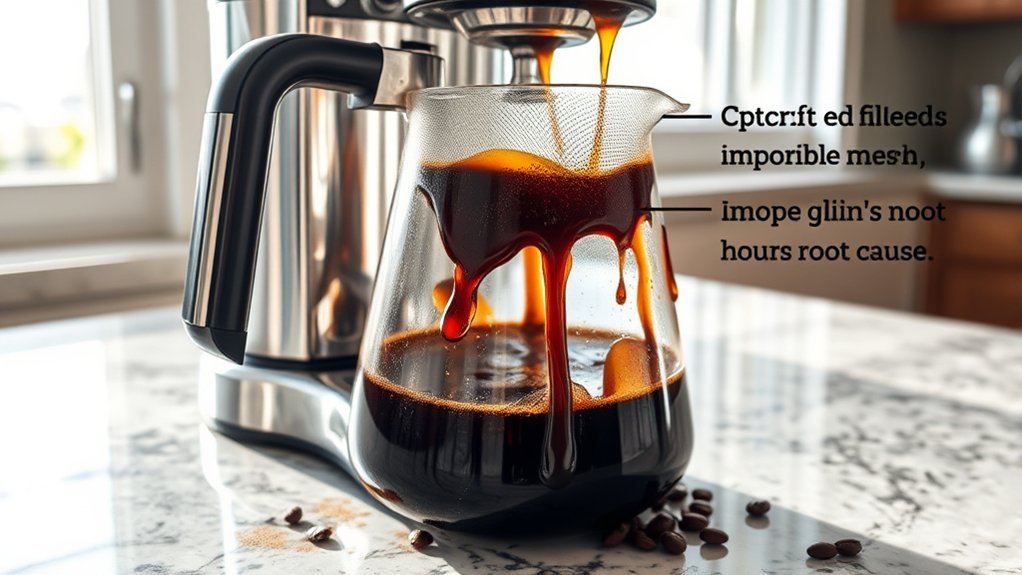
Using the right filter size is essential for preventing overflow in your coffee maker.
If the filter doesn’t fit properly or is misaligned, water can bypass it, leading to messy spills.
Additionally, choosing the appropriate type of filter, like taller Bunn coffee filters, can enhance water flow and improve your brewing experience.
Filter Size Matters
How crucial is it to select the right filter size for your coffee maker? Using the correct filter dimensions is essential to prevent overflow and guarantee effective brewing.
Here are some key points to take into account:
- Filter Size: A filter that’s too small can lead to water backing up into the reservoir.
- Filter Material: Opt for high-quality paper or reusable filters that promote ideal drainage.
- Coffee Grounds: Avoid overfilling your filter; this can block water flow and worsen overflow issues.
- Maintenance: Regularly clean your filter basket to prevent buildup that inhibits performance.
Proper Filter Placement
While it might seem straightforward, proper filter placement is critical in ensuring your coffee maker operates efficiently and prevents overflow. Misalignment or using the wrong filter size can restrict water flow, causing grounds to spill into the pot or back into the reservoir. Always check for filter alignment and compatibility with your machine’s specifications.
| Filter Type | Size Compatibility | Maintenance Tips |
|---|---|---|
| Paper Filters | Standard/Medium | Dispose after use |
| Reusable Filters | Custom Fit | Rinse regularly |
| Bunn Filters | Older Mr. Coffee | Clean with mild soap |
| Universal Filters | Varies | Check for clogs |
| Specialty Filters | Specific Models | Replace as needed |
Using high-quality filters can greatly enhance performance and mitigate overflow issues.
Recommended Filter Types
Choosing the right filter type is essential for maximizing your coffee maker’s performance and preventing overflow.
Using filters that match your machine’s specifications guarantees filter compatibility, which is critical for maintaining brewing efficiency.
Here are some recommended filter types:
- Standard 12-cup filters: Widely available and suitable for most machines.
- Tall Bunn coffee filters: Ideal for older Mr. Coffee models to prevent grounds overflow.
- Reusable filters: Eco-friendly options that require rinsing after each use to avoid clogging.
- Manufacturer-recommended filters: Always check your coffee maker’s manual for specific filter types to guarantee top performance.
How to Troubleshoot Specific Coffee Maker Models
When troubleshooting specific coffee maker models like the Keurig Elite B-40 and K70, it’s essential to focus on common issues that can lead to overflow or brewing failures.
Start by checking for clogs in the brewing system, as these can cause water to drain back into the reservoir. Use tools like paperclips or compressed air to clear any blockages in the outlet spout.
Check for clogs in the brewing system, as they can cause water to drain back into the reservoir.
Regular maintenance, including descaling with vinegar and cleaning the piercing needle, is vital for preventing buildup.
If your coffee maker continues to overflow, a stuck check valve or internal leaks may be present, necessitating professional repair.
Don’t forget to visit community forums dedicated to coffee maker brands for additional troubleshooting tips and brewing techniques.
Alternatives to Consider If Your Coffee Maker Can’t Be Fixed
If your coffee maker is beyond repair, exploring alternative brewing options can enhance your coffee experience without the frustration of overflow issues.
Here are some reliable alternatives to reflect on:
- Single-serve machines like the Chulux, praised for their reliability and simplicity.
- Cuisinart or Breville models, known for robust performance and fewer overflow problems.
- Traditional drip coffee makers utilizing Bunn coffee filters, which improve drainage and minimize overflow.
- French press or pour-over coffee makers, offering a unique brewing method that avoids common overflow issues found in electric machines.
Before making a purchase, check Consumer Reports for updated ratings to verify you choose a model with minimal overflow complaints.
Embrace these alternatives to enjoy a hassle-free coffee experience.
When to Call in the Pros for Your Coffee Maker?
While many coffee maker issues can be resolved through basic troubleshooting and cleaning, some problems indicate the need for professional intervention.
If your coffee maker continues overflowing back into the reservoir despite your efforts, it’s time to reflect on repair options. Internal leaks during operation or exposed electrical components are serious signs that require a professional evaluation to avoid hazards.
Additionally, if your machine unexpectedly shuts off while brewing, this could point to a malfunctioning internal valve or pump, warranting expert assistance.
Persistent overflow issues that standard methods can’t fix should prompt you to consult a technician.
Weigh repair costs—ranging from $80 to $300—against the price of a new unit to determine the best course of action.
Frequently Asked Questions
Can Using the Wrong Coffee Grind Size Cause Overflow?
Yes, using the wrong grind size can definitely cause overflow. If your grind consistency isn’t ideal, it disrupts brewing balance, leading to excess pressure and water backing up. Adjusting grind size can resolve this issue effectively.
How Often Should I Clean My Coffee Maker to Prevent Overflow?
Think of your coffee maker as a garden; it needs regular care. Clean it every month for ideal performance. Use vinegar or descaling solutions as maintenance tips to prevent buildup, ensuring a smooth brewing experience.
What Type of Water Is Best for Brewing Coffee?
Filtered water’s your best choice for brewing coffee. It reduces impurities and controls mineral content, enhancing flavor without causing buildup in your coffee maker. Avoid distilled water, as it lacks essential minerals for ideal taste.
Can Old Coffee Grounds Lead to Brewing Issues?
Yes, old coffee grounds can lead to brewing issues. Their lack of freshness affects flavor extraction. Make sure you store your grind properly in an airtight container to maintain coffee freshness and enhance your brewing experience.
Is It Safe to Use Vinegar for Cleaning My Coffee Maker?
Using vinegar’s acidic power is like sending your coffee maker on a rejuvenating spa day. It’s safe and effective for cleaning, and doing this every month maximizes vinegar benefits, ensuring a great brew every time.
Conclusion
In summary, addressing coffee maker overflow is essential for maintaining your machine’s efficiency. Did you know that nearly 20% of coffee makers experience overflow issues at some point? By regularly cleaning your coffee maker and using the correct filters, you can greatly reduce the risk of this frustrating problem. Remember, a few simple maintenance steps can extend your coffee maker’s lifespan and guarantee you enjoy a perfect brew every time. Don’t hesitate to explore fixes before seeking professional help.