

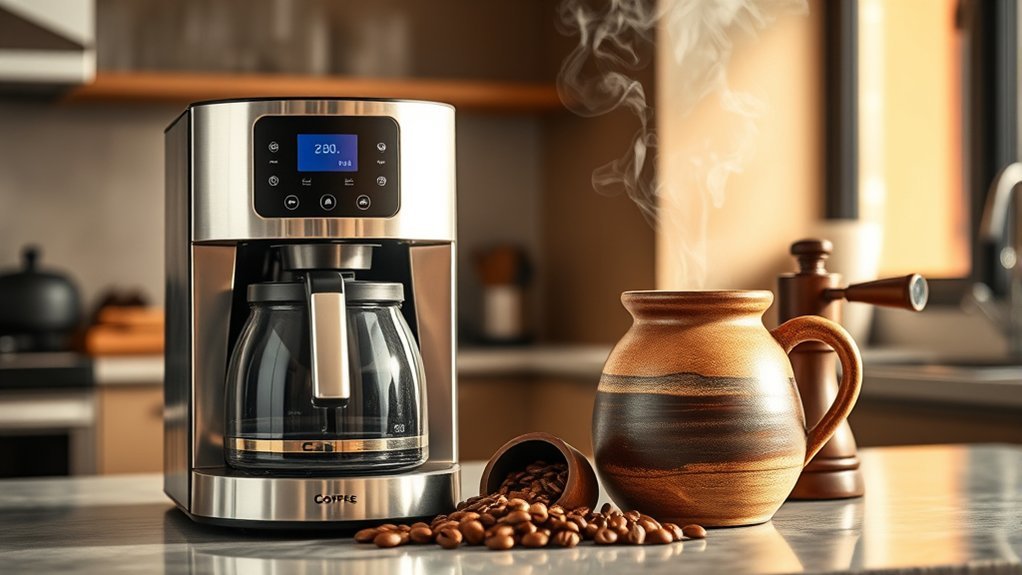
A coffee maker primarily utilizes a drip method to brew coffee quickly and easily, while a coffee brewer includes various types like French presses and pour-overs that often require more user involvement for ideal flavor extraction. Coffee makers typically yield milder flavors due to gravity extraction, whereas brewers offer richer profiles through techniques like immersion. Understanding these differences can help you choose the right device for your brewing style and preferences, and there’s more to explore on this topic.
Key Takeaways
- Coffee makers primarily use a drip method for quick, easy brewing, while coffee brewers often involve more manual techniques for richer flavors.
- Drip coffee makers are designed for convenience and typically yield milder coffee compared to espresso machines or French presses.
- Coffee brewers, such as French presses and pour-over systems, allow for greater user involvement and customization in flavor extraction.
- Pricing varies significantly, with basic coffee makers starting around $29.99 and espresso machines ranging from $100 to over $3,000.
- Choosing between a coffee maker and brewer depends on individual preferences for flavor, brewing techniques, volume needs, and budget.
What Is a Coffee Maker and How Does It Work?

A coffee maker is a versatile appliance that brews coffee through various methods, primarily the drip technique.
This process begins with heating water in a reservoir, which you then pour over ground coffee contained in specific filter types. These filters, ranging from paper to metal, play an essential role in coffee extraction, affecting both the flavor and clarity of the brew.
As the hot water seeps through the coffee grounds, it extracts vital oils and flavors, resulting in a rich cup of coffee.
The hot water extracts essential oils and flavors from the coffee grounds, creating a beautifully rich brew.
Many modern coffee makers offer programmable settings, enabling you to customize brewing times and strengths, enhancing your overall coffee experience.
With their user-friendly design, coffee makers cater to those who value convenience without sacrificing quality.
Understanding Coffee Brewers: Types and Features
While exploring the world of coffee brewing, you’ll discover a variety of devices designed to extract distinct flavors from coffee grounds.
Coffee brewers come in several types, each utilizing different brewing methods. Drip coffee makers are the most prevalent, employing a simple mechanism where hot water filters through coffee grounds into a carafe.
French presses, patented in 1852, offer full immersion brewing, yielding a rich flavor profile quickly. On the other hand, pour-over systems like Chemex or Hario V60 allow for greater manual control, enhancing customization during the brewing process.
Additionally, piston brewers and Moka pots are designed for ease of use, providing effective flavor extraction without requiring specialized skills, catering to both novice and experienced coffee enthusiasts.
Is a Coffee Maker Easier to Use Than a Brewer?
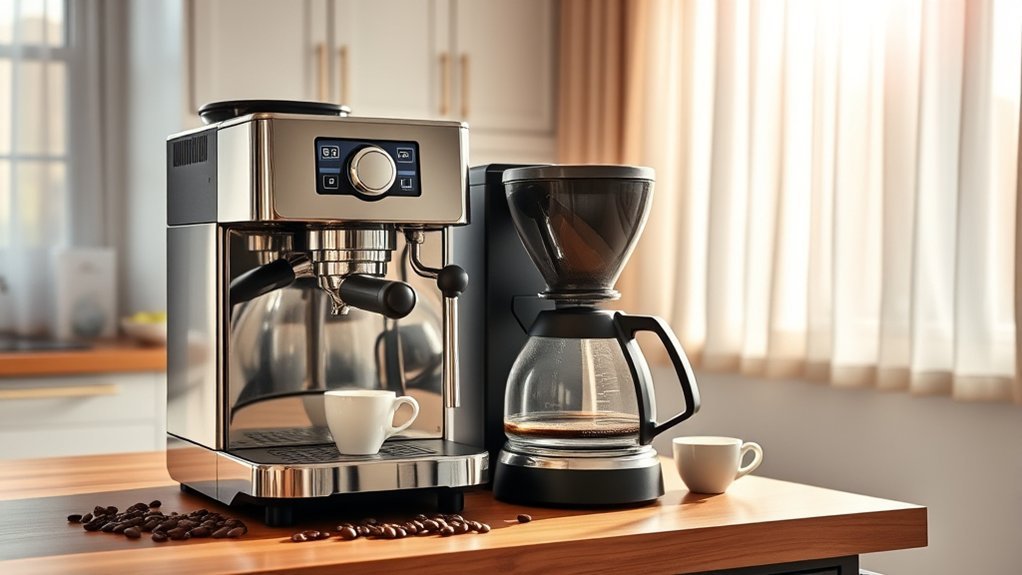
When you compare coffee makers and brewers, user-friendly operation is a key factor.
Coffee makers often feature simple drip systems and programmable settings, making them accessible for quick and efficient brewing.
In contrast, brewers like French presses or pour-over devices require more skill and attention, which can lengthen the brewing time and complicate the process for beginners.
User-Friendly Operation
How easy is it to brew your morning coffee? With a coffee maker, you’ll find user-friendly operation is a major advantage. Their straightforward drip brewing process allows you to heat water and pour it over coffee grounds with minimal effort, appealing to casual drinkers.
Many models feature programmable settings, letting you customize brew times and strength according to your user preferences. In contrast, coffee brewers like French presses require more technique and timing, demanding your active involvement for ideal flavor extraction.
While both devices aim for quality coffee, coffee makers generally rank higher in ease factors, making them a popular choice for households, while brewers attract enthusiasts who enjoy a hands-on approach.
Brewing Time Comparison
In comparing brewing times, coffee makers clearly offer a more efficient experience for those who value convenience. Typically, they brew a full pot in just 5 to 10 minutes, enhancing brewing efficiency for larger gatherings. In contrast, coffee brewers like French presses require about 4 to 5 minutes of steeping time after adding hot water, demanding more user involvement.
| Method | Brewing Time | Steeping Time |
|---|---|---|
| Coffee Maker | 5-10 mins | N/A |
| French Press | N/A | 4-5 mins |
| Pour Over | N/A | 3-5 mins |
Ultimately, coffee makers simplify the process, catering to those who prefer quick coffee preparation over the manual steps associated with brewers.
Essential Differences Between Coffee Makers and Coffee Brewers
When comparing coffee makers and coffee brewers, you’ll notice significant differences in their brewing processes and device complexity.
Coffee makers typically use a straightforward drip method that relies on gravity for flavor extraction, while brewers can utilize diverse techniques to enhance your coffee experience.
Additionally, coffee makers tend to offer more automated features, making them easier to operate, whereas coffee brewers may demand more skill and attention for ideal results.
Brewing Process Differences
While both coffee makers and coffee brewers serve the essential purpose of brewing coffee, they employ fundamentally different processes that considerably affect the final product.
Here’s a breakdown of their brewing techniques:
- Coffee Makers: Utilize a drip method where hot water flows over coffee grounds, allowing gravity to filter through, producing milder coffee.
- Coffee Brewers: Employ high pressure to force hot water through finely ground coffee, resulting in a concentrated and robust flavor profile.
- Brewing Time: Coffee makers take longer to brew, while coffee brewers achieve flavor extraction swiftly, often within 20 to 30 seconds.
- Output: Coffee makers typically produce multiple cups, whereas coffee brewers cater to single or double shots, aligning with various user preferences.
Device Complexity Comparison
Understanding the differences in device complexity between coffee makers and coffee brewers highlights how each caters to distinct user preferences and skill levels. Coffee makers offer a straightforward user experience, utilizing a simple drip method that’s ideal for casual users. In contrast, coffee brewers employ more complex techniques, such as pressurized extraction, appealing to those who enjoy a richer coffee experience.
| Feature | Coffee Maker | Coffee Brewer |
|---|---|---|
| Complexity | Low | High |
| User Experience | Easy to use | Requires skill and knowledge |
| Brewing Capacity | Multiple cups | Single or double shots |
Ultimately, the choice between these devices hinges on your desired user experience and willingness to engage with their complexity.
How Do Coffee Makers and Brewers Affect Coffee Quality?
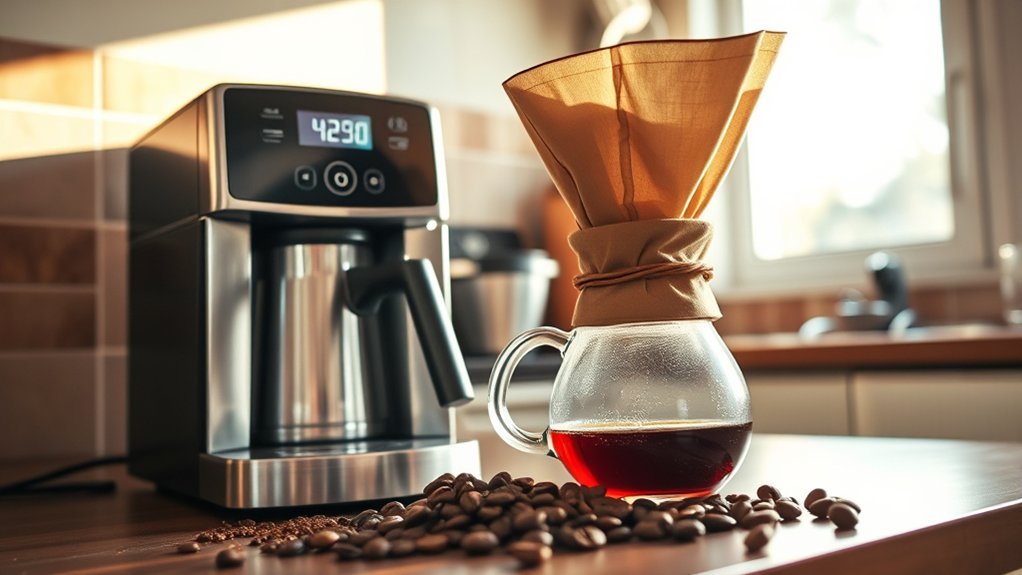
The method you choose to brew coffee greatly impacts its quality, as coffee makers and brewers utilize different extraction techniques that yield distinct flavor profiles. Here’s how they compare:
- Flavor Extraction: Coffee makers use gravity for milder flavors, while espresso machines apply high pressure for richer, concentrated tastes.
- Brewing Variables: The simplicity of coffee makers can lead to inconsistencies based on user technique, affecting overall quality.
- Consistency: Coffee machines equipped with flowmeters guarantee uniform brewing, resulting in a consistent taste for each cup.
- Complexity: Espresso machines offer a range of complex beverages, enhancing your coffee experience far beyond what traditional coffee makers can achieve.
Ultimately, your choice directly influences the flavor and quality of your coffee.
Customization Options: Coffee Makers vs. Coffee Brewers
When it comes to customizing your coffee experience, coffee makers and brewers offer distinct levels of control.
Coffee makers generally provide limited customization flexibility, mainly focusing on brew strength and volume. While some models feature programmable settings for brew times, they fall short of the intricate control offered by coffee brewers.
For instance, with a French press, you can manipulate brew time and coffee-to-water ratios to match your brew preferences, leading to a more personalized flavor profile. Espresso machines push this further, allowing you to adjust milk frothing, shot size, and extraction time.
What Are the Best Brands and Models for Coffee Makers and Brewers?
Choosing the right coffee maker or brewer can greatly enhance your daily coffee ritual, as various brands and models cater to different preferences and budgets.
Selecting the perfect coffee maker can elevate your daily brew, as diverse brands meet various tastes and budgets.
Here are some top recommendations based on current coffee trends and brewing techniques:
- Alessi Moka Pots: Stylish and durable, priced between $49.11 and $391.54.
- Espro French Press: Known for convenience, starting at $49.11.
- Stelton French Press: Another excellent option for quick brewing, also starting at $49.11.
- Kitchenminis Coffee Machine: Priced at $162.28, it balances functionality with elegance.
These brands offer reliable products that not only enhance your brewing experience but also stand out in design and longevity, making them ideal choices for coffee enthusiasts.
Price Comparison: What to Expect for Your Budget
Understanding the price spectrum for coffee makers and brewers helps you align your choices with your budget and brewing preferences.
Price expectations can vary considerably; basic coffee makers start around $29.99, while espresso machines often range from $100 to over $3,000, depending on features.
Moka Pots and French Presses typically begin at about $49.11, providing affordable options for manual brewing.
For those considering advanced functionalities, programmable coffee makers generally cost between $50 and $200.
High-quality machines, particularly those with built-in grinders or milk frothers, are priced between $300 and $1,500.
Choosing the Right Coffee Device for Your Needs
How do you determine the right coffee device for your needs? Start by evaluating your coffee preferences and lifestyle.
Evaluate your coffee preferences and lifestyle to choose the perfect brewing device for your needs.
Consider these factors:
- Coffee Flavor: Do you enjoy mild drip coffee or rich espresso?
- Brewing Techniques: Are you interested in experimenting with different methods, like pour-over or French press?
- Volume: Will you be brewing for one person or a large group?
- Budget: Are you looking for an affordable coffee maker or willing to invest in a high-quality espresso machine?
Frequently Asked Questions
Can a Coffee Maker Brew Espresso?
A coffee maker can’t brew espresso; it relies on different brewing techniques. Espresso machines use high pressure to extract flavors quickly. For authentic espresso, you need an espresso machine specifically designed for that purpose.
Do Coffee Brewers Require More Maintenance?
Coffee brewers often require more maintenance, with a cleaning frequency of every few weeks compared to standard models. Their cleaning requirements include descaling and regular filter changes to guarantee peak performance and flavor extraction.
Are Coffee Makers More Affordable Than Brewers?
Yes, coffee makers often provide more budget options, typically featuring a lower price comparison than brewers. If you’re looking for affordability, exploring various coffee maker models can help you stay within your budget effectively.
Which Is More Popular: Coffee Makers or Brewers?
Coffee makers are generally more popular due to their convenience and variety in brewing methods. Most people prioritize ease of use, while personal coffee preferences also influence the choice between different machines and brewing techniques.
Can I Use a Coffee Maker for Tea?
Yes, you can use a coffee maker for tea. However, the tea steeping process may not optimize flavor extraction as effectively as dedicated tea brewers, potentially resulting in a less flavorful cup compared to traditional methods.
Conclusion
In the world of coffee, choosing between a coffee maker and a coffee brewer is like selecting a brush for a canvas. Each device paints a unique flavor profile, shaping your morning ritual. While coffee makers offer convenience and speed, brewers invite you to explore the art of customization. Ultimately, your choice depends on your taste and lifestyle. Embrace the journey, and let your preferred device be the key to revealing your perfect brew, transforming each cup into a masterpiece.


