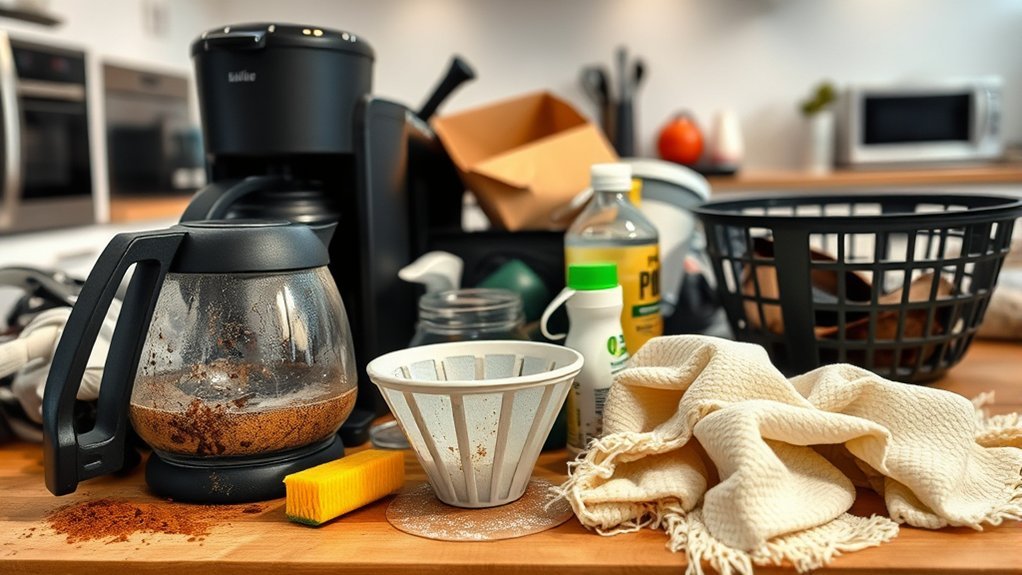
When cleaning your coffee maker, don’t just focus on the carafe; neglecting components like the brew basket can lead to bacterial growth. Avoid using vinegar for descaling, as it can leave behind unwanted odors. Skipping regular descaling promotes limescale buildup, affecting performance. And be sure to rinse thoroughly; leftover cleaning solutions can ruin your coffee’s taste. By addressing these common mistakes, you’ll keep your coffee maker running smoothly and improve your brews. There’s more to learn about effective cleaning techniques.
Key Takeaways
- Neglecting to clean components beyond the carafe fosters bacterial growth and compromises coffee quality.
- Using vinegar for descaling may leave unwanted odors and flavors in the coffee maker.
- Skipping regular descaling encourages limescale buildup, negatively impacting performance and taste.
- Failing to rinse thoroughly after using cleaning solutions can compromise the flavor of your coffee.
- Overlooking small parts like gaskets can lead to leaks and affect overall brewing quality.
How to Clean Your Coffee Maker Effectively
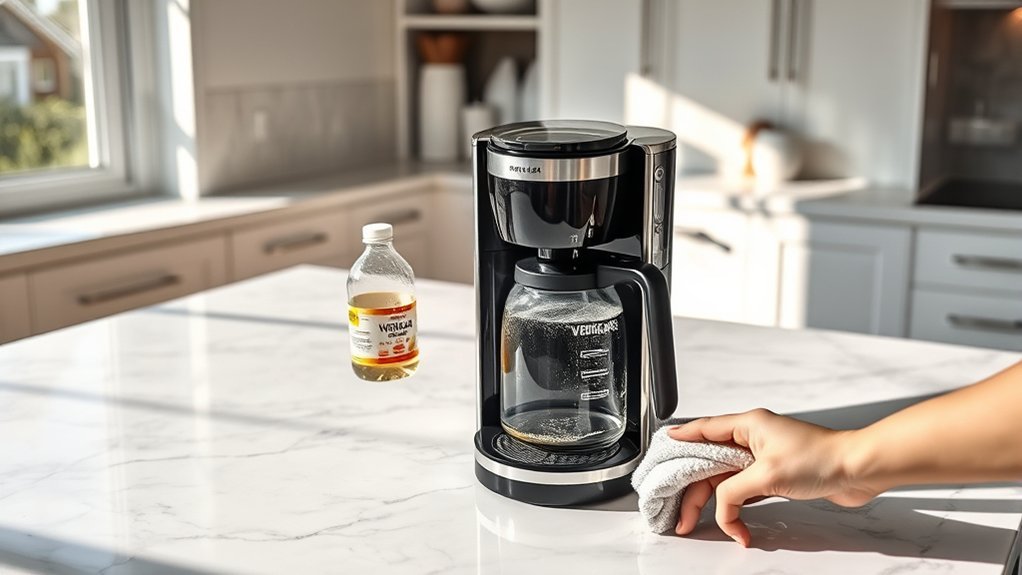
To keep your coffee maker in top shape, it’s essential to clean it regularly and effectively.
Regular and effective cleaning is vital to maintain your coffee maker’s performance and longevity.
Prioritize coffee maker maintenance by descaling it at least every three months with a mixture of equal parts white vinegar and water. Run a complete brewing cycle, letting the solution soak in the carafe for 15 minutes before rinsing with plain water.
Don’t forget to clean all removable parts, like the water reservoir, brew basket, and carafe, using warm, soapy water to prevent residue buildup.
For single-serve machines, clean the needle that punctures coffee pods with a small brush or toothpick.
Avoid harsh chemicals; natural solutions, such as citric acid, are safer and more effective for your machine’s longevity and performance.
Essential Cleaning Techniques for Coffee Machines
While many coffee lovers enjoy their daily brews, they often overlook the importance of proper cleaning techniques for their machines.
To maintain your coffee machine, regularly clean all removable parts like the water reservoir, brew basket, and carafe. This prevents bacterial growth and guarantees peak coffee quality.
Use citric acid or specialized descaling solutions to tackle limescale buildup; vinegar can leave unwanted odors and is less effective. Always rinse the machine thoroughly after cleaning to remove any lingering agents that could affect taste.
Follow your manufacturer’s guidelines for cleaning frequency and procedures, as neglecting them can lead to costly repairs.
Finally, incorporate a routine of flushing the machine with water after each use for enhanced hygiene.
Common Mistakes to Avoid When Cleaning
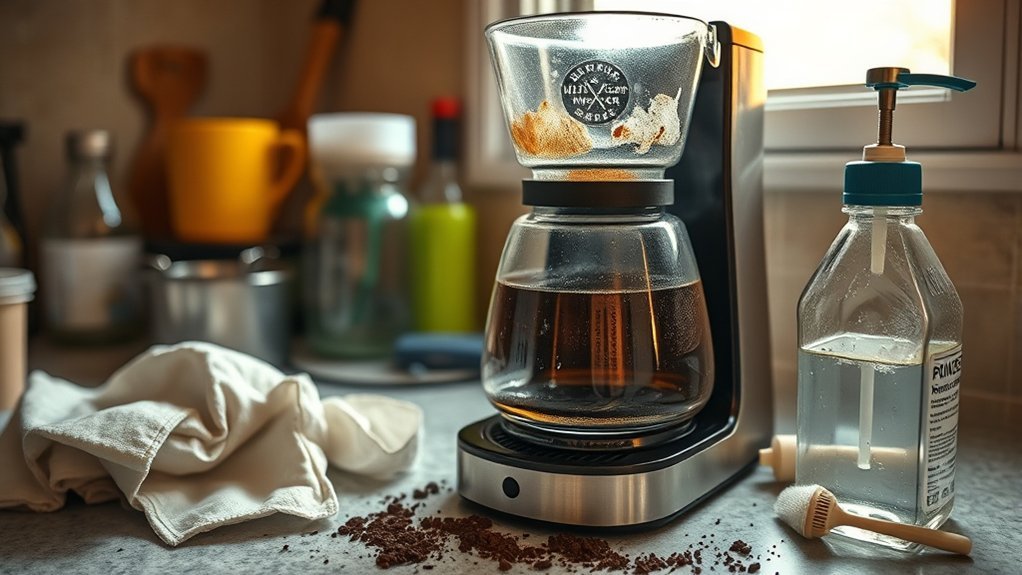
When cleaning your coffee maker, overlooking certain key aspects can lead to significant issues, from poor taste to machine malfunctions.
One common mistake is neglecting to clean all components, focusing only on the carafe. This can foster bacterial growth and degrade coffee quality.
Additionally, using vinegar for descaling may seem convenient, but it can leave unwanted odors and flavors. Instead, opt for citric acid.
Skipping regular descaling encourages limescale buildup, which hampers performance and incurs costly repairs.
Not rinsing thoroughly after using cleaning solutions can also leave residues that compromise taste.
Establishing good maintenance habits, such as daily rinsing and cleaning removable parts, guarantees ideal cleaning frequency and prevents clogs, ultimately enhancing your coffee experience.
The Consequences of Skipping Grinder Cleaning
Neglecting to clean your grinder can seriously compromise the flavor and quality of your coffee.
Over time, accumulated oils and stale grounds lead to off-flavors and bitter brews, while clogs can disrupt grind consistency and brewing efficiency.
Additionally, skipping this essential maintenance raises the risk of bacterial growth, posing potential health hazards.
Flavor Quality Deterioration
Cleaning your coffee grinder is essential for maintaining the rich flavor of your brew; otherwise, you risk introducing stale or bitter notes that can ruin your coffee experience.
Neglecting grinder maintenance leads to oil and residue buildup, which compromises flavor preservation. Inconsistent particle sizes from a dirty grinder cause uneven extraction, further diminishing coffee quality.
- Your morning ritual deserves the best taste.
- Stale flavors can ruin the joy of your favorite brew.
- A clean grinder promotes both flavor and hygiene.
Regularly cleaning your grinder not only enhances the flavor profile but also extends the lifespan of your equipment.
Don’t let a few minutes of maintenance cost you the perfect cup of coffee.
Clogs and Malfunctions Increase
If you skip regular grinder maintenance, you’ll likely experience clogs and malfunctions that can ruin your coffee experience.
Accumulated coffee oils and residue can obstruct the grinder, leading to inconsistent grind sizes. This inconsistency affects extraction, resulting in bitter or weak coffee that disappoints your taste buds.
Additionally, neglecting grinder cleaning can cause costly repairs or replacements due to wear and tear from built-up debris. Regularly cleaning components like hoppers and burrs not only guarantees peak performance but also prolongs your grinder’s lifespan.
Ultimately, maintaining your grinder is key to preserving coffee quality and enhancing your brewing routine, allowing you to enjoy every cup to its fullest potential.
Don’t let clogs compromise your brewing experience.
Bacterial Growth Risks Rise
While it might seem harmless to skip regular grinder cleaning, the reality is that this oversight can greatly raise the risk of bacterial growth. Neglecting grinder maintenance allows coffee oils and residues to accumulate, creating a breeding ground for up to 60 different types of bacteria.
This bacterial contamination can taint fresh coffee grounds, compromising flavor and posing health risks.
- You might unknowingly serve coffee laced with harmful bacteria.
- Your favorite brew could taste stale or off-putting.
- Customers may lose trust in your coffee quality.
Regularly cleaning your grinder is essential to prevent bacterial colonies and mold formation, ensuring not only a better taste but also a safer coffee experience for everyone.
Step-by-Step Guide to Cleaning Espresso Machines
A thorough cleaning routine for your espresso machine is vital to maintaining its performance and ensuring that every shot of espresso tastes exceptional.
Start by flushing the group head with water after each shot to prevent coffee residue buildup.
Daily, backflush the machine using approved cleaning powder, adhering to manufacturer instructions.
For portafilters and baskets, soak them in warm water with cleaning tablets, avoiding harsh scrubs.
After each use, purge the steam wand and soak it in a milk system cleaner to prevent clogs.
Remember, monthly descaling is significant to combat limescale buildup, especially in areas with hard water.
Consistent espresso machine maintenance and following a strict cleaning frequency will keep your machine in top shape.
Importance of Regular Descaling for Coffee Makers
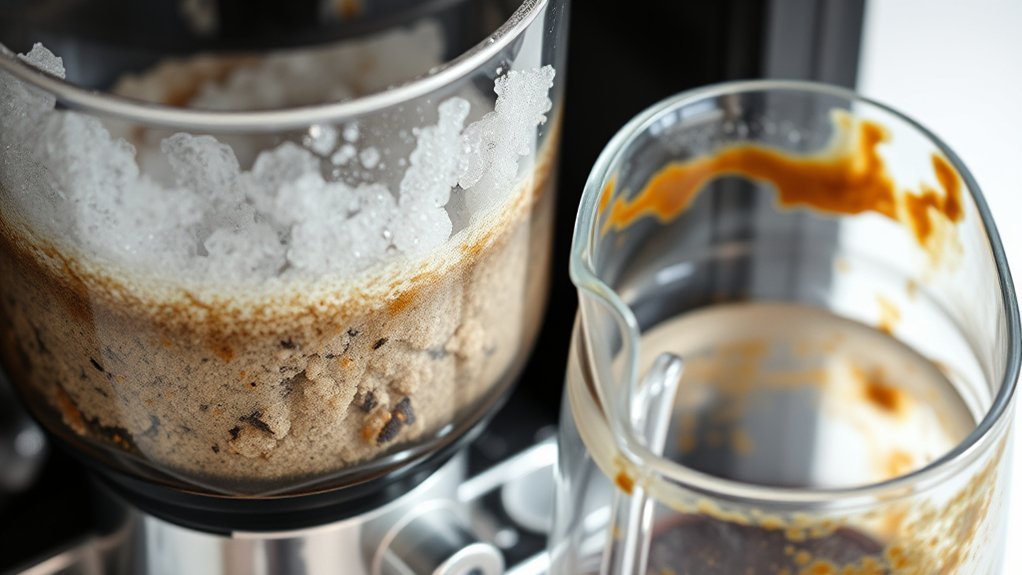
Regular descaling is essential for maintaining the performance and longevity of your coffee maker. By adhering to the recommended descaling frequency—at least once every three months—you prevent harmful mineral buildup that can compromise your brew’s quality.
- Enjoy rich, flavorful coffee every time
- Avoid costly repairs and replacements
- Extend the life of your coffee maker
Neglecting to descale may lead to damage in heating elements, affecting both efficiency and taste.
Use a descaling solution specifically designed for coffee equipment to effectively remove mineral deposits without harming internal parts. After descaling, always run a cycle of fresh water to eliminate any lingering solution, ensuring your next cup is pure and delicious.
Prioritize descaling for the best coffee experience!
Best Practices for Cleaning Milk Systems
To guarantee your coffee’s milk-based beverages taste their best, it’s crucial to maintain a clean milk system.
Start by regularly purging steam wands after each use to prevent milk residue buildup, ensuring peak frothing performance.
Regularly purging steam wands after each use is essential to avoid milk residue and maintain optimal frothing performance.
Clean all milk system components, like tubes and frothing pitchers, with a specialized milk system cleaner to effectively eliminate solid buildup and bacteria.
Disassemble and soak removable parts in warm, soapy water for at least 15 minutes to thoroughly remove milk proteins and fats.
After cleaning, rinse all components thoroughly to avoid soap residue that could compromise flavor.
Establish a daily cleaning routine to prevent unpleasant tastes and health risks from bacterial buildup, keeping your drinks delicious and safe.
Overlooking Small Parts and Gaskets During Maintenance
When maintaining your coffee maker, don’t underestimate the impact of small components like gaskets and shower screens.
Regularly inspecting and cleaning these parts is crucial, as neglect can lead to flavor issues and hygiene concerns.
Employ effective cleaning techniques to guarantee every piece contributes to the quality of your brew.
Importance of Small Components
Small components like gaskets, shower screens, and brew baskets play an essential role in maintaining the quality of your coffee. Neglecting these small parts during maintenance can lead to a buildup of coffee oils and residues, compromising flavor and hygiene.
Regular gasket maintenance guarantees that seals remain effective, preventing bacteria accumulation that could affect your health and the taste of your brew.
- A neglected brew basket can ruin your cup of coffee.
- Dirty gaskets can lead to costly repairs.
- Small components can silently sabotage your brewing experience.
Regular Gasket Inspections
Regular gasket inspections are crucial for ensuring your coffee maker operates at peak performance. Gaskets can trap coffee oils and residues, leading to leaks and compromised brewing quality if neglected.
To maintain ideal coffee extraction, incorporate gasket maintenance into your cleaning routine. Check gaskets for wear and tear, as damaged gaskets negatively impact pressure and temperature regulation during brewing.
Establish an inspection frequency that aligns with your coffee-making habits, ideally every month. Neglecting this small component can result in bacterial growth, posing health risks and affecting the taste of your coffee.
Effective Cleaning Techniques
Neglecting smaller components during your coffee maker’s cleaning routine can drastically impact the quality of your brews.
These overlooked parts, like shower screens and gaskets, can trap coffee oils and residues, compromising flavor.
To maintain a superior taste, make sure your maintenance routine includes:
- Regular cleaning of the steam wand to prevent milk residue buildup.
- Thorough rinsing of brew baskets, filters, and water reservoirs to inhibit bacteria growth.
- Consistent cleaning of grinders and hoppers to avoid stale coffee flavors.
How to Keep Your Cleaning Schedule on Track
To guarantee your coffee maker remains in top condition, establishing a consistent cleaning schedule is crucial.
Start by scheduling daily, weekly, and monthly cleaning tasks. Use calendar apps or reminders to help you remember daily backflushing and weekly exterior cleaning. A checklist of all removable components, like the brew basket and water reservoir, can guarantee you don’t overlook any parts.
Monitor how often you use your coffee maker; if it’s multiple times a day, consider increasing your cleaning frequency. Keep your cleaning supplies organized and accessible, so you can quickly tackle maintenance tasks.
Tips for Maintaining Your Coffee Maker’s Performance
To keep your coffee maker performing at its best, establish a regular cleaning schedule and stick to it.
Use proper cleaning products like citric acid or recommended tablets to effectively remove buildup without damaging the machine.
Regular Cleaning Schedule
Regularly maintaining your coffee maker is essential for peak performance and flavor. To keep your coffee tasting great and your machine functioning properly, establish a daily maintenance routine.
Here are some tips to help you stay on track:
- Empty used grounds and rinse the carafe daily to prevent mold and residue.
- Thoroughly clean removable parts weekly for ideal hygiene.
- Schedule monthly descaling to eliminate mineral deposits and enhance efficiency.
Pay attention to your coffee’s taste; if it starts to decline or brewing takes longer, adjust your cleaning frequency.
Proper Cleaning Products
Maintaining a regular cleaning schedule is just one part of ensuring your coffee maker performs at its finest.
Choosing the right cleaning products is essential. Always opt for mild, non-abrasive cleaners specifically designed for coffee machines to protect internal components and prevent unwanted residues that can alter coffee flavor.
Avoid household detergents, vinegar, and abrasive sponges, as these can corrode gaskets and clog valves. Instead, use commercial cleaning products like Caffenu® cleaning capsules or tablets for effective removal of coffee oils without harming your machine.
After cleaning, make sure to rinse all parts thoroughly to eliminate any leftover solution.
Additionally, regularly check and replace water filters as recommended to maintain peak performance and enjoy the best coffee quality.
Frequently Asked Questions
Can I Use Vinegar Instead of Commercial Cleaners?
Yes, you can use vinegar instead of commercial cleaners. Vinegar benefits include being a natural disinfectant and odor remover. It’s a cost-effective cleaning alternative that effectively removes mineral buildup and guarantees your coffee maker stays fresh.
How Often Should I Clean My Coffee Maker?
Think of your coffee maker as a cherished tool; you should clean it every month for ideal performance. Regular maintenance keeps flavors fresh, so follow these cleaning frequency tips and enjoy consistently great coffee.
What Should I Avoid When Cleaning My Coffee Maker?
When cleaning your coffee maker, avoid using abrasive materials that can damage surfaces. Also, don’t neglect cleaning frequency; regular maintenance guarantees better coffee flavor and machine longevity. Follow these maintenance tips for peak performance.
Is It Safe to Use Bleach for Cleaning?
It’s not safe to use bleach for cleaning your coffee maker; over 70% of users prefer bleach alternatives like vinegar or baking soda. Prioritize cleaning safety to guarantee your coffee remains delicious and your machine lasts longer.
Can I Clean My Coffee Maker in the Dishwasher?
You shouldn’t clean your coffee maker in the dishwasher due to dishwasher safety concerns. Instead, clean it regularly by hand using vinegar and water, ensuring it’s free from buildup and functions effectively for your coffee needs.
Conclusion
In conclusion, avoiding common coffee maker cleaning mistakes can elevate your brew to celestial heights. By following essential techniques and maintaining a consistent cleaning schedule, you’ll guarantee your coffee machine operates at peak performance. Don’t forget to give attention to small parts and grinders, as neglecting these can lead to disaster in your daily cup. Keep these tips in mind, and you’ll enjoy perfect coffee every time, like a barista in your own kitchen!