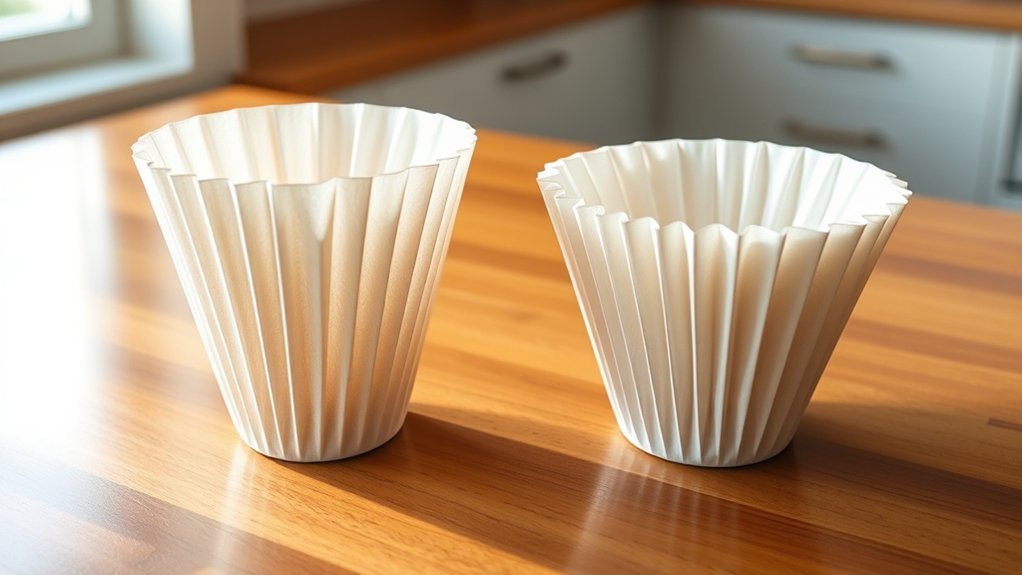
The #2 and #4 coffee filters differ mainly in size and compatibility. The #2 filter is ideal for 1-6 cup machines, holding 2-6 tablespoons of coffee, while the #4 filter suits larger brewers, accommodating 8-12 tablespoons. Using the wrong size can lead to issues like overflow or weak coffee. Additionally, the shape of the filter affects extraction efficiency and flavor profiles. For a deeper understanding of how these filters impact your brew, you’ll want to explore further.
Key Takeaways
- #2 filters are designed for 1-6 cup drip coffee makers, while #4 filters are suitable for larger machines accommodating 8-12 tablespoons of coffee grounds.
- The #2 filter measures approximately 4.5 inches across, whereas the #4 filter measures around 5 inches wide.
- Using a #2 filter in a #4 machine can cause collapse, while a #4 filter in a #2 machine may lead to overflow.
- The shape of the filters affects extraction efficiency; #4 filters allow for slower brewing, enhancing flavor complexity compared to #2 filters.
- Proper filter selection is crucial for optimal coffee strength and flavor extraction, as mismatched filters can result in weak or bitter coffee.
Key Differences Between #2 and #4 Coffee Filters
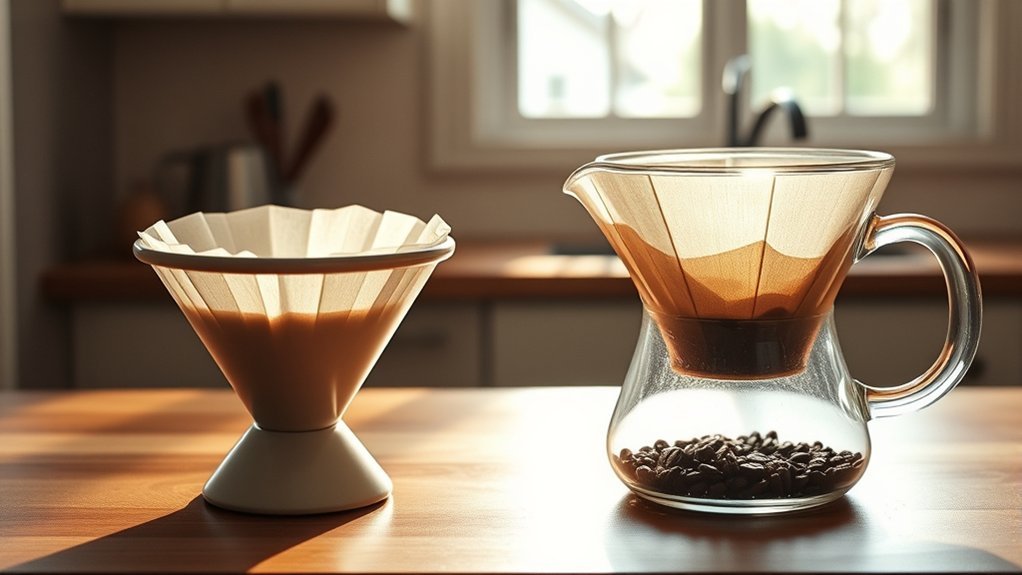
When choosing between #2 and #4 coffee filters, it’s essential to understand their distinct specifications and intended uses.
The #2 filter, designed for 1-6 cup drip coffee makers, measures approximately 4.5 inches across the top and holds about 2 to 6 tablespoons of coffee grounds.
In contrast, the #4 filter is suitable for larger machines, measuring around 5 inches wide and accommodating 8 to 12 tablespoons.
Both filters are made from similar filter material and share a cone shape, but the size difference impacts brewing methods.
The #4 filter’s larger capacity allows for deeper extraction, enhancing flavor complexity compared to the #2 filter, which may lead to less pronounced tastes in smaller brews.
Compatibility of #2 and #4 Filters With Coffee Makers
When choosing between #2 and #4 coffee filters, it’s essential to take into account the compatibility with your coffee maker.
A #2 filter works best with small drip machines and pour-over setups, while a #4 filter is designed for larger brewers.
Using the wrong filter size can lead to issues like overflowing or collapsed filters, impacting your coffee’s extraction and overall quality.
Filter Size Compatibility
Choosing the right coffee filter is essential for your brewing process, as #2 and #4 filters are designed for different coffee maker capacities.
The filter dimensions highlight this distinction: a #2 filter measures about 4.5 inches across the top, suitable for 1-6 cup machines, while a #4 filter, at 5 inches, accommodates 8-12 cup coffee makers.
Using a #2 filter in a #4 machine can cause it to collapse, while a #4 filter in a #2 maker may lead to overflow.
Additionally, #2 filters hold 2 to 6 tablespoons of coffee grounds, ideal for smaller brewing volumes, whereas #4 filters can handle 8 to 12 tablespoons, catering to larger capacities.
Selecting the correct filter directly impacts coffee strength and extraction time.
Brewer Type Considerations
The compatibility of coffee filters with specific brewer types greatly impacts your overall brewing experience.
Using a #2 filter in a #4 coffee maker can lead to filter collapse, while a #4 filter in a #2 machine might cause overflow. This mismatch not only hampers brewer performance but can also waste coffee and affect extraction times.
The dimensions of the filters matter—#2 measures about 4.5 inches across the top, while #4 is 5 inches. Choosing the right filter size guarantees ideal contact with water, enhancing the flavor profile of your brew.
Understanding the filter material and dimensions is essential for achieving the best results and maximizing the potential of your coffee maker.
The Impact of Filter Shape on Coffee Flavor and Extraction
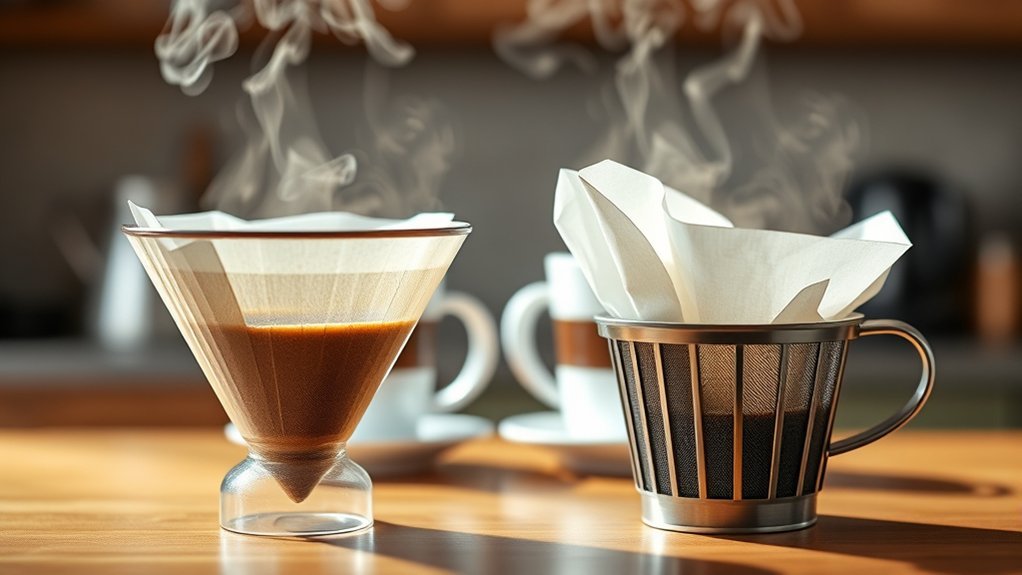
The shape of coffee filters greatly affects both extraction efficiency and flavor profiles.
When you use a cone-shaped filter like the #4, it allows for a slower brew, enhancing the complexity of your coffee’s taste.
In contrast, a #2 filter may lead to quicker extraction, which can alter the overall flavor and strength of your brew.
Extraction Efficiency Variance
Understanding extraction efficiency variance is essential for brewing the perfect cup of coffee, especially when comparing #2 and #4 cone-shaped filters. The differences in design notably impact your brewing variables and the final flavor.
Here are three key points to evaluate:
- Volume Capacity: #4 filters can hold 8-12 tablespoons of coffee grounds, enhancing extraction efficiency for richer flavors.
- Flow Rate: The shape of #4 filters allows for a more forgiving flow rate, reducing the risk of over-extraction compared to #2 filters.
- Brewing Time: Longer brewing times with #4 filters can lead to more complex flavors, while #2 filters favor a quicker, cleaner cup.
Flavor Profile Differences
When you brew coffee using different filter sizes, such as #2 and #4, you’re not just changing the amount of coffee you can make; you’re also altering the flavor profile of your brew.
The #4 filter, designed for larger volumes, allows for deeper extraction due to prolonged water contact, enhancing flavor complexity. This results in a milder cup since it traps more oils and sediment.
Conversely, the #2 filter, suited for smaller batches, can lead to stronger flavor intensity with less filtration, creating a more robust profile.
Remember, the grind size plays a significant role in extraction time, impacting how well the flavors develop based on the filter’s shape and capacity.
Choose wisely for the best coffee experience.
How to Measure Coffee for Ideal Brew Ratios
Achieving the perfect cup of coffee hinges on precise measurements, particularly the coffee-to-water ratio. The ideal ratio falls between 1:15 to 1:18, guaranteeing your brew strength is just right.
Here’s how to measure accurately:
- Use a scale: Weigh your coffee grind instead of measuring by volume. For standard brewing, 20 grams of coffee needs 300-360 grams (ml) of water.
- Follow the Specialty Coffee Association’s guideline: Aim for 55 grams of coffee per 1 liter of water (1:18 ratio).
- Enhance extraction: Pre-wet your coffee grounds with double the weight of water for 30 seconds to encourage blooming.
These steps guarantee a balanced flavor and elevate your coffee experience.
Common Brewing Issues With Incorrect Filter Sizes
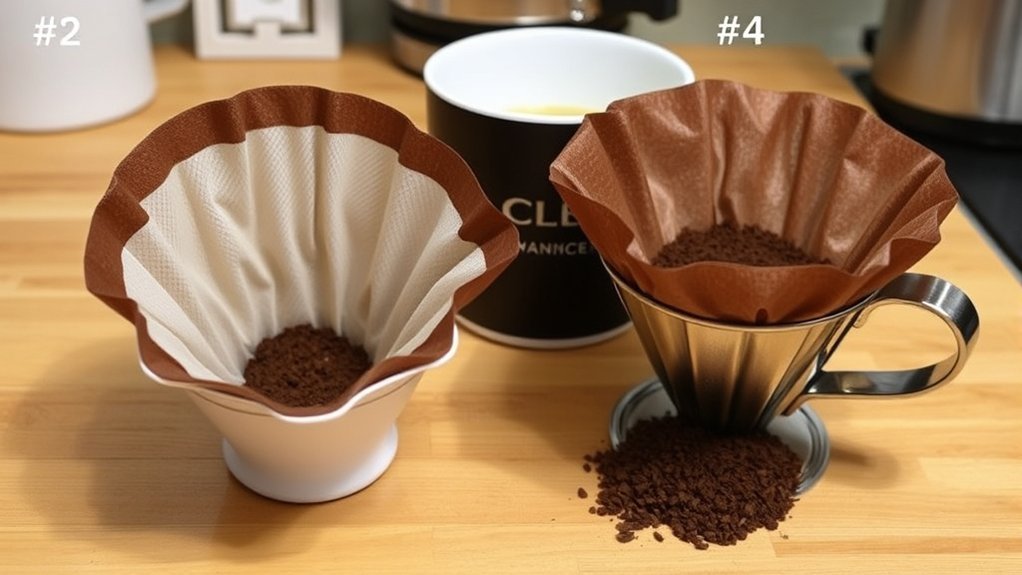
Using the correct coffee filter size directly impacts your brewing results and overall coffee quality.
If you use a #2 filter in a #4 coffee maker, it may collapse, allowing coffee grounds to escape and resulting in a muddy cup.
Alternatively, using a #4 filter in a #2 machine can cause overflow, as it won’t fit properly, leading to spilled water.
These mismatches affect extraction time, which can make your coffee weak or overly bitter, disrupting brewing consistency.
Additionally, the capacity differences mean you might waste coffee grounds if the filter doesn’t match your brewing volume.
To achieve ideal flavor extraction and maintain coffee strength, always choose the appropriate filter size for your machine.
How to Choose the Best Coffee Filter for Your Brewing Method?
How can you guarantee the best flavor from your coffee? Choosing the right coffee filter is essential. Here’s how to select the best option for your brewing method:
- Match your filter size: Use #2 filters for 1-6 cup machines and #4 filters for 8-12 cup makers.
- Consider filter shape: Cone filters enhance extraction, while basket filters yield a milder cup.
- Select appropriate filter materials: Paper, metal, or cloth can impact taste and clarity.
Frequently Asked Questions
Can I Reuse Coffee Filters for Multiple Brews?
You can reuse coffee filters for multiple brews, but their filter longevity may decrease. This could affect brewing efficiency, as oils and residues accumulate, potentially altering the flavor of your coffee over time.
Are There Eco-Friendly Options for Coffee Filters?
Yes, you’ve got eco-friendly choices! Biodegradable options break down naturally, while reusable filters cut waste markedly. By switching to these alternatives, you not only enjoy your coffee but also help protect the environment.
Do Coffee Filters Affect Caffeine Content?
Yes, coffee filters can affect caffeine content. Thicker filters may slow caffeine extraction, leading to lower levels in your brew. Conversely, thinner filters allow for quicker extraction, potentially increasing caffeine concentration in your cup.
Can I Use #2 Filters in a #4 Coffee Maker?
You can’t use #2 filters in a #4 coffee maker effectively. Filter compatibility is essential for brewing efficiency; using the wrong size can lead to poor extraction and mess, impacting your coffee’s flavor and strength.
How Do I Store Coffee Filters to Maintain Freshness?
To maintain freshness, store coffee filters in a cool, dry place. Studies show proper storage can enhance filter longevity by preventing exposure to moisture, which can degrade their quality and flavor absorption.
Conclusion
In the world of coffee, choosing between #2 and #4 filters might seem trivial, but it’s like picking between a rocket and a bicycle for your morning commute! The right filter can elevate your brew from mediocre to mind-blowing. Remember, the size and shape impact not just fit but also flavor and extraction. So, don’t let a simple oversight ruin your coffee experience. Choose wisely, and you’ll transform your daily ritual into an extraordinary adventure!