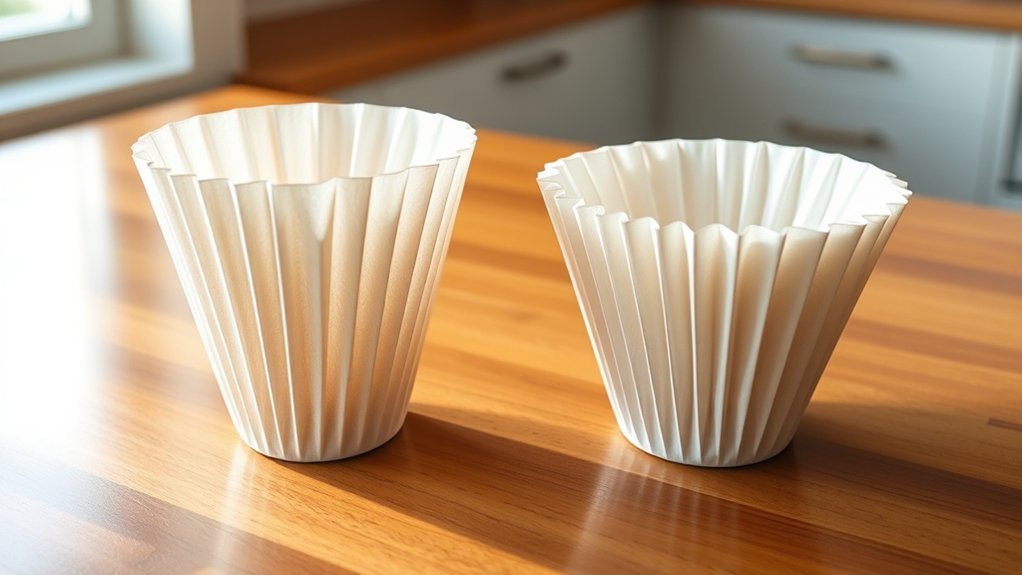
The main difference between #2 and #4 coffee filters is their physical size and the brewers they are designed to fit. A #2 cone filter is normally used in smaller coffee makers, while a #4 cone filter fits many larger cone-style machines. The correct choice comes from your brewer’s manual or filter-basket markings—not from the amount of coffee you want to make on a particular morning.
Quick Answer
A #2 coffee filter generally fits 2–6-cup electric cone brewers and some one-cup manual pour-over holders. A #4 filter generally fits 8–12-cup cone coffee makers. The #4 is taller and holds a larger coffee bed, but it does not automatically make stronger, slower, or more flavorful coffee.
Key Takeaways
- Use the filter number listed in your coffee maker’s manual or printed on its filter basket.
- Melitta identifies #2 filters for 2–6-cup electric brewers and certain one-cup manual cones.
- #4 filters are commonly designed for 8–12-cup cone-style coffee makers.
- Filter size does not determine coffee strength; coffee dose, water volume, grind, and brew time matter more.
- Some manual pour-over cones accept both sizes, but automatic brewers usually require the specified filter.
- Do not substitute a basket-style filter for a cone filter, even when the package lists a similar cup capacity.
Coffee Filter #2 vs #4 at a Glance
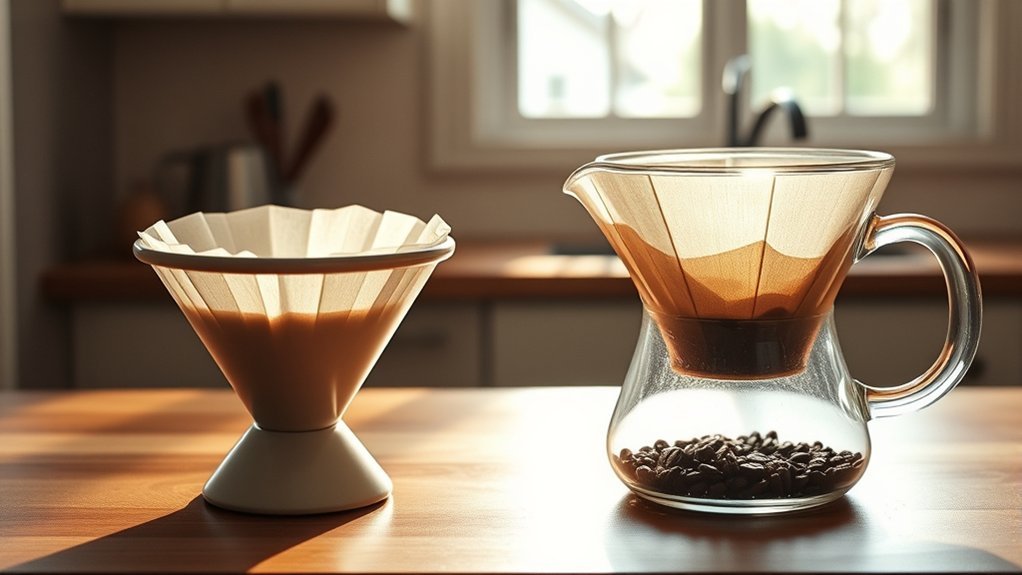
| Feature | #2 Cone Filter | #4 Cone Filter |
| Typical brewer fit | 2–6-cup electric cone brewers and some one-cup manual cones | 8–12-cup cone-style coffee makers |
| Relative size | Shorter and smaller | Taller with more room for a larger coffee bed |
| Best use | Small automatic brewers and compatible manual pour-over holders | Full-size automatic cone brewers and compatible larger pour-over holders |
| Flavor effect | No fixed flavor profile caused by the number alone | No fixed flavor profile caused by the number alone |
| Interchangeable? | Only when the brewer manufacturer approves both sizes | Only when the brewer manufacturer approves both sizes |
These capacity ranges are manufacturer fit categories, not universal measurements of how many eight-ounce mugs the machine produces. Coffee-maker “cups” also vary by brand, so the brewer manual remains the best source for both filter size and water capacity.
What Do the #2 and #4 Filter Numbers Mean?
The numbers identify sizes within a family of cone-shaped filters. They help match the filter to the height, width, slope, and capacity of a brewer’s filter basket.
They do not describe filter-paper thickness, caffeine removal, coffee strength, or a required number of tablespoons. A #4 filter is larger because it must support the coffee bed and water volume used in a larger compatible brewer.
Note: Filter sizing is most closely associated with Melitta-style cone filters. Other systems, including V60, Chemex, flat-bottom baskets, and proprietary reusable baskets, may use different names and dimensions.
Which Coffee Makers Use #2 Filters?
According to Melitta’s current #2 filter specifications, its #2 cone filters fit 2–6-cup electric coffee makers and one-cup non-electric cone or manual coffee makers.
Common uses include:
- Compact automatic drip coffee makers with cone-shaped baskets
- Small office or dorm coffee makers
- Compatible one-cup manual pour-over cones
- Small brewers whose manuals specifically call for a “No. 2” or “#2” filter
Do not choose a #2 filter only because you plan to brew two cups in a larger machine. If the machine has a #4 basket, the smaller filter may sit too low, leave gaps along the walls, or lose support as it fills with water.
Which Coffee Makers Use #4 Filters?
Melitta identifies its #4 cone filters for 8–12-cup cone coffee makers. This is one of the most common sizes in full-size household drip machines that use a tapered filter basket.
A #4 filter provides enough height and surface area for the larger coffee bed used by these brewers. It should sit against the basket walls without folding over the top, blocking the lid, or sagging into the brewer’s drain opening.
A large machine may still require a flat-bottom basket filter rather than a #4 cone. Match both the number and the shape shown in the appliance manual.
Can You Substitute #2 and #4 Coffee Filters?
For an automatic coffee maker, use the filter size specified by the manufacturer. Automatic machines have fixed spray heads, lids, basket supports, and drain valves. A poorly fitted filter can shift when water begins flowing.
Warning: Stop the brew cycle if water rises close to the top of the basket, the filter folds inward, or coffee grounds begin entering the carafe. Hot water and grounds can spill when the basket overflows.
A #2 filter placed in a basket designed only for #4 filters may:
- Sit too low in the basket
- Leave unsupported gaps around the sides
- Fold or collapse as the grounds become saturated
- Allow water or grounds to bypass the filter
A #4 filter placed in a smaller #2 basket may:
- Bunch or wrinkle along the walls
- Fold over itself and slow drainage
- Extend above the basket
- Interfere with the lid or water-distribution head
There are exceptions. For example, Melitta’s one-cup manual pour-over cone is expressly designed to accept either #2 or #4 filters. That flexibility should not be assumed for other brewers.
How Filter Size Affects Coffee Flavor and Extraction

A correctly fitted #2 filter does not have one flavor profile while a correctly fitted #4 filter has another. When both are made from similar paper, the number itself is mainly a size designation.
Coffee flavor and extraction are affected more directly by:
- The weight of coffee and water
- Grind size and uniformity
- Water distribution
- Total contact time
- Roast level
- Brewer geometry
- Filter material and porosity
Research summarized by the UC Davis Coffee Center shows that brew strength, extraction, grind, roast, and basket geometry can influence sensory results. That is different from claiming that a larger numbered paper filter automatically produces deeper extraction.
A #4 brewer may produce a different cup from a #2 brewer because it uses a larger coffee bed, more water, and different equipment. Those differences come from the complete brewing system, not simply from the number printed on the filter box.
Filter size determines whether the paper fits the brewer. Your recipe and brewing conditions determine whether the coffee tastes weak, balanced, or strong.
How Much Coffee Should You Use With #2 or #4 Filters?
Do not set the coffee dose by treating the filter number as a tablespoon guide. Measure according to the amount of water being brewed.
A practical starting range for drip coffee is 55–60 grams of coffee per liter of water, or roughly a 1:18 to 1:16.7 coffee-to-water ratio. Adjust the dose after tasting the finished coffee. The Specialty Coffee Association publishes coffee standards and brewer-testing frameworks, while current coffee research also emphasizes brew strength and extraction rather than filter number alone.
| Water | Suggested Starting Dose |
| 300 ml | 17–18 grams of coffee |
| 500 ml | 28–30 grams of coffee |
| 750 ml | 41–45 grams of coffee |
| 1 liter | 55–60 grams of coffee |
If the coffee tastes weak, first confirm that you used enough grounds and that the grind is not too coarse. If it tastes harsh or bitter, try a slightly lower dose, a coarser grind, or a clean brewer before blaming the filter size.
Pro Tip: A small digital kitchen scale gives more repeatable results than tablespoons because the weight of a scoop changes with grind size and how tightly the coffee is packed.
How to Install a Cone Coffee Filter Correctly
At a Glance
| Time Required | Less than 1 minute |
| Difficulty | Easy |
| Tools Needed | Correct cone filter, coffee grounds, and optional scale |
| Cost | Usually a few cents per disposable paper filter |
- Confirm the size and shape. Check the coffee maker’s manual, filter-basket label, or manufacturer product page.
- Fold the crimped seams. Fold the bottom and side seams flat so the filter opens cleanly and sits close to the basket walls. Melitta’s manual pour-over instructions also direct users to fold the filter seams before placing it in the cone.
- Seat the filter fully. The bottom should rest inside the basket without covering or pushing into the drain mechanism.
- Check the rim. The paper should not block the lid, water outlet, or basket handle.
- Add the measured coffee. Level the grounds gently instead of packing them down.
- Watch the first brew with a new filter type. Stop the machine if the water level rises unusually high.
Pre-rinsing is optional for many automatic brewers. For manual pour-over, rinsing can remove loose paper fibers and warm the brewer, but the wet filter must remain fully supported against the cone.
Common Brewing Problems With the Wrong Filter Size
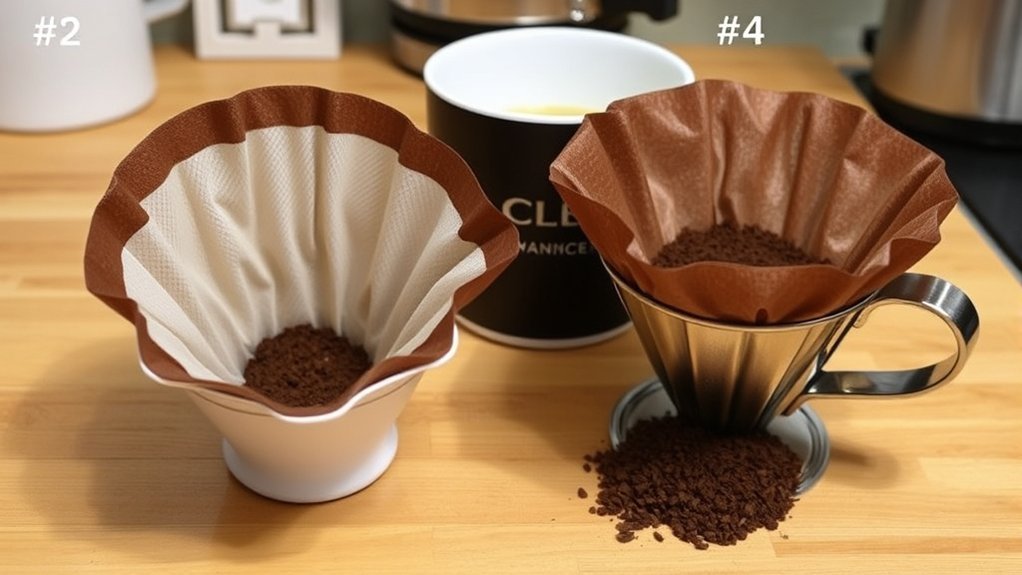
| Problem | Likely Cause | What to Do |
| Filter collapses inward | Filter is too small, not folded, or not supported by the basket | Use the specified size and press the folded filter gently against the basket walls |
| Water rises near the rim | Filter is bunched, grind is too fine, too much coffee was added, or the basket outlet is clogged | Stop brewing, correct the filter fit, use a coarser grind, and clean the basket |
| Grounds in the carafe | Torn, folded, collapsed, or overflowing filter | Discard the filter, clean the basket, and restart with a new correctly fitted filter |
| Coffee drains very slowly | Filter is folded over itself, grind is too fine, or the brewer needs cleaning | Reseat the filter, adjust the grind, and remove mineral or coffee buildup |
| Coffee tastes weak | Too little coffee, too much water, coarse grind, or water bypassing the coffee bed | Check the ratio and filter fit before increasing brew time |
If problems continue with the correct filter, clean the brew basket, spray head, carafe lid, and drain valve according to the coffee maker’s manual. A clogged brewer can mimic the symptoms of an incorrect filter.
Paper, Metal, and Cloth Filters
The #2-versus-#4 choice concerns size, but filter material can make a more noticeable difference in cup clarity and body.
- Paper filters: Catch most fine particles and much of the coffee oil, usually producing a cleaner cup with less sediment.
- Metal filters: Allow more oils and fine particles through, often creating a fuller body and more sediment.
- Cloth filters: Can produce a clean yet full-bodied cup but require careful washing, drying, and storage.
Research on paper-filtered coffee has found that paper can retain much of the diterpene-rich lipid material found in less-filtered coffee. That is a difference between filtration methods, not a reason to expect a #4 paper filter to remove more oil than a #2 paper filter made from the same material.
Disposable paper filters should normally be used once. A second brew through the same grounds will be weak, while emptying and reusing wet paper increases the chance of tearing, clogging, and stale flavors. Choose a purpose-built reusable filter when reducing paper waste is the priority.
Some paper cone filters are certified for commercial composting. Acceptance varies by facility, and filters contaminated with non-compostable additives may not qualify. Check local rules before placing filters and coffee grounds in a compost bin.
How to Choose the Correct Coffee Filter
- Read the manual. Look for wording such as “#2 cone,” “#4 cone,” “8–12-cup basket,” or a proprietary filter part number.
- Inspect the basket. Many removable baskets have the required filter size molded into the plastic.
- Match the shape. Cone and flat-bottom basket filters are not interchangeable.
- Dry-fit the paper. It should reach the basket walls without bunching, sagging, or extending into the lid.
- Check reusable-filter listings carefully. Confirm the coffee maker’s exact brand and model instead of relying only on a general cup range.
- Test the first brew safely. Stay near the machine and watch for slow drainage or an unusually high water level.
When the manual is unavailable, search the coffee maker’s exact model number on the manufacturer’s website. That is more reliable than estimating the filter by measuring its top edge.
Frequently Asked Questions
Can I reuse a paper coffee filter for multiple brews?
Disposable paper filters are best used once. Wet paper becomes weaker, and residue from the first brew can clog the filter or add stale flavors. Use a purpose-built reusable metal or cloth filter when you want a washable option.
Are there eco-friendly coffee-filter options?
Options include reusable metal or cloth filters and paper filters made with certified or responsibly sourced fibers. Some paper filters are commercially compostable, but local facilities may not accept them, so check local composting rules.
Do #2 and #4 coffee filters change caffeine content?
The filter number does not provide a predictable caffeine difference. Caffeine depends much more on the coffee dose, bean variety, water volume, and brewing conditions. Paper filtration mainly changes sediment and the amount of coffee oil reaching the cup.
Can I use a #2 filter in a #4 coffee maker?
Do so only when the brewer manufacturer says both sizes are compatible. In a typical automatic #4 brewer, a #2 filter may sit too low or collapse because the larger basket does not support it correctly.
Can I use a #4 filter in a #2 coffee maker?
A #4 filter may bunch, fold, or interfere with the lid of a small automatic brewer. Some manual pour-over cones accept both #2 and #4 filters, but you should verify compatibility in the product instructions.
How should unused coffee filters be stored?
Keep them in their original box or a clean covered container in a cool, dry cabinet. Protect them from moisture, cooking odors, dust, and cleaning chemicals because paper can absorb odors and lose its shape when damp.
Are #2 and #4 filters the same shape?
Standard #2 and #4 filters in this comparison are both cone-shaped. The #4 is larger and taller. Neither should be confused with a flat-bottom basket filter, even when the package lists a similar brewer capacity.
Conclusion
Choose between #2 and #4 coffee filters by matching the filter to the brewer—not by trying to change coffee strength or flavor. #2 filters normally serve smaller cone brewers, while #4 filters fit many 8–12-cup cone machines. Check the manual, match the shape, seat the paper correctly, and control flavor with an accurate coffee-to-water ratio and suitable grind.
Sources
- Melitta USA — #2 Cone Filter Paper — manufacturer compatibility guidance for #2 filters.
- Melitta USA — #4 Cone Filter Paper — manufacturer compatibility guidance for #4 filters.
- Melitta USA — One-Cup Pour-Over Cone — documents a manual holder compatible with both #2 and #4 filters and provides filter-folding instructions.
- Specialty Coffee Association — Coffee Standards — current framework for coffee quality, brewing performance, and technical standards.
- UC Davis Coffee Center — Research Publications — research on brew strength, extraction, grind, temperature, and basket geometry.
- PubMed — The Cholesterol-Raising Factor From Coffee Beans — research concerning paper filtration and coffee diterpenes.