
Auto shut-off on a coffee maker automatically ends active heating or powers down the brewer after a manufacturer-set period. It is useful for reducing unnecessary heating and the risk that comes with leaving a hot appliance running. The exact timing is not universal, though: depending on the model, shutdown can occur within minutes or several hours after brewing.
Quick Answer
Coffee maker auto shut-off is a built-in feature that stops active heating or powers down the brewer after a set time. The delay varies widely by model, from about five minutes on some single-serve machines to as long as four hours on certain programmable drip coffee makers. Always check the exact model’s manual.
Key Takeaways
- Coffee maker auto shut-off timing varies by model; there is no universal 30-minute or two-hour rule.
- Current manufacturer examples range from about five minutes after the last brew to adjustable timers of up to four hours.
- On glass-carafe brewers, auto-off commonly stops the warming plate so it does not remain hot indefinitely.
- Auto-off can reduce unnecessary energy use, but it does not necessarily eliminate every watt of standby power.
- Some models let you adjust or disable auto-off, while others use a fixed timer.
- Auto-off is a useful safety backup, not a substitute for following the manufacturer’s operating and unplugging instructions.
What Is Auto Shut-Off in Coffee Makers?
Auto shut-off is a programmed feature that changes a coffee maker from an active state to an off or lower-power state after a set amount of time. What shuts down depends on the machine. A drip brewer may turn off its warming plate, while a single-serve brewer may power down shortly after the last cup.
The feature is especially useful when you forget to press the power button after brewing. It reduces the amount of time a heater or warming plate stays energized unnecessarily.
However, auto shut-off is not identical on every coffee maker. The timer may be fixed, adjustable, or tied to the time of the last brew. Some machines also allow the feature to be disabled.
Note: Auto shut-off, auto-on, keep-warm, and standby are separate functions. A brewer can have one without having all of the others.
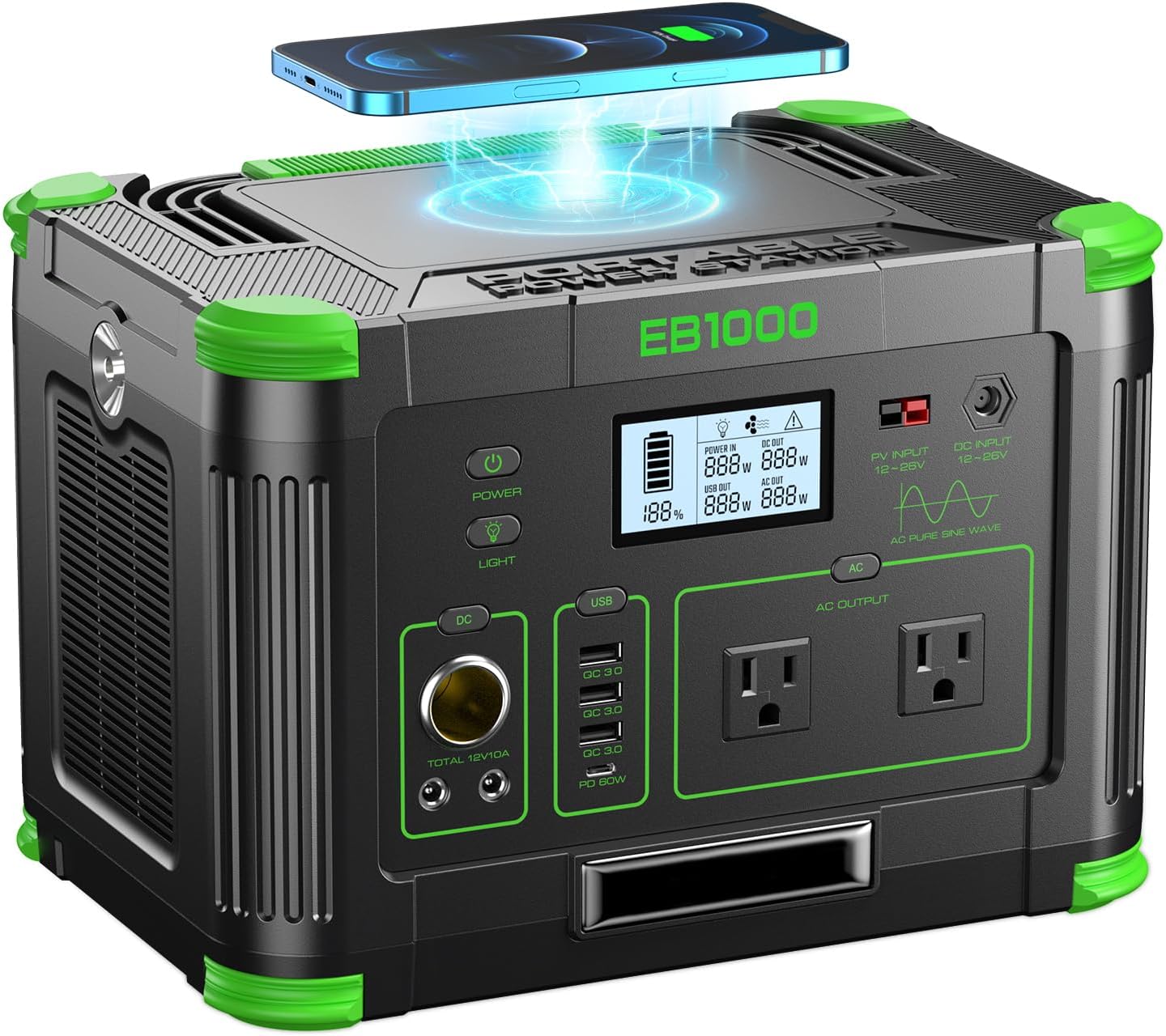
Power your essentials anywhere with a 999Wh pure sine wave power station delivering up to 1000W continuous with 2000W surge. It supports fast charging via USB-C PD 60W and USB-A QC 18W, plus simultaneous output for multiple devices through AC, USB, wireless, and car/DC ports. Recharge using AC, car, or solar with a built-in MPPT controller and dual cooling fans, while the upgraded battery management system protects against surges, short circuits, and overheating.

Generous Capacity & Durable Design: Glass carafe with 60oz capacity, this allows you to brew a large amount of coffee up to 12 full cups, or simply choose 2 or 4 at a time. It has an easy-grip handle for comfortable, drip-free pouring. The dishwasher safe carafe coffee pot is made of high-quality, non-porous borosilicate glass, which won’t absorb odors, while its superb heat-resistance will keep your coffee hotter for Ionger.

EASILY FILL FROM THE FRONT: In this 12 cup drip coffee machine, it's easy to add water and coffee grounds using the FrontFill water reservoir with a swing-open brew basket thatswings open from the front, making it easy to access under cabinets
How Long Does Coffee Maker Auto Shut-Off Take?
There is no single standard shutdown time for household coffee makers. Current manufacturer documentation shows that the timing can range from a few minutes to several hours.
| Example model | Documented auto-off behavior |
| Keurig K-Café Essentials | Automatically turns off five minutes after the last brew. |
| Keurig K-Compact | Turns off two hours after the last brew. |
| Cuisinart DCC-3200 | Offers an auto-off setting from 0 to 4 hours. |
| Hamilton Beach Pro 49500 | Defaults to two hours and allows adjustment in 10-minute increments up to four hours. |
These examples are why it is better to check the manual for your exact model than to rely on a general rule. A newer version of the same product family can also use different settings.
Auto Shut-Off vs. Auto-On, Keep-Warm, and Standby
Several coffee-maker features sound similar but perform different jobs:
- Auto shut-off: Ends active operation after a set period.
- Keep-warm: Keeps a glass carafe heated after brewing, usually with a warming plate.
- Auto-on or programmed brewing: Starts the coffee maker at a scheduled time.
- Standby: Leaves some electronics ready for use while reducing power compared with active heating or brewing.
For example, a coffee maker can stop heating the carafe while its clock or control panel remains active. That is why an auto-off feature should not automatically be described as eliminating all standby electricity use.
How Does Auto Shut-Off Enhance Safety and Convenience?
The main convenience is simple: you do not have to remember to return to the coffee maker solely to switch off a warming plate or brewer after the timer expires.
Auto-off can also reduce the risk associated with leaving an electrically heated appliance operating for an unnecessarily long period. The U.S. Consumer Product Safety Commission has previously recalled coffee makers that failed to turn off as programmed and could overheat, demonstrating why reliable shutdown controls matter.
Warning: Auto shut-off is a backup feature, not a guarantee against electrical failure. Stop using a coffee maker that develops an unusual burning smell, excessive heat, melting, smoke, sparking, or a failed shutdown function. Unplug it when safe to do so and follow the manufacturer’s service or replacement instructions.
Think of auto shut-off as a safety backup and convenience feature—not permission to ignore a malfunctioning or damaged coffee maker.
Understanding the Energy Efficiency Benefits of Auto Shut-Off
Auto shut-off can improve energy efficiency by preventing a heater or warming plate from running longer than necessary. The benefit is clearest on a glass-carafe drip brewer that would otherwise continue heating the pot.
However, shutting off active heating does not necessarily mean the machine consumes absolutely no electricity. A clock, display, wireless connection, or standby circuit may remain powered on some models.
It is also inaccurate to treat household auto shut-off as an ENERGY STAR requirement. The EPA’s current ENERGY STAR coffee-brewer program applies to eligible commercial coffee brewers and specifically lists products designed for residential applications as ineligible.
For a home coffee maker, the practical energy benefit is therefore straightforward: shorter unnecessary heating time generally means less electricity used by that heating function. The exact dollar savings depend on the brewer’s wattage, timer setting, frequency of use, and local electricity rate.
How Auto Shut-Off Affects Coffee Taste
On a traditional glass-carafe coffee maker, the warming plate continues applying heat after brewing. Keeping brewed coffee hot on that plate for a long period can gradually change its aroma and flavor.
Auto shut-off limits how long that continued heating lasts, but it is not primarily a flavor-control system. If you regularly keep coffee for several hours, a thermal carafe can be a better fit because it holds heat without relying on a continuously heated plate.
Single-serve machines work differently because there is usually no full carafe sitting on a warming plate. Their auto-off function is more about powering down the brewer after the last cup.
Choosing the Best Coffee Maker With Auto Shut-Off
When comparing coffee makers, check the exact model rather than assuming a feature works the same across an entire brand.
- Check the shutdown time: Decide whether you prefer a quick energy-saving shutdown or a longer keep-warm period.
- Look for adjustment: Some machines use a fixed timer, while others let you change the auto-off or keep-warm duration.
- Separate auto-off from auto-on: Scheduling tomorrow morning’s brew is a different feature from scheduling when today’s warming plate switches off.
- Consider the carafe: A glass carafe commonly relies on a warming plate. A thermal carafe retains heat without continuous plate heating.
- Check power-loss behavior: Some electronic models retain or restore settings after a brief outage, while others require reprogramming.
- Read the manual before buying: Manufacturer documentation is the most reliable place to confirm whether auto-off is fixed, adjustable, or disable-able.
Pro Tip: Search the manufacturer’s manual for the exact terms “Auto Off,” “Keep Warm,” and “Auto On.” Checking all three prevents you from buying a brewer that has the right feature name but the wrong timer behavior for your routine.
How to Check, Adjust, and Test Coffee Maker Auto Shut-Off
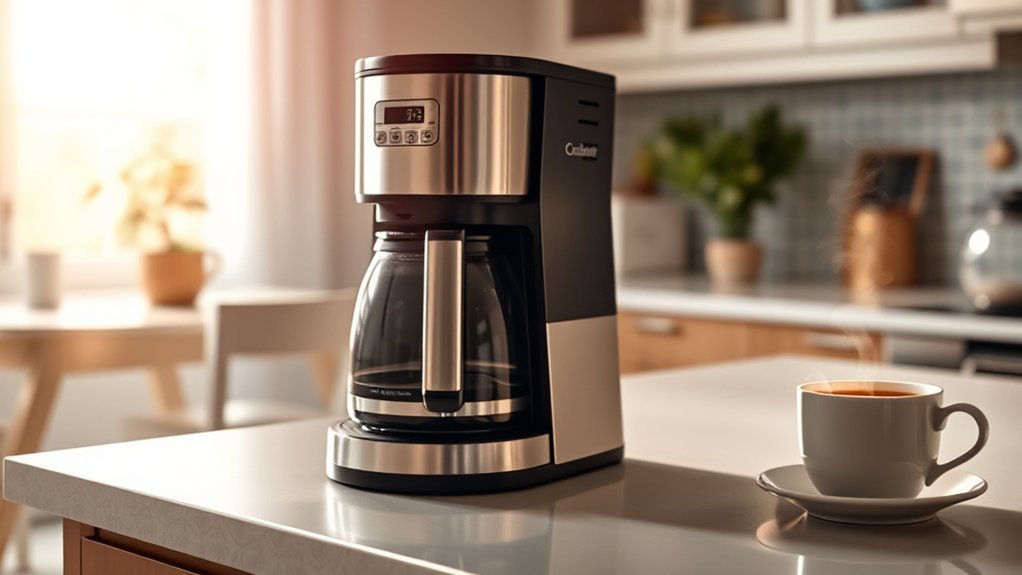
Start with the manufacturer’s specifications or user manual. Look for an Auto Off, Keep Warm, Energy Saver, or similarly named setting.
If the timer is adjustable, follow the exact button sequence in the manual. Do not assume instructions for another model from the same brand will work on yours.
To check that the function works, note when the brew finishes or when the manual says the timer begins, then remain nearby and verify that the brewer or warming plate shuts down at approximately the programmed time.
If the machine has a fixed auto-off setting, there may be nothing to adjust. Some models permit disabling the function, while others do not.
Routine cleaning and descaling should still be performed according to the manual, but cleaning should not be treated as a guaranteed repair for a failed electrical shutdown control.
Troubleshooting Coffee Maker Auto Shut-Off Problems
Coffee Maker Turns Off Too Soon
First confirm that the shutdown is not normal for your model. Some single-serve brewers are designed to power down only a few minutes after the last brew.
If your machine has an adjustable timer, check whether a power interruption or control-panel change reset the setting. Reprogram it using the manufacturer’s instructions.
Coffee Maker Does Not Shut Off
Confirm the expected timer in the manual and observe one complete cycle while you are nearby. If a brewer remains actively heating beyond its specified shutdown time, switch it off and discontinue use until you have checked the manufacturer’s troubleshooting or service guidance.
Do not open the appliance or attempt internal electrical repairs unless you are qualified to service mains-powered appliances.
What Happens After a Power Outage?
Power-loss behavior varies. Some coffee makers lose their clock and programmed settings immediately. Others include short-term memory. For example, the Cuisinart DCC-3200 specifies a 60-second reset feature that recalls settings and the machine’s position in the brewing process after a brief interruption.
After a longer outage, inspect the machine before restarting, confirm the water and coffee setup, and reprogram the clock or automatic functions if necessary.
Frequently Asked Questions
Can I Disable the Auto Shut-Off Feature on My Coffee Maker?
Sometimes. It depends on the exact model. For example, Keurig documents models on which auto-off can be disabled, while other brewers use a fixed shutdown program. Check the user manual before attempting to change the setting.
How Long Does the Auto Shut-Off Usually Last?
There is no universal duration. Current manufacturer examples range from about five minutes after the last brew on some single-serve machines to adjustable settings as long as four hours on some programmable drip brewers.
Does Auto Shut-Off Work With All Coffee Maker Models?
No. Many modern coffee makers include an automatic shutdown or energy-saving function, but it is not universal. Basic brewers and some specialized machines may use different controls, so verify the feature in the specifications or manual.
What Happens if the Power Goes Out While Brewing?
The answer depends on the brewer and the length of the outage. Some machines stop and require you to reset the clock or brew cycle. Others can remember settings through a short interruption. Check the manual before restarting a partially completed brew.
Can I Schedule the Auto Shut-Off Timing on My Coffee Maker?
Some models let you change the auto-off or keep-warm duration, while others use a fixed timer. Cuisinart and Hamilton Beach both offer examples of programmable drip brewers with adjustable shutdown periods. This setting is separate from an auto-on feature that schedules when brewing begins.
Does Auto Shut-Off Mean the Coffee Maker Uses No Electricity?
Not necessarily. Auto-off may stop the heater or warming plate while a clock, display, wireless feature, or standby circuit remains powered. The exact standby behavior depends on the model.
What Should I Do if Auto Shut-Off Stops Working?
Confirm the expected shutdown time in the manual and check that the timer has not been reprogrammed. If the machine remains actively heating beyond its specified period, turn it off, unplug it when safe, and contact the manufacturer rather than relying on the faulty feature.
Sources
- Cuisinart DCC-3200 Programmable Coffee Maker — documents 0–4-hour auto-off adjustment and its 60-second reset feature.
- Keurig K-Compact Coffee Maker — documents a two-hour auto-off period after the last brew.
- Keurig K-Café Essentials Use & Care Guide — documents a five-minute auto-off period.
- Hamilton Beach Pro 12 Cup Programmable Coffee Maker Manual — documents a default two-hour shutdown and adjustment up to four hours.
- EPA ENERGY STAR Commercial Coffee Brewers — confirms that products designed for residential applications are not eligible under the current coffee-brewer category.
- U.S. Consumer Product Safety Commission Coffeemaker Recall — documents overheating and fire/burn risk involving coffee makers that failed to turn off as programmed.
Conclusion
Auto shut-off is a useful coffee-maker feature for convenience, limiting unnecessary heating, and reducing the risk associated with leaving an active warming plate or brewer running. The important detail is that there is no universal shutdown time: current machines range from only a few minutes to several hours, and some offer adjustable settings.
Before buying or changing a setting, check the manual for the exact model. And if a coffee maker fails to shut down as designed, treat that as a malfunction rather than relying on the appliance to correct itself.


