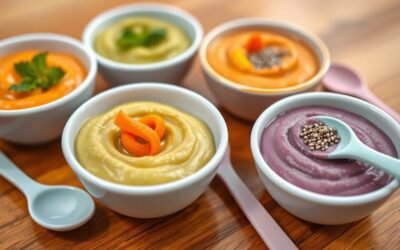
When choosing between homemade and store-bought baby food, consider factors like cost, nutrition, and convenience. Homemade options often use fresh, nutrient-dense ingredients and allow for customization to suit your baby’s needs, while store-bought food offers ready-to-eat convenience with portable packaging. However, some commercial products may contain added sugars and preservatives. Balancing both options can cater to your busy lifestyle and your child’s dietary preferences. Explore the key differences further to make the best choice for your little one.
Key Takeaways
- Homemade baby food is typically more cost-effective, utilizing ingredients already available at home, while store-bought options are often pricier due to packaging.
- Nutritionally, homemade baby food can be fresher and free from added sugars and preservatives, while some commercial products may contain harmful substances.
- Homemade baby food allows for greater customization of flavors and textures, catering to specific dietary needs, unlike the limited variety of store-bought options.
- Gradual texture introduction is easier with homemade food, enabling parents to tailor the progression based on their baby’s readiness and preferences.
- Monitoring for allergies is facilitated by homemade purees, allowing parents to introduce single ingredients and track reactions effectively over time.
How to Choose Between Homemade and Store-Bought Baby Food

When deciding between homemade and store-bought baby food, what factors should you consider?
First, conduct a cost analysis; homemade baby food can be considerably cheaper, allowing you to use ingredients you already have.
Next, perform a nutritional comparison. Store-bought options often contain added sugars and sodium, while homemade food can be fresher and more nutrient-dense.
Store-bought baby food may have added sugars and sodium, while homemade options can offer fresher, nutrient-dense alternatives.
Safety is another essential factor; commercial products undergo rigorous testing, while homemade choices depend on proper handling.
Finally, think about customization. Homemade baby food lets you tailor flavors and textures to match your baby’s unique preferences and dietary needs, which may not be possible with store-bought options.
Balancing these factors helps you make an informed decision that aligns with your values.
Convenience: Why Many Parents Prefer Store-Bought Baby Food
When it comes to feeding your baby, store-bought options offer significant convenience for busy parents.
With ready-to-eat meals that require no preparation, you can save time while ensuring your child enjoys a variety of flavors and textures.
Additionally, these products undergo strict safety testing, giving you confidence in their quality and suitability for your little one.
Time-Saving Meal Solutions
Given the hectic schedules many parents face, store-bought baby food presents a practical solution that saves valuable time.
These ready-to-eat meals require no preparation, allowing you to focus on other aspects of your day. With single-serving jars or pouches, meal planning becomes straightforward, perfect for on-the-go feeding situations.
The long shelf life of unopened store-bought baby food—often exceeding one year—enables you to stock up, easing time management concerns.
Additionally, the rigorous safety testing guarantees these products are free from harmful microorganisms, giving you peace of mind about your child’s safety.
The variety of flavors and textures also supports your infant’s exploration of new tastes, making feeding both convenient and enjoyable.
Easy Travel and Storage
Although many parents appreciate the benefits of homemade baby food, the convenience of store-bought options often makes them the preferred choice for travel and storage.
Here are a few reasons why:
- Travel Convenience: Store-bought baby food comes in portable jars or pouches, perfect for busy parents on the go.
- Long Shelf Life: Unlike homemade varieties, commercial baby foods last longer, allowing you to stock up without worrying about spoilage.
- No Prep Needed: With no cooking required, you can quickly serve single portions, reducing food waste and managing feeding times effortlessly.
These storage solutions make store-bought baby food a hassle-free option, letting you focus on enjoying moments with your little one, rather than stressing about meal prep.
Consistent Quality Assurance
While many parents value homemade baby food for its freshness, the consistent quality assurance of store-bought options is a key reason they often choose commercial varieties.
Store-bought baby food undergoes rigorous safety testing, ensuring it’s free from harmful microorganisms, which offers peace of mind about your child’s health. Additionally, reputable brands maintain strict quality control, guaranteeing nutritional consistency and a reliable texture and flavor across batches.
Many commercial options are fortified with essential vitamins and minerals, catering to the dietary needs of growing infants. With a longer shelf life, unopened jars can last over a year, making it easy for busy parents to stock up.
This convenience, combined with quality assurance, makes store-bought baby food a practical choice.
The Benefits of Homemade Baby Food for Your Child
When you choose to make homemade baby food, you’re not just providing fresher ingredients; you’re also ensuring that your child’s meals are free from preservatives and added sugars.
This approach offers numerous nutritional advantages and allows you to control the preparation techniques used.
Here are three key benefits:
- Customization: You can tailor recipes to meet your child’s specific dietary needs and preferences.
- Variety: Introducing diverse flavors and textures early on promotes healthy eating habits.
- Cost-effectiveness: Utilizing ingredients already in your home can lead to significant savings.
Ingredient Transparency: What to Look for in Baby Foods
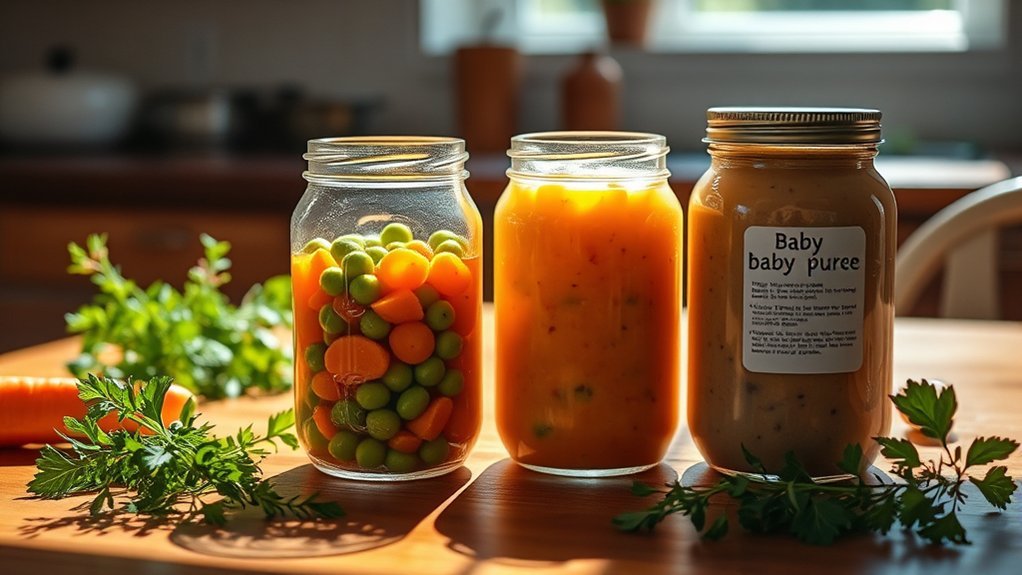
Understanding the ingredients in baby food is essential for ensuring your child receives the best nutrition possible. When you choose homemade baby food, you control ingredient sourcing, avoiding preservatives, artificial colors, and added sugars. This means you can use organic produce, minimizing pesticide exposure.
In contrast, store-bought options often contain added sugars, with some brands showing up to 13 grams per serving. It’s vital to read labels carefully; some may contain heavy metals that exceed safety limits.
While some commercial products boast fortified nutrients, be wary of marketing claims that mightn’t accurately reflect their nutritional benefits. By prioritizing ingredient transparency, you empower yourself to make informed decisions for your child’s health.
Safety Risks in Store-Bought Baby Food?
How safe is store-bought baby food for your little one? While many products undergo rigorous testing, some have been found to contain heavy metals, which can be alarming. Here are a few concerns to take into account:
Store-bought baby food may contain heavy metals, raising safety concerns for your little one’s health.
- Heavy Metals: Some infant rice cereals contain arsenic levels averaging 1.44 micrograms per serving, exceeding recommended limits.
- Lead Exposure: The American Academy of Pediatrics warns about potential lead in baby food, urging careful selection.
- Added Sugars and Preservatives: Even if free from harmful microorganisms, many commercial options include additives detrimental to infant health.
To mitigate these risks, opt for organic products and check for safety certifications on labels. Your baby’s health deserves the utmost care and attention.
Balancing Homemade and Store-Bought Baby Food
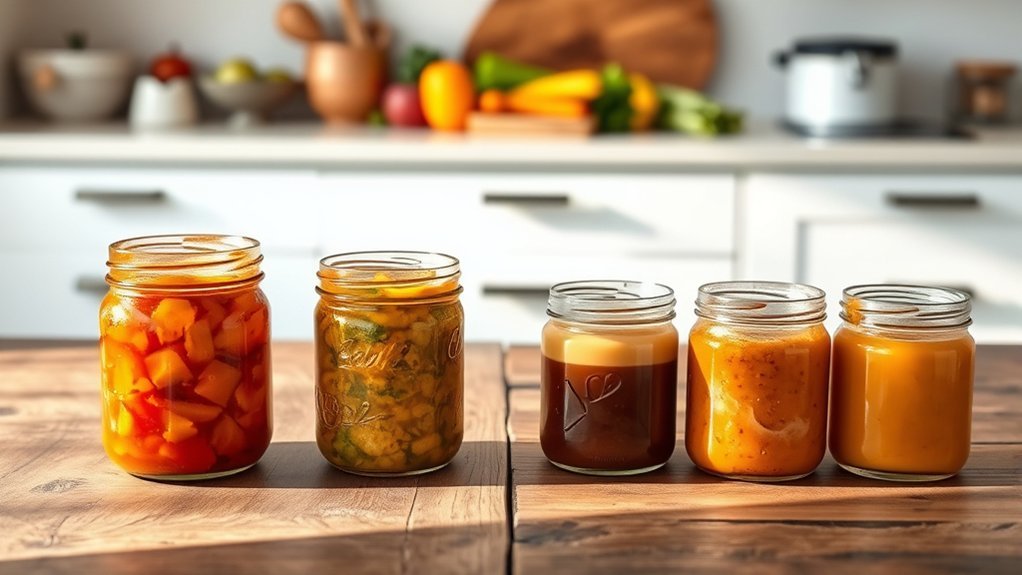
Balancing homemade and store-bought baby food can create a practical approach to feeding your little one. Many parents find that combining both options helps them maintain nutritional value while introducing flavor variety.
By batch cooking homemade baby food on weekends, you can prepare multiple meals in advance, simplifying meal prep during the busy week. Simple, single-ingredient purees can be easily enhanced with store-bought blends, allowing you to introduce new flavors without the time commitment.
This flexible approach reduces stress during feeding times, accommodating your busy schedule while still prioritizing your baby’s nutrition. Ultimately, finding a balance that suits your family’s unique needs guarantees you enjoy both the emotional rewards of cooking and the convenience of ready-to-eat options.
Tips for Successfully Transitioning Your Baby to Solid Foods
When shifting your baby to solid foods, it’s crucial to recognize signs of readiness, like sitting up independently and showing interest in food.
Gradually introduce different textures to help your baby adapt, as this can encourage acceptance of a variety of foods.
Always monitor your baby’s reactions to new foods to identify any potential allergies or sensitivities.
Recognizing Readiness Signs
Recognizing the right moment to introduce solid foods can greatly ease your baby’s change. Look for these readiness signs to guarantee a smooth shift into baby led weaning and achieve feeding milestones:
- Sitting Up: Your baby can sit unassisted, showing they’re ready for solid foods.
- Interest in Food: They watch you eat and reach for your food, indicating curiosity.
- Loss of Tongue-Thrust Reflex: By around 6 months, they stop pushing food out with their tongue.
Once you notice these signs, start with single-ingredient purees to monitor for allergies.
Remember, patience is key; it might take 8-10 tries for your baby to accept new flavors.
Embrace this journey of exploration and healthy eating habits!
Gradual Texture Introduction
As your baby becomes more comfortable with solid foods, gradually introducing different textures is essential for their development.
Start with smooth purees around six months and move to thicker textures as they reach feeding milestones like sitting up independently and showing interest in food. Pediatricians recommend offering single-ingredient foods first to monitor for allergies before combining flavors and textures.
This texture progression allows your baby to explore new foods at their own pace, which may take 8-10 tries for them to accept something new. Homemade baby food can simplify this shift, letting you customize the texture easily.
Meanwhile, store-bought options often come in stages designed for developmental readiness, providing another helpful resource in this journey.
Monitoring Reactions to Foods
Monitoring your baby’s reactions to new foods is essential for a safe and successful shift to solids. Here are three key tips to help you through this process:
- Allergy Monitoring: After introducing a new food, observe your baby for any signs of an allergic reaction, such as rashes or gastrointestinal upset, for at least 24 hours.
- Keep a Food Diary: Document everything your baby eats, noting their reactions and preferences. This will help you identify any problematic foods.
- Take Your Time: Space out new foods by 3-5 days. This allows you to pinpoint any adverse reactions and encourages gradual acceptance.
Frequently Asked Questions
Can Homemade Baby Food Be Frozen for Later Use?
Yes, you can freeze homemade baby food for later use. Use proper freezing techniques, like filling storage containers with cooled food, ensuring they’re airtight to maintain quality. Thaw in the fridge before serving to your baby.
How Can I Ensure Homemade Baby Food Is Safe for My Baby?
To guarantee homemade baby food is safe, always wash fruits and veggies thoroughly, like Sarah does for her baby. Proper storage and cooking methods enhance baby food safety while maximizing homemade nutrition for your little one.
What Equipment Do I Need to Make Homemade Baby Food?
To make homemade baby food, you’ll need a blender for smooth textures, a steamer for cooking, and storage containers to keep portions fresh. Mastering blending techniques guarantees your baby enjoys nutritious, safe meals tailored just for them.
Are There Specific Foods to Avoid in Homemade Baby Food?
When it comes to homemade baby food, steer clear of toxic ingredients and allergenic foods like honey, nuts, and dairy. It’s better to play it safe than sorry for your little one’s health.
How Do I Transition From Purees to Solid Foods Effectively?
To shift from purees to solid foods, start by gradually introducing textured foods, aligning with baby food progression. Offer soft, mashed options first, then move to small, manageable pieces to encourage self-feeding and exploration.
Conclusion
Ultimately, whether you choose homemade or store-bought baby food, both options have their unique advantages. Homemade baby food allows for freshness and customization, while store-bought offers convenience and consistency. By understanding the benefits and risks of each, you can make informed decisions that align with your family’s needs. Remember, it’s about providing the best nutrition for your little one, embracing the journey, and finding a balance that works for you. Your baby’s health and happiness are what truly matter.