
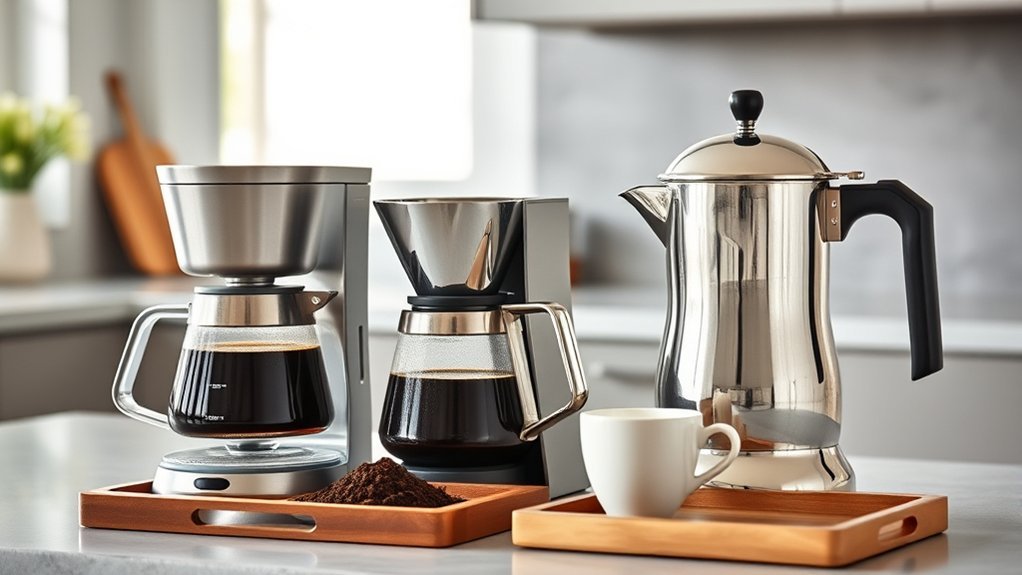
When comparing drip coffee makers and percolators, you’ll find notable differences in brewing methods, flavor profiles, and user experience. Drip coffee makers offer a convenient, user-friendly process that highlights subtler flavors, while percolators create bold, robust brews through multiple cycles of boiling water. Drip machines are easier to clean and require less attention during brewing, whereas percolators demand more effort and monitoring. Whether you prefer convenience or a hands-on approach affects your choice, and there’s much more to explore.
Key Takeaways
- Drip coffee makers provide a single pass of hot water, producing a cleaner cup with nuanced flavors, while percolators cycle water for bold, intense coffee.
- Brewing efficiency favors drip coffee makers, which are user-friendly and programmable, making them ideal for busy lifestyles.
- Percolators require more attention and manual control, allowing users to influence strength and flavor but risk over-extraction if not monitored.
- Drip coffee offers a balanced, smoother flavor, while percolator coffee delivers a fuller body and richer aroma due to enhanced oil extraction.
- Cleaning drip coffee makers is simpler and often dishwasher-safe, whereas percolators involve more effort for thorough maintenance.
Understanding Coffee Brewing Methods: Percolator vs. Drip Coffee
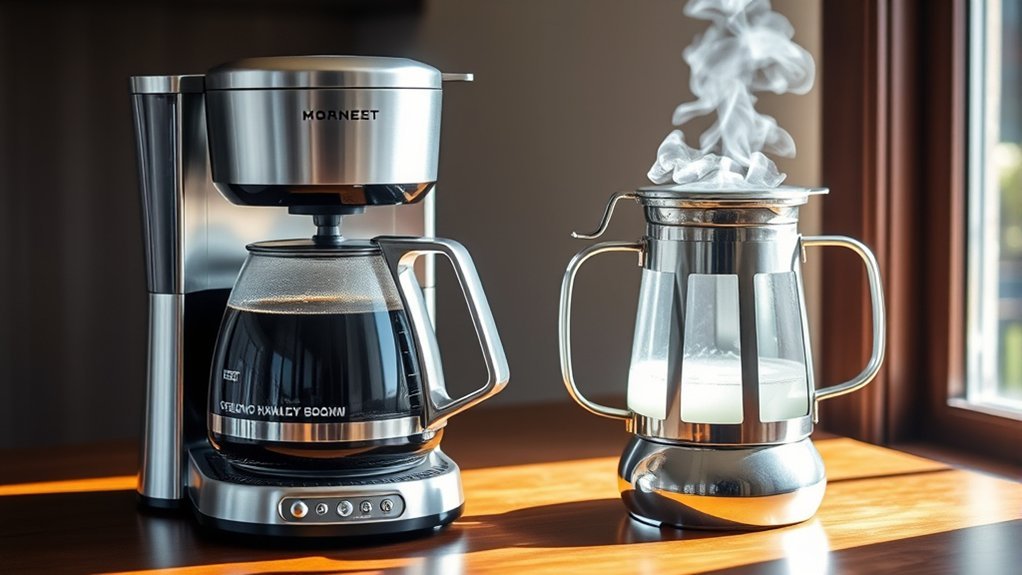
When you explore coffee brewing methods, understanding the differences between percolators and drip coffee makers is essential.
Percolators utilize a unique brewing technique that cycles boiling water through coffee grounds multiple times, often leading to more robust flavors. However, this method can result in over-extraction, which may create harsher tastes if not closely monitored.
Percolators cycle boiling water through coffee grounds, creating robust flavors but risking over-extraction and harsher tastes if not monitored.
In contrast, drip coffee makers offer a single pass of hot water, providing a more consistent and controlled coffee extraction. They typically use paper filters, producing a cleaner cup while highlighting nuanced flavors, especially in single-origin beans.
If you prefer a punchier brew, percolators might appeal to you, while drip coffee makers cater to those seeking a delicate, refined experience.
How Drip Coffee Makers Work
A drip coffee maker functions by heating water in a reservoir and evenly distributing it over coffee grounds nestled in a filter basket. The hot water seeps through the coffee grind, extracting flavors and aromas, then drips into a carafe below.
This method typically results in a smooth and clean flavor profile, enhanced by the use of paper filters that retain oils and sediments. Most modern machines allow you to set a brewing time in advance, adding convenience to your routine.
Additionally, a warming plate keeps your brewed coffee at an ideal temperature for 1 to 2 hours, ensuring you enjoy each cup at the right brewing temperature. This combination of features makes drip coffee makers a popular choice for coffee lovers.
How Percolators Brew Coffee

Percolators brew coffee through a unique cycling method that involves repeatedly forcing boiling water over coffee grounds.
The percolator mechanics start with heating water in the bottom chamber, which rises through a central tube and pours over the coffee grounds in the upper chamber. This water then returns to the bottom, creating a continuous cycle until the desired strength is achieved.
Typically, this brewing technique results in a strong, bold flavor due to the repeated extraction of oils and compounds from the grounds. Brewing time usually lasts 8 to 10 minutes, so careful monitoring is essential to avoid over-extraction, which can lead to bitterness.
Significantly, percolator coffee lacks paper filters, enhancing its rich and full-bodied mouthfeel.
Benefits of Drip Coffee Makers for Convenience
Though many coffee enthusiasts appreciate the robust flavor of percolated coffee, drip coffee makers offer a range of benefits that prioritize convenience for everyday use.
With user-friendly features like one-button operation, you can brew coffee quickly and effortlessly, making them perfect for busy mornings. Many models also come with programmable settings, allowing you to set a brewing schedule in advance, which is a great time-saving option.
The automatic brewing process guarantees consistent flavor and strength with minimal intervention, so you’ll always get a great cup. Additionally, drip coffee makers often accommodate larger capacities, brewing multiple cups at once, which is ideal for families or offices.
Their “keep warm” function also maintains your coffee at an ideal temperature for hours.
Key Drawbacks of Using Percolators

While drip coffee makers excel in convenience, percolators come with notable drawbacks that can impact your coffee experience.
One major issue is the brewing challenges associated with percolators, which often risk over-extraction. This can lead to harsher, more bitter flavors, compromising flavor consistency.
Brewing with percolators can lead to over-extraction, resulting in bitter flavors and inconsistent taste.
Additionally, inconsistent brewing temperatures in percolators may accentuate undesirable sour notes, further detracting from the overall taste.
The brewing process itself tends to be time-consuming, requiring careful monitoring to achieve your desired strength. Limited control over brewing time also hinders your ability to customize coffee strength, making it less versatile for different preferences.
Finally, without paper filters, coffee oils and sediments remain in the brew, which may not appeal to those seeking a cleaner taste.
Flavor Profiles of Coffee Brewing Methods: Percolator vs. Drip Coffee
When comparing the flavor profiles of percolated and drip coffee, you’ll notice distinct differences that cater to varying preferences.
Percolator coffee delivers a strong, bold flavor intensity, thanks to its repeated cycling of boiling water through the grounds. This method extracts more oils and aromatics, resulting in a fuller body and rich mouthfeel. However, the high brewing temperature can lead to over-extraction, creating bitter notes.
In contrast, drip coffee offers a smoother, balanced flavor with subtler nuances, brewed at a lower temperature. Its filtered process results in a cleaner cup that highlights delicate taste characteristics.
While percolated coffee boasts a nostalgic aroma richness, drip coffee presents a straightforward aromatic experience, appealing to those who prefer nuanced flavors.
How to Choose Between Percolator and Drip Coffee Makers?
How do you decide between a percolator and a drip coffee maker for your brewing needs?
If you crave strong, bold coffee with rich flavors, a percolator might be your best bet. It cycles boiling water through the grounds multiple times, resulting in a robust cup.
However, if convenience and consistency are more important, a drip coffee maker automates the process and delivers a clean, smooth taste, ideal for busy lifestyles.
Consider brewing capacity as well; percolators typically brew smaller amounts, while drip coffee makers excel in larger volumes.
If you value hands-on brewing experiences, choose a percolator. On the other hand, if you appreciate nuanced flavors in single-origin beans, a drip coffee maker is likely a better fit for your coffee culture.
Conclusion: Finding Your Perfect Coffee Brewing Method
Choosing between a drip coffee maker and a percolator hinges on your personal taste preferences and brewing convenience.
If you prioritize a bold flavor and hands-on experience, a percolator might suit you better.
However, if you value quick, consistent results, a drip coffee maker could be the perfect fit for your lifestyle.
Personal Taste Preferences
Personal taste plays an essential role in determining whether you prefer a drip coffee maker or a percolator. If your coffee preferences lean towards a smoother, nuanced flavor, you might find drip coffee makers more appealing. Their use of paper filters preserves delicate notes, resulting in a cleaner cup.
On the other hand, if you crave a bold and robust experience, percolators could be your go-to. The continuous cycling of water over grounds leads to a stronger brew, enhancing the richness of the coffee oils.
Additionally, hands-on brewing enthusiasts often enjoy the nostalgic process of using a percolator, while those prioritizing convenience favor the consistency of drip machines. Experimenting with both methods can refine your brewing experiences and help you discover your ideal coffee.
Brewing Convenience Factors
While both drip coffee makers and percolators have their unique advantages, the choice often comes down to convenience and your daily routine. Drip coffee makers excel in brewing efficiency, offering one-button operation and programmable features that cater to busy lifestyles. On the other hand, percolators provide a hands-on brewing experience, allowing you to control strength and flavor but requiring more attention.
| Feature | Drip Coffee Maker | Percolator |
|---|---|---|
| Brewing Efficiency | High | Moderate |
| User Experience | Easy, programmable | Manual, hands-on |
| Cleaning | Simple, dishwasher-safe | Thorough, multi-tiered |
| Flavor Profile | Consistent, mild | Bold, robust |
Choose based on your preference for efficiency or engagement in the brewing process.
Coffee Strength Considerations
When it comes to coffee strength, the brewing method greatly influences the final result in your cup.
Percolators tend to produce a bolder flavor profile, cycling boiling water through coffee grounds multiple times, which enhances coffee intensity. This method can lead to over-extraction if you’re not careful, especially since brewing temperature approaches boiling.
On the other hand, drip coffee makers offer a smoother cup, making them ideal for lighter roasts or single-origin beans. The consistent temperature just below boiling allows for peak flavor extraction, resulting in a cleaner taste.
Ultimately, your choice depends on your preferences for coffee strength and flavor, as well as how involved you want to be in the brewing duration.
Frequently Asked Questions
Can I Use the Same Coffee Grounds for Both Methods?
You can’t use the same coffee grounds for both methods effectively. Different brewing efficiencies lead to varying extraction levels. For ideal coffee freshness, using fresh grounds tailored to each method yields the best flavor.
How Long Does It Take to Brew Coffee With Each Method?
If you’ve got all day, a percolator takes about 10-15 minutes, while a drip coffee maker brews in 5-10 minutes. For brewing efficiency and flavor extraction, the drip method’s quicker—no one’s got time to wait!
Are Percolators More Difficult to Clean Than Drip Coffee Makers?
Yes, percolators can be more difficult to clean than drip coffee makers due to their multiple parts. For easier maintenance, follow cleaning tips like disassembling components and using vinegar to remove stubborn residue.
What Grind Size Is Best for Each Brewing Method?
For drip coffee makers, a medium grind size boosts brewing efficiency, while percolators benefit from a coarser grind. Using the right grind size enhances extraction, ensuring you enjoy a flavorful cup without excessive bitterness.
Can I Brew Tea Using a Percolator or Drip Coffee Maker?
You can brew tea using a percolator or drip coffee maker. While percolators offer benefits like enhanced flavor extraction, drip makers provide convenience. Just adjust the brew time to avoid over-extraction and bitterness in your tea.
Conclusion
In the quest for your ideal cup of coffee, both drip coffee makers and percolators offer unique advantages and flavor profiles. While drip machines shine in convenience, percolators can deliver a bolder brew. Ultimately, the choice depends on your taste preferences and lifestyle. Like two sides of a coin, each method presents a distinct experience. Embrace the journey of exploration, and you’ll soon discover the brewing method that truly resonates with your palate.