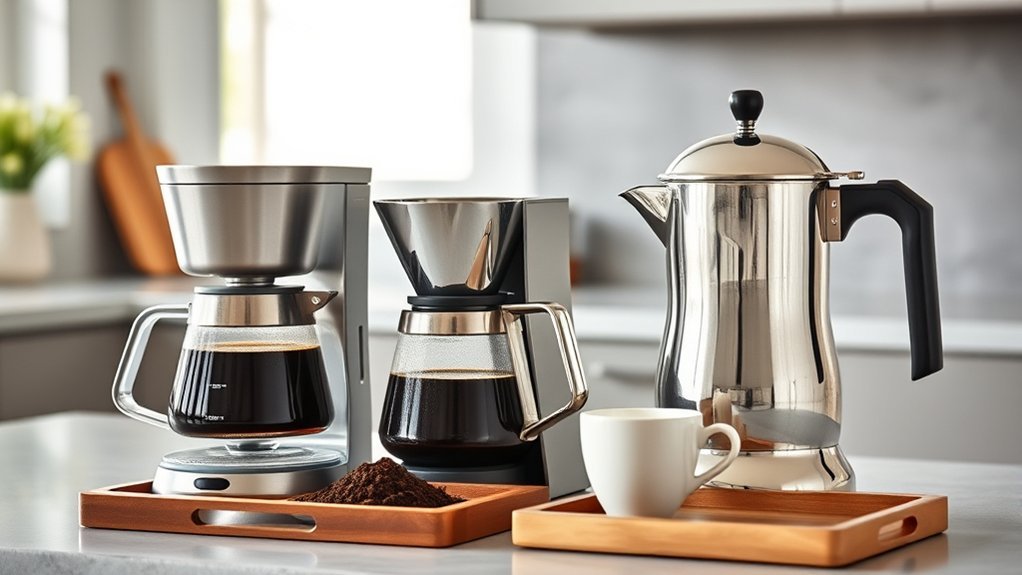
Drip coffee makers and percolators can both produce a satisfying pot of coffee, but they do it in very different ways. A drip brewer passes heated water through the grounds once, while a percolator repeatedly circulates water through its basket. That difference affects flavor, sediment, convenience, monitoring, and how easily you can control the final cup.
Quick Answer
Choose a drip coffee maker for easy operation, consistent brewing, programmable features, and a cleaner-tasting cup. Choose a percolator for a fuller-bodied, more intense brew and a traditional hands-on process. Neither method is automatically better; the right choice depends on your preferred flavor, filter type, capacity, and daily routine.
Key Takeaways
- Drip coffee makers pass heated water through the grounds once, while percolators circulate water through the basket repeatedly.
- Paper-filtered drip coffee usually has less sediment and a lighter body than coffee brewed through a metal percolator basket.
- Drip machines generally require less monitoring and may include timers, automatic shutoff, thermal carafes, or warming plates.
- Percolators can make excellent strong-tasting coffee, but excessive cycling, fine grounds, or extended heating may create bitterness.
- Capacity, brew speed, cleaning instructions, and filter compatibility vary by model, so compare manuals rather than relying only on brewer type.
Drip Coffee Maker vs. Percolator at a Glance
| Feature | Drip Coffee Maker | Percolator |
|---|---|---|
| Brewing action | Water passes through the grounds and filter into a carafe. | Heated water rises through a tube and repeatedly flows over the grounds. |
| Typical cup character | Clearer, smoother, and easier to fine-tune for delicate flavors. | Fuller-bodied and intense, with a greater chance of sediment or bitterness. |
| Best starting grind | Medium | Medium-coarse or percolator grind, unless the manual says otherwise |
| Attention required | Usually low after setup | Low for automatic electric models; higher for stovetop models |
| Filters | Paper or reusable metal, depending on the basket | Usually a metal basket; some models accept wraparound paper filters |
| Convenience features | Timers, brew-strength controls, auto shutoff, thermal carafes, and warming plates are widely available. | Electric models may stop perking automatically and switch to a keep-warm mode. |
| Portability | Normally requires electricity. | Stovetop models can work on a compatible camp stove or kitchen burner. |
Understanding Percolator and Drip Brewing Methods
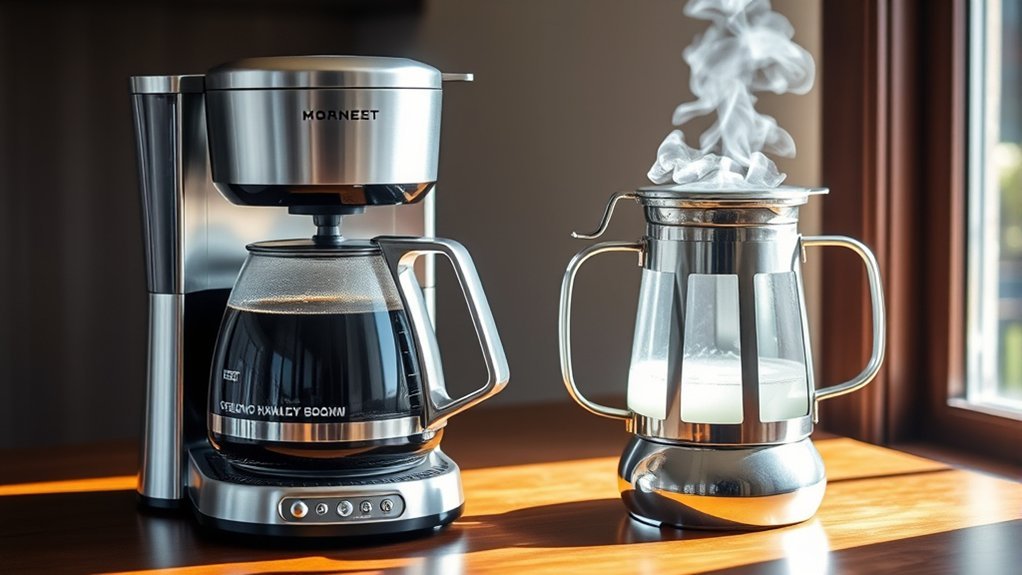
A drip coffee maker and a percolator both combine water and ground coffee, but the route the water takes is different.
In a drip brewer, heated water is distributed over coffee grounds held in a filter basket. The brewed liquid passes through the filter once and flows into a glass or thermal carafe. Paper filters capture much of the fine sediment and some coffee oils, while reusable metal filters allow more oils and fine particles into the cup.
A percolator heats water in a lower chamber. Pressure from the heated water pushes it up a central tube and over coffee grounds in an upper basket. The brewed liquid returns to the lower chamber and may repeat this cycle until the appliance stops perking or you remove a stovetop model from the heat.
A drip brewer extracts coffee during one main pass through the grounds; a percolator repeatedly circulates brewed liquid through its basket.
The repeated percolation process can produce a dark, full-bodied cup. It can also extract harsh flavors when the coffee is too finely ground, the cycle runs too long, or the finished coffee remains on high heat.
How Drip Coffee Makers Work
An automatic drip coffee maker heats water from its reservoir and sends it through a tube to a spray head or water outlet above the filter basket. The water wets the grounds, dissolves soluble flavor compounds, passes through the filter, and drips into the carafe.
High-performing automatic brewers commonly target water temperatures near the Specialty Coffee Association’s established brewing range. Current SCA-certified equipment includes machines designed to heat water to approximately 197–205°F. Actual temperature stability and water distribution still depend on the machine.
Many modern drip coffee makers include convenience features such as:
- Programmable start times
- Automatic shutoff
- Adjustable brew-strength settings
- Pause-and-pour valves
- Small-batch modes
- Glass carafes with warming plates
- Insulated thermal carafes
These features are not universal. A warming plate may shut off after a set period, remain manually controlled, or be absent when the brewer uses a thermal carafe. For example, the BUNN Heat N’ Brew shuts its warmer off after two hours, but other models operate differently.
Note: Coffee left on a hot plate may gradually taste flat, cooked, or bitter. A thermal carafe can hold heat without continuously heating the brewed coffee from below.
How Percolators Brew Coffee

A percolator consists of a lower water chamber, a vertical perk tube, and an upper basket for ground coffee. As the water heats, it rises through the tube and spreads over the grounds. The brewed liquid then falls back into the pot.
There are two main types:
Electric Percolators
Electric percolators control the heat with a built-in element. Many automatically reduce the heat or signal when the coffee is ready. Current models vary in capacity and speed. One Presto percolator, for example, brews from 2 to 12 nominal cups and is advertised at about one cup per minute. Its manufacturer defines a cup as approximately 5 ounces, which is smaller than a typical household mug.
Stovetop Percolators
Stovetop percolators require more attention because you control the burner. Once perking begins, the heat should generally be reduced enough to maintain a gentle cycle rather than aggressive boiling. Remove the pot from the heat when the desired strength is reached.
A clear knob on the lid of many stovetop models lets you observe the color and pace of the brew. The method can work well during camping or a power outage when you have a safe, compatible heat source.
Warning: Percolators, carafes, baskets, grounds, and brewed coffee can remain hot enough to cause burns. Secure the lid before brewing, keep cords away from counter edges, and never immerse an electrical base or other non-submersible components. Follow the safety directions in your model’s manual.
Benefits of Drip Coffee Makers for Convenience
A drip coffee maker is usually the easier choice when you want to load the basket, press a button, and continue with your morning. Automatic operation reduces the need to judge the perking rate or remove the brewer from a stove at the correct moment.
Drip machines are especially practical when you value:
- Repeatability: The machine controls the basic water-delivery cycle.
- Programmability: Some models can begin brewing at a scheduled time.
- Batch brewing: Household machines are available in a wide range of capacities.
- Cleaner filtration: Paper filters can reduce fine sediment and some coffee oils.
- Easy disposal: A paper filter and its grounds can often be lifted from the basket together.
- Thermal storage: Some models brew directly into an insulated carafe.
The main tradeoff is that convenience does not guarantee excellent extraction. A low-quality drip machine may distribute water unevenly, brew too cool, or send water through the basket too quickly. Brewer design, grind quality, coffee freshness, water, and recipe still matter.
Key Drawbacks and Common Brewing Problems

Drip Coffee Maker Drawbacks
- Uneven wetting: A small water outlet may leave dry areas in the coffee bed.
- Cool brewing water: Some machines may not reach or maintain an effective extraction temperature.
- Hot-plate flavor: Coffee can taste stale or cooked after extended warming.
- Scale buildup: Mineral deposits may slow water flow, lengthen brew time, or cause off flavors.
- Paper-filter waste: Disposable filters create recurring waste and cost, although compostable options may be available.
Percolator Drawbacks
- Bitterness: Repeated circulation can over-extract the coffee when the cycle continues too long.
- Sediment: Fine grounds can pass through a metal basket or clog its holes.
- More parts to wash: The basket, basket lid, tube, pot, and lid need regular cleaning.
- Heat management: Stovetop models require close attention once perking begins.
- Flavor loss during warming: Keeping the finished brew very hot can flatten aromas and intensify harsh flavors.
Most disappointing percolator coffee comes from excessive heat, excessive cycling, or grounds fine enough to pass through the basket.
Flavor Profiles: Percolator vs. Drip Coffee
Drip coffee is often described as smoother or clearer because the water passes through the grounds once and a paper filter removes much of the visible sediment. This can make acidity, sweetness, fruit, floral notes, and roast character easier to distinguish.
A metal-filtered percolator allows more suspended particles and oils into the cup, which can create a heavier mouthfeel. Repeated extraction can also make roast, bitter, and smoky flavors more noticeable.
Filter choice matters as much as the appliance category. A drip machine with a reusable metal filter may produce more body than one using paper. Likewise, some percolators accept wraparound paper filters that help reduce sediment. The current Presto 12-cup percolator, for example, lists compatible wraparound filters.
Roast level also changes the result. Light and medium roasts often benefit from the controlled extraction and clean filtration of a good drip machine. Medium-dark and dark roasts can provide the strong, familiar profile many people expect from a percolator, although any roast may become bitter when brewed too aggressively.
Grind Size, Coffee Ratio, and Brew Time
Your recipe often affects the cup more than the brewer label. Start with a sensible grind and coffee-to-water ratio, then make one adjustment at a time.
Starting Settings for Drip Coffee
- Grind: Medium
- Ratio: About 1 gram of coffee for every 16–18 grams of water
- Industry reference: The Specialty Coffee Association discusses 60 grams of coffee per liter of water, or approximately 1:16.7, as a common filter-coffee brewing ratio.
- Brew time: Follow the machine’s stated full-carafe time rather than assuming every drip brewer operates at the same speed.
Starting Settings for Percolator Coffee
- Grind: Medium-coarse or a labeled percolator grind
- Ratio: Begin near 1:16 to 1:18, then compare that result with the manufacturer’s coffee chart.
- Brew time: Use the ready light on an automatic electric model or monitor a stovetop model closely once it starts perking.
- Filter: Use the basket and any paper filter approved for the specific model.
Pro Tip: If the coffee tastes bitter, first use a slightly coarser grind or shorten the perking cycle. If it tastes weak, add a little more coffee before grinding finer, because very fine grounds can increase sediment and clogging.
Does a Percolator Make Stronger Coffee?
A percolator often makes coffee that tastes stronger because it has a heavier body and more noticeable roast and bitter flavors. That does not automatically mean every serving contains more caffeine.
Caffeine depends on several variables:
- The amount of ground coffee used
- The coffee variety and roast
- The volume of the finished serving
- The extraction time and temperature
- How much water remains in the grounds
A large mug of moderately brewed drip coffee may contain more total caffeine than a smaller cup of intense percolator coffee. Compare equal serving sizes and equal coffee doses before attributing a caffeine difference to the brewer alone.
Paper Filters, Coffee Oils, and Sediment
A paper filter usually produces the clearest cup because it catches fine particles and retains some lipid-based coffee compounds. Peer-reviewed research has examined how paper filters retain cafestol and how filter construction affects the amount that reaches brewed coffee.
This is a filter comparison rather than a simple drip-versus-percolator rule:
- A paper-filtered drip machine usually produces little visible sediment.
- A reusable metal drip filter allows more oils and fine particles through.
- A metal percolator basket may leave more sediment in the pot.
- A compatible wraparound paper filter can make percolator coffee clearer.
Note: People who have been advised to limit unfiltered coffee should discuss their intake with a qualified healthcare professional. The amount of coffee oils in a cup depends on the filter and brewing setup, not merely the appliance name.
Cleaning and Maintenance
Neither brewing method is maintenance-free. Coffee oils can become rancid, while mineral deposits may restrict water flow and affect temperature or brewing time.
Cleaning a Drip Coffee Maker
- Discard the grounds and filter after brewing.
- Wash the carafe, lid, and removable basket after use.
- Wipe the shower area and warming plate after the machine cools.
- Descale at the interval and with the product recommended by the manufacturer.
- Check the manual before putting removable parts in a dishwasher.
Cleaning a Percolator
- Let the appliance cool before disassembly.
- Wash the basket, basket lid, perk tube, and interior after use.
- Clear grounds from the tube, washer, basket holes, and perk well.
- Keep the electrical connection and non-submersible base dry.
- Use only the deep-cleaning procedure approved for that model.
Do not assume vinegar is approved for every machine. Some manufacturers recommend a specific descaler or a model-specific cleaning cycle. Follow the manual to avoid damaging seals, finishes, valves, heating parts, or warranty coverage.
Troubleshooting Common Coffee Problems
| Problem | Likely Cause | What to Try |
|---|---|---|
| Bitter or harsh coffee | Too much coffee, fine grounds, long contact time, or prolonged heating | Use a coarser grind, shorten the cycle, reduce the dose slightly, or move the coffee to a thermal carafe. |
| Weak coffee | Too little coffee, coarse grounds, poor water distribution, or a blocked percolator tube | Increase the dose, inspect the spray head or perk tube, and confirm that all parts are seated correctly. |
| Sediment in the cup | Grounds are too fine or the metal basket allows fines through. | Use a coarser grind or an approved paper filter. |
| Slow drip brewing | Mineral buildup, blocked water outlets, or an overly fine grind | Clean the removable parts and perform the manufacturer-approved descaling procedure. |
| Basket overflow | Too many grounds, an incorrect filter, fine coffee, or a blocked outlet | Stop the brewer safely, allow it to cool, and verify the filter, dose, grind, and basket placement. |
How to Choose Between a Percolator and Drip Coffee Maker
Personal Taste Preferences
Choose a drip coffee maker when you prefer a smoother cup with low sediment and want to distinguish subtle flavors. A paper-filtered drip machine is especially suitable for light or medium roasts and coffees with fruit, floral, or bright acidity.
Choose a percolator when you enjoy a heavier body, pronounced roast character, and the traditional aroma of coffee perking. A percolator can also suit people who regularly add milk or cream and want the coffee flavor to remain noticeable.
Brewing Convenience Factors
A programmable drip machine is usually the best fit for a busy household because it can prepare a full carafe with little monitoring. A thermal-carafe model is useful when coffee will be served over an extended period.
An electric percolator can also be simple to operate, especially when it has an automatic ready light and keep-warm control. A stovetop percolator is more engaging but requires active heat management.
Coffee Strength Considerations
Do not choose by brewer alone when strength is your main concern. Either method can make weak or strong coffee. Coffee dose, water volume, grind size, filter type, and contact time determine concentration and flavor intensity.
For more strength without excessive bitterness, increase the coffee dose slightly before extending the brew time. Longer perking is not always better because repeated extraction can make the cup harsher rather than pleasantly stronger.
Capacity and Cup Size
Both categories include small and large models. Check the actual water volume instead of relying on the number of “cups” printed on the appliance. A manufacturer’s coffee cup may be about 5 or 6 ounces, while a household mug may hold 10–16 ounces.
A 12-cup appliance therefore may not fill twelve full-size mugs. Compare the reservoir’s ounce or liter capacity with the amount your household actually drinks.
Portability and Power Source
Choose a stovetop percolator when you need a brewer that does not depend on a wall outlet and you have a safe, compatible stove or camp burner. Choose an automatic drip maker or electric percolator when convenience, timers, and indoor counter use matter more than portability.
Frequently Asked Questions
Can I use the same coffee in a drip maker and a percolator?
Yes. You can use the same beans and roast in both brewers. Grind the coffee differently for best results: start with a medium grind for drip brewing and a medium-coarse or labeled percolator grind for most percolators. Follow the appliance manual when it recommends a specific grind.
How long does each method take?
Brew time depends on the appliance, water volume, heating system, and serving capacity. Some fast drip machines finish a carafe in several minutes, while other models take longer. Electric percolators may be rated by the cup, and stovetop models depend on burner output and monitoring. Compare the full-capacity time in the exact manual.
Are percolators harder to clean than drip coffee makers?
Percolators usually have more loose brewing parts, including the basket, basket lid, and perk tube. Drip machines have fewer removable brewing parts but may be harder to clean internally because water travels through enclosed tubes and valves. Both require routine washing and periodic mineral-scale removal.
What grind size is best for each brewing method?
Use medium-ground coffee as a starting point for an automatic drip brewer. Use medium-coarse coffee for many percolators to reduce sediment and slow repeated extraction. Adjust one step at a time: grind coarser when coffee is bitter or muddy, and slightly finer when it is weak despite an adequate dose.
Can I place a paper filter in a percolator?
Some percolators accept specially shaped wraparound paper filters, while others are designed for the metal basket alone. Use only a filter that fits the model and does not obstruct the perk tube or basket lid. Check the manual or manufacturer’s accessory list before adding one.
Which method makes coffee with more caffeine?
Neither method always produces more caffeine. Total caffeine depends on the dose of coffee, bean type, extraction, water volume, and serving size. Percolator coffee may taste stronger because of its body and roast character, but a larger serving of drip coffee may contain more total caffeine.
Can I brew tea in a percolator or drip coffee maker?
Only do so when the manufacturer permits it. Coffee oils and residue can affect the tea’s flavor, and repeated percolation may over-extract some teas. A kettle or dedicated tea brewer gives you better control over water temperature and steeping time.
Is a percolator better for camping?
A stovetop percolator can be practical for camping because it does not require household electricity. Confirm that the pot is compatible with your stove, use it on a stable surface, follow all outdoor fire restrictions, and keep the hot handle and lid away from children and combustible materials.
Conclusion
A drip coffee maker is the stronger all-around choice when you want convenient operation, predictable batches, programmable features, and a cup with less sediment. It is particularly useful for busy mornings, offices, and households that want coffee ready with minimal supervision.
A percolator is worth choosing when you prefer a fuller-bodied, traditional brew or need a stovetop option for camping and other situations without household electricity. It rewards closer attention to grind size, heat, and brewing time.
For either method, use fresh coffee, measure the water and grounds, clean the brewer regularly, and follow the exact appliance manual. Those habits will have a greater effect on coffee quality than choosing one brewer type based on reputation alone.
Sources
- Specialty Coffee Association Certified Equipment — current automatic-brewer performance and temperature context.
- Specialty Coffee Association: Brewing Ratio and Water Principles — 60 g/L and 1:16.7 brewing-ratio reference.
- Presto 12-Cup Stainless Steel Coffee Maker — percolation method, capacity, nominal cup size, speed, and compatible filters.
- BUNN Heat N’ Brew Support — model-specific warming-plate behavior, maintenance, and troubleshooting.
- Rendón et al.: Cafestol Retention by Paper Filters — research on paper filtration and coffee oils.