A coffee maker does not have one single meaningful temperature. Water may be measured at the showerhead, in the wet coffee grounds, as it leaves the brew basket, in the carafe, or in your mug, and each point can give a different reading. For hot filter coffee, about 195°F to 205°F at the coffee bed is a useful benchmark, while the finished drink will normally be cooler.
Quick Answer
For hot filter coffee, about 195°F to 205°F at the wet coffee bed is a useful target. SCA-310 specifies 90°C to 96°C, or about 194°F to 205°F, for compliant home filter brewers. Coffee leaving the basket, sitting in the carafe, or reaching your mug will usually measure cooler.
Key Takeaways
- For SCA-compliant home filter brewers, the wet coffee slurry must reach about 194°F to 205°F and remain in that range during the required part of the brew cycle.
- A practical 195°F to 205°F starting range also works for many manual hot-brewing recipes, but SCA-310 does not cover pour-over, French press, espresso, or pod brewers.
- Measure the wet coffee bed when possible because showerhead, basket-outlet, carafe, and mug readings are not interchangeable.
- Temperature changes extraction speed, but grind size, dose, water ratio, contact time, and agitation also influence flavor.
- Brewing temperature is much hotter than comfortable drinking temperature, so allow freshly brewed coffee to cool before drinking.
At a Glance
| Time Required | About 5–10 minutes to test one brew cycle |
| Difficulty | Easy, if the brew basket can be accessed safely |
| Tools Needed | Fast-response digital thermometer, fresh water, coffee, and your normal filter |
| Cost | No extra cost if you already own a suitable thermometer; otherwise the cost depends on the thermometer |
How Hot Does a Coffee Maker Get?
The most useful temperature for judging extraction is the temperature of the wet coffee grounds, often called the brew slurry. The SCA-310 Home Coffee Brewers Standard specifies a slurry range of 90°C to 96°C, or about 194°F to 205°F, for the home filter brewers covered by the standard.
The requirement is more specific than a simple peak-temperature number. The slurry must enter the 90°C to 96°C range by the time 33% of the fresh-water mass has been sprayed onto the coffee and remain in that range for the rest of the brew cycle.
SCA-310 applies to electrical home filter coffee brewers operating at atmospheric pressure. It does not cover manual pour-over devices, French presses, home espresso machines, pressurized brewers, or pod/capsule brewers, so the standard should not be treated as a universal requirement for every way of making coffee.
| Measurement Point | What the Reading Tells You |
|---|---|
| Showerhead or water outlet | Shows the temperature of the water leaving the machine, but not necessarily the temperature reached by the coffee bed. |
| Wet coffee bed or slurry | The most useful location for judging extraction temperature in a filter brewer. |
| Coffee leaving the brew basket | Usually cooler than the hottest brewing water because heat has already been transferred to the grounds, filter, and basket. |
| Carafe | Useful for judging holding and serving heat, but not for proving the coffee-bed temperature. |
| Mug | Shows the temperature you are about to drink, after additional heat has been lost to the carafe, mug, air, and any milk or other additions. |
A 200°F coffee-bed reading and a much cooler mug reading can both be normal because they measure different stages of the same brew.
Power your essentials anywhere with a 999Wh pure sine wave power station delivering up to 1000W continuous with 2000W surge. It supports fast charging via USB-C PD 60W and USB-A QC 18W, plus simultaneous output for multiple devices through AC, USB, wireless, and car/DC ports. Recharge using AC, car, or solar with a built-in MPPT controller and dual cooling fans, while the upgraded battery management system protects against surges, short circuits, and overheating.

WHAT'S IN THE BOX: One water filter handle, and one filter to help ensure your beverages taste their absolute best.
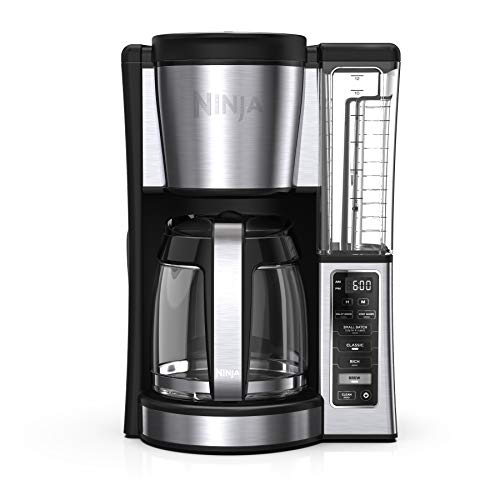
2 BREW STYLES: Classic or Rich, each brew is flavorful and never bitter with custom brew strengths.
How Hot Is Coffee in the Carafe and on the Warming Plate?
Finished coffee is normally cooler than the water used for brewing. Heat is absorbed by the grounds, filter, basket, carafe, mug, and surrounding air before the drink reaches you.
For SCA-310 brewers with a heated holding receptacle, the standard calls for the brewed coffee to remain between 80°C and 85°C, or about 176°F to 185°F, during the first 30 minutes of holding. The heating element should not make the coffee rise above 85°C during that period.
That requirement applies to the coffee being held, not to the surface temperature of the warming plate itself. Warming-plate surface temperatures vary by design, so do not assume the plate is safe to touch or try to judge brewing performance by touching it. Follow the hot-surface warnings in your machine’s manual.
How to Brew Coffee at the Optimal Temperature?
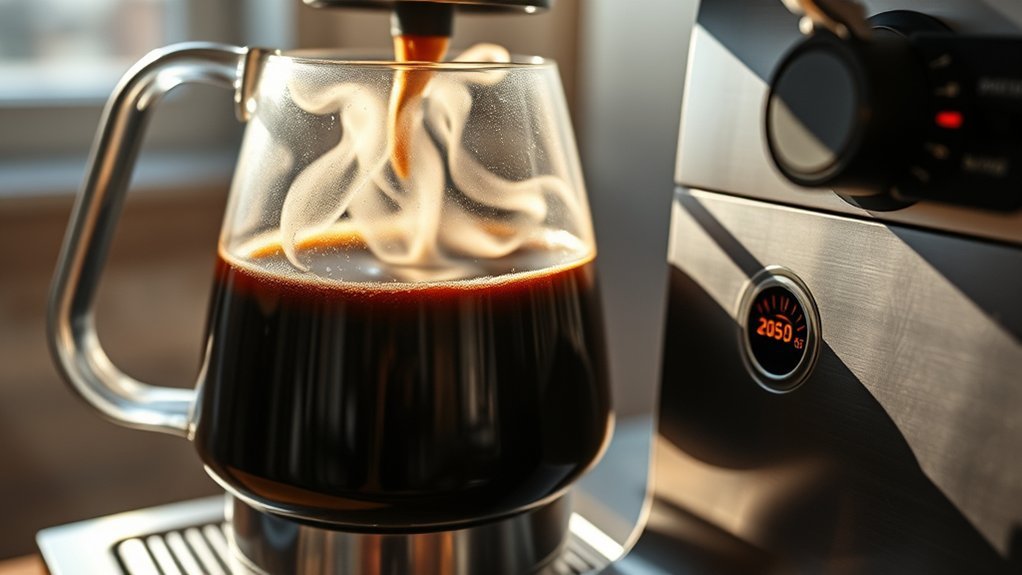
For many hot-brewing recipes, 195°F to 205°F is a useful place to begin. Once you are in a reasonable temperature range, use taste and extraction as your guide instead of changing temperature by itself.
- Preheat the brewer and carafe. Rinse the filter and warm the brewing vessel with hot water when the equipment allows it, then discard the rinse water.
- Use a consistent recipe. Keep the coffee dose, water amount, grind setting, filter, and batch size the same while comparing temperatures.
- Measure the wet coffee bed when it is safe to do so. Position a fast-response thermometer near the center of the slurry without touching the basket or blocking the showerhead.
- Watch the middle and later parts of the brew. The first drops may be cooler because the brewer, basket, grounds, and filter are still warming.
- Adjust one variable at a time. If the coffee is thin or sharply sour, try a finer grind or longer contact time before making a large temperature change. If it is harsh or drying, try a coarser grind, shorter contact time, or less agitation.
Warning: Only measure an operating brewer if its basket can be accessed safely. Do not insert a probe into an enclosed machine, near exposed electrical parts, or anywhere the manufacturer says must remain closed during brewing. Hot water, steam, coffee, and grounds can cause burns.
Pro Tip: Temperature affects how quickly coffee extracts. Before blaming the heater, confirm that your grind size, coffee-to-water ratio, batch size, and brew time are repeatable.
Comparing Brewing Temperatures Across Different Coffee Makers
Brewing temperature varies by machine design, model, serving size, altitude, and measurement point. Brand-wide comparisons can be misleading because one manufacturer may report water at the showerhead while another reports coffee leaving the brew basket.
| Coffee Maker or Category | Verified Temperature Information | How to Interpret It |
|---|---|---|
| SCA-310 home filter brewer | 90°C–96°C, about 194°F–205°F, in the brew slurry | The slurry must reach the range by 33% water delivery and remain there for the rest of the cycle. |
| KitchenAid drip coffee makers | About 192°F leaving the brew basket | KitchenAid’s support guidance says its regular coffee makers use showerhead water in the 197.6°F–204.8°F range and that coffee leaving the basket averages around 192°F. |
| Philips HD7612 | No verified official brew-temperature figure located | This is an older, discontinued model. Do not rely on unsourced legacy temperature figures; use the manual and measure the individual machine if needed. |
| Mueller Ultimate | No current official brew-temperature specification verified | Individual user measurements are not manufacturer specifications. Test your own unit if its serving temperature seems unusually low. |
| SCA-350 semi-automatic or automatic espresso machine | 90.5°C–96°C average brew temperature, about 195°F–205°F | The SCA-350 espresso-machine standard applies this range to the café-grade and competition-grade machine classes covered by that standard. |
Note: Compare two temperature numbers only when you know where and how each was measured. Showerhead water, slurry, brew-basket output, carafe coffee, and serving temperature are different measurements.
Why Brewing Temperature Affects Coffee Flavor
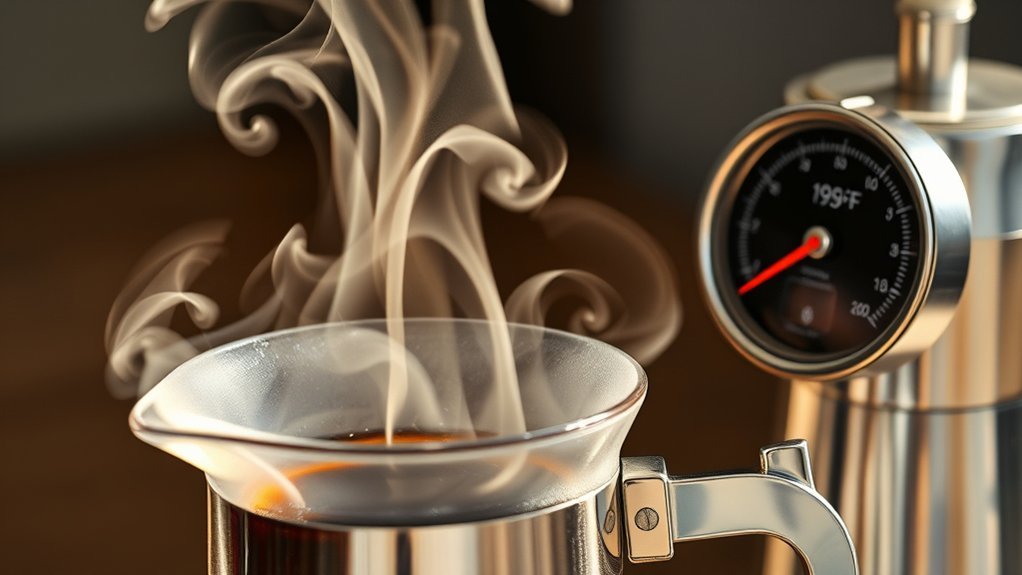
Hotter water generally increases the rate at which soluble compounds move from the coffee grounds into the brew. Temperature therefore affects extraction speed, but it works together with grind size, contact time, agitation, coffee dose, and water amount.
UC Davis Coffee Center research tested drip coffee brewed at 87°C, 90°C, and 93°C. When researchers adjusted grind size and brew time so that brew strength and extraction yield were matched, temperature had little appreciable effect on the sensory profile.
That finding does not mean temperature never matters. It means that over the tested range, similar extraction outcomes could produce similar sensory results even when the starting temperatures differed.
- Temperature changes extraction speed. A hotter brew can reach a given extraction level sooner, while cooler water may need more time, a finer grind, or additional agitation.
- Strength and extraction are different. Strength describes how concentrated the drink is. Extraction describes how much soluble material was removed from the dry coffee.
- Roast level can change your preferred setting. Light roasts are often less soluble and may respond well to more extraction help. Darker roasts are generally easier to extract and may taste cleaner with a cooler recipe.
Consequences of Brewing Coffee Too Hot?
Water above 205°F is outside the SCA-310 slurry range, but 205°F is not a universal flavor or safety cutoff for every brewing method. In manual brewing, water may leave a kettle near boiling and cool quickly as it contacts the dripper, grounds, and surrounding air.
Very hot water combined with a fine grind, long contact time, or heavy agitation can make a recipe extract faster than intended. If the cup tastes harsh, drying, or overly bitter, first check grind size, brew time, and agitation. A temperature reduction of a few degrees can then be used for fine-tuning.
Hot water does not literally burn already-roasted coffee grounds during a normal brew. “Burnt” flavors are more often associated with the roast itself, over-extraction, stale coffee, or coffee that has been held hot for too long.
Warning: Brewing temperature is not a safe drinking temperature. Hot coffee can scald. The International Agency for Research on Cancer defines beverages consumed above 65°C (149°F) as “very hot” and classifies drinking very hot beverages as probably carcinogenic to humans. This concerns the temperature at which you drink the beverage, not the temperature used to brew it.
Consequences of Brewing Coffee Too Cold?

Brewing below 195°F can slow extraction, but it does not automatically ruin coffee. A cooler recipe can still taste balanced when grind size, brew time, agitation, and ratio compensate for the lower temperature.
Weak Flavor Profile
A weak cup has a relatively low concentration of dissolved coffee. Low temperature can contribute when the brew also uses a coarse grind, short contact time, low coffee dose, or poor saturation. Try increasing the dose or grinding finer before making a large temperature change.
Sour Taste Issues
Sharp sourness often accompanies low extraction, although some coffees naturally have bright acidity. To increase extraction, try a finer grind, longer contact time, more even saturation, or slightly hotter water. Change one variable per brew so you can identify what actually improved the cup.
Lack of Aroma
A flat cup can result from stale beans, coffee ground too far in advance, poor water quality, a dirty brewer, or low extraction. Fresh coffee and a clean machine may improve aroma more than a small temperature change.
Measuring Your Coffee Maker’s Brewing Temperature
Use a fast-response digital thermometer with a narrow probe. Check its accuracy according to the manufacturer’s instructions; the USDA thermometer guidance describes ways to check thermometer accuracy.
- Run a plain-water cycle to warm the machine, basket, and carafe only if the manufacturer’s instructions allow it.
- Prepare coffee using your normal dose, grind, filter, and a full or commonly used batch size.
- If the basket is safely accessible during brewing, place the probe near the center of the wet coffee bed without touching the basket or blocking the showerhead.
- Watch the temperature through the middle and later parts of the brew rather than relying on the first drops alone.
- Repeat the test at least twice using the same batch size and warm-up routine.
A carafe reading can help you judge serving heat, but it cannot confirm the temperature of the coffee bed. If the slurry remains well below your machine’s stated range after cleaning and descaling, contact the manufacturer or a qualified repair service.
Note: A home thermometer check is only an approximate diagnostic test. Formal SCA-310 testing uses controlled conditions and a floating array of three thermocouples, so a single handheld probe cannot certify that a brewer meets the standard.
Best Practices for Keeping Your Brewing Temperature Consistent
- Preheat cold equipment: Warm a manual dripper, French press, carafe, or mug before brewing when appropriate.
- Use a repeatable batch size: Some automatic brewers behave differently at very small and full-capacity settings.
- Descale on schedule: Mineral buildup can affect water flow and heat transfer. Follow your machine’s instructions instead of using a one-size-fits-all descaling schedule.
- Keep the showerhead and basket clean: Uneven water flow can create uneven extraction even if the heater is working correctly.
- Use a thermal carafe when practical: It retains heat without relying on continuous hot-plate heating.
- Measure before replacing the machine: A cold mug or carafe can make properly brewed coffee seem cooler than expected.
Adjusting Temperature for Different Brewing Methods
The ranges below are practical starting points rather than universal rules. Your coffee, grinder, water, batch size, equipment, and taste may call for a different setting.
Pour Over Techniques
Start around 195°F to 205°F for many pour-over recipes. Use the upper end when a dense, lightly roasted coffee needs more extraction. Try slightly cooler water when a dark roast tastes smoky, harsh, or drying. Preheating the dripper and server reduces heat loss.
French Press Temperatures
A useful starting point is around 195°F to 205°F, with approximately four minutes as a common initial steep for a traditional recipe. Immersion brewing is flexible, so a cooler temperature can be paired with a longer steep or a different grind. Adjust the grind and steep time along with temperature rather than treating one number as mandatory.
Espresso Brewing Guidelines
A practical espresso starting range is about 195°F to 205°F. The SCA-350 standard for the semi-automatic and automatic espresso machines it covers specifies an average brew temperature from 90.5°C to 96°C. A 20- to 30-second shot remains a useful traditional reference, but dose, beverage yield, brew ratio, flow, and taste provide more information than time alone.
- Preheat the group, portafilter, basket, and cup.
- Use a scale to track both dry coffee dose and beverage yield.
- If the shot is sharply sour and runs fast, try grinding finer before raising the brew temperature.
- If the shot is harsh and runs slowly, try grinding coarser before lowering the temperature.
Pod and Single-Serve Coffee Makers
Many pod and single-serve brewers use fixed temperature controls, and the SCA-310 home filter-brewer standard specifically excludes pod and capsule brewers. Check the manual or manufacturer support page for your exact model rather than assuming it should match an SCA-310 slurry test.
If a pod brewer seems too cool, preheat the mug, use the recommended serving size, clean or descale the machine according to its manual, and compare the result with the manufacturer’s model-specific guidance.
How to Avoid Over-Brewing Your Coffee?
“Over-brewing” can describe two different problems: extracting too much from the grounds during brewing or leaving finished coffee on heat for too long. Control contact time during extraction, then drink the coffee promptly or move it to a thermal carafe.
| Brewing Method | Useful Starting Time | What to Watch |
|---|---|---|
| Automatic drip | Model-dependent; follow the manufacturer’s cycle | Very slow flow, overflow, unexpected cycle changes, or coffee held on a hot plate for too long |
| French press | About 4 minutes as a common starting recipe | Grind size, sediment, and continued contact with the grounds after plunging |
| Pour-over | Often about 2.5–4.5 minutes, depending on recipe and dose | Stalling, channeling, uneven saturation, or excessive agitation |
| Espresso | About 20–30 seconds as a traditional reference | Dose-to-yield ratio, flow, grind, and taste rather than time alone |
Regular cleaning also matters. Coffee oils and mineral deposits can affect flow, water distribution, and flavor, causing a normal brewing temperature to produce disappointing coffee.
What to Look For in a Coffee Maker’s Temperature Settings?
- Model-specific temperature information: Look for both the published temperature and the point where the manufacturer measures it.
- SCA certification: For applicable home filter brewers, SCA certification provides a stronger benchmark than heater wattage or vague claims about “optimal temperature.”
- Adjustable temperature: This can help when switching among different roast styles, but it cannot replace grind and ratio control.
- Temperature stability: A stable temperature through the important part of the brew is more useful than one brief high reading.
- Even water distribution: A well-designed showerhead and correctly sized basket help wet the grounds more evenly.
- Thermal carafe or controlled holding: Good heat retention can keep coffee warm without aggressive reheating.
- Clear cleaning instructions: Accessible descaling and removable parts make it easier to maintain normal performance.
Troubleshooting Coffee Temperature and Flavor
| Problem | Likely Causes | What to Try First |
|---|---|---|
| Weak and sour | Low extraction, coarse grind, short contact time, low dose, cool slurry, or uneven saturation | Grind finer or adjust the coffee dose; then raise temperature slightly if needed |
| Bitter or drying | Fine grind, long contact time, heavy agitation, dark roast, or a hotter-than-needed recipe | Grind coarser or shorten contact time; then lower the temperature slightly if needed |
| Coffee is hot in the basket but cool in the mug | Cold carafe or mug, long transfer time, open vessel, or added cold milk | Preheat the carafe and mug or use a thermal carafe |
| Machine never reaches its stated range | Scale buildup, cold start, unsuitable batch size, heater fault, or measurement error | Clean and descale according to the manual, retest consistently, then contact the manufacturer |
| Temperature swings between brews | Changing warm-up conditions, changing water volume, measurement position, thermostat behavior, or sensor problems | Use the same warm-up routine, batch size, and probe position for at least three tests |
| Reading seems unusually low | Temperature measured in the carafe or mug instead of the wet coffee bed | Confirm the measurement point before deciding the brewer has a heating problem |
Frequently Asked Questions
What Is the Ideal Brewing Temperature for Espresso?
About 195°F to 205°F is a practical starting range. The SCA-350 standard specifies an average brew temperature from 90.5°C to 96°C for the semi-automatic and automatic espresso-machine classes it covers. Fine-tune the result with grind size, dose, beverage yield, and taste.
Can I Adjust the Temperature on All Coffee Makers?
No. Many basic drip and pod machines use fixed temperature controls. Some premium drip brewers, kettles, and espresso machines allow temperature adjustment. Check the manual for your exact model.
How Does Altitude Affect Coffee Brewing Temperature?
Water boils at a lower temperature as elevation increases because atmospheric pressure falls. At high altitude, a kettle may be unable to reach the same temperature as it would near sea level. Use grind size, contact time, and agitation to compensate rather than trying to heat water above its local boiling point.
Are There Health Risks Associated With Very Hot Coffee?
Very hot coffee can cause burns. IARC defines beverages consumed above 65°C (149°F) as very hot and classifies drinking very hot beverages as probably carcinogenic to humans because of the probable association with esophageal cancer. This concerns drinking temperature, not the temperature used during brewing.
What Types of Coffee Beans Benefit From Higher Temperatures?
Dense, lightly roasted coffees often benefit from more extraction and may work well toward the hotter end of a recipe range. Darker roasts are generally easier to extract and may taste cleaner with somewhat cooler water. Treat these as starting points rather than fixed rules.
Is 192°F Too Low for Coffee?
Not necessarily. The measurement point matters. KitchenAid, for example, reports an average of about 192°F for coffee leaving the brew basket while also reporting hotter water at the showerhead. A 192°F outlet reading therefore cannot be compared directly with a 195°F to 205°F coffee-bed target.
Why Is My Coffee Maker Not Hot Enough?
Possible causes include a cold start, unsuitable batch size, mineral scale, blocked water distribution, a cold carafe, measurement at the wrong location, or a failing heater. Clean and descale the machine according to its manual, then repeat the test using the same batch size and measurement point.
How Hot Is Coffee When It Reaches the Cup?
Usually cooler than the brewing water because heat is lost to the grounds, filter, basket, carafe, mug, air, and any milk or other ingredients you add. Measure the mug directly if you want to know drinking temperature rather than brewing temperature.
Does Boiling Water Burn Coffee Grounds?
Not in the literal sense during normal brewing. Coffee beans have already been exposed to far higher temperatures during roasting. Very hot water can increase extraction speed, but the actual coffee-bed temperature also falls as heat transfers to the brewer and grounds. If the cup tastes harsh, adjust grind, time, agitation, and temperature instead of assuming the grounds were burned.
Conclusion
For a hot filter brewer, about 195°F to 205°F at the coffee bed is a useful benchmark, and SCA-310 specifies roughly 194°F to 205°F for compliant home filter brewers during the required portion of the brew cycle. However, the number only makes sense when you know where it was measured. Showerhead water, slurry, basket output, carafe coffee, and coffee in your mug can all have different temperatures.
If your coffee tastes wrong, keep the batch size and recipe consistent, measure the wet coffee bed when it is safe to do so, and adjust grind, contact time, ratio, agitation, or temperature one change at a time. Stable extraction matters more than simply chasing the hottest possible brew.
Sources
- Specialty Coffee Association SCA-310 Home Coffee Brewers Standard — home filter-brewer slurry temperature, measurement method, scope, and heated holding requirements.
- Specialty Coffee Association SCA-350 Espresso Machine Standard — average espresso brew-temperature requirements for covered café-grade and competition-grade machines.
- UC Davis Coffee Center Publications — research on brew temperature, brew strength, extraction yield, acidity, and sensory results.
- KitchenAid Brew Times and Temperature — manufacturer-reported showerhead range, basket-outlet temperature, and brew-time information.
- USDA High Altitude Cooking — effect of elevation and atmospheric pressure on the boiling point of water.
- International Agency for Research on Cancer: Very Hot Beverages — health context for beverages consumed above 65°C.