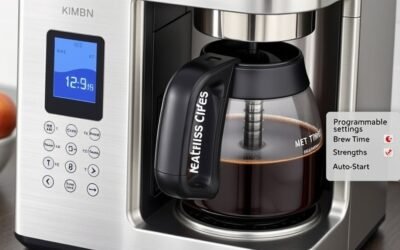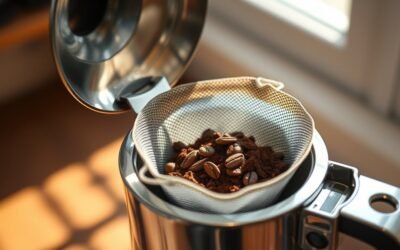

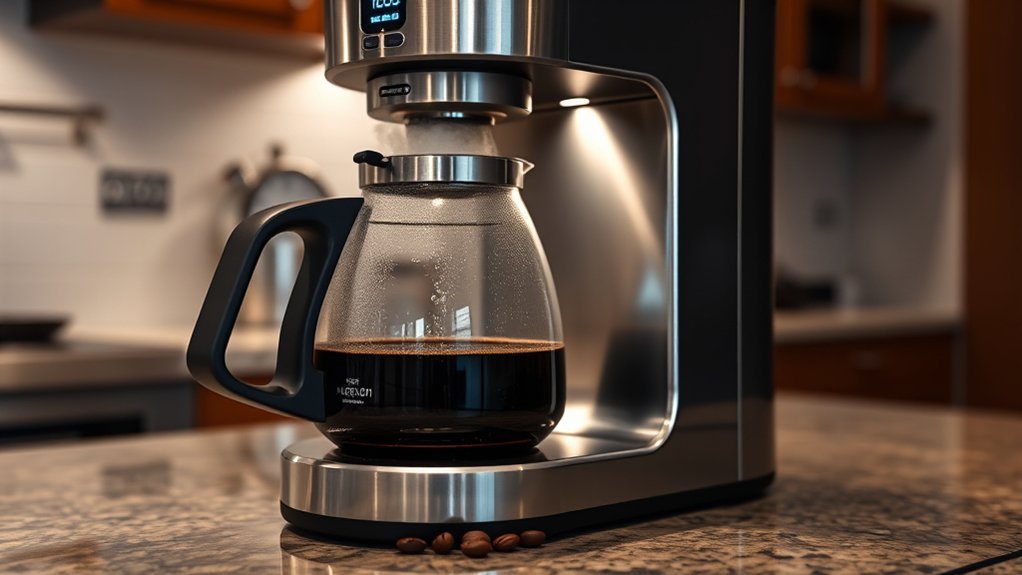
Most standard drip coffee makers take about 9 to 11 minutes to brew a full pot, while compact models can finish in under 5 minutes. Personal-sized machines usually take around 4.5 minutes. It’s essential to monitor the brew time, as longer times might indicate a need for cleaning. Remember, the brew time greatly impacts flavor. If you’re curious about optimizing or troubleshooting your coffee brewing process further, more insights await you.
Key Takeaways
- Standard drip coffee makers typically brew a full pot in 9 to 11 minutes.
- Compact 4-cup models can complete brewing in under 5 minutes.
- KitchenAid machines also take about 9 to 11 minutes for a full pot.
- Brew times for personal-sized coffee makers average around 4.5 minutes.
- Longer brew times may indicate the need for cleaning and descaling.
Average Brew Time for Different Coffee Makers
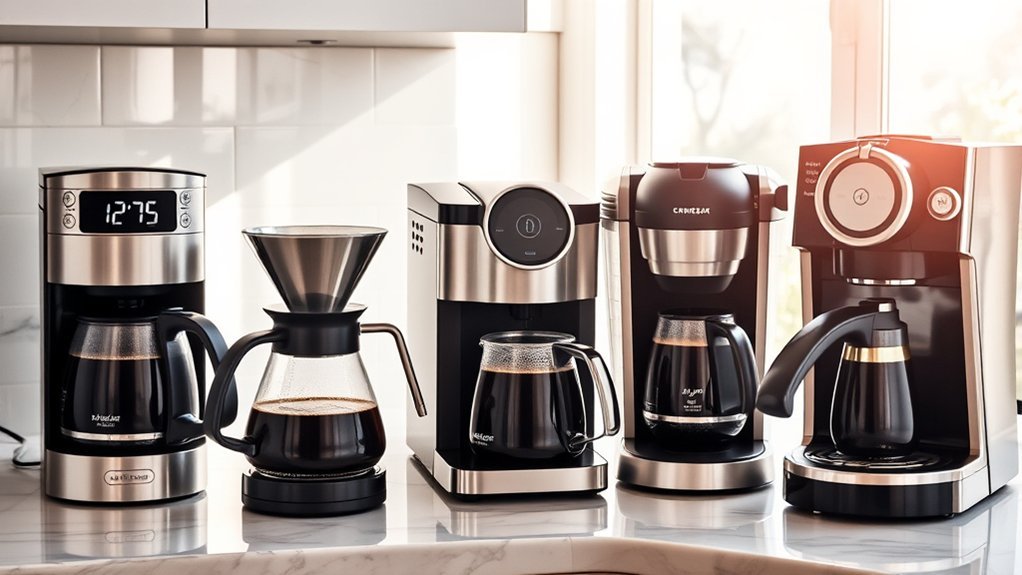
When it comes to brewing coffee, understanding the average brew time for different coffee makers can enhance your morning routine.
Most standard drip coffee makers take about 9 to 11 minutes to brew a full pot, while compact models, like 4-cup machines, can finish in under 5 minutes.
Standard drip coffee makers brew a full pot in 9 to 11 minutes, while compact 4-cup models finish in under 5 minutes.
These brew variations hinge on factors such as the specific model, capacity, and water temperature. For instance, KitchenAid machines typically brew a full pot in 9 to 11 minutes, whereas personal-sized coffee makers operate at around 4.5 minutes.
Keep in mind that longer brew times might signal the need for cleaning and descaling, which can directly impact your coffee’s quality and your overall brewing experience.
The Importance of Brew Time for Flavor
Brew time plays a crucial role in shaping the flavor profile of your coffee, making it essential to understand its impact on extraction. Ideal brew time ranges from 5 to 6 minutes, where water effectively interacts with coffee grounds for the best flavor extraction.
If you brew too quickly, you risk producing weak, under-extracted coffee, while an excessively long brew time can lead to bitterness from over-extraction. The preferred water temperature of 195–205°F enhances this process.
Additionally, using a medium grind size balances brew time and flavor extraction, further influencing quality. By monitoring brew time, you can considerably improve your coffee experience, as standard drip coffee makers typically complete brewing in 5 to 12 minutes for a full pot.
Key Factors That Affect Your Coffee Maker’s Brew Time
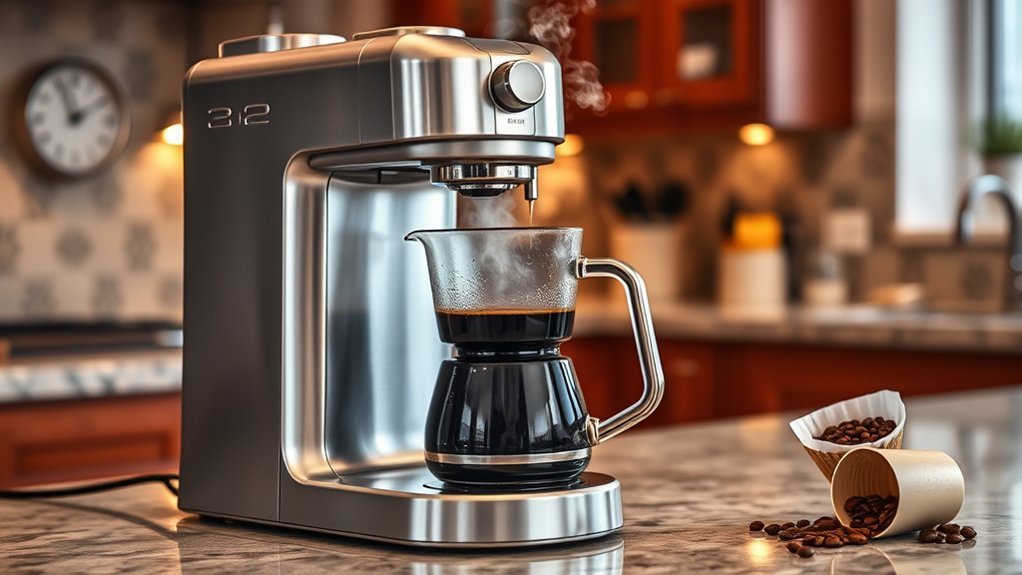
When brewing coffee, a few key factors greatly influence your coffee maker’s brew time.
Water temperature is essential; if it’s not in the ideal range of 195–205°F, you might find your coffee takes longer to brew.
Additionally, the grind size and coffee-to-water ratio can either speed up or slow down the extraction process, affecting the overall timing and flavor of your cup.
Water Temperature Impact
Although water temperature might seem like a minor detail, it plays an essential role in determining how effectively your coffee maker brews. The ideal water temperature for brewing coffee is between 195–205°F.
When the water temperature is too low, you risk under-extraction, resulting in weak and less flavorful coffee. Additionally, brewing at higher elevations can lower boiling points, impacting both brew time and overall quality.
Maintaining consistent water temperature throughout the brewing process is vital for maximum extraction while minimizing bitterness.
To enhance brewing efficiency, regular cleaning and descaling of your coffee maker guarantees that it heats water appropriately, ultimately improving both brew time and the flavor profile of your coffee.
Grind Size Selection
Grind size is a crucial factor that directly influences your coffee maker’s brew time and overall extraction quality. Choosing the right grind size affects how efficiently water extracts flavors from the coffee grounds.
- Finer grinds increase resistance, slowing down brew time.
- Medium grind size is ideal for drip coffee makers, achieving peak extraction in 5 to 6 minutes.
- Coarse grinds result in weak coffee, as water passes through too quickly.
- Monitoring grind size is essential; deviations can lead to undesirable brew times and quality.
Regular maintenance of your coffee maker is also important, as scale and mineral buildup can compound the effects of incorrect grind size, further impacting extraction efficiency.
Coffee-to-Water Ratio
The coffee-to-water ratio plays a pivotal role in determining both the flavor and brew time of your coffee. Ideally, you should aim for a ratio of 1:15 to 1:17—using 15 to 17 grams of water for every gram of coffee.
This balance affects coffee strength considerably; a higher ratio yields a stronger brew, while a lower ratio results in a milder taste. Remarkably, brew time is influenced by this ratio—stronger mixtures often require longer extraction, whereas weaker blends brew more quickly.
If you’re facing issues like under-extraction or over-extraction, adjusting the ratio can help. Experimenting with different ratios allows you to tailor your brew according to your taste preferences, enhancing your overall coffee experience.
How Brewing Temperature Affects Coffee Quality
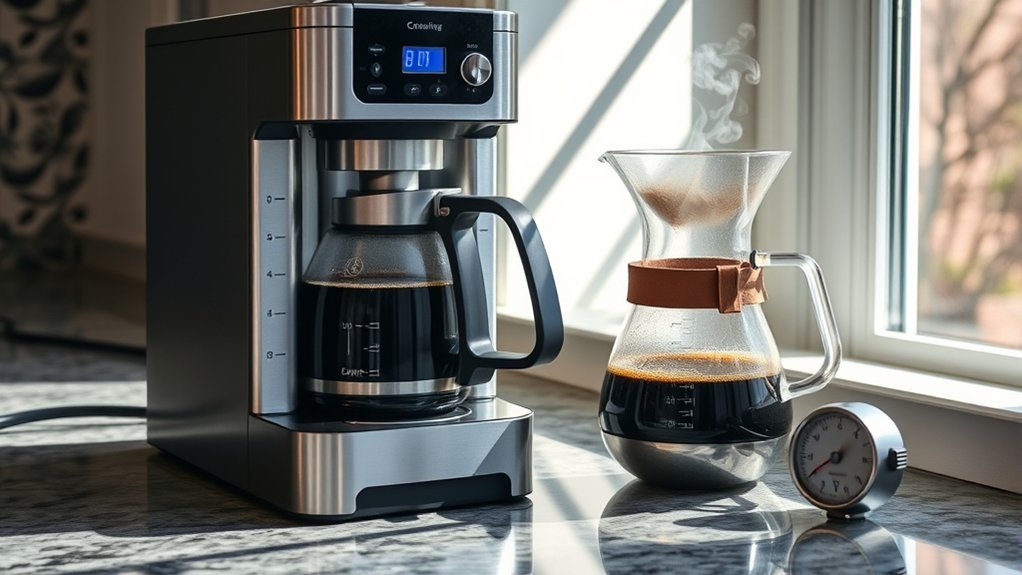
When it comes to brewing coffee, the temperature of the water plays an essential role in determining the final flavor profile. Ideally, you want your brewing temperature to be between 195°F to 205°F. This range maximizes extraction balance, enhancing flavor while avoiding bitterness.
- Water that’s too hot can lead to over-extraction, yielding a bitter cup.
- Conversely, cooler water results in under-extraction, leading to a weak brew.
- KitchenAid coffee makers average around 192°F, slightly below ideal.
- At higher elevations, lower boiling temperatures can adversely affect coffee quality.
Maintaining the correct brewing temperature is vital, as it directly influences the extraction of coffee solubles and overall flavor enjoyment.
Tips for Optimizing Brew Time in Your Coffee Maker
To optimize brew time in your coffee maker, start by keeping your machine clean to prevent any buildup that could slow down the process.
Next, use a medium grind size for your coffee, as this allows water to flow through the grounds efficiently.
Finally, pay attention to your coffee-to-water ratio; achieving the right balance can greatly enhance extraction and improve flavor.
Maintain Machine Cleanliness
Maintaining machine cleanliness is essential for optimizing your coffee maker’s brew time, as neglecting regular upkeep can lead to unwanted delays.
Implementing a consistent cleaning routine not only enhances efficiency but also guarantees your coffee tastes great.
Here are some key practices:
- Regularly descale to prevent mineral buildup.
- Clean the brew basket and carafe after each use.
- Replace water filters according to the manufacturer’s guidelines.
- Monitor water temperature to stay within 195–205°F.
Optimize Grind Size
Cleanliness plays an essential role in your coffee maker’s performance, but so does the grind size of your coffee. To achieve the best extraction balance, aim for a medium grind.
If your grind is too fine, it can slow down the brewing process, leading to weak, under-extracted coffee. On the other hand, a grind that’s too coarse may brew too quickly, resulting in over-extraction and bitterness.
Regularly making grind adjustments based on your taste preferences and brewing time can greatly enhance your coffee’s quality. Additionally, consider the coffee-to-water ratio, typically between 1:15 to 1:17, to further optimize your brew time.
Fine-tuning these elements will help you enjoy consistently flavorful coffee from your drip coffee maker.
Adjust Coffee Ratios
Adjusting coffee ratios is essential for enhancing brew time and achieving the perfect cup of coffee.
The right coffee-to-water ratio, typically between 1:15 and 1:17, can notably impact coffee strength and flavor balance.
Here are some tips to help you refine your ratios:
- Experiment with different ratios to discover your ideal strength.
- Use a medium grind size for even extraction and balanced flavor.
- Aim for a brew time of 5 to 6 minutes for optimal flavor development.
- Regularly clean and descale your coffee maker to maintain consistent brewing efficiency.
Which Coffee Makers Brew the Fastest?
When you’re in need of a quick caffeine fix, knowing which coffee makers brew the fastest can make all the difference.
The Bunn CSB3T Speed Brew stands out by brewing a full pot in just 5 minutes, making it one of the fastest drip coffee machines available.
If you prefer a machine that holds multiple servings, the Hamilton Beach BrewStation Summit 4846 brews a full pot in about 8 minutes.
For those who enjoy freshly ground coffee, the Cuisinart Next-Generation Burr Grind & Brew DGB-800 also takes around 8 minutes.
If single servings are your go-to, pod machines like the Nespresso Pixie can deliver a cup in about 1 minute, while the Cuisinart Coffee Center SS-15 offers a quick first cup in just 1 minute and 30 seconds.
Troubleshooting Brew Time Issues
If your coffee maker seems to take longer than the usual 5 to 12 minutes to brew a full pot, it’s essential to investigate potential issues that could be affecting its performance.
Several factors might be at play, leading to coffee maker malfunctions:
Several factors could be causing your coffee maker to malfunction, affecting its efficiency and brew time.
- Mineral buildup requiring cleaning or descaling
- Water temperature not reaching 195–205°F
- Grind size being too fine or too coarse
- Improper coffee-to-water ratio (aim for 1:15 to 1:17)
Tips for Achieving the Perfect Brew Every Time
How can you consistently brew the perfect cup of coffee? Start by ensuring the water temperature is between 195–205°F, as this range is essential for ideal flavor extraction. Use a medium grind size to prevent over-extraction or weak flavors, and maintain a coffee-to-water ratio of 1:15 to 1:17 for balanced strength. Regularly clean your coffee maker to avoid mineral buildup, which can hinder brewing performance. Finally, monitor your brew time, aiming for 5 to 6 minutes for optimal extraction.
| Brewing Technique | Key Considerations |
|---|---|
| Water Temperature | 195–205°F |
| Grind Size | Medium |
| Coffee-to-Water Ratio | 1:15 to 1:17 |
Follow these tips for a consistently delicious brew!
Frequently Asked Questions
Can Brew Time Affect Caffeine Content in My Coffee?
Yes, brew time directly affects caffeine extraction and brew strength. Longer brewing allows more caffeine to dissolve, resulting in a stronger cup. However, over-extraction can lead to bitterness, so balance is essential for ideal flavor.
Do Different Coffee Types Require Varying Brew Times?
You’d think all coffee’s brewed the same, but espresso brewing takes seconds while cold brew demands hours. Each type’s unique characteristics dictate its ideal brew time, highlighting how diverse coffee truly is. Enjoy the differences!
Will Altitude Impact My Coffee Maker’s Brew Time?
Yes, altitude affects your coffee maker’s brew time. Higher altitudes reduce brewing pressure, which can lead to longer extraction times. This means you might need to adjust your brewing method for ideal flavor and strength.
How Often Should I Clean My Coffee Maker for Optimal Brew Time?
Think of your coffee maker as a garden; if you don’t tend to it regularly, weeds will stifle growth. Clean it monthly for ideal brew time, following maintenance tips to keep flavors vibrant and equipment efficient.
Do I Need to Adjust Brew Time for Coffee Grind Size?
Yes, you should adjust brew time based on grind size. Finer grinds increase extraction time, often requiring shorter brewing. Coarser grinds need longer extraction for ideal flavor. Experiment to find the perfect balance for your taste.
Conclusion
To summarize, understanding your coffee maker’s brew time is essential for achieving the perfect cup. Did you know that a standard drip coffee maker typically takes about 5 to 6 minutes to brew a full pot? This time allows for ideal extraction, enhancing flavor and aroma. By considering factors like brewing temperature and grind size, you can refine your coffee experience. So, take the time to experiment and enjoy the nuanced flavors that a well-brewed cup can offer.