For a standard 12-cup coffee maker, you’ll want to use 12 to 13 scoops of ground coffee, which translates to around 24 to 26 tablespoons. This amount helps achieve a well-balanced flavor, considering the ideal coffee-to-water ratio of 1:17. To optimize your brew, keep in mind factors like grind size and water quality. If you’re curious about how to adjust for your preferred strength or troubleshoot common brewing issues, there’s more to explore.
Key Takeaways
- Use 12 to 13 scoops of ground coffee, or 24 to 26 tablespoons, for a full 12-cup coffee maker.
- The ideal coffee-to-water ratio is 1:16 to 1:18, translating to 18 to 24 tablespoons for 72 ounces of water.
- For milder coffee, use 1.5 tablespoons per 6 ounces; for stronger coffee, use 2 tablespoons per 6 ounces.
- A standard coffee scoop equals 2 tablespoons, ensuring accurate measurement for consistent brewing.
- Experiment with different ratios based on personal taste to achieve the desired coffee strength.
How Much Coffee Do You Need for 12 Cups?

When brewing coffee using a standard 12-cup coffee maker, it’s essential to understand the correct amount of coffee to use for ideal flavor. Typically, you’ll need about 12 to 13 scoops of ground coffee, which equals 24 to 26 tablespoons.
This measurement aligns with the recommended coffee-to-water ratio of approximately 1.5 to 2 tablespoons of coffee per 6 ounces of water. Since a 12-cup pot brews around 72 ounces, using this ratio guarantees optimal extraction of flavors.
Additionally, consider the brewing temperature and water quality; these elements affect the extraction process and overall taste. Adjust your measurements based on personal preferences, making sure you achieve a brew that suits your palate while maintaining the integrity of the coffee.
What’s the Right Coffee-to-Water Ratio for You?
Finding the right coffee-to-water ratio can greatly enhance your brewing experience. The ideal ratio is generally 1:17, meaning you’ll use 1 gram of coffee for every 17 grams of water.
Discovering the perfect coffee-to-water ratio can elevate your brewing, with 1:17 being the ideal starting point.
For a standard 12-cup coffee maker, this translates to about 18 to 24 tablespoons of ground coffee. The Golden Ratio suggests starting with 1:16 to 1:18 for decent flavor, enabling you to tailor it to your coffee preferences.
Measuring in grams can lead to increased precision; for instance, 55 grams of coffee per liter of water aligns with the 1:18 ratio.
Experimenting with different ratios allows you to find the strength that best suits your taste, depending on your preferred brewing techniques.
Factors That Affect Coffee Flavor and Strength

Although many factors influence coffee flavor and strength, understanding their interplay is essential for crafting the perfect cup.
The type of coffee beans you choose, including their origins and roast levels, directly impacts the flavor profile. For instance, beans from different regions boast distinct taste characteristics, while lighter roasts often highlight acidity, and darker roasts provide a bolder, richer experience.
Grind size also plays an important role; finer grinds enhance extraction, yielding stronger flavors, whereas coarser grinds create a milder brew.
Additionally, the quality of water can affect taste—filtered water enhances flavors, while tap water may introduce undesirable notes.
Finally, your brewing method can alter the final taste, as different techniques affect extraction time and flavor development.
Adjusting Coffee for Your Desired Strength
Adjusting coffee for your desired strength is essential for achieving the perfect cup tailored to your taste.
For a standard 12-cup coffee maker, you’ll want to use between 18 to 24 tablespoons of ground coffee, depending on your brewing preferences. A milder brew starts with 1.5 tablespoons of coffee per 6 ounces of water, while a stronger brew typically requires 2 tablespoons.
The ideal coffee-to-water ratio is 1:16 to 1:17, but coffee strength adjustments can be made based on your personal taste. Don’t hesitate to experiment; modifying the amount of coffee used allows you to find your ideal balance.
Just remember, the 12-cup measurement is based on 6-ounce cups, so adjust accordingly if your cups are larger.
The Best Measurements: Tablespoons vs. Scoops
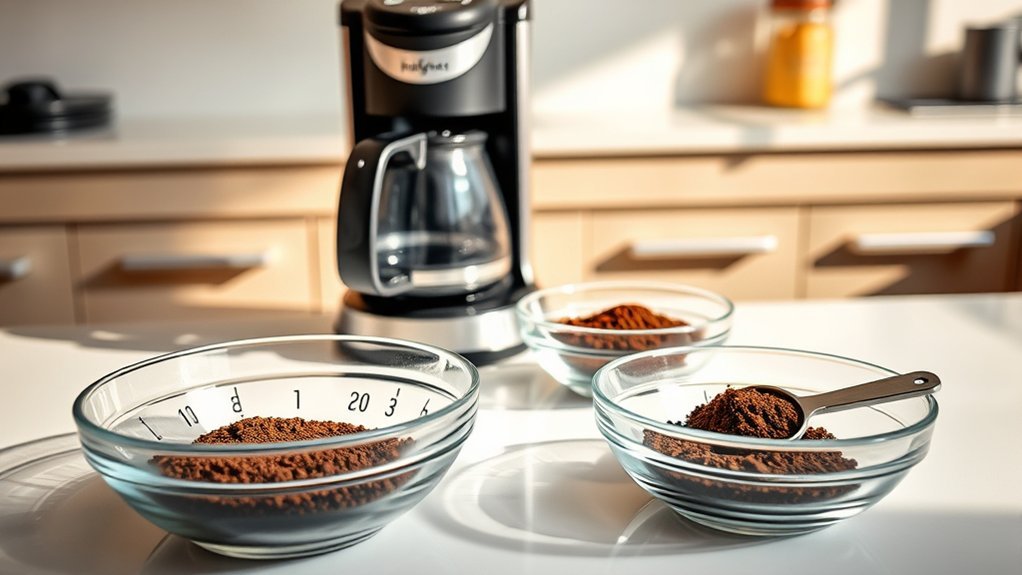
When it comes to measuring coffee for your 12-cup maker, understanding the differences between tablespoons and scoops is essential.
A standard coffee scoop equals 2 tablespoons, which can impact how strong your brew turns out.
Understanding Scoop Measurements
Measuring coffee accurately is essential for brewing the perfect cup, especially with a 12-cup coffee maker. A standard coffee scoop typically holds about 2 tablespoons of ground coffee, making scoop sizes important for achieving precise measurements.
For best results, you should use 12 to 13 scoops of coffee, which equates to approximately 24 to 26 tablespoons. Remember, coffee makers define a “cup” as 6 ounces, differing from the usual 8 ounces, so your total coffee amount needs adjustment.
Additionally, scoop measurements might require tweaking based on grind size and coffee basket type to enhance extraction. Consistency in using scoops or tablespoons is essential for measuring accuracy, leading to a more enjoyable and predictable brewing experience.
Tablespoons vs. Scoops Debate
The choice between tablespoons and scoops for measuring coffee can markedly impact your brewing experience. A standard coffee scoop holds about 2 tablespoons of ground coffee, meaning one scoop equals two tablespoons.
For a 12-cup coffee maker, using 12-13 scoops translates to 24-26 tablespoons, ensuring ideal flavor. However, since coffee makers often indicate 6-ounce cups, you might need to adjust based on your taste and cup size.
While some coffee enthusiasts lean towards tablespoon accuracy for precision, others prefer scoops for convenience, reflecting their scoop preferences.
Regardless of your choice, the key to consistent flavor lies in maintaining uniform measurements, ensuring you achieve the desired strength in every brew.
Essential Tips for Brewing Consistently Great Coffee
To brew consistently great coffee, focus on achieving the perfect coffee-to-water ratio, as this is essential for flavor balance.
Utilize precise measuring techniques to guarantee accuracy in your coffee quantities, and remember that slight variations can make a significant difference.
Finally, don’t hesitate to experiment with different brew methods and grind sizes, as these factors can dramatically enhance your coffee’s taste profile.
Perfect Coffee-To-Water Ratio
Understanding the coffee-to-water ratio is vital for brewing consistently great coffee, especially when using a 12-cup coffee maker. The ideal ratio is around 1:17, meaning you’ll need about 18 to 24 tablespoons of ground coffee for 60 ounces of water. This balance is essential for ideal flavor extraction during coffee brewing.
If you prefer adjusting the strength, starting with 1.5 to 2 tablespoons per 6 ounces of water allows for customization based on your taste. Using a kitchen scale to measure coffee in grams can further enhance consistency and flavor profile.
Additionally, experimenting with a 1:15 ratio for full immersion methods can improve extraction and elevate your coffee experience considerably.
Measuring Techniques for Precision
Accurate measurement is essential for brewing consistently great coffee, especially when using a 12-cup coffee maker. Employing proper measuring tools, like precision scales, can greatly enhance your brewing process. For a full pot, aim for 12 to 13 scoops of ground coffee, which translates to 24 to 26 tablespoons.
| Measurement | Coffee (grams) | Water (liters) |
|---|---|---|
| Mild | 45-55 | 1 |
| Balanced | 55-65 | 1 |
| Strong | 65-75 | 1 |
Adjust measurements based on your taste preferences and the specific coffee maker’s capacity. Remember, consistency in measurement fosters a better flavor profile, making each cup a satisfying experience.
Experimenting With Brew Methods
While exploring various brew methods, you’ll find that subtle changes in technique can greatly alter the flavor of your coffee.
Start by experimenting with different coffee-to-water ratios, beginning with the recommended 1:17 for drip coffee makers. Adjust to taste to achieve your desired flavor profiles.
Consider the grind size; coarser grinds may require a tighter ratio (1:15) for methods like French press, affecting extraction. Use a kitchen scale for precise measurements—aim for 24-26 tablespoons for a 12-cup maker.
Water quality matters too; filtered water can notably enhance taste.
Keep a record of your ratios, grind sizes, and brew times to refine your brewing techniques and guarantee consistency in every cup.
Troubleshooting Common Coffee Brewing Issues
Troubleshooting common coffee brewing issues can greatly enhance your coffee experience.
If your coffee tastes weak, increase the coffee-to-water ratio to about 2 tablespoons per 6 ounces. Make sure the grind size aligns with your brewing method; coarse grinds suit French press, while fine grinds work best for espresso.
Conversely, if your coffee is overly bitter, you might be over-extracting. In that case, reduce brewing time or switch to a slightly coarser grind.
Pay attention to your brewing temperature—using water above 200°F can cause undesirable flavors, while below 195°F may lead to under-extraction.
Finally, regularly clean your coffee maker to eliminate buildup and make certain you’re using fresh, filtered water for best results.
Frequently Asked Questions
Can I Use Pre-Ground Coffee Instead of Whole Beans?
Yes, you can use pre-ground coffee instead of whole beans. However, the coffee grind affects extraction efficiency, so adjust your brewing techniques accordingly. Freshly ground beans typically yield better flavor and aroma in your cup.
How Long Does Brewed Coffee Stay Fresh?
Brewed coffee freshness diminishes after about 30 minutes, much like a fading sunset. To prolong its life, store it in an airtight container away from light, heat, and moisture—follow these coffee storage tips for ideal flavor.
Is It Okay to Use Flavored Coffee?
Yes, it’s okay to use flavored coffee. The benefits include enhanced taste and variety, while drawbacks can be artificial ingredients and potential over-sweetening. Balance your choices to enjoy the best of both worlds.
What Type of Water Is Best for Brewing?
Spring water’s minerals enhance coffee flavor, making it ideal. Tap water can work, but its chlorine and impurities may alter taste. Always consider water quality, as it greatly influences your brewing outcome and overall coffee experience.
Can I Brew Less Than 12 Cups in This Machine?
Yes, you can brew less than 12 cups. Adjust your coffee ratios accordingly, using proper brewing techniques to maintain flavor. Experiment with different amounts until you find the perfect balance for your taste preferences.
Conclusion
To sum up, brewing coffee in a 12-cup maker requires about 3/4 to 1 cup of grounds, depending on your taste. Remember, “the proof of the pudding is in the eating”—experiment with ratios and adjust to find your perfect brew. Factors like grind size and water temperature also play a role in flavor. By mastering these elements, you can consistently enjoy a cup that meets your preferences, ensuring every sip is a delightful experience.