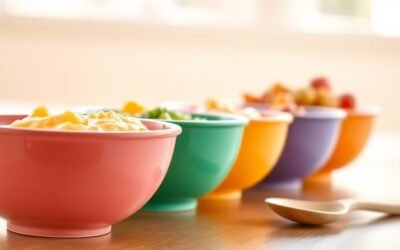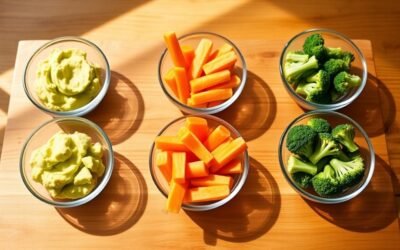


To choose baby food storage containers, start by prioritizing safety: pick options that are BPA-free and phthalate-free. Next, consider materials; glass is durable and non-reactive while silicone offers flexibility. Look for airtight, leak-proof designs to keep food fresh. Choose sizes that fit your baby’s portion needs, and guarantee they’re microwave and freezer-safe. Don’t forget about maintenance; clean them promptly and check for damage. If you want more tips, keep exploring the key features and best practices.
Key Takeaways
- Prioritize materials: Choose BPA-free, phthalate-free, and PVC-free containers for safety and health compliance.
- Select glass or silicone for durability and non-reactive properties, ensuring food safety during storage.
- Look for airtight and leak-proof designs to maintain freshness and prevent contamination.
- Consider microwave-safe and freezer-safe labels to ensure versatile usage and food quality.
- Assess your needs for portioning and convenience when making your final selection.
Why Safe Baby Food Storage Containers Matter

When you prepare homemade baby food, choosing safe storage containers is essential for your child’s health. By selecting containers free from harmful chemicals like BPA and phthalates, you prioritize baby health and nutrition safety.
Glass containers, such as Pyrex, are highly recommended due to their durability and non-reactive nature, guaranteeing no toxins leach into your baby’s food. Properly storing food in airtight containers helps maintain freshness, allowing you to keep meals for up to 48 hours in the fridge or 1-2 months in the freezer.
This approach not only minimizes food waste but also facilitates portion control and easy reheating, making life simpler for busy parents. Always verify compliance with FDA regulations for safe food contact materials.
Top Features to Ensure Safety and Freshness in Baby Food Containers
When choosing baby food containers, it’s essential to prioritize material safety by selecting options that are BPA-free, phthalate-free, and PVC-free.
You’ll also want to look for leak-proof designs and airtight seals to keep your baby’s food fresh and safe from contamination.
These features not only enhance safety but also streamline your meal prep and storage processes.
Material Safety Standards
Choosing the right materials for baby food storage containers is essential, as it directly impacts your child’s health and the quality of their food.
Look for containers made from BPA-free, phthalate-free, and PVC-free materials to avoid harmful chemicals leaching into meals. It’s important to guarantee containers are labeled as microwave-safe and freezer-safe, preserving food quality during storage and reheating.
Opt for glass containers for their durability and non-reactive properties, making cleaning a breeze. Additionally, check for material certifications that comply with FDA and EU standards for added safety assurance.
Eco-friendly options are great, too, as they minimize environmental impact while keeping your baby’s food fresh and safe.
Leak-Proof Design
Selecting baby food storage containers involves more than just material safety; the design features play a significant role in maintaining food safety and freshness.
A leak-proof design is essential to prevent spills and contamination, ensuring your baby’s food remains safe during storage and transportation. Look for containers with tight-sealing lids or snap-lock mechanisms for ideal leak proof benefits.
Silicone and glass containers typically offer better durability and leak resistance compared to cheaper plastic options. Features like silicone gaskets or locking lids enhance protection, especially when freezing or storing upright.
Regularly inspect seals and lids for wear and tear; damaged components can compromise both safety and freshness. Prioritizing these design elements will liberate you from worrying about food leaks.
Airtight Seal Features
How can you guarantee that your baby’s food stays fresh and safe? Focus on airtight seal features in your storage containers.
An effective airtight seal prevents air from entering, which keeps food fresh and limits bacterial growth. Look for containers with snap-lock lids or silicone gaskets—these provide excellent seal durability.
Additionally, check for leak-proof designs to prevent spills and contamination. Regular seal inspection is essential; compromised seals can lead to food spoilage and safety risks.
A well-sealed container not only preserves flavor and nutritional quality but also gives you peace of mind. By prioritizing airtight seals, you guarantee your baby’s meals stay delicious, safe, and nutritious for every feeding.
How to Choose the Right Portion Sizes for Your Baby?
As your baby begins to explore solid foods, understanding the right portion sizes becomes essential for their growth and satisfaction. Start with 1 to 2 ounces for infants around six months, adjusting as they grow. Observe your baby’s feeding cues to gauge hunger and fullness, preventing overfeeding.
| Age Group | Recommended Portion Size | Frequency |
|---|---|---|
| 6 months | 1-2 ounces | 2-3 times a day |
| 7-9 months | 2-3 ounces | 3-4 times a day |
| 10-12 months | 3-4 ounces | 3 meals + snacks |
| Toddlers (1+) | 4 ounces | 3 meals + snacks |
Using portion-controlled containers can help you track intake and minimize waste. Adjust based on your baby’s preferences and developmental stage.
Best Practices for Storing and Thawing Baby Food

When you store and thaw baby food, it’s important to follow best practices to maintain safety and freshness.
Keep homemade purees in airtight containers for up to 48 hours in the fridge or freeze them for 1-2 months.
When it’s time to thaw, use the refrigerator or microwave, and always reheat until steaming to make sure your baby’s food is safe to eat.
Ideal Thawing Methods
Thawing baby food properly is essential for ensuring both safety and quality, so it’s important to follow best practices.
Use safe defrosting techniques, like thawing in the refrigerator or utilizing your microwave’s defrost setting. These methods help prevent bacterial growth and keep your baby’s food safe.
Remember to use defrosted baby food within 24 hours to maintain freshness. When reheating, make sure the purees are steaming hot to effectively kill any potential bacteria—serve them either at room temperature or hot.
Avoid reheating more than once; instead, portion out meals before freezing. This minimizes waste and maximizes safety, ensuring you provide nutritious meals for your little one without compromising on quality.
Safe Storage Duration
To guarantee your baby food remains safe and nutritious, it’s crucial to understand the appropriate storage durations for both homemade and store-bought options.
Homemade baby food should be refrigerated for up to 48 hours, while store-bought pureed fruits and vegetables can last 72 hours.
When freezing, homemade baby food is best used within 1-2 months, and store-bought pureed meats, poultry, or fish should also be consumed within this timeframe.
Always label your containers with preparation dates to track freshness, adhering to safety guidelines.
For thawing, use the refrigerator or microwave and consume defrosted food within 24 hours.
Following these storage duration tips guarantees your little one enjoys safe and wholesome meals.
Proper Heating Techniques
Proper heating techniques are essential for ensuring your baby food is both safe and nutritious. Start by thawing frozen baby food in the refrigerator or using your microwave’s defrost setting. Make sure to use it within 24 hours to keep it safe.
When reheating, always heat purees until they’re steaming hot to effectively kill any bacteria. Avoid reheating food more than once; instead, portion out servings before freezing to minimize waste and enhance safety.
Serve purees at room temperature or hot, but never partially reheated to prevent bacterial growth. Use airtight containers for storage to maintain freshness and prevent freezer burn, and label them with preparation dates for easy tracking.
Following these temperature guidelines will help keep your little one healthy.
Comparing Materials: Glass, Plastic, and Silicone

When selecting baby food storage containers, understanding the differences between materials like glass, plastic, and silicone is crucial. Each material has its unique advantages, so consider what fits your needs best.
- Glass advantages: Durable, non-reactive, and recyclable, allowing you to monitor food easily.
- Plastic: Lightweight and less prone to breakage, but some varieties can leach harmful chemicals like BPA.
- Silicone benefits: Flexible, lightweight, and typically BPA-free, making portioning and reheating easy without the risk of breakage.
- Durability and safety: Assess which material aligns with your lifestyle, especially for freezing or reheating needs.
Choosing the right container guarantees your baby’s food remains safe, fresh, and stress-free.
Maintenance and Care for Baby Food Containers
Maintaining baby food containers is essential for ensuring your child’s meals stay safe and fresh. Clean your containers immediately after use with warm, soapy water or in the dishwasher to promote container cleanliness and prevent stains or bacterial growth.
If you haven’t used a container for a while, sterilize it by boiling it in water or using a sterilizing solution. Regularly perform a damage inspection for cracks or warping, as these can compromise food safety.
When freezing baby food, avoid overfilling containers to prevent leaks, and make sure lids are securely fastened. Don’t forget to label frozen containers with dates and food types, ensuring you use older food first and minimize waste.
Frequently Asked Questions
Can I Use Regular Containers for Baby Food Storage?
You can use regular containers for baby food storage, but make certain they meet safety and hygiene guidelines. Look for BPA-free materials and follow proper storage guidelines to keep your baby’s food fresh and safe.
How Long Can I Store Homemade Baby Food?
You can store homemade baby food in the fridge for up to three days or freeze it for about six months. For ideal shelf life, use airtight containers and label them with storage tips for freshness.
Are There Specific Brands Recommended for Baby Food Containers?
You’ll find popular brands like OXO, Beaba, and Munchkin offer high-quality baby food containers. Look for options made from BPA-free plastic or glass, ensuring safety and durability for your homemade meals.
What Is the Best Way to Label Baby Food Containers?
Labeling techniques can either clutter your kitchen or streamline container organization. Use clear, waterproof labels with dates and contents. Consider color-coding for easy identification, ensuring you’re always ready to serve nutritious meals for your baby.
Can I Freeze Baby Food in Glass Containers?
Yes, you can freeze baby food in glass containers. Glass offers excellent freezing safety, preventing harmful chemicals from leaching. Just make certain you leave space for expansion, and your homemade baby food will remain fresh and nutritious.
Conclusion
Choosing the right baby food storage containers is essential for your child’s health and safety. Did you know that over 90% of parents worry about the safety of the materials used in baby food containers? By understanding the key features, portion sizes, and proper maintenance, you can guarantee your little one’s meals stay fresh and safe. Remember, investing in high-quality containers not only preserves nutrition but also gives you peace of mind as your baby grows.