To clean inside your coffee maker, start by descaling using a solution of 50% white vinegar and water or a commercial descaler. Run the largest brew cycle and let the solution sit for 15-20 minutes to dissolve mineral buildup. Disassemble removable parts, soaking them in warm soapy water, then scrub and rinse thoroughly. Next, run multiple water brews to flush out residues. Make sure to check hidden parts for buildup, and there’s more effective cleaning information ahead.
Key Takeaways
- Regularly descale your coffee maker using a solution of 50% white vinegar and cold water or Barkeeper’s Friend to remove mineral buildup.
- Disassemble the coffee maker according to the manufacturer’s instructions to access hidden areas for thorough cleaning.
- Soak removable parts like the carafe and filter basket in warm soapy water to eliminate stains and debris.
- Use a soft brush or sponge to scrub hidden areas, paying special attention to hard-to-reach spots to prevent mold growth.
- Rinse all components thoroughly with clean water and run a brewing cycle with water to flush out any residual cleaning solution.
The Importance of Descaling: Benefits for Your Coffee Maker

Descaling your coffee maker is essential, especially if you want to maintain peak performance and flavor in every cup.
Regular descaling removes hard water buildup, which negatively affects both the taste of your coffee and the machine’s performance. To effectively tackle mineral buildup, use a descaling solution like a 50% mixture of white vinegar and cold water or 8 oz of Barkeeper’s Friend dissolved in cold water.
Running a descaling cycle enhances flavor and extends your coffee maker’s lifespan by preventing malfunctions. Observing the debris collected post-descaling helps you gauge the level of buildup, informing your descaling frequency.
A clean coffee maker operates efficiently, ensuring consistent, flavorful brews while minimizing the risk of clogs and operational issues.
Preparing for the Descaling Process
Before you begin the descaling process, it’s essential to prepare your coffee maker to confirm ideal results.
Start by emptying the carafe of any old coffee and grounds to prevent contamination during descaling. Gather your cleaning supplies, including a descaling solution—either a 50% mixture of white vinegar and cold water or 8 oz of Barkeeper’s Friend mixed with cold water.
Next, identify the largest brew size on your machine, especially if it lacks a clean button. Prepare to run the descaling cycle by adding your solution to the reservoir.
Identify the largest brew size on your coffee maker to prepare for the descaling cycle.
These preparation steps confirm that your coffee maker is ready to effectively eliminate hard water buildup, enhancing the taste of your coffee and prolonging the machine’s lifespan.
How to Run the Descaling Cycle

To effectively run the descaling cycle, start by ensuring your coffee maker is ready with the descaling solution prepared in the reservoir.
Empty the carafe, then mix 50% white vinegar with cold water, or use 8 oz of Barkeeper’s Friend mixed with cold water.
If your machine has a clean button, press it; otherwise, set it to brew the largest pot and run until half full.
Let the descaling solution sit for 15 to 20 minutes to break down mineral buildup.
Continue the brewing cycles until complete, noting any debris in the carafe as a sign of effectiveness.
Finally, rinse the machine thoroughly with clean water by running a full cycle to eliminate any residue from the descaling solutions.
Deep Cleaning Removable Parts of Your Coffee Maker
Once you’ve successfully completed the descaling cycle, it’s time to focus on the removable parts of your coffee maker.
Begin by disassembling the machine according to the manufacturer’s instructions.
Disassemble your coffee maker following the manufacturer’s guidelines for effective cleaning.
Use effective cleaning techniques to guarantee thorough cleaning:
- Soak the removable parts, like the carafe and filter basket, in warm soapy water for at least 15 minutes to loosen built-up coffee oils.
- After soaking, scrub all parts with a soft brush or sponge to eliminate stubborn stains.
- Rinse everything thoroughly with clean water and let the parts dry completely before reassembling.
This process helps to keep your coffee maker in prime condition and prevents any mold growth, guaranteeing a better brewing experience every time.
Rinsing Your Coffee Maker: Ensuring No Residue Remains
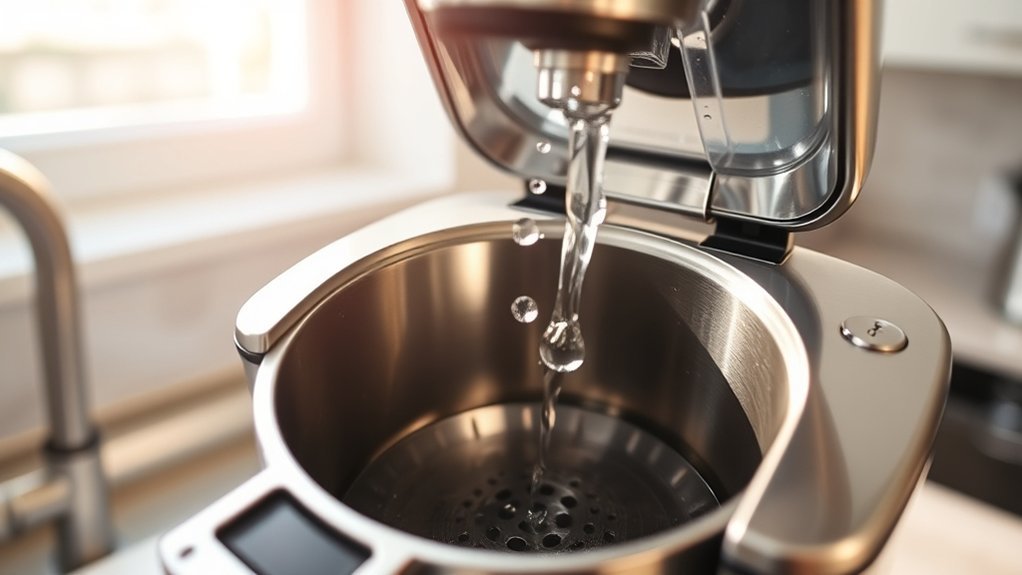
After completing the descaling process, it’s crucial to confirm that your coffee maker is thoroughly rinsed to eliminate any lingering residues. Begin by emptying the carafe and filling the water tank with clean water to initiate a rinse cycle. Run a full brewing cycle using just water to flush out any residual descaler. If the water appears cloudy or yellow during the rinse, perform an additional rinse cycle for peak water quality. Confirm that no traces of the descaling solution remain, as this can impact both the taste of future brews and the machine’s performance. Finally, check and clean all internal components to ascertain they’re free of buildup and residue.
| Step | Action |
|---|---|
| 1. Empty Carafe | Remove any leftover coffee |
| 2. Fill Water Tank | Use clean, filtered water |
| 3. Run Brew Cycle | Flush with just water |
| 4. Check Water Quality | Look for cloudiness or color |
| 5. Inspect Internal Parts | Confirm no residue remains |
Putting Your Coffee Maker Back Together: A Simple Guide
Reassembling your coffee maker is a straightforward process that guarantees peak functionality for your next brew.
Follow these reassembly tips to avoid common mistakes:
- Place the carafe back onto the warming plate, making sure it’s secure.
- Reinsert the filter basket into its designated area, checking for proper seating to prevent leaks.
- Carefully reconnect any removable water reservoirs, making sure they click into place.
Before finalizing the assembly, verify that all internal components, like the brew head, are free from residue.
Once everything is securely in position, plug the coffee maker back in and perform a test run with water to confirm all parts are functioning correctly.
This careful approach guarantees your coffee maker is ready for your next delicious cup.
Frequently Asked Questions
How Often Should I Clean My Coffee Maker?
You should clean your coffee maker every month for peak performance. Regular cleaning frequency guarantees efficient coffee maintenance, preventing buildup, and preserving flavor. Don’t underestimate the importance of routine maintenance to enhance your brewing experience.
Can I Use Lemon Juice Instead of Vinegar for Descaling?
Yes, you can use lemon juice instead of vinegar for descaling. Lemon juice benefits include natural acidity that breaks down calcium buildup. It’s a revitalizing alternative, but make certain you rinse thoroughly to avoid lingering flavors.
What Should I Avoid Using to Clean My Coffee Maker?
You should avoid harsh cleaning products like bleach or abrasive scrubbers, as they can damage your coffee maker. Stick to gentle solutions and follow maintenance tips for peak performance and longevity of your machine.
Are There Specific Tools Needed for Cleaning Hidden Areas?
You’ll need specific tools for cleaning hidden areas, like cleaning brushes for tight spots and microfiber cloths for surfaces. Curiously, regular cleaning can enhance your coffee’s flavor by up to 30%—it’s worth the effort!
How Can I Tell if My Coffee Maker Needs Descaling?
You can tell your coffee maker needs descaling if you notice coffee buildup, a decrease in brewing efficiency, or taste changes in your coffee. Regular maintenance guarantees peak performance and flavor from your machine.
Conclusion
By regularly cleaning your coffee maker, you’re not just brewing better coffee; you’re also prolonging its lifespan. Remember, “a stitch in time saves nine.” Taking these steps to descale and deep clean your machine guarantees peak performance and flavor. With your coffee maker back in action, you can enjoy that perfect cup every morning. So, don’t put it off—make cleaning a part of your routine to savor every sip!