

To freeze baby food in ice cube trays, start by washing, peeling, and cooking fruits or vegetables until they’re soft. Blend them into a smooth puree, then fill ice cube trays halfway, leaving space for expansion. Cover the trays with plastic wrap or foil to prevent odors and freeze for at least 24 hours. Once solid, transfer cubes to labeled freezer bags for easy storage. Want to know the best ways to thaw your frozen baby food?
Key Takeaways
- Prepare fruits or vegetables by washing, peeling, and cooking until soft before blending them into a smooth puree.
- Fill BPA-free ice cube trays halfway with the puree, leaving space for expansion during freezing.
- Cover the trays with plastic wrap or aluminum foil to prevent contamination and odor absorption.
- Freeze the trays for at least 24 hours until the puree cubes are solid.
- Transfer the frozen cubes to labeled freezer bags for easy organization and storage.
Benefits of Freezing Baby Food: Why You Should Do It
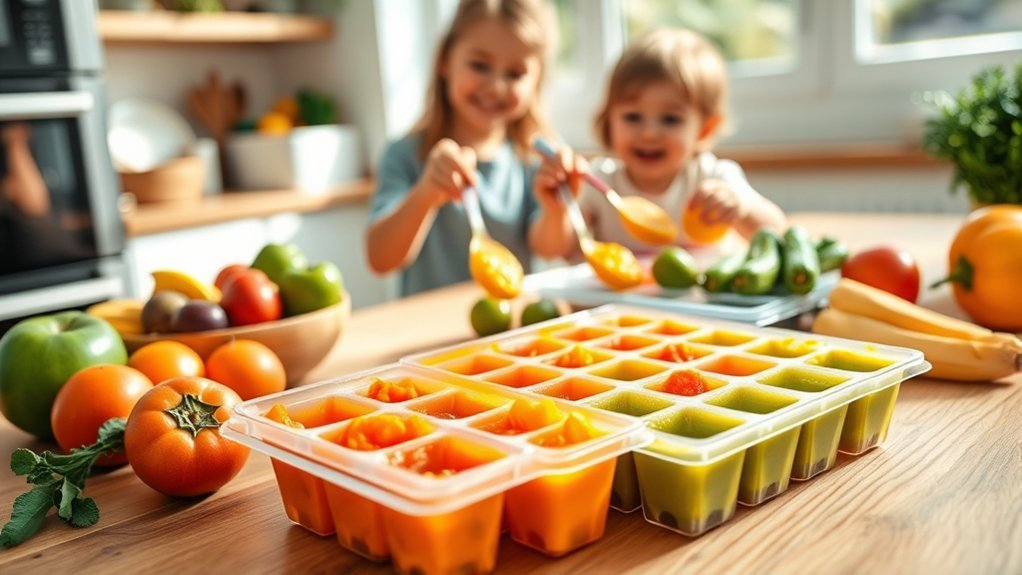
Freezing baby food offers numerous advantages that can simplify your meal prep and guarantee your little one enjoys healthy meals.
One significant benefit is nutritional preservation; when stored properly, homemade baby food retains its quality for 3-6 months, ensuring your baby gets fresh, wholesome options.
Nutritional preservation is key; properly stored homemade baby food stays fresh for 3-6 months, offering wholesome options for your little one.
With ice cube trays, you can enjoy meal convenience by controlling portions, defrosting only what you need for each feeding. This method not only maintains the texture of purees but also allows you to prepare a variety of flavors ahead of time, promoting a diverse palate for your baby.
Organizing and labeling the cubes helps reduce waste, ensuring older foods are used first.
Embrace these benefits for streamlined, health-focused feeding.
Essential Tools for Freezing Baby Food in Ice Cube Trays
When it comes to freezing baby food in ice cube trays, having the right tools can make all the difference. Start with BPA-free plastic ice cube trays, as they’re made from safe materials and easy to clean.
You’ll also need a blender or hand mixer to puree fruits and vegetables before transferring them into the trays. Don’t forget a clean marker for labeling the trays with the food type and date, helping you track what you’ve frozen.
Once pureed, allow the food to cool to room temperature for safety and quality. Finally, cover the trays with plastic wrap or aluminum foil during the freezing process to prevent contamination and preserve the flavor of your baby food.
Step-by-Step Guide to Preparing Baby Food for Freezing
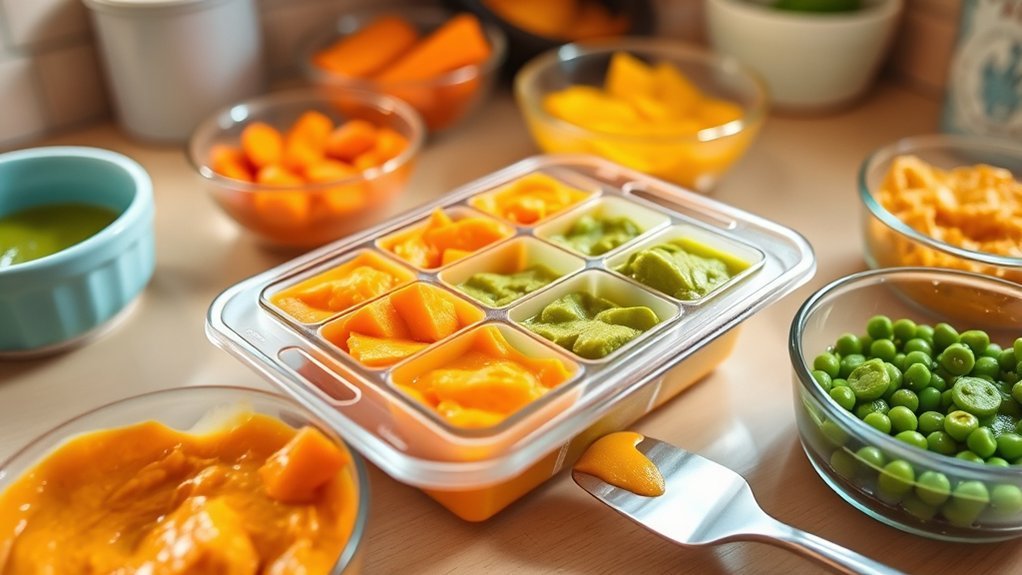
Preparing baby food for freezing is a straightforward process that guarantees your little one has nutritious meals ready at a moment’s notice.
Start by washing, peeling, and cooking your selected fruits or vegetables until they’re soft enough for pureeing, ensuring ideal baby food nutrition. Blend or use a hand mixer to achieve a smooth consistency, perfect for tiny tummies.
Next, fill your ice cube trays with the pureed food, leaving a bit of space in each compartment for expansion. Cover the trays with plastic wrap or aluminum foil to keep out freezer odors.
Freeze for at least 24 hours before popping out the cubes and storing them in labeled freezer bags. Experiment with different flavor combinations to keep mealtime exciting!
How to Freeze Baby Food in Ice Cube Trays
To guarantee your baby food stays fresh and easy to serve, using ice cube trays is an effective method for freezing purees.
Start by selecting clean, BPA-free trays and fill each compartment halfway to allow for expansion. After pouring in your desired baby food flavors, cover the trays with plastic wrap or aluminum foil to prevent freezer burn.
Freeze for at least 24 hours until solid, then transfer the cubes to freezer-safe bags for long-term storage. Remember to label the bags with the food type and freezing date for organization.
This method not only promotes portion control but also assures your baby enjoys a variety of flavors while keeping meals fresh for 3-6 months.
Cover and Store Ice Cube Trays: Best Practices

To keep your baby food fresh, cover your ice cube trays with plastic wrap to block out freezer odors and prevent freezer burn.
Make sure to label each tray with the type of puree and the date it was made, so you can easily identify and track storage time.
Finally, store the trays flat in the freezer to avoid spills and maximize space.
Use Plastic Wrap Covering
Covering ice cube trays with plastic wrap is a simple yet effective way to preserve the quality of your homemade baby food. The plastic wrap benefits include preventing freezer burn and keeping your food fresh.
To maximize these advantages, use proper sealing techniques by ensuring the wrap is tightly secured around the edges of the tray. This prevents any absorption of unwanted odors from the freezer.
Make sure not to overfill the compartments, as food expands when frozen, which could lead to spillage if uncovered.
Once the baby food is frozen, consider transferring the cubes into labeled freezer bags for long-term storage while maintaining an airtight seal. This method keeps your baby food in top condition for future meals.
Label For Easy Identification
Labeling your ice cube trays is essential for easy identification of frozen baby food. Clear labels help you quickly find the right cubes without confusion. Use effective labeling techniques, such as writing the food type and freezing date directly on the trays. This way, you’ll know exactly what you’re grabbing.
| Food Type | Freezing Date |
|---|---|
| Carrot Puree | 10/01/2023 |
| Pea Puree | 10/02/2023 |
| Sweet Potato Puree | 10/03/2023 |
| Apple Sauce | 10/04/2023 |
| Squash Puree | 10/05/2023 |
After freezing, store labeled cubes in an airtight container or freezer bag for long-term organization and easy access. Proper identification methods streamline your baby food routine.
Store In Freezer Safely
After you’ve labeled your ice cube trays, it’s important to focus on proper storage techniques to keep your baby food safe and fresh.
Start by covering the trays with aluminum foil or plastic wrap to prevent contamination and odors from affecting the food. Make sure the trays are level while freezing to avoid spills and preserve shape.
Once the cubes are solid, transfer them to labeled, airtight containers or plastic bags for long-term storage, ensuring you note the food type and date prepared. This practice enhances freezer organization and food safety, allowing you to track freshness easily.
Store these containers on the top shelf to maintain ideal texture and minimize temperature fluctuations during door openings.
Storage Duration of Frozen Baby Food: Guidelines and Tips
When you’re freezing baby food, understanding how long different types can last is vital for maintaining both quality and nutrition. Follow these freezing guidelines to enhance freshness:
| Food Type | Storage Duration | Notes |
|---|---|---|
| Cooked Vegetables | 6-8 months | Label with date and type |
| Meats (Beef/Lamb) | 4-6 months | Ideal quality in this range |
| Oily Fish | 3-4 months | Check for signs of freezer burn |
Make certain to store your baby food at a consistent temperature below -18°C. Regularly inspect for spoilage, and use the food within the recommended timeframes to guarantee the best taste and nutritional quality for your little one.
Thawing Frozen Baby Food Safely?
When it comes to thawing frozen baby food, you have a few safe options to choose from.
The refrigerator method is ideal for maintaining texture, while a hot water bath can speed things up if you’re in a hurry.
If you opt for the microwave, just remember to stir well to eliminate any hot spots before serving it to your little one.
Refrigerate Overnight Thawing Method
Thawing frozen baby food safely is essential for maintaining its quality and guaranteeing your baby’s health. The refrigeration benefits of thawing overnight help preserve both texture and nutrients while minimizing bacterial growth. Simply place the ice cube trays in the refrigerator before bedtime, and you’ll wake up to perfectly thawed meals.
| Time | Action | Notes |
|---|---|---|
| Evening | Place trays in fridge | Allows safe, gradual thaw |
| Morning | Check food temperature | Use a clean spoon to test |
| Before serving | Consume within 24 hours | Guarantees freshness and safety |
Quick Hot Water Bath
If you’re in a hurry and need to thaw baby food quickly, a hot water bath is an effective method. This technique allows for quick thawing without cooking the food, guaranteeing it retains its nutrients and flavor.
Follow these steps for safe thawing:
- Place the ice cube tray in a bowl of warm water, keeping the water level below the tray’s edge.
- Stir the cubes gently in the warm water bath to promote even thawing and reduce hot spots.
- Once thawed, transfer the cubes to a clean dish for reheating.
Always test the temperature of the thawed food before serving to avoid burns.
Aim for piping hot food throughout to secure your little one’s safety and enjoyment!
Microwave Cubes Carefully
How can you safely thaw frozen baby food cubes in the microwave?
Start by placing your cubes in a microwave-safe dish and cover it to keep moisture in during heating. Heat the cubes in short intervals of 15-30 seconds, stirring in between to guarantee even warming and prevent hot spots.
Always test the temperature with a clean spoon before serving; it should be piping hot throughout but cool enough for your baby to eat safely.
Remember, microwave safety is essential—avoid reheating baby food more than once to reduce the risk of bacterial growth.
Also, steer clear of using the microwave for items containing raw meat or eggs to avoid uneven cooking.
Enjoy the liberation of quick, safe meals for your little one!
Reheating Frozen Baby Food: Tips for Safety and Quality
When reheating frozen baby food, it’s important to heat it until it’s piping hot throughout to guarantee your baby’s safety. Here are some effective reheating techniques to guarantee food safety and quality:
- Thaw Gradually: Place frozen cubes in the refrigerator overnight for a slow defrost, preserving nutrients.
- Use a Hot Water Bath: For quicker results, submerge the container in hot water to thaw while keeping the food’s texture intact.
- Microwave with Care: If using a microwave, stir the food thoroughly to eliminate hot spots that can burn your baby’s mouth.
Always test the temperature with a clean spoon before serving.
Common Mistakes to Avoid When Freezing Baby Food
While freezing baby food can be a straightforward task, several common mistakes can compromise its safety and quality.
First, avoid overfilling ice cube trays; leave space for food expansion to prevent spills and sticking.
Make sure your purees are completely cooled before freezing to maintain safety and aid in texture preservation.
Ensure your purees are fully cooled before freezing for optimal safety and texture.
Opt for flexible ice cube trays for easier removal of frozen cubes. If they stick, simply run the tray under cold water.
Always label your containers with the food type and freezing date; this prevents confusion and encourages using older purees first.
Finally, steer clear of freezing raw eggs in shells or watery fruits, as these items can negatively affect texture and safety when thawed.
Using Frozen Baby Food Cubes in Different Meals
Once you’ve successfully frozen your baby food, you can easily incorporate those frozen cubes into a variety of meals.
These meal combinations can introduce delightful flavor pairings and textures for your little one. Here are three ideas to get you started:
- Mix sweet potato cubes with peas for a nutritious and tasty blend.
- Combine apple cubes with oatmeal to create a sweet breakfast option.
- Pair carrot cubes with chicken puree for a savory lunch.
Remember to thaw the cubes within 24 hours and reheat them thoroughly until piping hot.
Always test the temperature before serving to guarantee safety.
Frequently Asked Questions
Can I Freeze Baby Food That Contains Dairy?
Yes, you can freeze baby food with dairy, but it may affect texture. Consider using dairy alternatives for better freezing results. Always follow freezing tips like labeling and storing in airtight containers for ideal freshness.
Is It Safe to Refreeze Thawed Baby Food?
It’s not safe to refreeze thawed baby food. Once thawed using safe methods, like refrigeration, it should be used within 24 hours to guarantee food safety. Always prioritize your baby’s health and well-being.
What Types of Fruits and Vegetables Freeze Best?
Berries, bananas, and peaches freeze best among fruits, while carrots, peas, and spinach excel in vegetable storage. Choose ripe options to enhance flavor and nutrition, ensuring your baby enjoys the freshest, healthiest choices.
How Can I Determine the Right Portion Size for Freezing?
To nail portion control, think of your baby’s appetite as an endless ocean. Consider their feeding schedule, starting with one-ounce servings. Adjust based on their growth, ensuring you always have the perfect amount ready to go.
Are There Any Allergens I Should Avoid When Making Baby Food?
You should avoid common allergens like dairy, eggs, peanuts, tree nuts, soy, wheat, and shellfish when making baby food. Safe substitutions include avocado, sweet potatoes, and pureed fruits, which keep your baby’s meals nutritious and safe.
Conclusion
In wrapping up, freezing baby food in ice cube trays is a clever way to keep mealtime stress at bay while ensuring your little one enjoys nutritious meals. By following these simple steps and best practices, you’re not just saving time but also safeguarding the quality of your baby’s food. So, embrace the convenience of your freezer and let those colorful cubes bring joy and nourishment to your baby’s palate, one delightful bite at a time!