Introducing lumpy textures to your baby is essential for their development. First, watch for signs of readiness, like interest in food and the ability to sit up. Start with soft, mashed foods containing small lumps, such as ripe bananas or cooked sweet potatoes. Gradually increase the texture as your baby adjusts. Encourage self-feeding with small portions and monitor their reactions closely. Create a positive mealtime environment to foster exploration. There’s much more to discover about making this change smooth and enjoyable.
Key Takeaways
- Observe signs of readiness, such as sitting upright and showing interest in food, before introducing lumpy textures around 7 months.
- Start with soft mashed foods containing small lumps, like ripe bananas or cooked sweet potatoes, for a gradual texture transition.
- Encourage self-feeding with teething biscuits or puffed cereals around 8-9 months to enhance chewing skills and independence.
- Create a positive mealtime environment with colorful utensils and minimal distractions to promote exploration and curiosity about new textures.
- Monitor reactions closely, providing positive reinforcement for trying new foods, and ensure safety by supervising closely during feeding.
Why Introduce Lumpy Textures to Your Baby?

Introducing lumpy textures to your baby is a crucial step in their development. By gradually incorporating these textures, you enhance their oral motor skills, which are essential for chewing and speech development.
The benefits of textures extend beyond immediate feeding; introducing a variety of textures can positively shape their long-term food preferences and dietary choices. Around 7-8 months, lumpy foods encourage self-feeding, fostering independence during mealtimes.
As you monitor your baby’s reactions to these textures, you’ll gain valuable insights into their readiness for solids and can tailor your feeding approach to their individual needs.
Embracing texture variety not only supports your baby’s growth but also empowers them to explore new tastes and experiences confidently.
How to Recognize Signs of Readiness for Textured Foods?
How can you tell if your baby is ready for textured foods? Look for your baby’s cues around 6 to 7 months, such as sitting upright and showing interest during mealtimes.
Signs of feeding readiness include reaching for food, excitement when you eat, and the ability to move food to the back of their mouth and swallow.
Look for signs like reaching for food, showing excitement during meals, and swallowing ability to gauge your baby’s readiness for textured foods.
If your baby can mash soft foods with their gums and has started developing teeth, they’re likely ready for lumpier textures.
Don’t be alarmed by gagging; it’s a normal reflex as they learn to handle different textures.
Additionally, if your baby rejects purees, it may indicate a preference for the challenge of self-feeding with textured options.
Step-by-Step Guide to Transitioning to Lumpy Textures
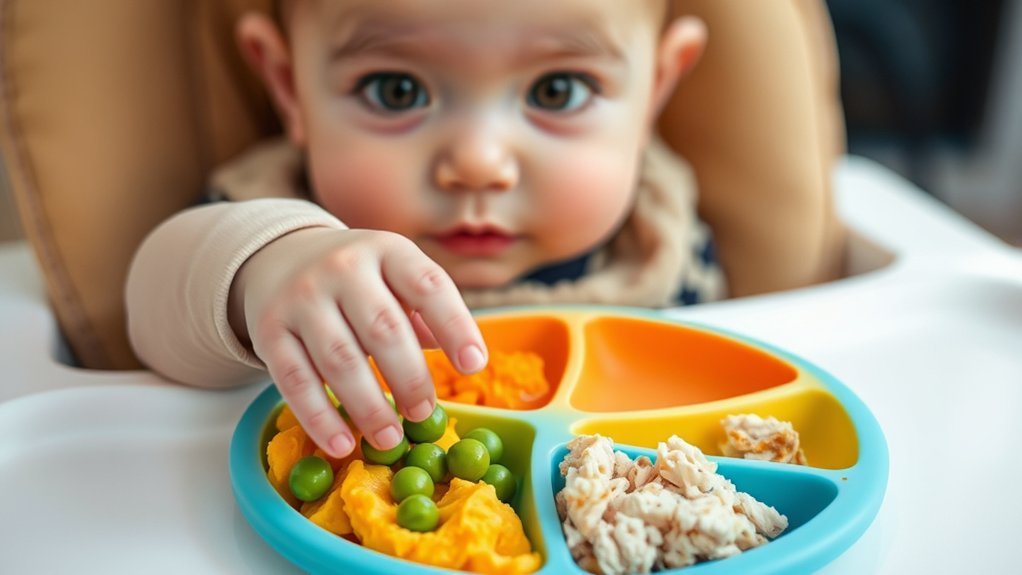
As you prepare to introduce lumpy textures, it’s important to recognize your baby’s readiness signals.
Start with gradual texture progression, beginning with soft mashed foods that contain small lumps. This approach enables a smoother change while ensuring your baby feels comfortable exploring new consistencies.
Recognizing Baby’s Readiness Signals
Recognizing when your baby is ready to explore lumpy textures is essential for a smooth change in their eating journey. Typically, around 6-7 months, you’ll notice baby cues indicating feeding readiness, such as sitting upright and showing interest in food.
Watch for signs like reaching for food, attempting to self-feed, or getting excited during family meal preparations. It’s normal for your baby to gag as they learn to manage lumpy textures; this indicates their oral motor skills are developing.
However, if your baby consistently pushes lumpy foods out with their tongue, it may be best to continue with smooth purees until they’re more ready. Introducing mashed foods like bananas or soft vegetables around 7 months can support this change safely.
Gradual Texture Progression Steps
Introducing lumpy textures to your baby can be an exciting milestone in their feeding journey, and it’s best approached in gradual steps. Start around 7 months corrected age, focusing on soft, mashed foods like bananas and avocados. As your baby becomes accustomed to these textures, gradually increase thickness with thicker purees.
Here’s a simple progression table for texture exploration:
| Stage | Food Examples |
|---|---|
| Soft Mashed Foods | Bananas, Avocados |
| Thicker Purees | Smooth pureed carrots |
| Finger Foods | Cooked carrot sticks, soft pasta |
Monitor your baby’s reactions closely, maintaining a relaxed mealtime environment. This gradual exposure helps them adapt comfortably to lumpy textures, fostering independence in self-feeding.
Top First Textured Foods for Babies: What to Start With
When you’re ready to introduce textured foods to your baby, starting with soft, easily mashable options is essential for a smooth changeover. Ripe bananas and avocados are excellent first foods, as they’re gentle on your baby’s palate and easy to manage.
Next, consider cooked and mashed vegetables like sweet potatoes or carrots, which offer essential nutrients and introduce new textures. Pureed fruits with a thicker consistency, such as applesauce made from cooked apples, can help your baby acclimate to lumpy textures.
Don’t forget soft-cooked grains like oatmeal or quinoa for a different texture variety. Finally, around 8-9 months, teething biscuits or puffed cereals can encourage chewing and exploration of more complex textures, enriching your baby’s feeding experience.
How to Encourage Self-Feeding With Finger Foods: Practical Tips
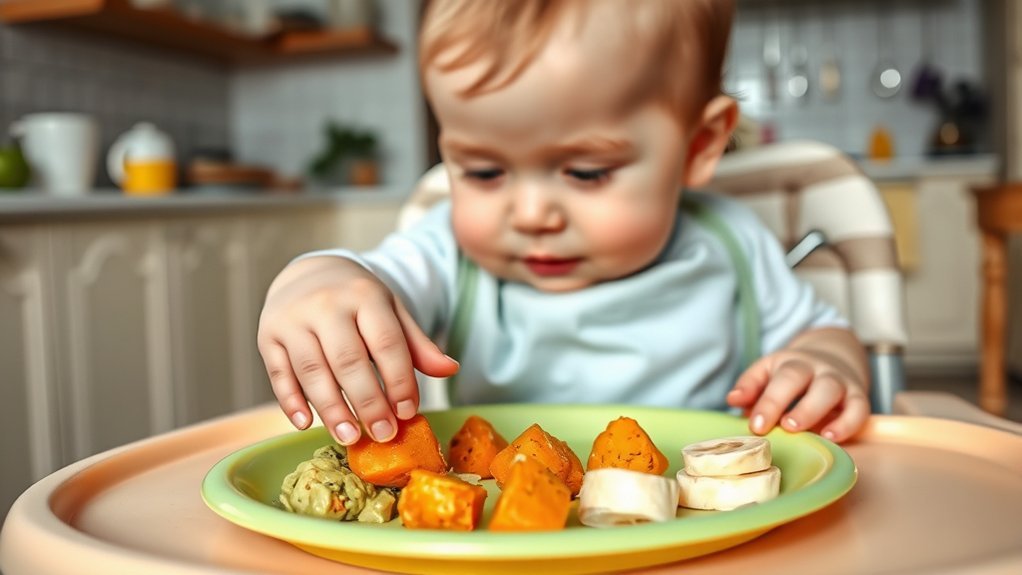
Self-feeding is an exciting milestone in your baby’s development, typically beginning around 6-8 months of age when they can sit up independently and show interest in feeding themselves. To support this, offer soft, easily graspable finger food ideas like ripe bananas or cooked sweet potatoes. Allow your baby to explore and manipulate these foods, which fosters fine motor skills and independence.
| Finger Food Ideas | Self Feeding Techniques |
|---|---|
| Ripe bananas | Encourage picking up and grasping |
| Cooked sweet potatoes | Allow exploration and mess-making |
| Soft-cooked veggies | Provide a variety of textures |
| Small pieces of fruit | Supervise closely for safety |
Gagging vs. Choking: Key Facts for Parents
Understanding the difference between gagging and choking is essential for your baby’s feeding safety.
Gagging is a natural reflex that helps your baby manage new textures, while choking indicates a blocked airway that demands immediate action.
Gag Reflex Explained
The gag reflex serves as an essential protective mechanism for babies, helping them navigate the shift to solid foods. This natural response pushes food that’s too large or thick toward the front of the mouth, allowing your baby to handle textures safely.
Gagging is common when introducing lumpy foods and is part of their developmental milestones, signaling that they’re learning to chew and swallow. You’ll notice coughing sounds or gagging motions, which are typically not dangerous.
It’s vital to differentiate between gagging and choking; while gagging usually requires no intervention, choking does. To minimize choking risks, supervise mealtimes closely, avoid hard or small round foods, and guarantee food is cut appropriately for your baby’s stage.
Signs of Choking
Recognizing the signs of choking is essential as you introduce lumpy textures to your baby’s diet. Gagging is a normal reflex that helps your little one manage food safely, pushing it forward in the mouth.
However, choking is more serious; it occurs when an object completely blocks the airway, leading to difficulty breathing. It’s vital to differentiate between the two. Gagging may increase as your baby learns to handle lumpier foods and shouldn’t cause panic.
Always supervise mealtimes closely, ensuring foods are appropriately sized and soft to minimize choking hazards. Familiarizing yourself with these signs empowers you to respond effectively, ensuring an appropriate emergency response if choking occurs, and maintaining a safe feeding environment for your baby.
Safety Tips During Feeding
While introducing lumpy textures to your baby’s diet, it’s vital to prioritize safety during feeding. Understand that gagging is a normal reflex, helping your baby manage larger food pieces, while choking is a serious emergency requiring immediate action.
To create a safe feeding environment, avoid hard foods and make certain small, round items are squashed or cut into manageable pieces. Supervision is important—never leave your baby alone with food, as you must respond quickly to any choking incidents.
Pay attention to your baby’s cues; they can indicate discomfort or difficulty with textures. Educating yourself on the differences between gagging and choking will help reduce anxiety and foster a safer, more enjoyable feeding experience for both you and your baby.
Creating a Positive Mealtime Environment for Texture Exploration
Creating a positive mealtime environment is crucial for encouraging your baby to explore lumpy textures. By fostering a welcoming mealtime atmosphere, you can support sensory exploration and make the experience enjoyable.
Fostering a welcoming mealtime atmosphere is essential for encouraging your baby to explore new textures and flavors.
Here are some tips to enhance the mealtime setting:
- Use colorful feeding mats and vibrant utensils to capture your baby’s interest.
- Minimize distractions, allowing your baby to focus and feel relaxed while trying new foods.
- Offer a variety of textured foods to spark curiosity and experimentation.
Join your baby at mealtimes, modeling enjoyment of textured foods. Your enthusiasm can motivate them to explore new tastes.
Always supervise closely, ensuring safety while observing their reactions, which is essential for their learning process.
Frequently Asked Questions
What Age Should I Start Introducing Lumpy Textures?
You should start introducing lumpy textures around 8 to 10 months, as your baby’s development progresses. Ensuring a gradual texture progression helps them adapt better, promoting independence and exploration in their eating experiences.
Can I Mix Lumpy Textures With Purees?
Absolutely, you can mix lumpy food combinations with purees. This approach helps your baby explore texture preferences while easing the shift. Gradually increase lumpy bits, fostering independence and encouraging adventurous eating habits.
How Can I Tell if My Baby Dislikes a Texture?
You’ll notice your baby’s cues, like turning their head, grimacing, or pushing food away, indicating texture sensitivity. Pay attention to these reactions to better understand their preferences and support their journey with new textures.
What Should I Do if My Baby Refuses Lumpy Foods?
If your baby’s not keen on lumpy foods, gently encourage texture exploration. Offer a variety of baby food preferences, mixing lumps with smooth options. Gradually, they’ll discover delightful new tastes and textures, fostering independence.
Are There Any Foods to Avoid When Introducing Lumps?
When introducing lumps, avoid foods with choking hazards like whole nuts, popcorn, or hard fruits. Also, be cautious with allergenic foods like peanuts and shellfish, introducing them gradually to monitor for any allergy concerns.
Conclusion
Introducing lumpy textures to your baby can feel intimidating, yet it’s an essential step in their development. Embrace the mix of excitement and apprehension as your little one explores new sensations. While the thought of gagging might instill fear, remember that it’s a natural part of learning. By fostering a positive mealtime environment, you’re guiding your baby toward independence and confidence. Balancing caution with encouragement, you can transform mealtimes into joyful adventures of discovery.