Introducing peanut-containing food during infancy can help reduce the chance of a future peanut allergy, but timing and preparation matter. Most babies can try peanut once they are ready for solid foods, usually at about 6 months. Babies with severe eczema, egg allergy, or a previous food reaction need guidance from a pediatrician or allergist first.
Quick Answer
Most babies can try peanut once they are developmentally ready for solid foods, usually around 6 months and never before 4 months. Babies with severe eczema, egg allergy, or a previous food reaction need clinician guidance first. Use a thinned, smooth peanut food, offer a small taste, and watch closely for two hours.
Key Takeaways
- Do not introduce peanut before 4 months or before your baby is developmentally ready for solid food.
- Ask a pediatrician or allergist for guidance first if your baby has severe eczema, egg allergy, a known food allergy, or a previous immediate food reaction.
- Use thinned smooth peanut butter, smoothly mixed peanut powder, or softened peanut puffs—not whole nuts, chopped nuts, chunky peanut butter, or a thick spoonful.
- Offer the first serving during the day while your baby is healthy, seated upright, and continuously supervised.
- After a successful introduction, keep peanut in your baby’s diet regularly in age-appropriate portions.
- For breathing trouble, tongue swelling, repeated vomiting with other symptoms, sudden limpness, or another sign of anaphylaxis, use prescribed epinephrine immediately and call 911.
At a Glance
| Time Required | About 10–15 minutes to prepare and feed, followed by 2 hours of close observation |
| Difficulty | Easy for most low-risk babies; clinician-guided for high-risk babies |
| Tools Needed | Small bowl, measuring spoon, infant spoon, smooth peanut product, water or familiar puree, and an upright high chair |
| Cost | Low; each feeding uses only a small amount of peanut product |
Medical note: This article provides general educational information and does not replace care from your child’s pediatrician or allergist. Follow your baby’s individual feeding plan and allergy action plan when those instructions differ from general guidance.
Why Early Introduction of Peanuts Is Important for Babies

Older advice often told families to delay peanut and other allergenic foods. Current pediatric guidance has changed. Once a baby is ready for solid food, delaying peanut without a medical reason does not prevent peanut allergy and may miss an important period for building tolerance.
The American Academy of Pediatrics advises offering age-appropriate peanut foods once a baby is ready for solids. The exact timing and setting depend on the baby’s allergy risk.
In the high-risk children followed in the LEAP-Trio study, regular peanut intake from infancy through age 5 was associated with a 71% lower rate of peanut allergy in adolescence than early peanut avoidance.
That result does not mean peanut introduction guarantees prevention, and it should not be used to treat a baby who already has a peanut allergy. It does show why timely, regular intake is now preferred over unnecessary avoidance.
When Is a Baby Ready to Try Peanut?
Age is only one part of readiness. Never give peanut-containing food before 4 months. Many babies are ready at about 6 months, when they can:
- Hold their head and neck steady.
- Sit upright with support and remain stable during feeding.
- Open their mouth or lean toward a spoon.
- Move soft food from the front of the mouth and swallow it instead of pushing it out.
- Handle a few familiar purees or other first foods without difficulty.
Breast milk or infant formula should remain the baby’s main source of nutrition during this stage. Peanut is introduced as a complementary food, not as a replacement for breast milk or formula.
How to Assess Your Baby’s Risk for Peanut Allergy
The most important guideline-defined risk factors are severe eczema and egg allergy. A previous immediate reaction to any food also needs medical review. Use the following table as a starting point, not as a substitute for your baby’s clinician.
| Risk group | Examples | Recommended approach |
|---|---|---|
| Higher risk | Severe eczema, egg allergy, or both | Talk with a pediatrician or allergist. Testing or supervised feeding may be recommended. Introduction may occur as early as 4–6 months when the baby is ready. |
| Moderate risk | Mild or moderate eczema | Introduce at about 6 months in an age-appropriate form. Routine testing is generally unnecessary unless the clinician identifies another concern. |
| Lower risk | No eczema, egg allergy, known food allergy, or previous reaction | Introduce once the baby is ready for solids, commonly at about 6 months, according to family preference and normal feeding routines. |
| Needs evaluation | Previous hives, swelling, repeated vomiting, wheezing, or another immediate reaction after food | Do not deliberately retry the suspected food at home. Contact the pediatrician or an allergist for an evaluation and a safe plan. |
Warning: Do not perform a home peanut introduction if your baby has a diagnosed peanut allergy, previously reacted to peanut, or has been told to avoid peanut. Early introduction is a prevention strategy, not a home treatment for an existing allergy.
Before the First Peanut Feeding
Choose the setting carefully so you can respond quickly if a reaction occurs:
- Feed peanut at home unless your clinician recommends a supervised medical setting.
- Choose a morning or early-afternoon meal, not bedtime or a rushed trip outside the home.
- Make sure your baby is healthy. Postpone the introduction during fever, vomiting, a significant respiratory illness, or a severe eczema flare.
- Use peanut as the only new food at that meal. Mix it with a food your baby has already tolerated.
- Keep your baby seated upright in a high chair or another secure feeding seat.
- Have a working phone nearby.
- If your child has a prescribed epinephrine device or allergy action plan, have it within reach and know how to use it.
Step-by-Step Process for Introducing Peanuts to Your Baby

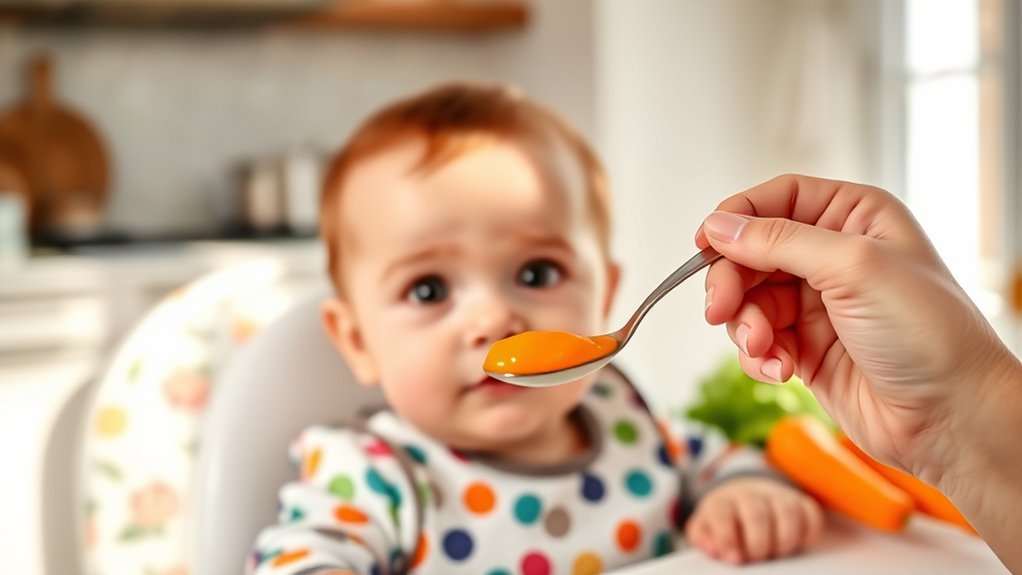
- Prepare a smooth, thin mixture. Use one of the baby-safe methods below. The food should slide easily from the spoon and contain no sticky lumps.
- Seat your baby upright. Never feed while your baby is lying down, crawling, walking, riding in a stroller, or traveling in a car.
- Offer a tiny first taste. Place a small amount on the tip of a spoon and let your baby swallow it.
- Pause for 10 minutes. Watch for hives, swelling, coughing, wheezing, vomiting, sudden drooling, unusual sleepiness, or a change in behavior.
- Continue slowly if there is no reaction. Offer the rest at your baby’s normal feeding pace. Do not force your baby to finish.
- Watch closely for two hours. Keep your baby nearby and avoid introducing another new food during that observation period.
- Record the feeding. Note the peanut product, approximate amount, time, and any symptoms. Share the record with your baby’s clinician if a concern develops.
Pro Tip: Photograph the peanut-product label before the first feeding. The ingredient list, brand, serving size, and lot details can be useful if you later need to discuss a reaction with a clinician.
Safe Peanut Forms for Babies
The safest option depends on your baby’s eating skills. All peanut foods should be smooth, soft, and easy to swallow.
- Thinned smooth peanut butter: Mix smooth peanut butter with warm water and allow it to cool, or blend it into a familiar puree.
- Peanut powder or flour: Mix a measured amount completely into water, cereal, yogurt, or puree until no dry powder or thick lumps remain.
- Peanut puffs: For early eaters, soften the puffs with warm water or puree and mash them into a smooth consistency. Older babies with established self-feeding skills may be able to eat an age-appropriate dissolvable puff while seated and supervised.
- Mixed soft foods: Stir a thin peanut mixture into foods your baby has already tolerated, such as infant oatmeal, plain yogurt, applesauce, mashed banana, or mashed avocado.
Do not add peanut butter to a bottle. Feeding the mixture by spoon helps you control its texture and observe how much your baby eats.
Preparing Peanut Butter Safely for Your Baby

A guideline-based serving can be prepared with:
- Measure 2 teaspoons of smooth peanut butter into a small bowl.
- Slowly stir in 2–3 teaspoons of hot water until the mixture is smooth and thin.
- Let it cool completely before feeding.
- If needed, add more water, breast milk, formula, infant cereal, or a familiar puree to produce an easy-to-swallow texture.
- Check carefully for sticky lumps before offering it by spoon.
The final consistency should be loose and spoonable rather than thick, pasty, or sticky. Use smooth peanut butter without nut pieces. Products with fewer added sugars and less sodium are reasonable choices, but a specific brand is not required.
Choking warning: Never give a baby whole peanuts, chopped peanuts, chunky peanut butter, dry clumps of peanut powder, or a thick spoonful of nut butter. The CDC identifies whole or chopped nuts and chunks or spoonfuls of nut butter as choking hazards for young children.
Serving Sizes and Frequency for Peanut Products
After your baby successfully tolerates peanut, continue offering it regularly instead of treating the first taste as a one-time test.
The NIAID peanut-allergy prevention guideline used approximately 6–7 grams of peanut protein per week over three or more feedings. Two teaspoons of smooth peanut butter contain approximately 2 grams of peanut protein, so a commonly used guideline-based pattern is about 2 teaspoons three times per week.
Your baby does not need to eat the full amount immediately. Begin with a small taste and build toward an age-appropriate serving as feeding skills and appetite allow. A pediatrician or allergist may recommend a different target for a high-risk baby.
Note: Regular exposure matters more than following an exact day-of-the-week schedule. Choose a routine your family can maintain, and do not force-feed a baby who turns away or shows signs of fullness.
What If Your Baby Refuses the Peanut Food?
Refusal does not mean your baby is allergic. Babies often need repeated chances to accept a new flavor or texture.
- Try a thinner consistency.
- Mix the peanut into a smaller amount of a familiar food.
- Offer it at a different meal when your baby is alert and hungry but not distressed.
- Start with a very small amount and increase gradually.
- Stop when your baby closes their mouth, turns away, or becomes upset.
Do not hide peanut in a large serving that makes it difficult to know how much was eaten. If your baby repeatedly cannot manage the texture, coughs while eating, or has feeding or swallowing difficulties, ask the pediatrician for guidance.
Recognizing Allergic Reactions After Introducing Peanuts
Allergic symptoms can begin within minutes, although some reactions develop later. Stay with your baby and watch for changes involving the skin, mouth, breathing, stomach, circulation, or behavior.
| Possible symptom | Examples | What to do |
|---|---|---|
| Possible mild reaction | A few hives, localized redness, or mild itching without breathing, circulation, or repeated stomach symptoms | Stop feeding, stay with your baby, and contact the pediatrician or after-hours medical service for prompt advice. Do not offer peanut again until a clinician says it is safe. |
| Breathing or throat emergency | Wheezing, repetitive coughing, trouble breathing or swallowing, hoarse cry, tongue swelling, or sudden heavy drooling | Use prescribed epinephrine immediately and call 911. |
| Multiple-system reaction | Hives or swelling together with vomiting, coughing, wheezing, or unusual behavior | Treat as possible anaphylaxis: use prescribed epinephrine and call 911. |
| Circulation or behavior emergency | Pale or bluish skin, sudden limpness, fainting, unusual sleepiness, confusion, weak responsiveness, or inconsolable crying with other symptoms | Use prescribed epinephrine immediately and call 911. |
| Repeated vomiting | More than one forceful vomiting episode, especially with hives, swelling, lethargy, pallor, or breathing symptoms | Treat as an emergency and call 911. Use prescribed epinephrine when anaphylaxis is suspected. |
A small red patch where food touched the skin can sometimes be irritation rather than an allergy. Because it can be difficult to tell the difference at home, stop the feeding and obtain medical advice rather than deliberately testing the food again.
Allergic Reaction Versus Choking
Choking and an allergic reaction are different emergencies, although both can involve breathing difficulty.
- Possible choking: Sudden inability to cry, cough effectively, or make sound while eating; clutching or distress; bluish color; or loss of responsiveness.
- Possible allergic reaction: Hives, facial swelling, wheezing, repetitive coughing, vomiting, sudden drooling, pale skin, unusual sleepiness, or symptoms affecting more than one body system after exposure.
Learn infant choking first aid and CPR from a qualified instructor before beginning solid foods. For a choking baby who cannot breathe or make sound, call 911 and begin age-appropriate choking first aid. Do not perform a blind finger sweep.
What to Do If Your Baby Has an Allergic Reaction
- Stop the feeding. Remove the food and keep your baby with you.
- Assess breathing and responsiveness. Look for wheezing, repetitive coughing, swelling, repeated vomiting, pale or blue skin, sudden limpness, or unusual sleepiness.
- Use prescribed epinephrine immediately for suspected anaphylaxis. Do not delay epinephrine while waiting for an antihistamine to work or while placing a phone call.
- Call 911. Tell the dispatcher that an infant may be experiencing anaphylaxis and whether epinephrine has been given.
- Position your baby safely. Keep the baby lying on their back when possible. Turn the baby onto their side if vomiting or having significant breathing difficulty.
- Follow the allergy action plan. If symptoms continue or worsen, give a second epinephrine dose only as directed by the child’s prescribed plan or the emergency dispatcher.
- Go to the emergency department. Symptoms can return even after initial improvement.
- Do not reintroduce peanut. Arrange follow-up with the pediatrician or an allergist before another exposure.
Emergency reminder: Epinephrine is the recommended first-line treatment for anaphylaxis. Antihistamines may reduce itching or hives, but they do not reverse dangerous breathing or circulation symptoms and must never replace epinephrine.
Tips for Making Peanut Products More Appealing to Babies
Peanut has a strong flavor and sticky texture, so acceptance may improve when it is introduced gradually:
- Blend a thin peanut mixture into a familiar puree.
- Stir peanut powder smoothly into infant oatmeal.
- Mix thinned peanut butter into plain full-fat yogurt after dairy has already been tolerated.
- Combine it with mashed banana, applesauce, sweet potato, or avocado.
- Adjust the amount of liquid so the mixture matches your baby’s current feeding skills.
- Offer small, calm tastes without pressure.
Do not roll slippery fruit pieces in chopped or coarsely ground peanuts. For babies who are not ready to manage pieces safely, mix finely milled peanut powder directly into a smooth mash instead.
Health Benefits of Peanuts for Your Baby
In addition to their role in allergen introduction, peanut foods can contribute useful nutrients to a varied diet:
- Energy and fat: Peanut foods provide concentrated energy and mostly unsaturated fat.
- Protein: Peanut protein can contribute to normal growth and tissue maintenance.
- Micronutrients: Peanuts contain nutrients such as niacin, magnesium, vitamin E, and zinc, although the amount a baby receives depends on the serving.
- Dietary variety: Early exposure can help a baby become familiar with a wider range of tastes and textures.
Peanut should remain one part of a varied diet that also includes iron-rich foods, fruits, vegetables, grains, dairy or appropriate alternatives, and other protein foods.
Frequently Asked Questions
Can I introduce peanuts if my baby has eczema?
Yes, but the eczema severity changes the plan. Mild or moderate eczema usually does not require peanut-allergy testing, and peanut can generally be introduced at about 6 months. Severe eczema places a baby at higher risk, so speak with a pediatrician or allergist before introduction.
What are the signs of a mild peanut reaction?
A possible mild reaction may involve a few hives, localized redness, or mild itching without breathing trouble, repeated vomiting, faintness, or unusual sleepiness. Stop feeding and contact your baby’s clinician promptly. Do not give peanut again until you receive medical guidance.
Should I consult a doctor before introducing peanuts?
Most healthy, lower-risk babies do not need testing or a special appointment before trying an age-appropriate peanut food. Consult a clinician first if your baby has severe eczema, egg allergy, a known food allergy, feeding difficulties, or a previous immediate reaction to food.
Can I use regular peanut butter instead of smooth peanut butter?
Use smooth peanut butter and thin it before feeding. Chunky peanut butter and thick spoonfuls of either smooth or chunky peanut butter can be choking hazards. The finished mixture should be loose, smooth, and easy to swallow.
Is it safe to give peanuts if there is a family history of allergies?
A family history can justify discussing concerns with the pediatrician, but the baby’s own severe eczema, egg allergy, known food allergy, or previous reaction is more important for deciding whether testing or supervised introduction is needed. Do not delay peanut solely because a relative has an allergy unless your baby’s clinician advises it.
How often should my baby eat peanut after the first serving?
Continue offering peanut regularly after it is tolerated. The NIAID prevention guideline used about 6–7 grams of peanut protein per week over three or more feedings, which is approximately two teaspoons of smooth peanut butter per feeding. Follow any individualized target from your baby’s clinician.
What should I do if my baby eats only a tiny amount?
Do not force the serving. A small taste can be the first step. Try again on another day with a thinner texture or a familiar food, provided no symptoms occurred. Gradually work toward an age-appropriate regular serving.
Conclusion
Introducing peanut can be a straightforward part of starting solid foods when you use the right timing, texture, and precautions. Wait until your baby is developmentally ready, use a smooth and thinned peanut food, supervise every bite, and continue regular servings after peanut is tolerated. Seek individualized guidance for severe eczema, egg allergy, or a previous reaction, and treat possible anaphylaxis as an emergency.
Sources
- American Academy of Pediatrics: When to Introduce Common Food Allergens — timing, risk factors, safe textures, and continued exposure.
- American Academy of Allergy, Asthma & Immunology: Peanut Allergy — updated risk-based introduction guidance.
- NIAID Addendum Guidelines for the Prevention of Peanut Allergy — risk groups, preparation methods, and weekly peanut-protein target.
- CDC: Choking Hazards for Infants and Young Children — prohibited nut and nut-butter textures.
- American Academy of Pediatrics: Anaphylaxis in Infants and Children — symptoms, epinephrine use, and emergency response.
- National Institutes of Health: Early Peanut Introduction and Lasting Protection — LEAP-Trio adolescence findings.