To make homemade chicken puree for your baby, start by choosing organic chicken thighs or boneless, skinless breasts. Boil cubed chicken in low-sodium broth for 15-20 minutes until cooked through. Transfer it to a blender, adding reserved broth gradually until smooth. For added flavor, consider pairing it with sweet potatoes or apples. Store the puree in the fridge for up to 3 days or freeze it for longer. There’s much more to discover about enhancing flavor and storage!
Key Takeaways
- Start with 8oz of organic, boneless, skinless chicken breast or thighs cut into small cubes for even cooking.
- Boil the chicken in low-sodium broth for 15-20 minutes until it reaches a safe internal temperature of 165°F.
- Transfer the cooked chicken to a blender, reserving broth to adjust the consistency as needed.
- Blend the chicken until smooth, adding reserved broth gradually to achieve the desired texture without chunks.
- Store the puree in airtight containers in the fridge for up to 3 days or freeze in ice cube trays for up to 2 months.
Choosing the Best Chicken for Baby Food
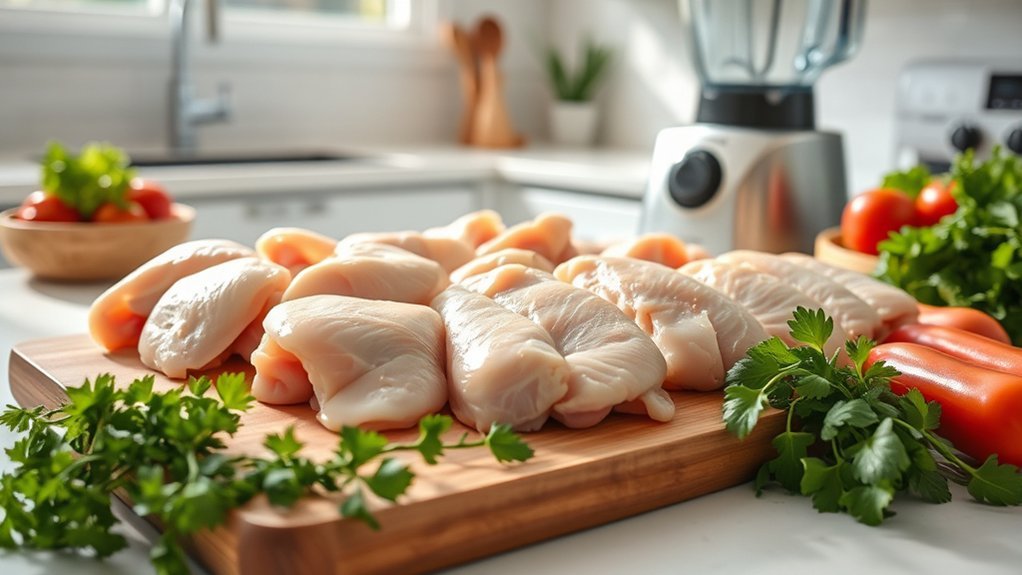
When it comes to making baby food chicken, choosing the right cut of meat is essential for both nutrition and taste. Opt for organic chicken whenever possible, as it minimizes exposure to antibiotics and hormones found in conventional poultry.
For a moister texture and richer flavor, chicken thighs are a fantastic choice, while boneless, skinless chicken breasts provide a lean source of protein. Regardless of your selection, verify the chicken is thoroughly cooked to an internal temperature of 165°F to eliminate harmful bacteria.
Cut the chicken into small cubes before cooking to promote even cooking and simplify the blending process. Additionally, consider using low-sodium or sodium-free chicken broth to enhance flavor without adding excessive salt, which isn’t recommended for babies.
Top Cooking Techniques for Chicken Puree
To create a smooth and nutritious chicken puree for your baby, you’ll want to choose the right cooking technique. Two popular methods are boiling techniques and steaming methods, each offering unique benefits.
- Boiling chicken for 15-20 minutes guarantees it reaches the safe internal temperature of 165°F.
- Steaming in a basket or aluminum foil helps retain moisture and nutrients, taking about 12-20 minutes.
- Shredding boiled chicken with forks gives a smoother texture, perfect for little tummies.
After cooking, blend the chicken with low-sodium broth or breast milk to achieve the ideal consistency.
Always monitor the texture, making sure no chunks remain for a safe eating experience. Empower your baby’s journey to solid foods with these effective techniques.
How to Make Chicken Puree in Simple Steps
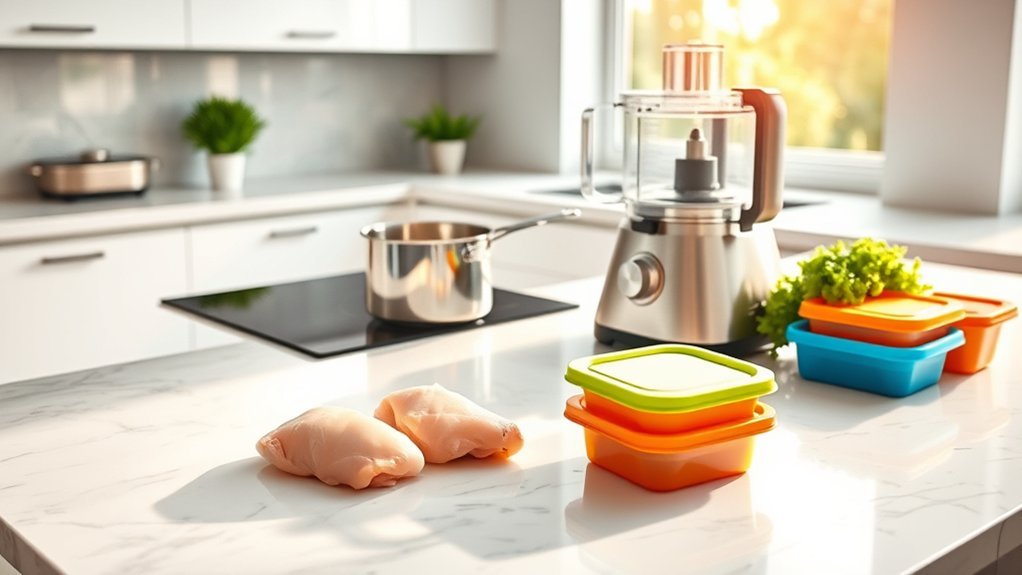
Making chicken puree for your baby is a straightforward process that guarantees they get a nutritious meal.
Preparing chicken puree for your little one is simple and ensures they receive a healthy meal.
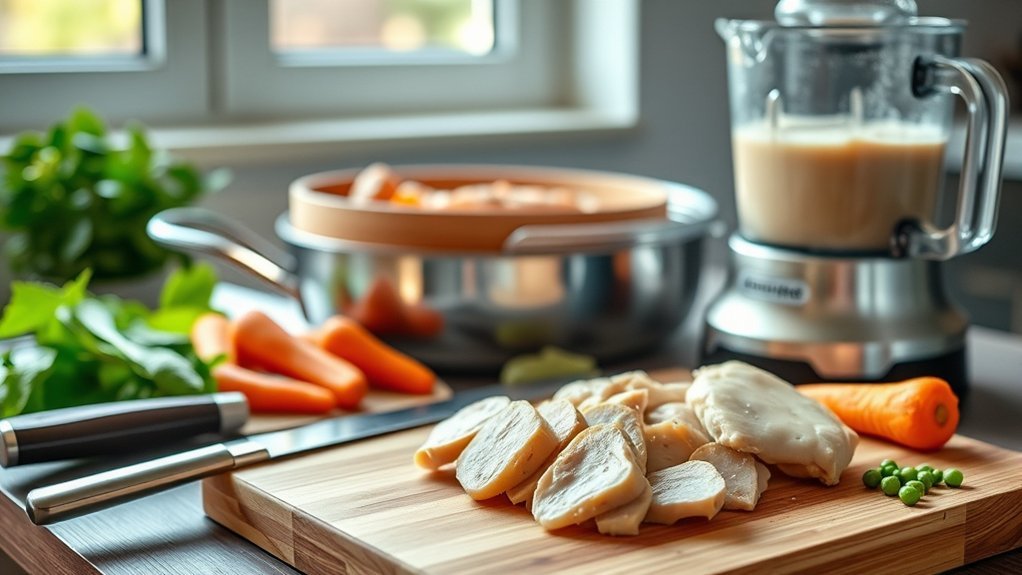
Start with 8oz of boneless, skinless chicken breast or thighs, cubed for even cooking. Boil the chicken in a medium saucepan with low-sodium broth and optional dried parsley for 15-20 minutes until fully cooked.
Using a slotted spoon, transfer the chicken to a blender, reserving the broth for adjusting the puree consistency. Blend the chicken, adding the reserved broth gradually until you achieve a smooth texture suitable for your baby’s age.
Store the chicken puree in airtight containers in the fridge for up to 3 days or freeze in ice cube trays for up to 2 months. This guarantees your baby enjoys healthy chicken nutrition in their meals.
Flavor Pairings to Enhance Chicken Baby Food
Enhancing chicken baby food with complementary flavors can elevate the taste and nutritional value of your baby’s meals. By pairing chicken with different ingredients, you not only boost its appeal but also provide essential nutrients.
- Sweet potato adds natural sweetness and creaminess, perfect for babies starting solids.
- Apple introduces mild sweetness and fiber, making the chicken puree smooth and palatable.
- Broccoli enriches the dish with vitamins C and K while balancing flavors.
These combinations not only highlight chicken benefits but also create delightful puree textures.
You can even experiment with herbs like parsley for added complexity, introducing them gradually to monitor for allergies.
Elevate your baby’s culinary experience while ensuring they enjoy their nutritious meals!
Storage Tips and Reheating Methods for Chicken Puree
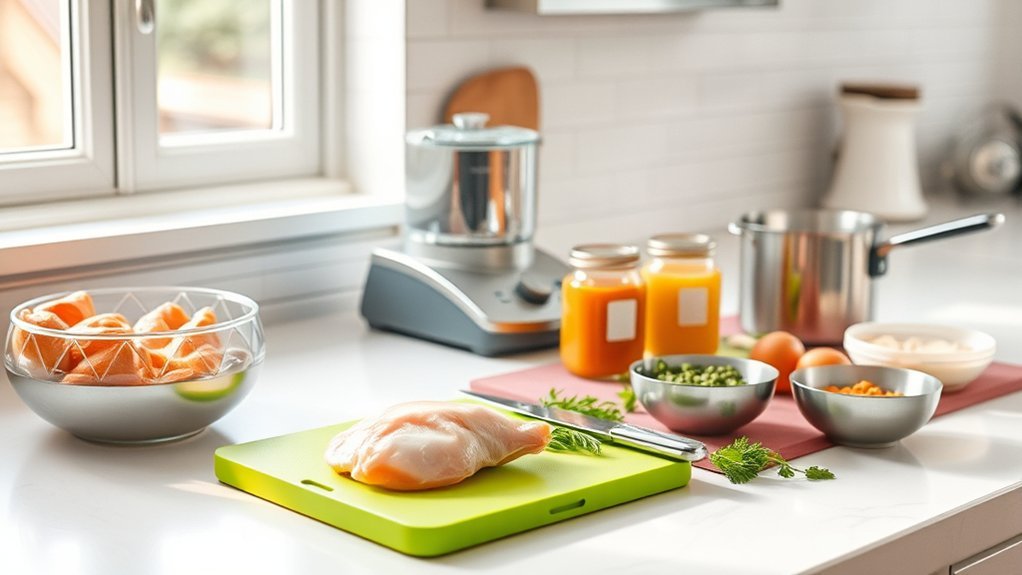
When storing chicken puree for your baby, it’s important to prioritize freshness and safety to guarantee your little one enjoys nutritious meals. Follow these refrigeration guidelines and freezing techniques for ideal storage:
| Storage Method | Duration |
|---|---|
| Refrigeration | Up to 3 days |
| Freezing | Up to 2 months |
| Thawing | Overnight in fridge |
| Reheating | Gentle warming on stove |
To freeze, pour the puree into ice cube trays for easy portioning, then transfer to storage bags. Always thaw frozen puree overnight in the fridge for safe reheating. Warm it gently in a small saucepan, stirring occasionally, and check the temperature before serving to verify it’s safe for your baby.
Frequently Asked Questions
Can I Use Frozen Chicken for Baby Food?
Yes, you can use frozen chicken for baby food. Just make sure it’s properly thawed and cooked thoroughly. This way, you provide a safe, nutritious option for your baby, packed with protein and essential nutrients.
How Long Can I Store Homemade Chicken Baby Food?
Like a treasure chest, homemade baby food storage can keep chicken puree fresh for up to three days in the fridge or six months in the freezer, ensuring your little one enjoys nutritious meals safely.
Is It Safe to Add Spices to Baby Food Chicken?
It’s generally safe to add spices to baby food chicken, but start with mild options. Spice safety matters; introduce flavors gradually, ensuring your baby tolerates them well. This approach fosters a diverse palate for future meals.
When Can I Introduce Chicken to My Baby’s Diet?
You can introduce chicken to your baby’s diet around 6-8 months, as it’s one of the first protein foods. Make certain it’s well-cooked and pureed for easy digestion, promoting a balanced, nutritious start to their meals.
What Are Signs My Baby Dislikes Chicken Puree?
If your baby shows signs like turning away, spitting out, or refusing to swallow chicken puree, they might dislike it. Keep an eye on their texture preferences, as they may prefer smoother or chunkier options.
Conclusion
In conclusion, making chicken baby food can be simple and rewarding. By choosing the right chicken and utilizing effective cooking techniques, you can create nutritious purees that your little one will enjoy. As the saying goes, “You are what you eat,” so providing wholesome meals sets the foundation for healthy eating habits. Remember to experiment with flavors and store leftovers properly to guarantee your baby gets the best out of every meal. Happy cooking!