
Baby food pouches can make feeding easier during travel, daycare, errands, and other busy moments. They can provide fruit, vegetables, grains, dairy, or protein, depending on the product. However, pouches should complement—not routinely replace—breast milk or formula, balanced meals, finger foods, and the varied textures children need as their feeding skills develop.
Quick Answer
Baby food pouches can be a useful part of a varied diet, but they are not automatically a complete meal. Choose products without added sugar, check the ingredients and nutrients, serve age-appropriate textures at other meals, supervise every feeding, and avoid letting a child repeatedly suck from a pouch throughout the day.
Key Takeaways
- Pouches are convenient for travel and busy days, but convenience does not make every product nutritionally balanced.
- Fruit-heavy pouches may contain a large amount of total sugar even when the label says “no added sugar.”
- Frequent reliance on smooth purees can crowd out iron-, protein-, fat-, and texture-rich foods.
- Offer mashed, lumpy, finely chopped, and soft finger foods as your child develops the skills to manage them safely.
- Feed children seated upright and supervised, keep the cap out of reach, and discard leftovers exposed to saliva.
Note: This article provides general feeding information. Ask your pediatrician or a qualified feeding professional for individualized advice if your child was born prematurely, has poor growth, has a food allergy, coughs or chokes while eating, has difficulty swallowing, or struggles to progress beyond smooth textures.
The Convenience of Baby Food Pouches for Busy Parents

As you juggle parenthood and a busy schedule, baby food pouches can be a practical way to carry an age-appropriate snack or part of a meal. Their popularity has grown rapidly because unopened products labeled as shelf-stable are portable, require little preparation, and usually create less mess than a bowl of puree.
Pouches are especially useful during travel, daycare drop-off, appointments, or emergencies when your normal meal routine is difficult to follow. Resealable packaging may also help with portioning, but only untouched food should be saved. If your child has sucked directly from the spout, saliva has entered the package and the remaining food should be discarded.
Pouches solve a real time-and-mess problem, but they work best as a backup—not as a replacement for meals that let children see, smell, touch, chew, and self-feed.
Flavor variety can also be helpful, but read the ingredients carefully. A pouch marketed with pictures of spinach, broccoli, or another vegetable may still contain apple, pear, or another sweet fruit as its first ingredient.

Power your essentials anywhere with a 999Wh pure sine wave power station delivering up to 1000W continuous with 2000W surge. It supports fast charging via USB-C PD 60W and USB-A QC 18W, plus simultaneous output for multiple devices through AC, USB, wireless, and car/DC ports. Recharge using AC, car, or solar with a built-in MPPT controller and dual cooling fans, while the upgraded battery management system protects against surges, short circuits, and overheating.

Made with 100% organic apples with no added sweeteners or preservatives

MADE WITH REAL FRUIT – Made from 100% organic fruit including apples and apple juice concentrate with no high fructose corn syrup, added sugar, or artificial ingredients
Nutritional Concerns About Baby Food Pouches
Baby food pouches vary widely. Some contain only fruit puree, while others include vegetables, grains, yogurt, beans, meat, or healthy fats. For that reason, it is more accurate to assess the individual product and the child’s overall diet than to label every pouch as either healthy or unhealthy.
Total Sugar Is Not the Same as Added Sugar
The CDC advises avoiding added sugar in foods for infants and young children. A pouch can meet that standard and still contain substantial total sugar because pureed fruit naturally contains sugar.
A 2019 German pediatric nutrition position statement found that sugar supplied almost 90% of the calories in some fruit-heavy pouches it reviewed. That figure does not describe every pouch, but it shows why “no added sugar” should not be the only factor you check.
Pureed fruit may retain fiber, depending on how it was processed, but it does not provide the same structure, chewing practice, or eating pace as pieces of soft fruit. Frequent, prolonged sucking also keeps carbohydrate-rich puree in contact with the teeth. The American Academy of Pediatric Dentistry recommends limiting frequent sugar exposure and choosing nutrient-dense snacks.
Iron, Protein, and Fat Still Matter
Fruit-only and fruit-dominant pouches are often low in iron, protein, and fat. They may be suitable as one component of a snack, but they should not routinely replace iron-rich foods such as meat, eggs, beans, lentils, tofu, or iron-fortified infant cereal.
Overreliance does not automatically cause a nutritional deficiency. The concern is that repeated pouch meals can crowd out more nutrient-dense foods. From 6 to 12 months, breast milk or iron-fortified infant formula remains the main source of nutrition while complementary foods gradually take on a larger role, according to the CDC’s infant feeding guidance.
Pouches and Selective Eating
Frequent pouch use has been associated in observational research with food fussiness and selective eating, but the evidence does not prove that pouches cause those behaviors. Children who already prefer smooth foods may also be more likely to receive pouches.
The practical concern is clearer: when a child frequently sucks puree without seeing or touching the food, they receive fewer opportunities to practice chewing, spoon use, finger feeding, and acceptance of less-sweet flavors.
How to Choose a Baby Food Pouch
Front-of-package phrases such as “organic,” “natural,” “veggie blend,” and “no added sugar” do not tell you whether the product is balanced. Turn the package over and review the full label.
- Check the first ingredients: Ingredients are listed by weight. If apple, pear, banana, or fruit concentrate appears first, expect a sweet, fruit-forward product even when vegetables appear on the front.
- Look for no added sugar: Avoid products listing sugar, syrup, honey, or fruit-juice concentrate used mainly as a sweetener. Never give honey to a child under 12 months.
- Consider the pouch’s role: A fruit puree may work as a side. A meal pouch should offer more than fruit and ideally include an age-appropriate source of iron, protein, or fat.
- Check sodium: Choose lower-sodium products and avoid using salty adult sauces to improve the flavor.
- Review allergens every time: Milk, egg, wheat, soy, sesame, peanuts, tree nuts, fish, and shellfish may appear in mixed products. Recipes can change.
- Check the age statement and texture: Marketing age ranges do not replace developmental readiness. Select food your child can manage safely.
- Inspect the package: Do not use a swollen, leaking, punctured, unsealed, or unusually damaged pouch.
Pro Tip: When a pouch is mainly fruit, pair it with an age-appropriate iron or protein source, such as iron-fortified infant cereal, plain pasteurized yogurt, mashed beans, egg, tofu, or finely prepared meat.
How to Encourage Healthy Eating Without Relying on Pouches

To encourage healthy eating, introduce a variety of flavors and textures as your child becomes ready for them. The CDC recommends progressing from smooth foods to mashed, lumpy, finely chopped, or ground foods as feeding skills develop.
Offer safe self-feeding opportunities, such as soft-cooked vegetables, ripe fruit, mashed beans, strips of omelet, or other foods prepared in an age-appropriate shape. Let your child touch, smell, squash, and taste the food. Mess is part of learning.
Use responsive feeding rather than pressure. Offer an appropriate amount, watch for hunger and fullness signals, and let your child decide whether and how much to eat. Turning away, closing the mouth, pushing food away, or becoming distracted can be signs of fullness.
| Food Type | How It Supports Feeding Skills |
|---|---|
| Soft Finger Foods | Soft-cooked vegetables and ripe fruit prepared in a developmentally appropriate size encourage grasping, self-feeding, and chewing practice. |
| Pureed Foods | Smooth food can help beginners learn to swallow from a spoon, but it should not remain the only texture once the child is ready to progress. |
| Mashes | Fork-mashed avocado, beans, potato, vegetables, or adapted family meals introduce thicker and less-uniform textures. |
| Small, Soft Pieces | Finely chopped or ground foods can be offered when your child has the skills to manage them safely. |
| Engaging Preparation | Older babies and toddlers can watch, touch safe ingredients, or help with simple supervised tasks to build familiarity with food. |
Balancing Pouch Use With Whole Foods and Textures
There is no evidence-based rule that every child must be limited to exactly one pouch a day. A better goal is to prevent pouches from becoming the default at every meal or snack.
Use them as a backup when needed, while continuing to offer whole foods and varied textures. Spoon-feeding a portion from a bowl lets your child see the food and interact with you during the meal. Offering soft solids alongside puree supports chewing, grasping, and oral feeding skills.
A simple balanced routine is to:
- Decide whether the pouch is a snack, side, or part of a meal.
- Add an iron-, protein-, or fat-rich food when the pouch is mostly fruit or vegetables.
- Offer a safe texture your child can touch or chew at the same meal.
- Allow your child to stop when showing signs of fullness.
- Return to regular family foods at the next eating opportunity rather than relying on another pouch automatically.
Continue exposing your child to vegetables that are not hidden behind sweet fruit. Familiarity often takes repeated, pressure-free exposure.
How to Use Baby Food Pouches Safely
Warning: Always seat your child upright and supervise the entire feeding. Remove the cap before handing over the pouch, keep the cap out of reach, and do not let a child eat while walking, lying down, or riding unattended in a moving vehicle.
- Wait for readiness: Most children begin complementary foods at about six months when they can control their head and neck, sit with support, bring objects to the mouth, and swallow food rather than pushing it out. Introducing solids before four months is not recommended. See the CDC’s readiness guidance.
- Consider using a spoon or bowl: Squeezing a portion into a dish makes it easier to control the amount and lets the child see and smell the food.
- Do not save saliva-exposed food: The FDA advises discarding baby food contaminated by saliva. This includes a pouch after the child has sucked from its spout.
- Do not microwave the pouch: Transfer food to a microwave-safe dish, heat only if needed, stir well, let it stand, and test the temperature before serving.
- Watch for allergic reactions: Stop feeding and seek medical advice for hives, repeated vomiting, facial swelling, coughing, wheezing, or other concerning symptoms. Call emergency services for breathing difficulty or signs of anaphylaxis.
- Know choking versus gagging: Gagging can be noisy and may happen while learning textures. Choking may be silent and requires immediate action. Caregivers should learn age-appropriate choking first aid.
Creative Ways to Incorporate Baby Food Pouches Into Family Meals

Incorporating baby food pouches into family meals can be both creative and convenient. Treat the pouch as an ingredient rather than assuming it is a complete meal.
- Mix fruit or vegetable puree into plain pasteurized yogurt or ricotta cheese after the dairy ingredient has been introduced safely.
- Spread a thin layer on soft French toast strips for a child who is developmentally ready and has already been introduced to egg and wheat.
- Combine puree with iron-fortified infant cereal to add texture and iron. Adjust the thickness so your child can manage it safely.
- Stir a savory vegetable pouch into mashed beans, lentils, potato, or an unsalted family meal.
- Use a small amount in muffins, pancakes, sauces, or smoothies for older toddlers, while continuing to serve recognizable fruits and vegetables separately.
These ideas can simplify meal preparation and introduce flavor variety. They should not hide every vegetable or replace opportunities for your child to learn what individual foods look, smell, and taste like.
Storage, Refrigeration, and Reusable Pouches
Store unopened commercial pouches according to the package instructions. Check the use-by date and confirm that the package is sealed, flat, and undamaged before serving.
After opening, follow the manufacturer’s directions first. The federal FoodSafety.gov storage chart gives these general refrigerated ranges for opened or freshly prepared baby food:
- Strained fruits and vegetables: Two to three days
- Strained meats and eggs: One day
- Meat-and-vegetable combinations: One to two days
- Homemade baby food: One to two days
Those ranges apply only when the food was handled cleanly and refrigerated promptly at 40°F (4°C) or below. If your child sucked from the pouch or ate from the storage container, discard the leftovers instead of refrigerating them.
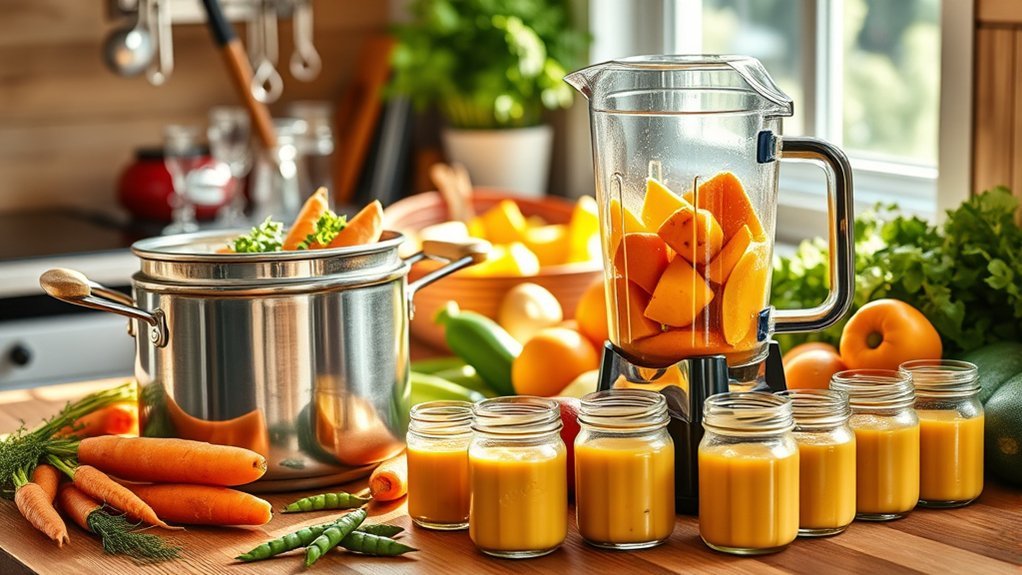
Homemade purees can be stored in reusable food pouches when the pouches are designed for freezing or refrigeration. Wash every component thoroughly, clean around the spout and seams, allow all parts to dry completely, label the food with its preparation date, and follow the pouch manufacturer’s limits. Thaw frozen puree in the refrigerator rather than on the counter.
Heavy Metals, Recalls, and Package Safety
Environmental contaminants such as lead, arsenic, cadmium, and mercury can enter fruits, vegetables, and grains through soil, water, and air. This concern is not unique to pouches or commercial baby food.
In January 2025, the FDA finalized action levels for lead in processed foods intended for babies and children under two. The guidance specifically includes food packaged in pouches, jars, tubs, and boxes.
You cannot determine a product’s contaminant level from its front label. Practical ways to reduce repeated exposure include serving a varied diet, rotating grains instead of relying only on rice, avoiding dependence on one product, and checking the FDA recall database for current notices.
Frequently Asked Questions
Are baby food pouches recyclable or eco-friendly?
Many pouches combine plastic, film, foil, and a separate cap, so they are not accepted in standard curbside recycling. Programs vary by brand and location. Check the package and your local recycling authority rather than placing the pouch in the recycling bin based on appearance alone. Reusable pouches may reduce packaging waste when they can be cleaned thoroughly and used many times.
How long do baby food pouches last after opening?
Follow the package instructions because ingredients differ. Government storage guidance ranges from one day for strained meats or eggs to two or three days for strained fruits and vegetables. Refrigerate promptly. If your child sucked directly from the spout, discard the remaining food because saliva can introduce bacteria.
Can homemade purees be stored in reusable pouches?
Yes, when the pouch is food-safe, clean, airtight, and approved for the intended refrigerator or freezer use. Clean the spout and seams carefully, dry every part, label the preparation date, and refrigerate homemade baby food for no more than one to two days unless it is frozen.
What age is appropriate for baby food pouches?
Complementary foods generally begin at about six months when a child shows developmental readiness. Introducing solids before four months is not recommended. The texture and feeding method should match the child’s abilities, and an adult should supervise every feeding.
Do baby food pouches contain preservatives or additives?
Some do and some do not. Many shelf-stable products rely on heat processing and sealed packaging rather than chemical preservatives. Read the full ingredients list for acids, starches, gums, concentrates, flavors, or other additives, and choose the formulation that fits your child’s needs.
Is it safe for a baby to suck directly from a pouch?
Direct feeding can be convenient when the child is seated upright and closely supervised. Remove the cap and keep it out of reach. Spoon or bowl feeding is preferable when practical because it supports interaction with the food. Never save a pouch after the child has sucked from it.
Can a baby food pouch replace a complete meal?
It depends on the ingredients, but many fruit and vegetable pouches are better treated as a side or snack component. Check for iron, protein, and fat, and pair a fruit-heavy pouch with other age-appropriate foods. Breast milk or infant formula remains the main source of nutrition from 6 to 12 months.
What should I do if my child refuses anything except smooth pouches?
Continue offering small, pressure-free opportunities to explore thicker and lumpier textures that are safe for your child’s development. Avoid forcing bites. Contact your pediatrician or a feeding specialist if your child coughs, chokes, loses weight, becomes distressed, or cannot progress beyond smooth foods.
Conclusion
Baby food pouches can be a helpful ally when time is tight, but they are best used as one tool within a varied feeding routine. Choose products by reading the full label, pair fruit-heavy purees with iron-, protein-, or fat-rich foods, and continue offering safe whole foods and changing textures.
Serve your child seated and supervised, keep caps out of reach, follow storage directions, and discard food exposed to saliva. This balanced approach preserves the convenience of pouches while supporting nutrition, chewing practice, self-feeding, and a positive relationship with food.
Sources
- CDC: When, What, and How to Introduce Solid Foods — developmental readiness, food introduction, texture, and choking prevention.
- CDC: Tastes and Textures — progression from purees to mashed, lumpy, finely chopped, and finger foods.
- CDC: Foods and Drinks to Avoid or Limit — added-sugar guidance for infants and young children.
- FDA: Once Baby Arrives—Food Safety — saliva contamination, portioning, refrigeration, and safe handling.
- FDA: Action Levels for Lead in Processed Foods for Babies and Young Children — 2025 lead guidance covering foods packaged in pouches.
- Scoping Review of Squeeze Pouch Use Among Infants and Children — current evidence on use patterns, product types, parental experiences, and research limitations.