
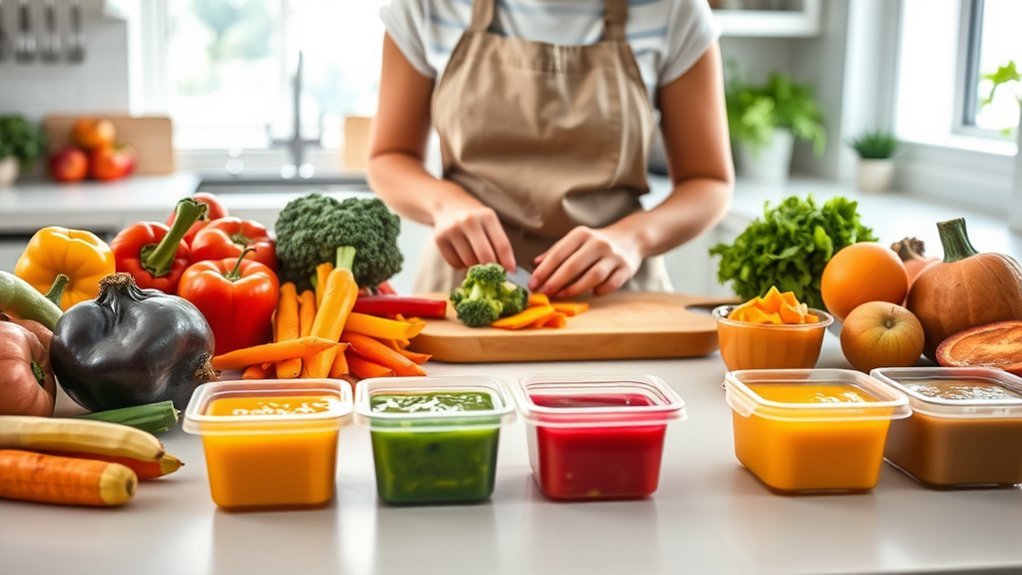
To meal prep baby food for the week, start by selecting nutrient-dense ingredients like avocados and sweet potatoes. Cook in bulk using a baby food prep machine, then portion the purees into airtight containers. Label each container with the date and food type before storing in the fridge or freezer. Remember to cool the food before freezing to maintain texture. Engaging serving ideas can make mealtimes fun—there’s more to explore to make this process easier and enjoyable!
Key Takeaways
- Choose nutrient-dense fruits and vegetables, like avocados and sweet potatoes, for optimal baby nutrition and flavor variety.
- Cook in bulk using a baby food prep machine to create purees or chunky textures suitable for your baby’s developmental stage.
- Portion the prepared baby food into individual servings using freezer trays, and label each container with the date and food type.
- Store pureed baby food in airtight containers; it lasts 2-3 days in the refrigerator and can be frozen for longer shelf life.
- Conduct weekly meal prep sessions to maintain a steady supply of healthy meals, ensuring a diverse diet for your baby.
Why Meal Prep Is Essential for Baby Food
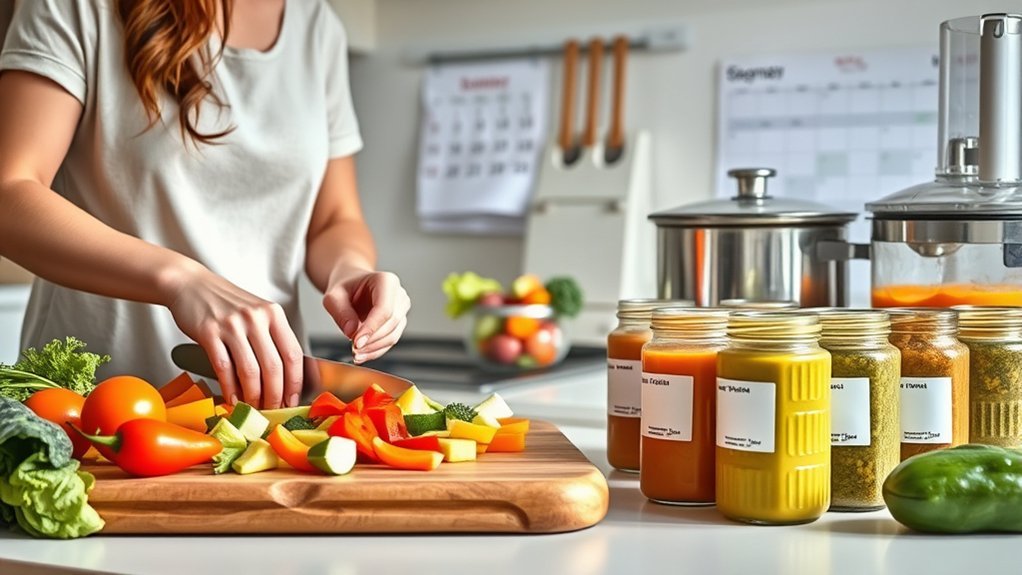
Meal prepping baby food is essential because it not only saves you time but also guarantees that your little one has access to nutritious meals throughout the week.
With meal prep efficiency, you can prepare meals in bulk and store them for easy access. Utilizing freezer storage extends the shelf life of homemade purees, allowing you to freeze individual portions in ice cube trays for later use.
Meal prep allows you to bulk prepare and conveniently store nutritious homemade purees for your baby.
This structured approach supports your baby’s development by introducing a variety of flavors and nutrients while preventing pickiness. Preparing in advance reduces daily stress, making mealtime enjoyable and fostering positive associations with food.
Embracing these baby food benefits empowers you to provide a balanced diet that focuses on diverse colors and food groups for ideal nutrition.
Choosing the Right Ingredients for Your Baby’s Diet
When choosing ingredients for your baby’s diet, focus on nutrient-dense first foods like avocados and sweet potatoes, which provide essential vitamins and healthy fats.
Opt for seasonal produce to guarantee freshness and flavor, while also exposing your baby to a variety of tastes.
This approach not only supports their growth but also helps establish healthy eating habits early on.
Nutrient-Dense First Foods
Choosing the right ingredients for your baby’s diet is vital for their growth and development, especially during those early months. By focusing on nutrient-dense first foods, you can make certain your little one gets the best start possible.
Here are some great options to contemplate:
- Avocado – Packed with healthy fats, avocado benefits brain development.
- Sweet Potatoes – Rich in beta-carotene and energy, these are a vibrant choice.
- Pureed Chicken – A simple protein source that supports muscle growth.
- Oats – A complex carbohydrate that aids digestion and provides sustained energy.
Incorporating a variety of colors and textures not only makes meals appealing but also assures a broad spectrum of nutrients vital for your baby’s health.
Seasonal Produce Selection
Selecting seasonal produce for your baby’s diet not only enhances flavor but also boosts nutrient content, making it an ideal choice for homemade baby food.
Seasonal benefits include higher nutrient levels and better taste, which can make meals more enjoyable for your little one. In fall, try sweet potatoes, carrots, and apples; in spring, consider peas, asparagus, and strawberries.
Choosing organic options reduces pesticide exposure, promoting your baby’s health. Local sourcing at farmers’ markets not only supports your community but often offers fresher produce at lower prices.
Don’t hesitate to experiment with a variety of seasonal ingredients, as this can introduce your baby to new flavors and textures while ensuring a balanced diet. Your efforts will pay off in their healthy development!
Step-By-Step Guide to Preparing Baby Food
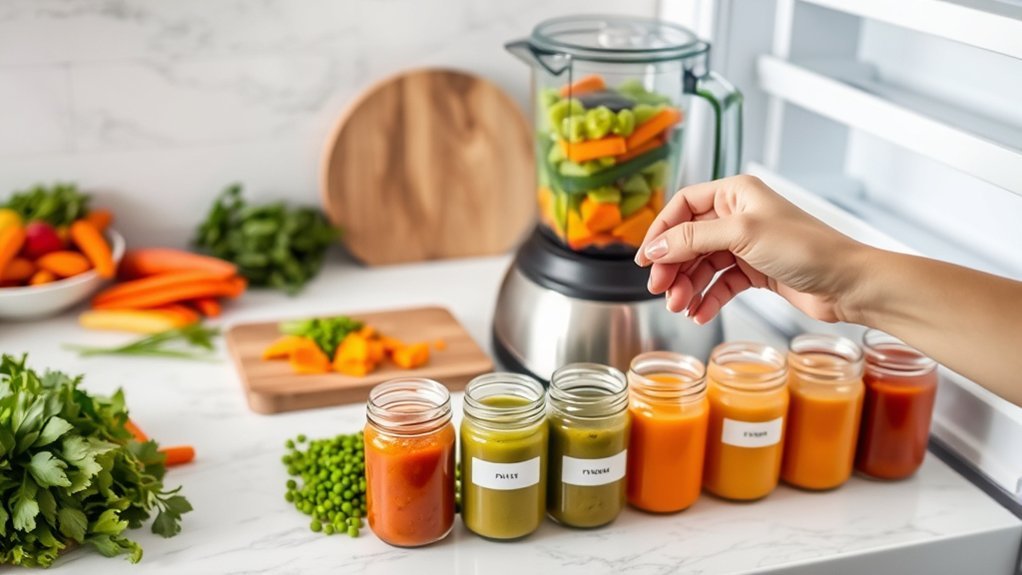
Preparing baby food can be a straightforward process that guarantees your little one enjoys nutritious and tasty meals. Here’s a simple step-by-step guide for effective meal prep:
Preparing baby food is easy and ensures your little one enjoys healthy, delicious meals. Follow these simple steps for successful meal prep.
- Choose Ingredients: Select a variety of fruits and vegetables your baby loves, like sweet potatoes, bananas, and avocados.
- Cook in Bulk: Use a baby food prep machine to steam or boil your choices, creating smooth purees or chunky textures.
- Portion: Divide the prepared baby food into individual servings using freezer trays or small containers for easy reheating.
- Label: Don’t forget to label and date your containers, keeping track of freshness for ideal nutrition.
With a weekly meal prep session, you can guarantee your baby’s meals are ready to go, making feeding time a breeze.
How to Safely Store and Freeze Homemade Baby Food
Storing and freezing homemade baby food properly can extend its shelf life and maintain its nutritional value. Use airtight containers for effective storage techniques, guaranteeing freshness and preventing contamination. Clear containers help you easily identify the contents.
Remember, pureed baby food lasts 2-3 days in the refrigerator, but excess portions can be frozen using ice cube trays for convenient access. When employing freezing methods, label each container with the date and food type for proper rotation, aiming to use them within 3-6 months for the best quality.
Always cool your cooked baby food to room temperature before freezing to avoid ice crystals that can alter texture. For reheating, guarantee even heating and stir well to prevent hot spots.
Engaging Serving Ideas for Baby Food?
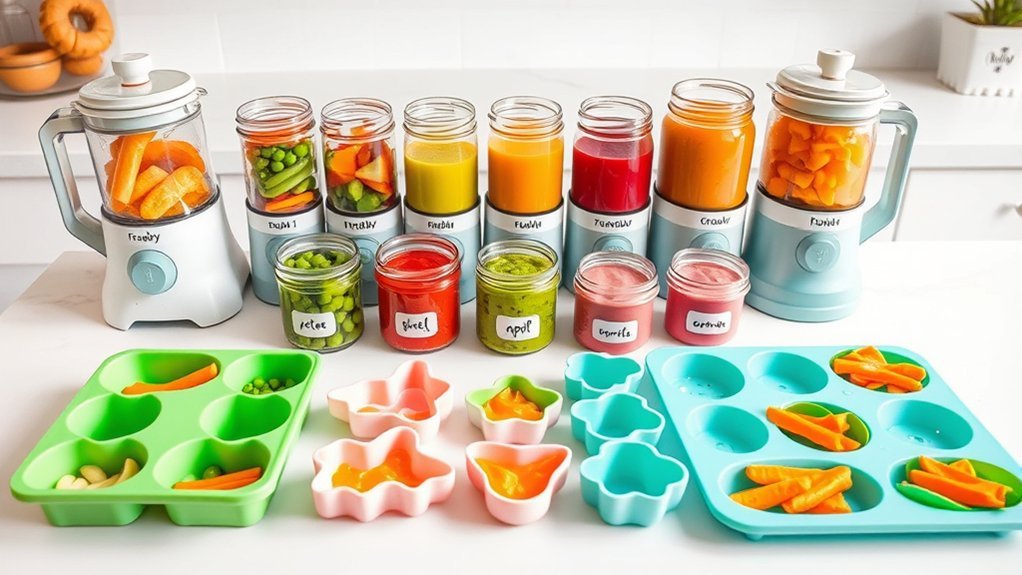
After ensuring your homemade baby food is stored and frozen correctly, it’s time to think about how to serve it in a way that engages your little one. Here are some fun ideas:
After properly storing your homemade baby food, get creative with serving to make mealtime engaging for your little one.
- Use suction plates with high rims to minimize mess and encourage exploration.
- Offer finger foods like avocado spears or roasted sweet potato wedges to promote self-feeding and fine motor skills.
- Present colorful meals with a variety of fruits and vegetables to draw your baby’s interest and enhance nutrient intake.
- Create themed meals, like “Rainbow Day,” featuring an array of purees to make mealtime enjoyable while ensuring a balanced diet.
These strategies not only make mealtime fun but also support your baby’s development.
Essential Tips for Successfully Introducing New Baby Food
Introducing new baby food can be an exciting yet challenging experience for parents, especially when considering your little one’s health and preferences. Start by introducing one new food at a time, ideally safe options like avocado or banana around six months. This approach allows for allergy awareness, so you can monitor for any reactions.
Look for signs of readiness, like independent sitting and interest in solids. Aim to introduce a colorful variety—3-4 different colors daily—guaranteeing diverse nutrients.
As your baby grows comfortable, gradually enhance texture progression from smooth purees to chunkier options and finger foods. Keeping a record of new foods and reactions helps track preferences and guarantees a balanced diet over time.
How to Maintain Variety in Your Baby’s Meals
Maintaining variety in your baby’s meals is key to keeping mealtime enjoyable and nutritionally balanced. Here are some practical tips to guarantee colorful combinations and texture exploration:
Keeping mealtime enjoyable and balanced for your baby is all about variety and creativity.
- Colorful Plates: Offer 3-4 different colored foods daily; each color packs unique nutrients for development.
- Texture Variety: Introduce smooth purees, chunky blends, and soft finger foods to help your baby adapt to new tastes and textures.
- Weekly Rotation: Switch up fruits, vegetables, and proteins weekly—think sweet potatoes, bananas, and chicken—to create a well-rounded diet.
- Themed Days: Plan fun themes like “Veggie Monday” or “Fruit Friday” to keep meals exciting and nutritionally diverse.
Frequently Asked Questions
Can I Mix Different Fruits and Vegetables in One Puree?
Yes, you can mix different fruits and veggies in one puree! Combining fruit combinations like banana and mango or veggie blends like sweet potato and carrot can enhance flavors and nutrients, making mealtime exciting for your baby.
How Long Can Homemade Baby Food Be Stored in the Fridge?
Homemade baby food can safely be stored in the fridge for up to three days. Beyond that, its food shelf life diminishes, so prepare for those delightful meals—freshness matters for your little one’s taste buds!
Is It Safe to Use Frozen Baby Food After Three Months?
Yes, it’s safe to use frozen baby food after three months if stored properly. Always check for signs of freezer burn or odd smells, as food safety is essential for your baby’s health.
What Kitchen Equipment Do I Need for Meal Prepping Baby Food?
For meal prepping baby food, you’ll need a high-quality blender, like a food processor or immersion blender, and airtight storage containers. These tools guarantee smooth textures and proper storage, making feeding your little one convenient and safe.
Can I Use Canned Fruits or Vegetables for Baby Food Preparation?
Yes, you can use canned fruits or vegetables for baby food preparation. Just guarantee they’re low in sodium and sugar, maintaining baby food safety. They still provide essential canned nutrients, making meal prep convenient and nutritious.
Conclusion
By meal prepping baby food, you’re setting the stage for a healthy start to your little one’s eating journey. Just like planting seeds in a garden, your thoughtful preparation will help them blossom into adventurous eaters. With the right ingredients, safe storage, and a sprinkle of creativity, you’ll make mealtime not just nutritious but enjoyable too. Remember, consistency is key, and with practice, you’ll turn meal prep into a breeze. Happy cooking!