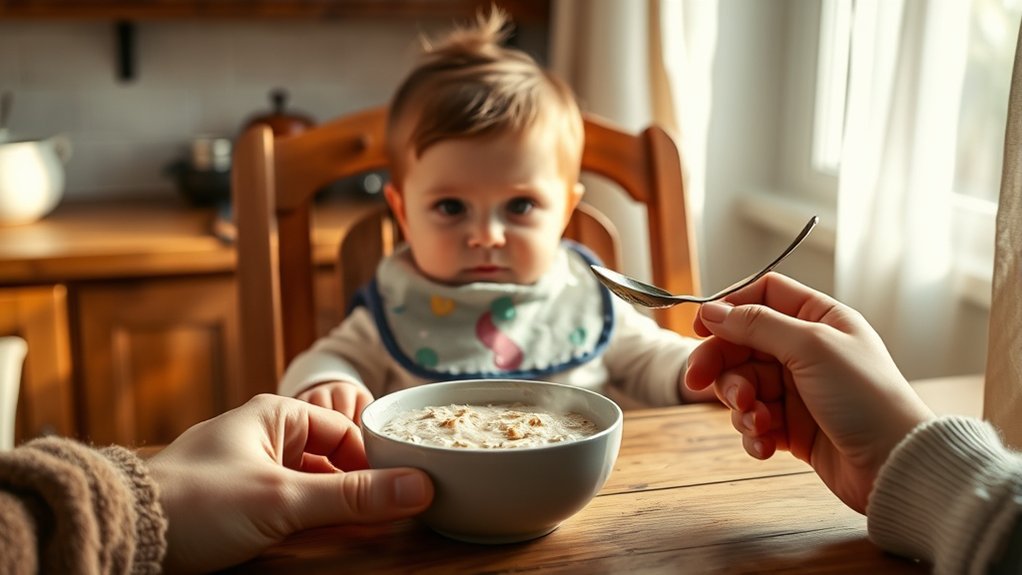
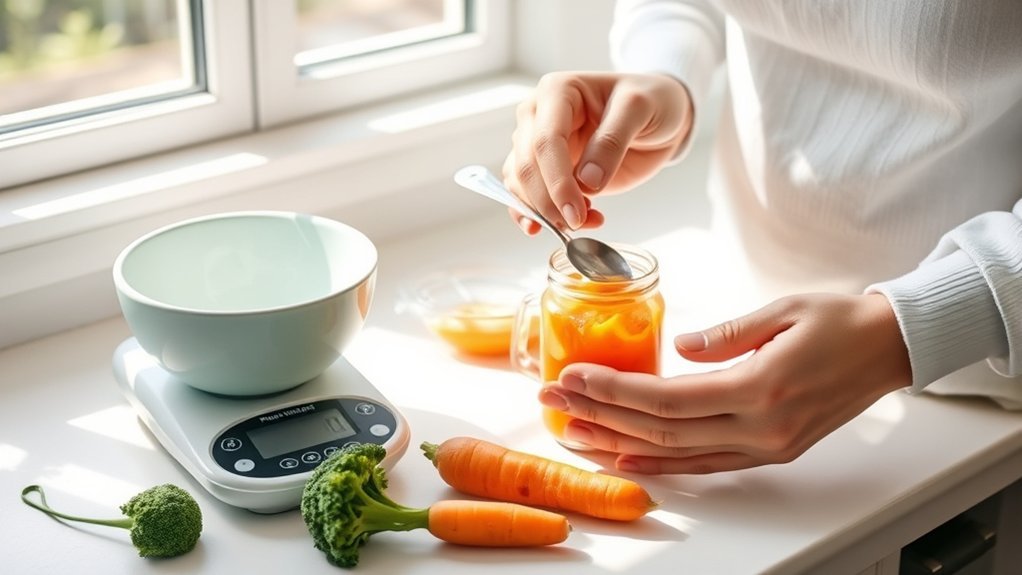
Measuring baby food portions can help you prepare a sensible starting amount, but the number on the spoon is only part of the process. Your baby’s readiness, appetite, feeding skills, and hunger and fullness cues matter more than finishing a fixed serving. Most babies begin complementary foods at about 6 months while continuing breast milk or infant formula.
Quick Answer
Begin with a small amount, such as 1 or 2 teaspoons for a first taste or 1 to 2 tablespoons for a small serving. Use measuring spoons or a marked bowl, then offer more only if your baby still shows hunger cues. Stop when your baby closes their mouth, turns away, or pushes food aside.
Key Takeaways
- Most babies are ready for solid foods at about 6 months; introducing solids before 4 months is not recommended.
- Treat portion sizes as starting offers, not amounts your baby must finish.
- A teaspoon, tablespoon, or marked container is more accurate than comparing food with an everyday object.
- Breast milk or infant formula remains the main source of nutrition from 6 to 12 months.
- Follow your baby’s hunger and fullness cues instead of encouraging a clean bowl.
- Use safe textures, supervise every meal, and introduce common allergens in age-appropriate forms.
At a Glance
| Time Required | About 2–5 minutes to portion and prepare each meal |
| Difficulty | Easy, with ongoing attention to your baby’s cues |
| Tools Needed | Measuring spoons, a small serving bowl, an infant spoon, and optional marked storage containers |
| Cost | Usually no extra cost if you already have measuring spoons and a clean bowl |
Note: This article provides general feeding information, not individualized medical advice. Ask your baby’s pediatric clinician about feeding if your baby was born prematurely, has poor growth, has swallowing problems, has severe eczema, has a known food allergy, or has another medical condition.
Check Whether Your Baby Is Ready for Solid Food
Portion size matters only after your baby is developmentally ready to eat. According to the Centers for Disease Control and Prevention, most babies can begin complementary foods at about 6 months. Solid foods should not be introduced before 4 months.
Look for several readiness signs together. Your baby may be ready when they can:
- Sit upright with support and hold their head steady.
- Control food in their mouth and swallow it rather than pushing it straight back out.
- Bring toys or other objects to their mouth.
- Reach toward food or open their mouth when food is offered.
- Show interest in what other people are eating.
A baby who watches you eat is not necessarily ready if they cannot yet sit safely or control food in their mouth. Ask your pediatric clinician when you are unsure.

Power your essentials anywhere with a 999Wh pure sine wave power station delivering up to 1000W continuous with 2000W surge. It supports fast charging via USB-C PD 60W and USB-A QC 18W, plus simultaneous output for multiple devices through AC, USB, wireless, and car/DC ports. Recharge using AC, car, or solar with a built-in MPPT controller and dual cooling fans, while the upgraded battery management system protects against surges, short circuits, and overheating.

Package Include: you will get 6 pieces different colors of portion control serving spoons, yellow, red, beige, green, black, dark blue, including 2 slotted spoons(1oz, 3oz) and 4 unslotted spoons(2oz, 4oz, 6oz, 8oz-1/4 Cup, 1/2 Cup, 3/4 Cup, 1 Cup), which is sufficient to meet your daily replacement needs
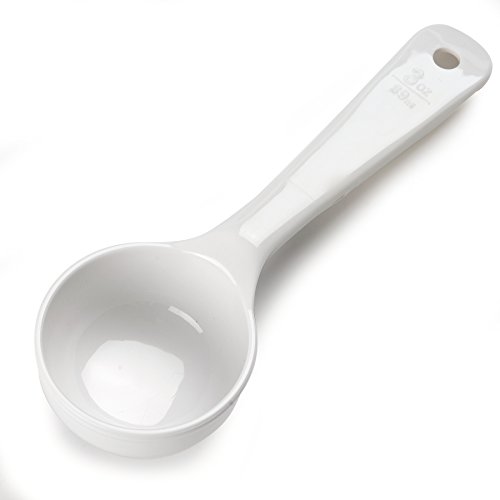
Precise Portioning – Measured cup creates consistent proportions
Baby Food Portion Sizes by Age and Stage
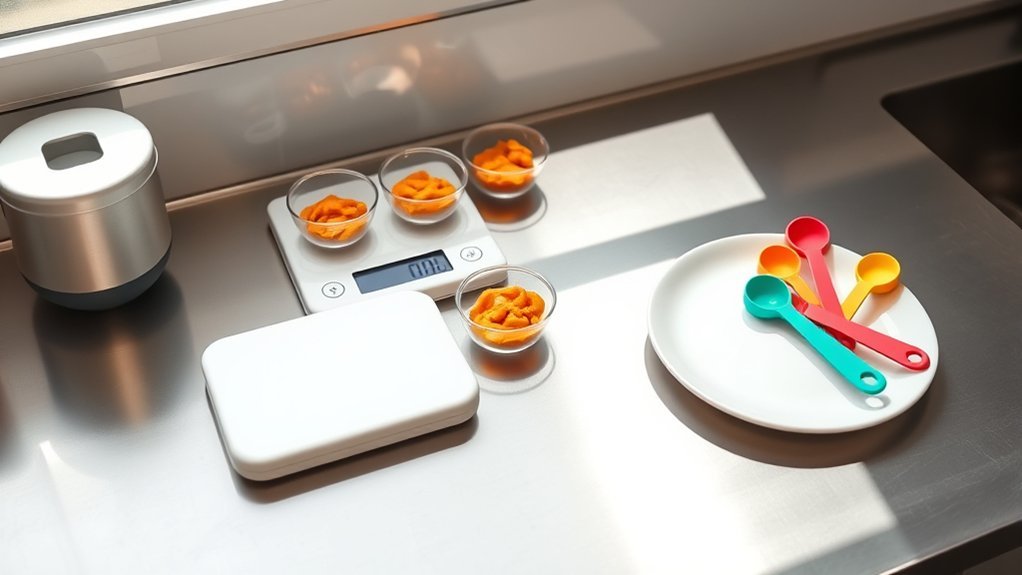
There is no single portion that every baby of the same age must eat. Growth, milk intake, activity, teething, illness, and familiarity with a food can all change appetite from one day to the next.
The CDC recommends starting with about 1 to 2 tablespoons of food and watching for signs that your baby wants more or has had enough. For a baby’s very first tastes, placing only 1 or 2 teaspoons in the bowl can reduce waste while the baby practices eating.
| Age or Stage | Practical Starting Amount | How to Adjust |
|---|---|---|
| First tastes, usually around 6 months | Place 1–2 teaspoons in the bowl for practice, or offer a small serving of up to 1–2 tablespoons. | Stop when your baby loses interest. Gradually offer more when they consistently lean forward, open their mouth, or reach for food. |
| About 6–8 months | Start with roughly 1–2 tablespoons of each offered food. Early meals may contain only one or two foods. | Increase the amount and variety slowly as eating skills improve. Do not pressure your baby to finish. |
| About 8–12 months | Offer small portions of several foods. An individual food portion may begin around 2–4 tablespoons, but actual intake can be less or more. | Refill the bowl when hunger cues continue. Meals and snacks gradually become more regular as the first birthday approaches. |
These amounts describe what you might offer, not what your baby must eat. Breast milk or iron-fortified infant formula remains the main source of nutrition from 6 to 12 months while solid foods gradually take on a larger role.
Pro Tip: Serve a small first portion and keep extra food in a clean container. You can add another spoonful when your baby is still hungry. This reduces waste and helps prevent saliva from contaminating the stored portion.
How to Measure Baby Food Portions Accurately
You do not need a food scale for most everyday baby meals. Measuring spoons provide enough accuracy for purees, mashed food, yogurt, cooked cereal, and other spoon-fed foods.
- Wash your hands and equipment. Start with a clean spoon, bowl, work surface, and storage container.
- Measure a small first portion. Use a teaspoon for a new eater or a tablespoon for a baby who already eats solids comfortably.
- Transfer the food to a separate bowl. Avoid feeding directly from the main storage container when you may need to save the remainder.
- Check the texture. The food should match your baby’s current chewing and swallowing skills.
- Offer one spoonful at a time. Allow enough time for your baby to swallow and respond.
- Watch for hunger or fullness. Add another measured spoonful only when your baby continues to show interest.
- Record only when useful. Tracking portions may help when introducing allergens or discussing feeding with a clinician, but most healthy babies do not need every bite logged.
Skip the poker-chip comparison. A poker chip shows width, not volume, and the thickness of purees and mashed foods can vary. One level tablespoon equals three teaspoons, making measured spoons a clearer reference.
Recognizing Signs of Hunger and Fullness in Your Baby
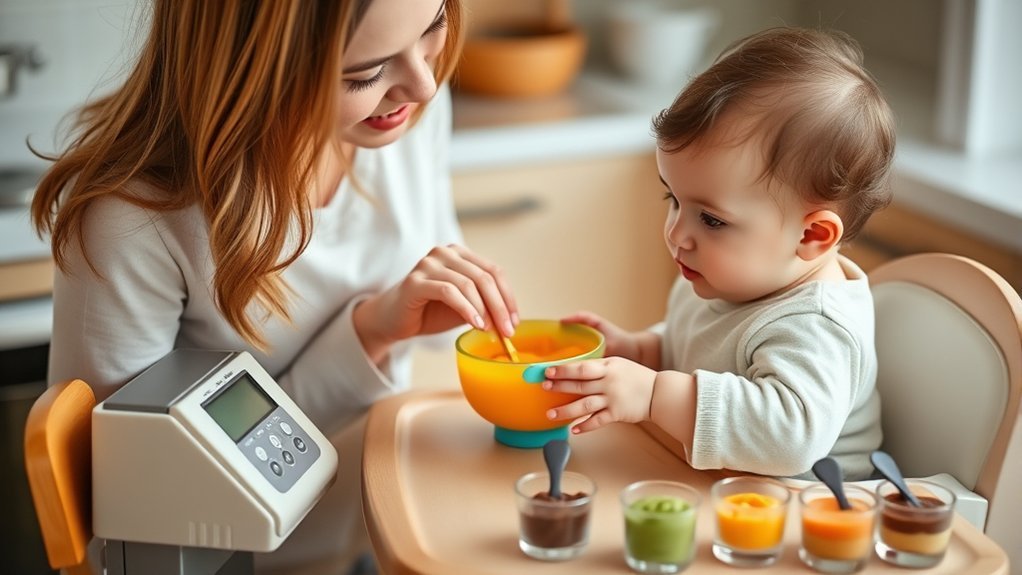
Your baby’s behavior is a better guide than an empty bowl. Responsive feeding means offering suitable food while allowing the child to decide whether to eat and how much to eat.
Signs Your Baby May Still Be Hungry
- Reaches for or points toward food.
- Opens their mouth when the spoon approaches.
- Leans forward or becomes excited when food appears.
- Makes sounds or gestures asking for more.
- Follows the spoon and remains engaged with the meal.
Signs Your Baby May Be Full
- Closes their mouth when food is offered.
- Turns their head or body away.
- Pushes the spoon, bowl, or food away.
- Leans back and stops reaching for food.
- Becomes more interested in playing than eating.
- Signals or vocalizes that they are finished.
The CDC advises letting children decide how much they want to eat. They do not need to finish all the food in a jar, bowl, or plate.
Measure the portion you offer, but let your baby’s cues determine the portion they eat.
Rooting and lip smacking can be hunger cues in younger milk-fed infants. Once a baby is eating solids, reaching for food, opening the mouth, and showing excitement are usually more useful mealtime signals.
Match Food Texture to Your Baby’s Skills
Accurate portioning does not make an unsafe texture safe. Early foods may be smooth, mashed, pureed, or strained. As your baby learns to move food through their mouth, gradually offer thicker mashed foods, soft lumps, and developmentally appropriate finger foods.
Do not keep every food completely smooth for longer than your baby needs. Gradual texture changes help your baby practice chewing and handling a wider range of foods. Progress at your baby’s pace and ask a clinician for help if your baby repeatedly coughs, chokes, struggles to swallow, or cannot advance beyond very smooth textures.
Warning: Always seat your baby upright and supervise the entire meal. Avoid hard, round, sticky, or difficult-to-chew foods such as whole nuts, whole grapes, popcorn, raw carrot pieces, hot-dog rounds, hard candy, chunks of meat or cheese, and thick spoonfuls of nut butter.
The CDC’s choking-prevention guidance recommends preparing food in a shape, size, and texture suited to the child’s development. Babies should eat while seated safely, not while lying down, crawling, walking, riding in a stroller, or traveling in a moving car.
Tips for Introducing New Foods and Common Allergens
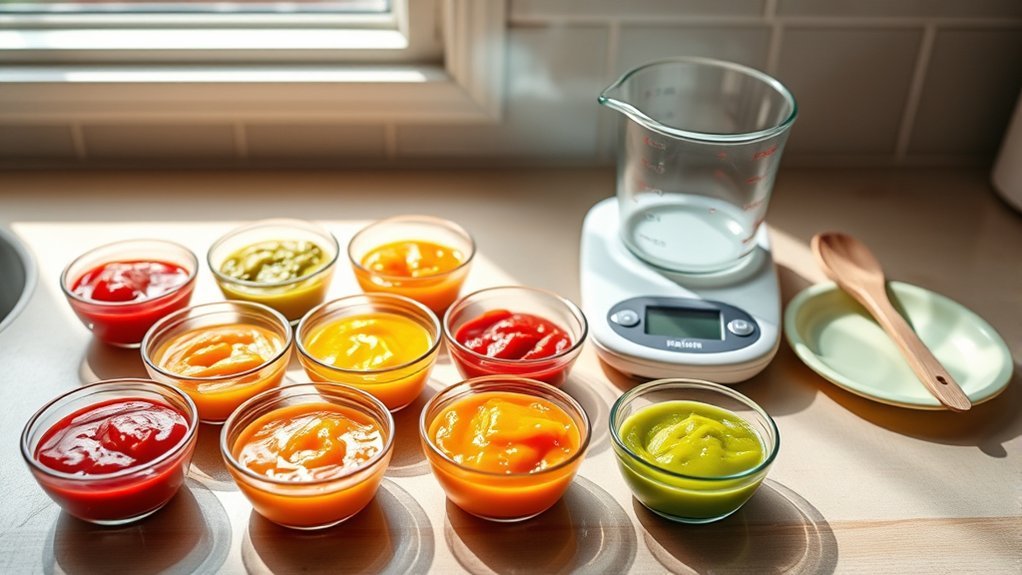
When you begin solids, offer one single-ingredient food at a time. Start with a small amount, such as 1 or 2 teaspoons, and observe your baby. Current CDC guidance recommends waiting three to five days between new foods at first so it is easier to connect a possible reaction with a particular ingredient.
Keep a simple record of the food, the date, and any symptoms. Once a food has been tolerated, continue offering it as part of a varied diet rather than treating every feeding as another test.
Potentially allergenic foods can be introduced when other complementary foods are introduced. Common food allergens include:
- Peanut
- Tree nuts
- Egg
- Milk
- Wheat
- Soy
- Fish
- Crustacean shellfish
- Sesame
Serve allergens in age-appropriate forms. For example, use smooth nut butter thinned with warm water, breast milk, formula, or a familiar puree. Never offer whole nuts or a thick lump of nut butter because they are choking hazards.
If your baby has severe eczema, an egg allergy, or both, speak with your baby’s healthcare provider before introducing peanut-containing food. The provider may recommend a specific introduction plan or supervised testing.
Warning: Stop feeding a food and seek medical advice if your baby develops hives, repeated vomiting, facial swelling, coughing, or wheezing. Trouble breathing, swelling of the tongue or throat, sudden limpness, or a rapidly worsening reaction requires emergency help. In the United States, call 911.
Choose a Variety of Nutrient-Rich Foods
No single puree provides everything a growing baby needs. Rotate foods from several groups as feeding skills develop:
- Iron-rich foods: meat, poultry, fish, eggs, beans, lentils, tofu, and iron-fortified infant cereal.
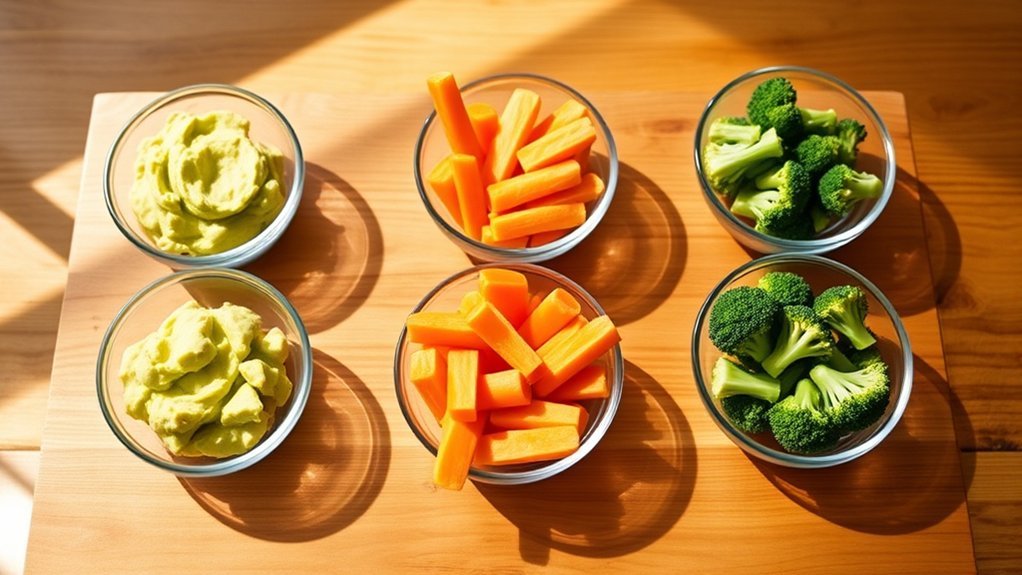
- Vegetables and fruits: soft-cooked, mashed, pureed, or cut into an age-appropriate texture.
- Grains: oatmeal, barley, multigrain infant cereal, soft rice, pasta, and other suitable grains.
- Dairy foods: pasteurized plain yogurt and suitable cheese textures can be offered before age 1, although cow’s milk should not replace breast milk or formula as a drink before 12 months.
If you use infant cereal, offer different fortified grains rather than relying only on rice cereal. Popular first foods such as banana, mango, sweet potato, avocado, oatmeal, beans, egg, meat, and plain yogurt can all fit when prepared safely.
Foods and Drinks to Avoid Before Age One
Keep the following limits in mind while measuring and preparing baby food:
- No honey before 12 months. Honey can cause infant botulism, including when it is mixed into food, water, formula, or baked recipes that are not specifically proven safe for infants.
- Do not use cow’s milk as the main drink before 12 months. Breast milk or infant formula should remain the primary milk source.
- Do not serve unpasteurized milk, juice, yogurt, or cheese.
- Avoid added sugars and limit high-sodium foods.
- Do not offer juice before 12 months. Whole fruit provides more useful texture and fiber.
- Avoid fish known to be high in mercury. Choose lower-mercury fish in developmentally safe forms.
See the CDC’s current list of foods and drinks to avoid or limit for infants and young children for further guidance.
Storing and Reheating Baby Food Safely
Homemade and commercially prepared baby foods can both be suitable. Safety depends on clean preparation, proper storage, appropriate ingredients, and using the food within recommended time limits.
Safe Storage Basics
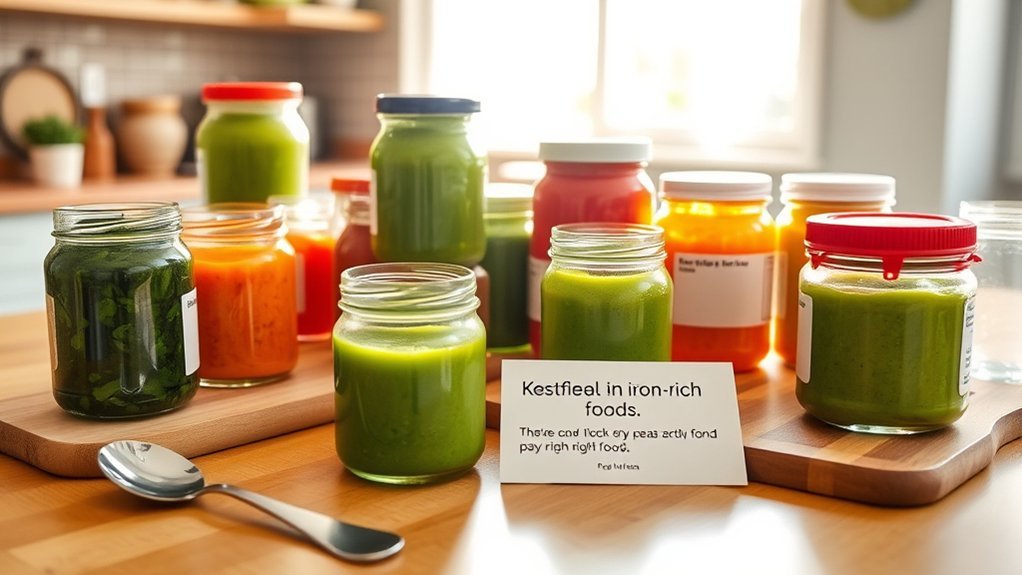
- Place homemade food in clean, airtight containers.
- Label each container with the food and preparation date.
- Refrigerate promptly rather than leaving perishable food at room temperature.
- Use homemade baby food within 1–2 days when refrigerated.
- Use frozen homemade baby food within 1–2 months for best safety and quality.
- Freeze small portions in a clean tray or container, then transfer frozen portions to a labeled freezer-safe container.
- Thaw food in the refrigerator or by using a safe reheating method, not on the counter.
According to FoodSafety.gov, storage times vary by ingredients. Strained meat and egg dishes have shorter refrigerator limits than plain fruits and vegetables, so follow the shortest applicable limit when foods are combined.
Reheating Baby Food
Transfer food from its container to a dish before microwaving. Stir it thoroughly, allow it to stand, and test the temperature before feeding because microwaves can create hot spots. The food should feel lukewarm rather than hot.
Do not return food from the feeding bowl to the refrigerator once your baby’s used spoon has touched it. When possible, place a small portion in the bowl and keep the remaining food separate and chilled.
When to Contact Your Baby’s Healthcare Provider
General portion charts cannot account for every baby. Contact your baby’s doctor, nurse, or feeding specialist when:
- Your baby is not gaining weight as expected.
- Your baby regularly refuses both milk and solid foods.
- Feeding causes repeated coughing, choking, gagging that does not improve, or breathing changes.
- Your baby seems unable to swallow or manage age-appropriate textures.
- Vomiting, diarrhea, blood in the stool, hives, swelling, or other symptoms repeatedly follow a food.
- Your baby has severe eczema, an existing food allergy, or a condition that affects feeding.
- You are concerned about dehydration, unusual sleepiness, or a sudden major decrease in intake.
A clinician can assess growth, oral-motor skills, allergies, nutrient intake, and any medical reason feeding may be difficult.
Frequently Asked Questions
What tools are best for measuring baby food portions?
Use standard measuring spoons for purees, mashed food, cereal, and yogurt. A small bowl with ounce or milliliter markings is useful when portions become larger. A kitchen scale is optional and is usually unnecessary unless a pediatric clinician or dietitian asks you to track intake by weight.
How can I store leftover baby food safely?
Store untouched homemade baby food in clean, airtight containers for 1–2 days in the refrigerator or 1–2 months in the freezer. Label it with the preparation date. Discard food left in the feeding bowl after the meal because the used spoon may have introduced saliva and bacteria.
When should I start introducing solids to my baby?
Most babies begin at about 6 months when they can hold their head steady, sit with support, swallow food, and show interest in eating. Do not introduce solid food before 4 months. Ask your pediatric clinician when readiness is uncertain or your baby was born prematurely.
Can I use homemade baby food instead of store-bought food?
Yes. Homemade and commercial baby foods can both be appropriate. Homemade food gives you control over ingredients and texture, while commercial food may be convenient and clearly labeled. Neither option is automatically more nutritious. Safe preparation, variety, suitable texture, and proper storage are the main concerns.
What common allergens should I watch for in baby food?
Common allergens include peanut, tree nuts, egg, milk, wheat, soy, fish, crustacean shellfish, and sesame. Introduce them in age-appropriate textures once complementary feeding begins. Babies with severe eczema, egg allergy, or both should receive medical guidance before peanut is introduced.
What should I do when my baby refuses a measured portion?
Do not force the food or repeatedly push the spoon toward your baby’s mouth. End the meal calmly when your baby closes their mouth, turns away, or pushes food aside. You can offer the food again on another day. Acceptance often takes repeated, pressure-free exposure.
Can I overfeed my baby with solid food?
Overriding fullness cues can encourage a baby to eat beyond their appetite. Reduce that risk by offering small first portions, pausing between spoonfuls, and stopping when your baby turns away, closes their mouth, or pushes food aside. Do not require a clean bowl.
Should solid food replace breast milk or formula?
No. From about 6 to 12 months, breast milk or iron-fortified infant formula remains the main source of nutrition. Solid food gradually adds iron, textures, flavors, and eating practice. Milk feeding patterns will change over time, but solids should not abruptly replace breast milk or formula.
Conclusion
Measuring spoons can help you prepare a sensible starting portion, but your baby decides how much to eat. Begin solids at about 6 months when your baby is ready, offer a teaspoon or two for early practice or a small 1–2-tablespoon serving, and add more when hunger cues continue. As eating skills grow, expand the portions, textures, and variety without pressuring your baby to finish.
Patience remains important as your baby explores new flavors and textures. Some meals will be larger than others, and a food may be refused several times before it becomes familiar. Safe preparation, responsive feeding, continued breast milk or formula, and guidance from your baby’s healthcare provider provide a stronger foundation than any rigid portion chart.
Sources
- CDC: When, What, and How to Introduce Solid Foods — readiness, timing, allergen introduction, and texture guidance.
- CDC: How Much and How Often to Feed — starting portions, feeding frequency, and the role of breast milk or formula.
- CDC: Signs Your Child Is Hungry or Full — responsive feeding and age-related feeding cues.
- CDC: Choking Hazards — safe textures, seating, food preparation, and supervision.
- CDC: Foods and Drinks to Avoid or Limit — honey, cow’s milk, juice, added sugar, sodium, and unpasteurized foods.
- FoodSafety.gov: Children Under Five — baby-food refrigeration, freezing, reheating, and food-safety practices.