
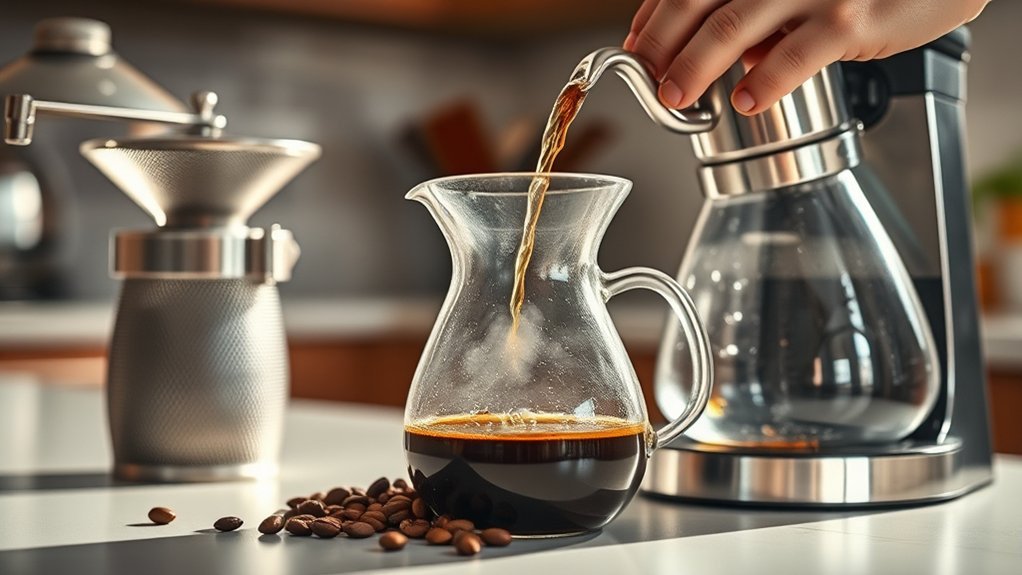
To prevent coffee grounds in your carafe while brewing, make sure your filter is properly positioned and secure. Use a medium grind size to reduce fines from passing through. Regularly clean your coffee maker and consider using a second paper filter on top of the grounds for added filtration. Maintain the ideal coffee-to-water ratio between 1:15 to 1:18. If you’re looking for more effective methods and tips, there’s plenty more to explore on this topic.
Key Takeaways
- Use a medium grind size to minimize fine particles that can pass through filters and into the carafe.
- Ensure the coffee filter is properly seated in the basket to prevent overflow and grounds escape.
- Avoid using both paper and gold mesh filters simultaneously to reduce clogging issues.
- Regularly clean the brew basket and drip holes to prevent residue buildup affecting filtration.
- Experiment with adding a second paper filter on top of the grounds to catch any floating particles.
Causes of Coffee Grounds and How to Prevent Them

When brewing coffee, several factors can contribute to the presence of coffee grounds in your cup. One major cause is improperly positioned filters; make certain your filter fits snugly in the basket to prevent overflow.
The type of filter matters too—using both gold mesh and paper filters simultaneously can lead to clogs. Additionally, using a medium grind size reduces the risk of fine grounds passing through the filter types.
Using both gold mesh and paper filters can cause clogs, while a medium grind size helps prevent fine grounds from passing through.
It’s essential to maintain the correct coffee-to-water ratio; avoid heaping scoops that can exceed the filter’s capacity.
Regularly cleaning your coffee maker, including the filter basket and showerhead, helps eliminate residue buildup, making certain smooth coffee brewing and preventing grounds from making their way into your carafe.
Choosing the Right Coffee Grind Size to Prevent Grounds
Choosing the right coffee grind size is essential for preventing grounds in your brew. A coarse grind minimizes sediment and is ideal for methods like cold brew.
Meanwhile, a medium grind enhances extraction without clogging your drip coffee maker.
Avoid using fine grinds, as they can lead to overflow and muddy coffee due to excessive particles slipping through filters.
Coarse Grind Benefits
Using a coarse grind can greatly enhance your brewing process by minimizing the presence of unwanted coffee grounds in your final cup.
With a coarser grind, you’ll experience several benefits that elevate your coffee’s flavor clarity:
- Reduced fine particles that settle and seep into your brew
- Improved extraction during cold brew methods, leading to a cleaner taste
- Smoother water flow, preventing filter clogging and overflow
- Less sediment that muddles the drink, ensuring clarity and taste
Avoiding Fine Grounds
How can you guarantee a smooth brewing experience without fine coffee grounds? Start by choosing a medium grind size, which considerably reduces the risk of fine particles escaping into your carafe.
Grinding too finely can lead to overflow and unwanted sediment due to the expansion of grounds when hot water is introduced. For specific brewing techniques, like cold brew, coarser grinds are recommended to enhance clarity.
Invest in a burr grinder to achieve grind consistency, minimizing the presence of fine grounds that can muddy your brew. Regularly experimenting with grind size will help you find the ideal setting, balancing flavor extraction and preventing grounds from ruining your coffee experience.
Techniques for Brewing Without Grounds

To brew coffee without grounds, start by ensuring your filter is properly placed and not collapsed, as this can let grounds escape.
Choosing a medium grind size also helps, reducing the likelihood of fines passing through the filter.
Proper Filter Placement
Proper filter placement is essential for brewing coffee without grounds, and there are several techniques you can employ to confirm success.
Follow these steps to ascertain your filter is positioned correctly:
- Fold the edges of the paper filter and flip it inside out for a snug fit.
- Secure the filter basket tightly in the coffee maker to prevent overflow.
- Use a heavier object, like a coffee scoop, to keep the filter in place.
- Avoid using both paper and gold mesh filters simultaneously, as this can lead to grounds escaping.
Optimal Grind Size
Choosing the right grind size is essential for brewing coffee without grounds, and using a coarse grind is often recommended to minimize sediment. Finer coffee grounds can lead to overflow and increase the chances of grounds entering your carafe.
For drip coffee makers, adjusting to a medium grind size can enhance brew clarity. To achieve grind consistency, opt for a burr grinder instead of a blade grinder, as it produces uniform particles and reduces the likelihood of unwanted fines and boulders.
Experimenting with different grind sizes tailored to your brewing method can also help you find the ideal setting. Regularly monitoring and adjusting the grind size based on your coffee maker’s filtering capabilities will greatly improve your brewing experience.
How to Maintain Your Coffee Maker for Best Results
Although maintaining your coffee maker might seem like a minor task, it plays an essential role in ensuring consistent and high-quality brews. Proper coffee maker maintenance enhances your brewing performance and minimizes issues like grounds in the carafe.
Follow these steps:
- Regularly clean the brew basket and drip holes to prevent residue buildup.
- Inspect and replace old or damaged filters to maintain a proper seal.
- Secure the filter with a heavy object during brewing to avoid leakage.
- Use a vinegar solution periodically to eliminate mineral deposits.
Alternative Brewing Methods for Cleaner Coffee
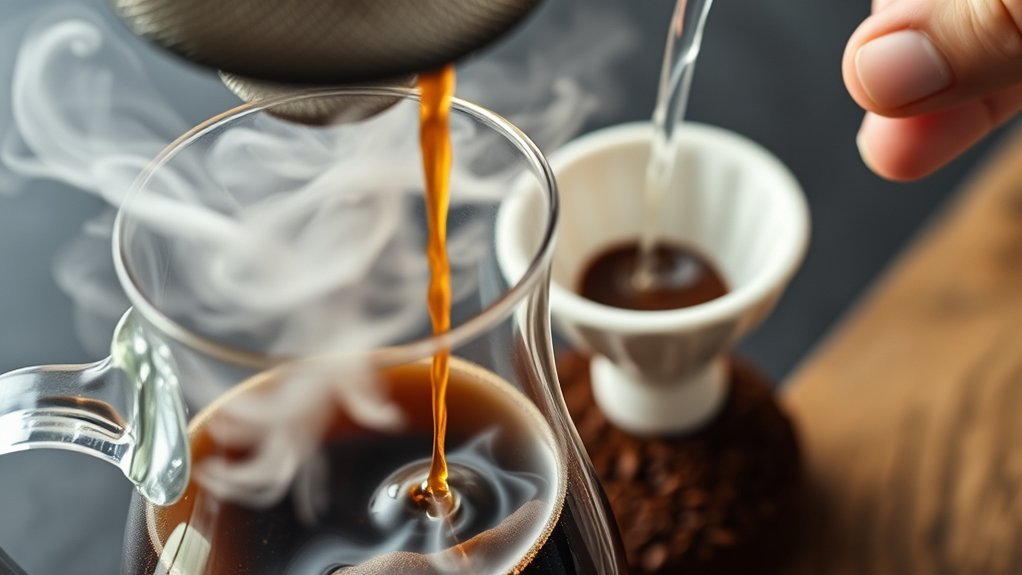
To achieve a cleaner cup of coffee, consider using a coarse grind size, especially with cold brew or French press methods, as it reduces sediment considerably.
You can also enhance filtration by using coffee filter bags, which trap fine particles effectively.
Additionally, cold brew offers advantages in minimizing grounds, providing a smoother and cleaner coffee experience.
Coarse Grind Benefits
When you opt for a coarse grind while brewing coffee, you greatly reduce the amount of sediment in your final cup, particularly in methods like cold brew and French press.
Here are some coarse grind advantages:
- Less sediment: Larger particles minimize the chances of grounds escaping through filters.
- Clog-free flow: Coarse grinds are less likely to block brewing filters, guaranteeing a smoother pour.
- Enhanced extraction: Experimenting with grind size can improve extraction efficiency and clarity.
- Grind consistency: Using a burr grinder guarantees uniformity in particle size, essential for peak brewing results.
Using Filter Bags
Using filter bags can greatly enhance your coffee brewing experience by effectively capturing fine coffee grounds and minimizing sediment in your final cup.
One major filter bag advantage is their ability to improve brewing efficiency, especially when using coarse coffee grounds. These fine mesh bags, like those from Doppelgänger Goods, act similarly to paper filters but are reusable, reducing waste and promoting sustainability.
Many coffee shops utilize them for cold brew, showcasing their effectiveness in delivering a cleaner product. By experimenting with different types of filter bags, you can discover a brewing method that not only clarifies your coffee but also elevates your overall enjoyment.
Say goodbye to sediment settling at the bottom of your carafe!
Cold Brew Advantages
Cold brew coffee offers distinct advantages over traditional brewing methods, particularly in achieving a cleaner cup with minimal sediment. The coarse coffee grounds used in cold brew minimize the presence of grounds in your final product, resulting in an impressive flavor profile.
Here are some key benefits:
- Smoother extraction: The slow brewing process reduces bitterness and acidity.
- Enhanced clarity: Using a filtering method, like a paper filter, guarantees that most grounds are removed.
- Convenience: You can make large batches, providing multiple servings without repeated brewing.
- Customization: Experimenting with grind sizes and filtration techniques allows you to find your ideal balance between flavor and clarity.
With cold brew, you’ll enjoy a more enjoyable drinking experience with each cup.
The Importance of Water Quality in Brewing Grounds-Free Coffee
Although you mightn’t think about it often, the quality of water you use plays an essential role in brewing grounds-free coffee. Using filtered or bottled water enhances the brewing process by reducing impurities that can cause foaming or excess grounds.
Hard water, with its high mineral content, can lead to mineral buildup that affects flavor and filtration efficiency, increasing the risk of grounds escaping into the carafe. Consistent water quality guarantees a stable brewing environment, minimizing grounds overflow.
Aim for water temperatures between 195°F to 205°F, as excessively hot water can exacerbate bitterness and grounds issues. Regularly replace water filters and use fresh water to maintain ideal brewing conditions, guaranteeing a clean cup every time.
Adjusting Coffee-to-Water Ratios for Better Brews
To brew coffee that’s free of unwanted grounds, adjusting your coffee-to-water ratio is crucial. Aim for a coffee-to-water ratio of 1:15 to 1:18 to guarantee proper extraction without overloading the filter.
Here are some tips to keep in mind:
- Use precise measurements with a kitchen scale for consistency.
- Adjust coffee amounts based on brew size to maintain ideal water levels.
- Increase the water-to-coffee ratio slightly for larger quantities, accounting for ground expansion.
- Experiment with different coffee ratios to find your perfect brew strength.
These adjustments not only enhance your coffee’s flavor but also minimize the risk of sediment in the carafe, providing a cleaner cup every time.
User Tips for Brewing Without Grounds
When brewing coffee, implementing user-friendly tips can greatly reduce the likelihood of grounds ending up in your cup. Start by using a medium grind size; finer grinds can expand and create sediment, leading to overflow.
Consider layering a second paper filter on top of the coffee grounds to catch any floating particles. Make sure that the filter basket is properly seated and secure to prevent leakage.
Experiment with taller coffee filter types, like BUNN filters, for better coverage and reduced overflow risk. Additionally, maintain your coffee maker by regularly cleaning its components, as ideal water flow is essential to preventing clogs that could introduce grounds into your brew.
These brewing techniques will enhance your overall coffee experience.
Troubleshooting Grounds in Your Brew
Even with careful brewing techniques, grounds can still find their way into your coffee. To troubleshoot this issue, check the following:
- Verify the coffee filter is properly seated in the basket to prevent overflow.
- Avoid overly fine coffee grounds; they can seep through the filter.
- Add a second paper filter on top of the grounds to catch floating particles.
- Regularly clean your coffee maker and inspect for clogs in the filter basket.
Pay attention to grind consistency and filter maintenance.
Experimenting with coarser grind sizes and taller filters can greatly reduce grounds in your brew.
Experimenting With Various Coffee Brands for the Best Taste
Exploring various coffee brands can greatly enhance your brewing experience by revealing unique flavor profiles tailored to your preferences. Engaging in brand comparisons, like trying Cafe Bustelo or local roasters, helps identify roasts that best suit your taste.
Many enthusiasts suggest medium to dark roasts for a richer flavor, while light roasts often provide acidity and fruity notes. Adjusting the grind size when switching brands can markedly affect extraction, enhancing flavor and reducing sediment.
Some brands may produce excessive foaming, leading to grounds in the carafe; testing different blends can minimize this issue. Additionally, community suggestions and reviews can guide you toward brands that deliver ideal flavor clarity and brewing efficiency, ultimately elevating your coffee experience.
Frequently Asked Questions
Can I Reuse Coffee Grounds Without Affecting Flavor?
You can reuse coffee grounds, but it’ll impact flavor. The first brew extracts the most oils and compounds, so subsequent uses yield weaker, less flavorful coffee. Experimenting can help find a balance, though.
How Often Should I Clean My Coffee Maker?
You should clean your coffee maker every three to six months for ideal coffee maker maintenance. This frequency helps prevent buildup, ensuring your machine operates efficiently and delivers the best flavor in your brews.
Does the Type of Water Affect Grind Size?
Yes, water hardness affects grind consistency. Hard water can lead to uneven extraction, altering flavor profiles. To guarantee a balanced brew, opt for filtered water that maintains ideal mineral content and enhances your coffee’s overall quality.
Is It Necessary to Pre-Wet Coffee Filters?
Pre-wetting coffee filters is like warming up before a workout; it enhances extraction and reduces paper flavors. This brewing technique maximizes coffee filter benefits, ensuring a smoother, richer brew that elevates your coffee experience.
Can I Use Flavored Coffee Beans Without Grounds?
You can’t use flavored coffee beans without grounds, as brewing methods require the grounds to extract flavors. However, using a fine grind and proper filters can minimize residue while still enjoying the flavor.
Conclusion
By understanding the causes of coffee grounds and implementing proper techniques, you can enjoy a cleaner brew. Choosing the right grind size and maintaining your coffee maker are essential, yet so is experimenting with different brands to find your perfect cup. While it’s easy to overlook the importance of coffee-to-water ratios, getting it right can transform your experience. With these adjustments and tips, you’ll brew a flavorful coffee without the hassle of unwanted grounds—savor each sip, untainted and pure.