
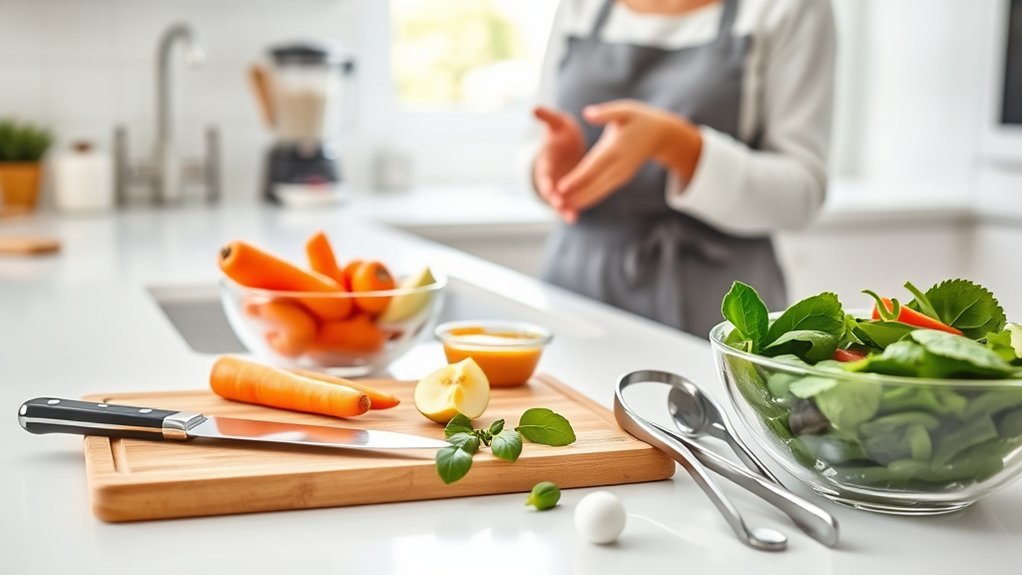
To prevent cross-contamination when making baby food, start by washing your hands thoroughly before handling any ingredients. Use separate cutting boards and utensils for raw meats and cooked foods. Clean surfaces with hot, soapy water followed by a disinfectant spray. Always rinse fruits and vegetables under running water before cooking. Store raw ingredients below cooked ones in the fridge. Following these steps guarantees your baby’s food remains safe. You’ll discover even more safety tips as you continue exploring.
Key Takeaways
- Always wash hands with soap and warm water for at least 20 seconds before and after handling any food ingredients.
- Use separate cutting boards and utensils for raw meats and cooked or ready-to-eat foods to avoid cross-contamination.
- Store raw meats in sealed containers on the bottom shelf of the refrigerator to prevent drips onto other foods.
- Clean and sanitize all surfaces and utensils immediately after use to eliminate any harmful bacteria.
- Ensure all ingredients, especially meats, reach a safe internal temperature of 165°F (74°C) during cooking.
Understanding the Importance of Preventing Cross-Contamination in Baby Food
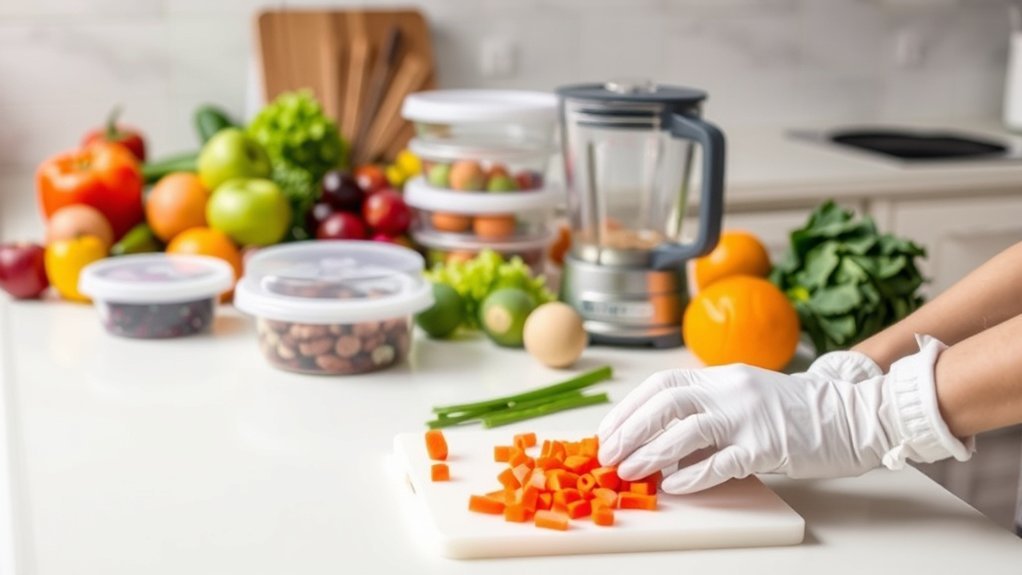
When you prepare baby food, it’s crucial to understand that cross-contamination can pose serious health risks to your little one.
Babies have immature immune systems, making them particularly vulnerable to foodborne illnesses. This risk increases when harmful bacteria from raw foods come into contact with cooked or ready-to-eat foods.
To protect your baby, always use separate utensils and cutting boards for raw and cooked ingredients. Storing raw meats in sealed containers on the bottom shelf of your refrigerator prevents their juices from contaminating other foods.
Always use separate utensils and cutting boards for raw and cooked foods to ensure your baby’s safety. Store raw meats securely to prevent contamination.
Educating yourself and other caregivers about cross-contamination risks and implementing strict hygiene practices can greatly enhance food safety for your infant.
Essential Steps for Effective Hand Hygiene Before Cooking
Effective hand hygiene is an essential first step in ensuring the safety of your baby food preparation. Start by using proper handwashing techniques: wash your hands thoroughly with soap and warm water for at least 20 seconds before and after handling food. This helps eliminate potential allergens and bacteria.
After washing, dry your hands completely with single-use paper towels, as damp hands can harbor contaminants. Be sure to wash your hands after handling raw meats or vegetables to prevent cross-contamination.
Encourage family involvement by reminding everyone to practice proper hand hygiene, especially before meals and after using the restroom. Reinforcing these habits is vital in protecting your little one from foodborne illnesses while preparing nutritious baby food.
Step-by-Step Guide for Cleaning and Sanitizing Surfaces

To guarantee a safe environment for making baby food, follow this step-by-step guide for cleaning and sanitizing surfaces.
| Step | Action | Frequency Recommendation |
|---|---|---|
| 1 | Wash surfaces with hot, soapy water | Before each use |
| 2 | Use a disinfectant spray on cleaned surfaces | After washing |
| 3 | Clean and sanitize utensils immediately | After each use |
| 4 | Allow surfaces and utensils to air dry | Always |
| 5 | Establish a deep cleaning routine for high-contact areas | Weekly or bi-weekly |
Incorporating these surface sanitization techniques will keep your kitchen free from harmful bacteria. Regular cleaning frequency recommendations will help maintain hygiene and guarantee a safe space for preparing baby food.
Baby Food Safety: Best Practices for Washing Fruits and Vegetables
When preparing baby food, it’s essential to wash fruits and vegetables properly to guarantee safety.
Rinse all produce under running water and scrub firm items with a brush to eliminate dirt and bacteria.
Additionally, consider choosing organic options for produce known to have higher pesticide residues, like the “Dirty Dozen.”
Rinse Under Running Water
Rinsing fruits and vegetables under running water is an essential step to keep your baby’s food safe from harmful contaminants.
This simple act of fruit washing and vegetable cleaning can considerably reduce the risk of exposing your little one to dirt, bacteria, and pesticide residues.
Here are some important tips to remember:
- Always rinse fresh produce before preparation.
- Pay attention to the “Dirty Dozen” and consider organic options.
- Rinse rice thoroughly to minimize arsenic exposure.
Scrub Firm Produce
Scrubbing firm produce is essential for guaranteeing your baby’s food is safe and free from harmful contaminants. Always rinse fruits and vegetables under running water, scrubbing them with a clean brush to effectively remove dirt and bacteria.
Focus on items like potatoes, carrots, and cucumbers, which benefit greatly from proper cleaning techniques. Pay special attention to the “Dirty Dozen,” as these are more likely to contain pesticide residues.
Avoid soap or bleach, as they can leave harmful residues on produce; water and a brush are sufficient. After washing, use a clean cloth or paper towel to dry the produce, further reducing the risk of bacteria and cross-contamination.
Prioritizing produce safety helps guarantee your baby’s health.
Consider Organic Options
Choosing organic options for your baby food can considerably reduce exposure to harmful pesticides and chemicals. By opting for organic fruits and vegetables, you’re taking a proactive step in ensuring your little one’s safety.
Here are some key points to remember:
- Check for organic certifications to verify the produce meets safety standards.
- Refer to the EWG’s “Dirty Dozen” list to identify fruits and veggies with high pesticide residues.
- Maintain pesticide awareness by selecting organic options for those specific items.
Even with organic produce, wash all fruits and vegetables under running water, and scrub firm produce thoroughly.
This careful preparation helps minimize risks, ensuring a healthier, happier mealtime for your baby. Make informed choices to nourish them safely!
Keeping Raw and Cooked Foods Separate: Best Practices
To keep your baby food safe, always use separate utensils for raw and cooked foods.
After handling raw ingredients, clean your surfaces thoroughly to eliminate any harmful bacteria.
Properly storing foods, especially raw meats, is essential to prevent cross-contamination and guarantee your baby’s meals are safe and healthy.
Use Separate Utensils Always
When preparing baby food, using separate utensils for raw and cooked ingredients is essential to prevent cross-contamination. This practice minimizes the risk of harmful pathogens transferring to your baby’s food.
Here are some effective strategies:
- Designate utensil types: Use specific tools for raw meats and others for fruits and veggies.
- Implement color coding: Assign different colors to utensils based on their use, making it easy to identify which ones are for raw versus cooked foods.
- Store allergen-free utensils separately: Keep them apart to avoid accidental mixing.
Clean Surfaces Thoroughly
One key step in preventing cross-contamination during baby food preparation is to clean surfaces thoroughly. Start by washing all countertops and cutting boards with hot, soapy water before and after use. This is essential for eliminating harmful bacteria.
To implement effective surface sanitization techniques, use separate cutting boards for raw meats and fresh produce to prevent pathogen transfer. After handling raw foods, always apply a disinfectant spray to surfaces, further enhancing your bacteria prevention strategies.
It’s vital to air dry cleaned surfaces or use single-use paper towels to avoid recontamination. Finally, regularly sanitize high-contact areas like handles and knobs to maintain a hygienic environment, ensuring your baby food preparation is safe and healthy.
Store Foods Properly
Proper food storage is essential for preventing cross-contamination, especially in baby food preparation. To keep raw and cooked foods safe, follow these best practices:
- Store raw meats in sealed, leak-proof containers on the bottom shelf of your refrigerator.
- Use separate cutting boards for raw and cooked foods to avoid cross-contamination.
- Label storage containers clearly to distinguish between raw and cooked items.
Regularly check your refrigerator’s storage temperature, ensuring it’s set at 40°F (4°C) or below to inhibit bacterial growth.
Fruits and vegetables should be consumed within three days, while meats should be used within one day or frozen for up to two months.
Safe Cooking Techniques for Nutritious Baby Food
To guarantee your baby food is both nutritious and safe, adopting effective cooking techniques is essential.
Start by washing your hands thoroughly with soap and warm water before and after handling any food. Use separate cutting boards and utensils for raw ingredients, especially meats, to prevent cross-contamination.
Ascertain that all ingredients reach safe internal temperatures; for high-risk foods like meat, that’s at least 165°F (74°C). Rinse fruits and vegetables under running water, scrubbing firm produce to eliminate surface contaminants.
Incorporating a variety of safe, well-cooked ingredients helps maintain nutritional balance in your baby food. By following these techniques, you’ll create delicious, healthy meals that support your baby’s growth while keeping them safe from harmful bacteria.
How to Store Baby Food Safely for Optimal Freshness
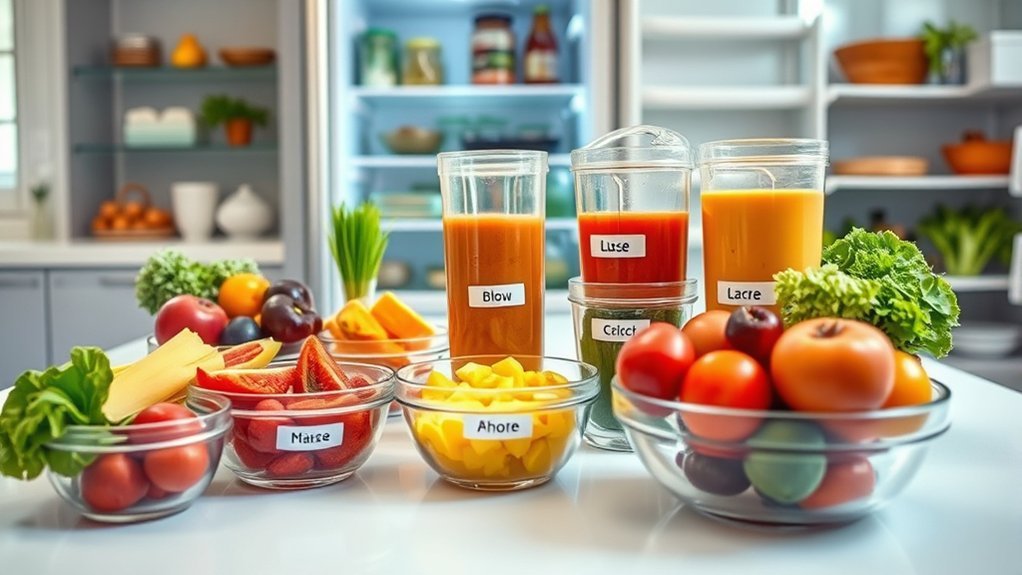
After you’ve prepared nutritious baby food using safe cooking techniques, storing it correctly is just as essential to maintain its freshness and safety.
Follow these guidelines for ideal storage:
- Refrigerate homemade baby food in baby food containers for no more than 3 days to prevent spoilage.
- Freeze fruits and vegetables in airtight containers or freezer bags for up to 8 months, preserving their nutritional value.
- Label your containers with the preparation date to prioritize older food and avoid serving expired baby food.
What You Should Know About Reheating Baby Food
Reheating baby food safely is vital for protecting your little one from harmful bacteria that might’ve developed during storage.
Always heat the food to a safe internal temperature of 165°F (74°C) using reheating techniques like microwaving or stovetop heating. A food thermometer can help guarantee the food reaches the appropriate temperature throughout.
It’s important to avoid reheating the same portion more than once to minimize the risk of bacterial growth. After reheating, cool the food to a safe serving temperature to prevent burns.
Store leftover baby food in shallow containers to promote quick cooling in the refrigerator, and aim to consume it within three days for best safety and quality.
Your baby’s health is worth it!
Frequently Asked Questions
Can I Use the Same Cutting Board for All Ingredients?
You shouldn’t use the same cutting board for all ingredients. To guarantee cutting board hygiene and ingredient separation, designate different boards for raw meats and vegetables, preventing cross-contamination and keeping food safe for everyone.
How Often Should I Wash My Hands While Cooking?
You should wash your hands frequently while cooking—before and after handling food, after using the restroom, and after touching surfaces. Consistent handwashing enhances cooking hygiene, reducing the risk of contamination and keeping your meals safe.
What Utensils Should I Avoid Using for Baby Food Preparation?
You’ll want to steer clear of utensils that have been in contact with raw meats or unwashed produce. Opt for safe utensils, ensuring you minimize cross contamination and keep your baby’s food healthy and pure.
Is It Safe to Freeze Leftover Baby Food?
Yes, it’s safe to freeze leftover baby food. Just follow freezing guidelines: use airtight storage containers and label them with dates. Properly stored, frozen baby food can last up to three months without losing quality.
How Long Can I Store Homemade Baby Food in the Fridge?
When it comes to homemade baby food, you’ve got to keep things fresh! Store it in the fridge for up to 48 hours for ideal food storage. After that, it’s best to freeze or discard.
Conclusion
By following these steps, you can guarantee your baby’s food is safe and nutritious. Practice effective hand hygiene, clean and sanitize surfaces, and wash fruits and vegetables thoroughly. Keep raw and cooked foods separate, utilize safe cooking techniques, and store baby food properly. Finally, remember to reheat food safely. With these best practices, you’ll not only prevent cross-contamination but also provide a healthy start for your little one. Your diligence today sets the foundation for their future health.


