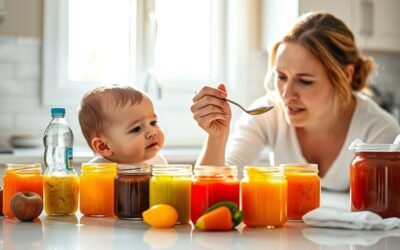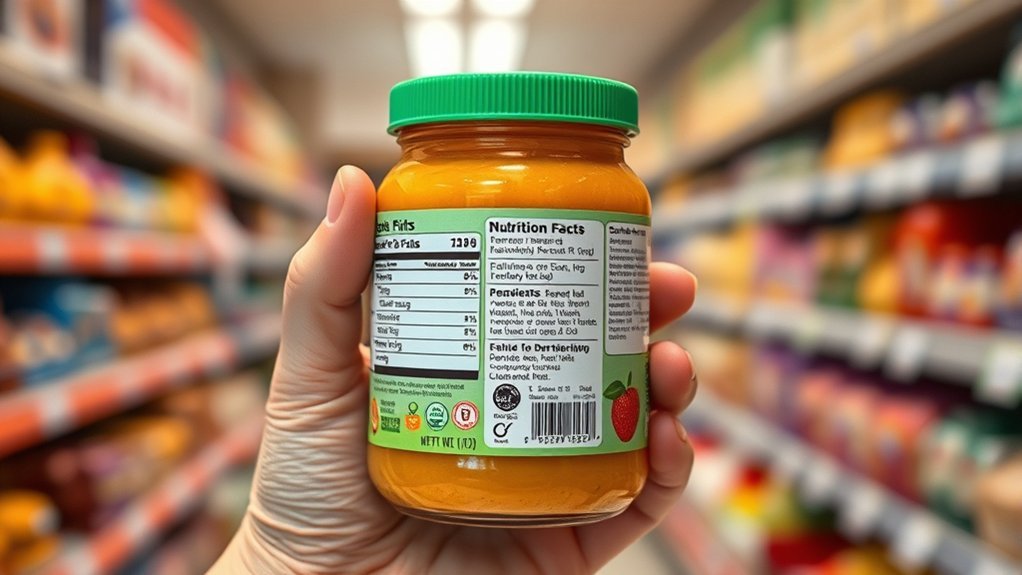
To read a baby food label, start by checking the ingredient list; look for recognizable whole foods and avoid artificial flavors. Next, review the Nutrition Facts panel, paying attention to serving sizes, key nutrients, and added sugars; aim for products with less than 7g of total sugars per 4 oz. Also, watch for organic certification and sodium levels, keeping intake below 200 mg per serving. This knowledge lays the groundwork for healthier choices ahead.
Key Takeaways
- Check the ingredient list for whole, recognizable foods and avoid artificial additives, ensuring they align with the flavor name.
- Look for the “Added Sugars” section, aiming for less than 7g of total sugars per 4 oz serving to promote healthy eating habits.
- Verify organic certification to ensure ingredients are free from harmful pesticides and GMOs, supporting your baby’s health.
- Review the Nutrition Facts panel for % Daily Value (%DV) of key nutrients, keeping added sugars low and sodium under 200 mg per serving.
- Consider age indications on labels to choose appropriate first stage foods for infants aged 4-6 months.
Why Reading Baby Food Labels Is Essential for Your Child’s Health
When you consider your child’s health, reading baby food labels becomes vital, as many products on the market fail to meet recommended nutrition guidelines. Over 60% of baby and toddler foods don’t provide adequate nutrition, making your nutritional awareness significant.
Additionally, with 99% of products making misleading marketing claims, ingredient transparency is often lacking. You’ll find that 44% of baby foods exceed sugar guidelines, which can negatively influence your child’s taste preferences and future eating habits.
Decoding the Ingredient List: What to Look For
Understanding how to read baby food labels is key, especially when it comes to decoding the ingredient list. Focus on the ingredient hierarchy; ingredients are listed from largest to smallest quantity. Look for whole, recognizable foods and avoid artificial flavors or preservatives. Pay attention to added sugars, which can be hidden under names like cane sugar or corn syrup. Aim for less than 7g of total sugars per 4 oz serving. Verify the ingredient list matches the flavor name, and check for organic certification for quality assurance.
| Ingredient Type | What to Look For | Sugar Alternatives |
|---|---|---|
| Primary Ingredients | Whole foods first | Unsweetened options |
| Additives | No artificial components | Natural sweeteners |
| Certification | Organic label | Non-GMO verified |
| Sugar Content | <7g total sugars | Alternative sweeteners |
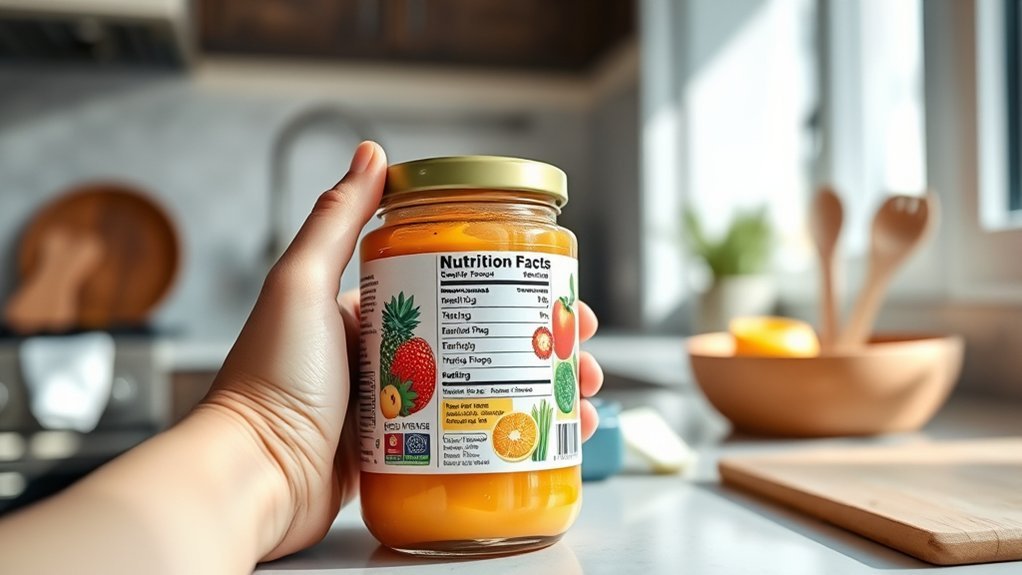
Understanding the Nutrition Facts Panel and Its Importance
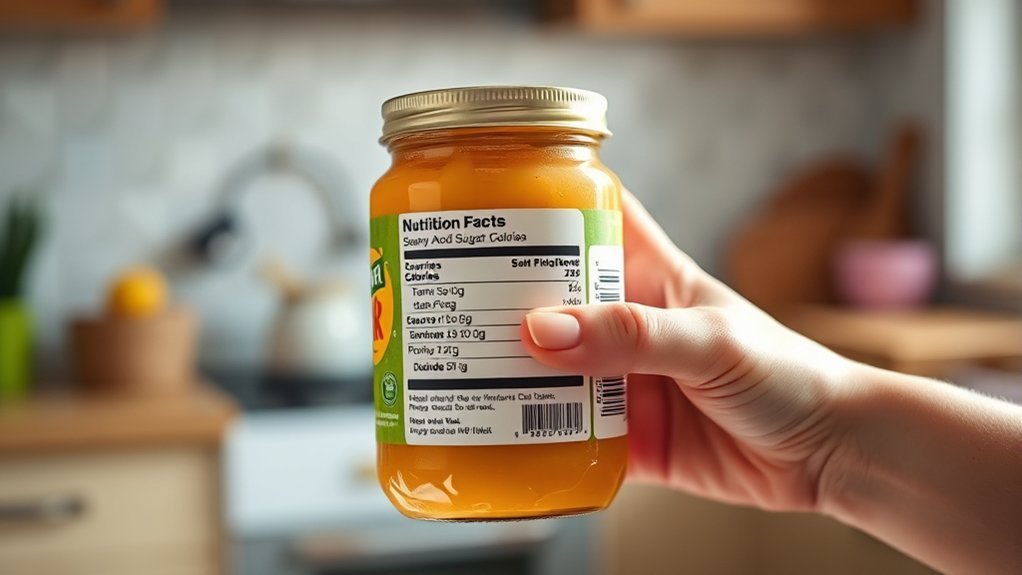
Maneuvering the Nutrition Facts panel is essential for ensuring your baby’s diet meets their developmental needs. This panel provides a nutrient breakdown, detailing serving sizes, calories, and key nutrients like protein, fiber, vitamins, and minerals.
By monitoring these elements, you can guarantee your baby receives adequate nutrition for healthy growth. Pay special attention to the % Daily Value (%DV); it shows how much a nutrient contributes to a daily diet based on a 2,000-calorie intake.
Limit added sugars to avoid exceeding recommended daily sugar intake for infants, and choose baby foods with 5% DV or less for sodium to protect developing kidneys.
Informed choices empower you to nourish your baby effectively.
How to Identify the Right Serving Size for Your Baby
Identifying the right serving size for your baby is essential for ensuring they get the nutrients they need without overfeeding. Typically, the serving size is marked in bold at the top of the label, often around 3-4 ounces for infants.
Remember, these serving sizes are tailored specifically for babies, which differ from adult portion sizes. Many jars or pouches contain multiple servings, so check the total servings to maintain proper portion control.
Monitoring these servings helps provide balanced nutrition while avoiding excess sugars and sodium. For a tailored approach, consult your pediatrician for serving size recommendations based on your baby’s age and developmental stage.
Empower yourself with this knowledge for your baby’s healthy growth!
How to Spot Added Sugars in Baby Food Labels?
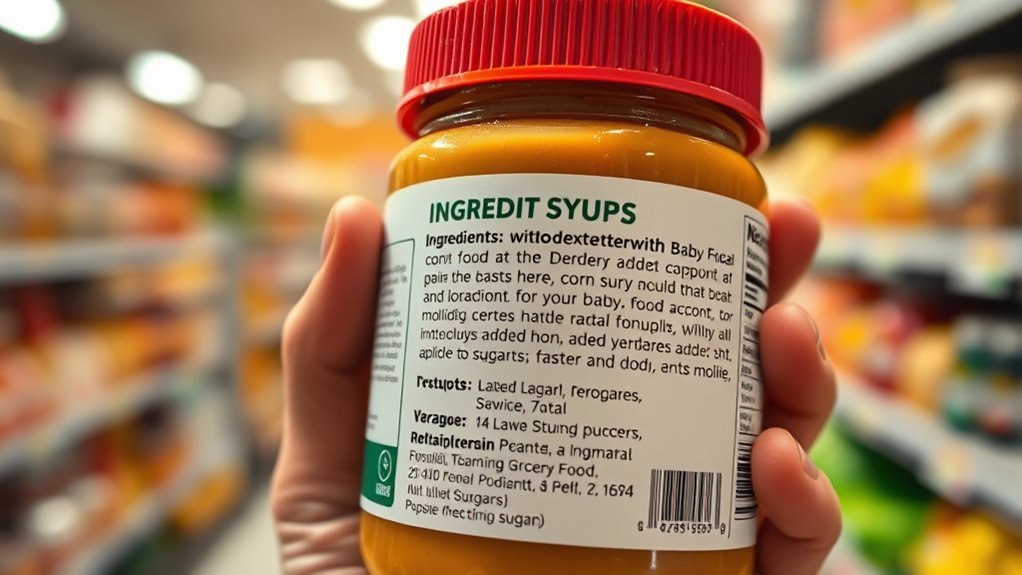
How can you guarantee your baby’s food is free from unnecessary sugars? Start by examining the “Added Sugars” section on the Nutrition Facts label, which explicitly lists sugars added during production.
Next, explore the ingredient list; look for terms like high fructose corn syrup, cane sugar, and other less familiar sweeteners.
The Dietary Guidelines recommend avoiding added sugars for infants and toddlers up to age 2, making it essential to choose baby foods with minimal or no added sugars.
Ideally, select options with less than 7g of total sugars per 4 oz serving.
Don’t Be Fooled: Spotting Misleading Marketing Terms
While shopping for baby food, it’s easy to get swayed by appealing marketing terms that promise health benefits. However, many products rely on misleading claims and clever marketing tactics.
The term “natural,” for example, lacks a strict definition and doesn’t guarantee the absence of artificial ingredients. Similarly, while “organic” is USDA-regulated, it may still include added sugars.
Claims like “no added sugar” can be deceptive, as they often refer only to refined sugars, leaving natural sugars from fruits intact.
To make informed choices, focus on actual ingredient lists and nutritional content. Don’t let catchy phrases influence your decisions; understanding these terms is essential for ensuring your baby’s diet is genuinely healthy.
Why Organic Certification Matters for Baby Food
When choosing baby food, organic certification is essential because it guarantees that ingredients are free from harmful pesticides, herbicides, and GMOs.
The USDA enforces strict regulations, requiring that at least 95% of the ingredients be organic to display the official seal.
Importance of Organic Ingredients
Choosing organic baby food is essential for ensuring your infant’s health, as organic certification guarantees that these products are free from synthetic pesticides, fertilizers, and genetically modified organisms (GMOs).
By opting for organic sourcing, you greatly reduce your baby’s exposure to harmful chemicals, as studies show organic produce typically has lower pesticide residues.
Additionally, organic baby foods often consist of whole ingredients, which can enhance their nutritional benefits.
With a commitment to 100% organic ingredients, brands like Amara provide peace of mind regarding the quality and safety of your baby’s food.
Prioritizing organic options not only supports healthier development but also empowers you to make informed choices that align with your values and beliefs about nutrition.
Regulations by USDA
Understanding the regulations set by the USDA is essential for parents seeking safe and nutritious baby food options. The USDA guidelines guarantee that organic baby food adheres to strict organic standards, providing peace of mind.
Here are three key points to take into account:
- Organic Certification: Products must contain at least 95% organic ingredients to earn the USDA Organic seal.
- Production Integrity: The entire production process, from farm to table, must maintain organic integrity, avoiding synthetic pesticides and GMOs.
- Labeling Differences: Items labeled “made with organic ingredients” only need 70% organic content and lack the USDA Organic seal, indicating lower certification.
Impact on Baby Health
Organic certification plays an essential role in ensuring that the baby food you choose is free from harmful chemicals and genetically modified organisms (GMOs). This certification means the food is produced without synthetic pesticides, herbicides, or fertilizers, which promotes baby food safety and minimizes chemical exposure.
Since babies are particularly vulnerable, opting for organic food can greatly reduce their risk of ingesting substances that might hinder their development. Additionally, research indicates that organic baby foods may offer greater nutritional benefits, including higher levels of antioxidants that support immune health.
With over 60% of conventional baby foods failing to meet recommended nutrition guidelines, choosing organic options is a more reliable choice for parents who prioritize their baby’s well-being.
Understanding Sodium’s Impact on Baby Health
Understanding sodium’s role in your baby’s development is crucial, as high sodium intake can strain their immature kidneys.
The American Academy of Pediatrics recommends keeping sodium consumption under 1,000 mg per day for infants.
Sodium’s Role In Development
Sodium plays an essential role in an infant’s development, as it helps maintain fluid balance, supports nerve function, and enables muscle contractions.
However, excessive sodium intake can strain developing kidneys. To guarantee healthy sodium consumption, consider these points:
- Sodium Sources: Common baby food items often contain added sodium, which can lead to exceeding recommended limits.
- Sodium Alternatives: Opt for fresh or homemade baby foods, utilizing ingredients like fruits and vegetables that naturally contain lower sodium levels.
- Label Awareness: Always read labels carefully, as hidden salts may not be obvious and can impact your baby’s dietary habits.
Recommended Sodium Limits
Maintaining a sodium intake of no more than 1,500 mg per day is essential for infants under one year old, as their developing kidneys are particularly sensitive to high levels.
Many baby foods contain added sodium to enhance flavor, making it vital to read labels carefully. The American Academy of Pediatrics recommends that foods for babies should have less than 200 mg of sodium per serving.
By monitoring sodium sources, you can prevent your baby from developing a preference for salty foods.
Consider sodium alternatives, like herbs or spices, to flavor homemade meals without adding harmful sodium. This mindful approach promotes healthy eating habits and supports your baby’s long-term health.
Consequences Of Excess Sodium
While it may seem harmless, excess sodium intake in infants can have serious health repercussions. Understanding sodium sources in baby food is vital for your child’s well-being.
Here are some key health impacts to take into account:
- Increased Blood Pressure: High sodium can elevate blood pressure, posing long-term cardiovascular risks as your baby grows.
- Kidney Strain: Excess sodium may strain developing kidneys, leading to potential damage or dysfunction.
- Taste Preferences: Early exposure to sodium-rich foods can shape your baby’s taste preferences, making them more likely to favor salty diets later.
The American Heart Association recommends limiting sodium intake to no more than 1,500 mg per day.
Reading labels guarantees you’re making informed choices for your baby’s health.
Tips for Choosing the Best Baby Food Products
How can you guarantee that the baby food you choose is both nutritious and safe for your little one? Start by checking the age indication on the label; first stage foods are perfect for infants aged 4-6 months.
Ensure your baby’s food is nutritious and safe by checking age indications on the label; first stage foods are ideal for 4-6 months.
Look for organic certification seals to guarantee adherence to organic standards, keeping synthetic pesticides at bay. Prioritize baby foods listing whole foods, like vegetables and fruits, as primary ingredients for optimal nourishment.
Be wary of marketing terms like “natural”; instead, scrutinize the ingredient list for added sugars and preservatives. Finally, compare products side by side, examining sugar content, additives, and ingredient sourcing.
Embrace the latest baby food trends that emphasize simplicity and transparency to make empowered choices for your child’s health.
Frequently Asked Questions
How Can I Tell if a Baby Food Is Fresh?
To tell if baby food’s fresh, check for fresh food indicators like vibrant color and smooth texture. Also, consider proper baby food storage; avoid jars with dents or leaks, and always observe expiration dates.
Are Homemade Baby Foods Better Than Store-Bought?
Homemade baby foods offer fresh nutrients and customization, while store-bought options provide convenience. Imagine crafting a spinach puree rich in iron versus quickly grabbing a jar—each choice has its benefits, depending on your lifestyle.
What Are the Signs of Spoiled Baby Food?
You’ll notice signs of spoiled baby food by checking for changes in color, texture, or smell. Always confirm the baby food expiration date, and discard any product showing spoiled food indicators to guarantee safety.
How Often Should I Change My Baby’s Food Variety?
You should change your baby’s food variety every three to four days. This baby food rotation promotes nutritional variety, ensuring your little one gets a balanced diet while preventing allergies and enhancing taste preferences.
Can I Mix Different Baby Foods Together?
Yes, you can mix different baby foods together. Combining foods can enhance nutritional balance and expose your baby to diverse flavors. Just make certain the combinations are safe and appropriate for your baby’s age and dietary needs.
Conclusion
So, there you have it—decoding baby food labels isn’t rocket science, but it might feel like it after reading all that jargon. Remember, while “organic” sounds fancy, it doesn’t always guarantee gourmet. If you want to avoid feeding your little one a concoction of mystery ingredients, stay vigilant. After all, you wouldn’t want to serve your baby a science experiment gone wrong, right? Choose wisely, and let your baby’s palate be the true judge of quality!