
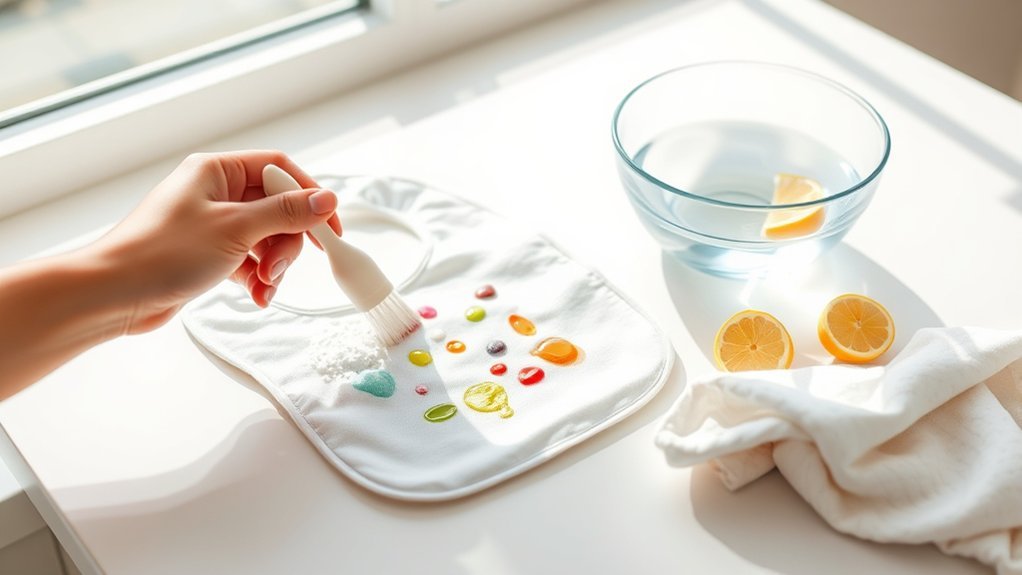
To remove baby food stains from bibs, rinse the stain under cold water right away. For tougher stains, soak the bib in a vinegar and water solution for 30 minutes. You can also create a paste with baking soda and water to apply directly to the stain. Use a gentle, baby-safe detergent to wash the bib on a delicate cycle. Want to know more about preventing future stains and caring for your bibs? Keep going!
Key Takeaways
- Rinse the bib under cold water immediately after mealtime to prevent stains from setting.
- Soak tougher stains in a mixture of white vinegar and water for 30 minutes before blotting.
- Apply a paste of baking soda and water directly on stubborn stains and let it sit for 30 minutes before washing.
- Use gentle, baby-safe detergent on a delicate cycle for washing and air dry to maintain fabric quality.
- Regularly evaluate bibs for stains, odors, or damage to ensure a clean feeding experience.
Why Prompt Stain Treatment Is Essential for Baby Bibs
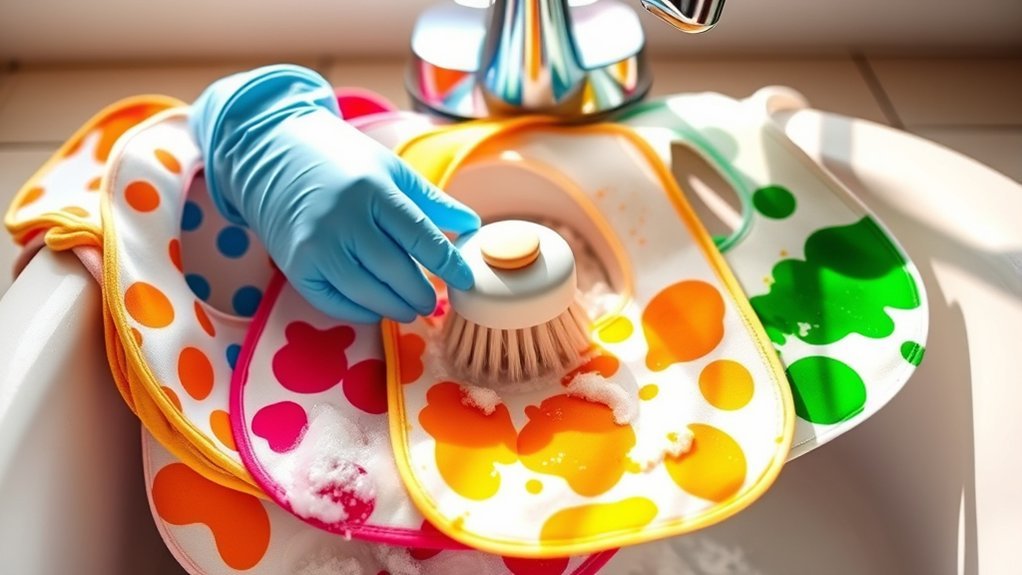
When it comes to baby bibs, treating stains promptly is vital because those stubborn food marks can bond tightly with the fabric fibers over time.
You’ve probably noticed that different stain types, like deep pigments from berries or the yellowish tones of yogurt, can wreak havoc on your bibs if left untreated. If you don’t act fast, these stains can lead to permanent discoloration, ruining the bib’s appearance.
To preserve your bib’s fabric care, immediate rinsing under cold water is important. Plus, using natural pre-treatment methods like vinegar or baking soda can work wonders in loosening those pesky food particles.
Stay proactive, and you’ll keep those bibs looking fresh and ready for your little one’s next meal!
How to Rinse Baby Food Stains Immediately
When you spot a baby food stain on a bib, act fast! Rinse it under cold water immediately to stop the stain from setting in.
If it’s a tougher stain, don’t forget to soak it for 10-15 minutes and blot gently with a clean cloth for the best results.
Rinse With Cold Water
To tackle baby food stains effectively, rinsing the bib with cold water right away is key. Cold water is your best friend here, as it helps prevent the stain from bonding with the fabric.
Hold the stained area directly under the running water to dislodge those pesky food particles. If you’re out and about, don’t fret—using a damp cloth or baby wipe can help blot the stain until you can rinse it properly.
For deeper stains, soak the bib in cold water for about 10-15 minutes before moving on to your next cleaning steps. These rinse techniques not only make stain prevention easier but also keep your baby’s bib looking fresh and clean!
Blot Stains Immediately
After rinsing the bib with cold water, the next step is to tackle those stubborn stains by blotting them immediately.
Grab a clean towel or paper napkin, and gently press it against the stained area. This blotting technique helps with stain absorption without rubbing the food deeper into the fabric. Remember, the sooner you act, the better your chances of keeping that bib looking fresh!
If the stain is particularly stubborn, you can use a diluted vinegar solution or a baby-safe pre-treat stain remover to help lift it.
Just be sure to avoid washing the bib with other laundry, as that could transfer any remaining stain residue.
You’ve got this—say goodbye to those pesky stains!
Soak For Deep Stains
While you might think a quick rinse will do the trick, soaking the bib in a vinegar solution can make a world of difference for those stubborn baby food stains.
Start by rinsing the stained bib under cold water immediately to prevent the stain from setting. Next, mix a few tablespoons of distilled white vinegar with cold water and let the bib soak for 10-15 minutes. This soaking technique loosens food particles, making stain removal easier.
For deeper stains, create a paste with baking soda and warm water, apply it, and let it sit before rinsing. Remember to blot gently instead of rubbing, and finish by washing the bib on a gentle cycle with baby-safe detergent.
Pre-Treating With Natural Remedies for Stain Removal
When you’re faced with stubborn baby food stains on bibs, pre-treating them with natural remedies can make all the difference.
Start by soaking the bibs in a mixture of white vinegar and water for about 30 minutes. This helps loosen those pesky stains.
For oily or pigmented stains, whip up a paste using 4 tablespoons of baking soda and ¼ cup of warm water, and apply it directly to the stain.
Fresh lemon juice acts as a natural enzyme and gentle bleach, perfect for tackling protein-based stains like dairy.
If you’re dealing with deeper stains, consider an overnight soak in oxygen-based bleach for a gentle touch.
Just remember to test any method on a hidden area first!
How to Choose and Apply Baby-Safe Stain Removers
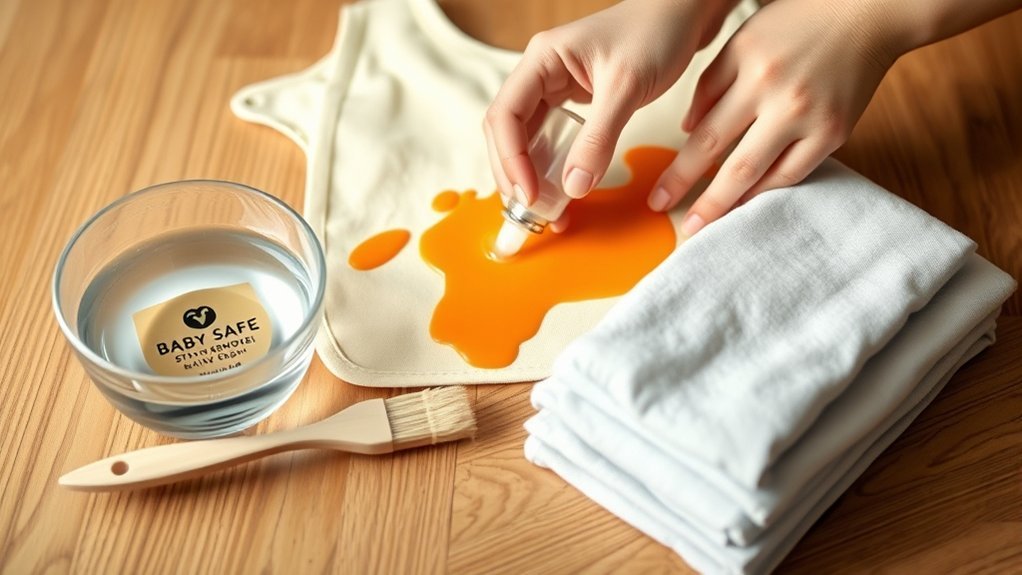
Choosing the right stain remover for your baby’s bibs can be a game changer in your laundry routine.
Look for products that are fragrance-free, hypoallergenic, and specifically formulated for sensitive skin. Popular baby-safe options like Dreft detergent, Baby Oxy-Clean, and Shout stain remover combine effectiveness with gentleness.
Always check the stain remover ingredients and do a patch test on a small, hidden area of the bib to avoid any adverse reactions or discoloration.
For stubborn stains, consider pre-treatment pens for quick application—perfect for busy parents!
Remember to follow the manufacturer’s instructions for best results and to protect the fabric compatibility of your bibs, keeping them looking fresh and clean for your little one.
How to Wash Baby Bibs Properly
Washing baby bibs properly is essential to keep them clean and stain-free, ensuring your little one has a fresh start at mealtime. Before their first use, always wash the bibs to eliminate any manufacturing residues.
Use a gentle, scent-free baby detergent and select a delicate cycle at 40 degrees Celsius, washing with similar colors to prevent bleeding. After meals, rinse the bibs immediately in cold water to minimize stains from bonding.
For ideal maintenance, air dry them to extend their lifespan, though machine drying can make them softer, it may reduce absorbency. Finally, store the bibs in a dry place, ensuring they’re completely dry to avoid mold growth.
With these washing techniques, your baby bibs will stay fresh and ready for every meal!
What Water Temperature Should You Use?
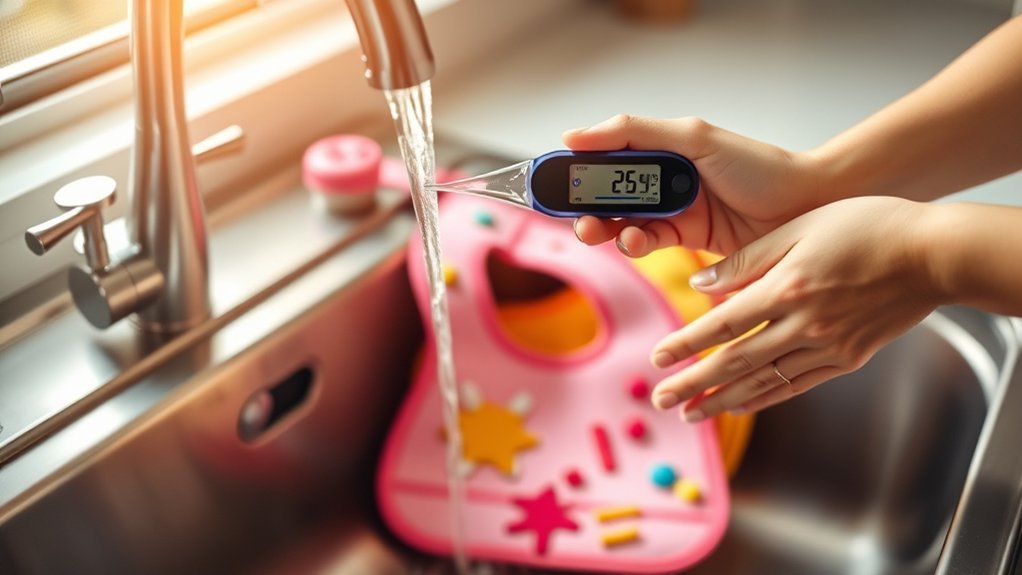
When it comes to washing baby bibs, the water temperature you choose can make a big difference in stain removal.
You’ll want to stick with cold or lukewarm water to prevent stains from setting in.
Always check the fabric care label for the best temperature, so you keep those bibs looking fresh and clean!
Optimal Temperature Guidelines
To effectively tackle baby food stains on bibs, it’s essential to pay attention to water temperature. Start by rinsing fresh stains with cold water; hot water can set those pesky stains deep into the fabric fibers.
For best washing, use lukewarm or cold settings when you toss the bibs in the machine. If you’re dealing with stubborn stains, a soak in cold water mixed with natural stain removers like vinegar or baking soda works wonders.
Impact on Stain Removal
Understanding the impact of water temperature on stain removal can make a significant difference in keeping those bibs looking fresh.
Cold or lukewarm water is your best bet, as it prevents food and dairy stains from setting in. Hot water can actually cause proteins in dairy stains to bond more firmly with the fabric, increasing stain persistence.
Rinse fresh stains under cold water right away to avoid permanent damage. When you’re pre-treating stains, warm or room temperature water can enhance the cleaning agents’ effectiveness.
Always check the fabric care label, too, to avoid harming delicate materials like cotton and bamboo.
Drying Options for Baby Bibs: Best Practices
Drying baby bibs effectively is crucial for maintaining their quality and longevity. Air drying is your best bet; it not only extends the bibs’ lifespan but also lets sunlight work its magic on any lingering stains.
If you’re short on time, a tumble dryer on a low or delicate setting can keep them soft, but be cautious—this may reduce their absorbency. Always check that bibs are completely dry before storing them to prevent mold growth in damp conditions.
Remember to verify all stains are treated before drying, as heat can set them permanently. By using these drying techniques, you can prioritize fabric care while keeping those bibs fresh and ready for your little one’s next meal!
How to Troubleshoot Common Stain Removal Challenges
While managing baby food stains can seem intimidating, you can troubleshoot those pesky challenges with a few effective techniques.
For stubborn stains, create a paste with baking soda and water, applying it directly to the stain for at least 30 minutes before washing. If stains still linger after washing, skip the dryer—heat can set them in. Instead, repeat the pre-treatment and wash cycle.
You can also use distilled white vinegar as a natural stain remover; just pat it onto the stain and let it dampen before laundering. For deep discolorations, dilute hydrogen peroxide with water, but always test it first.
Finally, regularly inspect your bibs after washing and treat any remaining stains immediately—these bib care tips are essential for success!
Tips for Preventing Future Stains on Bibs
To keep those bibs looking fresh, start by choosing stain-resistant fabrics like bamboo or organic cotton.
After mealtime, rinse the bibs right away to stop any food from sticking and causing trouble later.
These simple steps can make a big difference in preventing stubborn stains!
Choose Stain-Resistant Fabrics
When you’re on the hunt for bibs that can withstand the messy adventures of feeding time, choosing the right fabric can make all the difference.
Focus on these tips to enhance your bibs’ durability and prevent future stains:
- Opt for high-quality materials like bamboo or organic cotton, known for their stain resistance.
- Select bibs with waterproof backing to keep spills from soaking through to your baby’s clothes.
- Look for dark or patterned designs to help camouflage those pesky food stains and drool.
- Consider bibs treated with stain-resistant finishes that make cleaning easier and prevent deep penetration of food particles.
Immediate Rinse After Meals
Choosing stain-resistant fabrics is a great first step in tackling those inevitable baby food messes, but what you do right after mealtime can make a huge difference too.
An immediate rinse under cold water is essential for preventing stains from setting into the fabric fibers. This quick action can save you a lot of hassle later. If you encounter stubborn food particles, soak the bib in a mixture of cold water and baby-safe detergent for 10-15 minutes.
On-the-go? Carry a spray bottle with diluted white vinegar for pre-treatment. Remember to blot excess food with a clean cloth instead of rubbing, as this can push the stain deeper.
Using multiple bibs can also help you manage the mess more effectively.
When to Consider Disposing of Stained Bibs
If you’ve tried everything to remove stubborn stains from your baby’s bib and they just won’t budge, it might be time to think about tossing it out.
Maintaining hygiene is vital, so consider these factors when deciding when to dispose:
- Persistent Stains: If stains remain after multiple cleanings, it’s time for a new bib.
- Mold Spots: Widespread mold is a clear sign of disposal for hygiene considerations.
- Strong Odor: If the bib smells bad despite washing, it’s unsafe for continued use.
- Worn Fabric: Damaged bibs can be uncomfortable for your baby and should be replaced.
Regularly evaluating your bibs keeps feeding clean and stress-free.
Don’t hesitate to let go when necessary!
Frequently Asked Questions
Can I Use Bleach on Baby Bibs for Stain Removal?
You shouldn’t use bleach on baby bibs, as it can damage the fabric and pose safety risks. Instead, opt for gentler stain removers that are safe for the bib material and your little one.
Are There Specific Bib Materials That Stain More Easily?
You know what they say, “An ounce of prevention is worth a pound of cure.” When it comes to bibs, fabrics like cotton stain more easily than synthetic materials, which often have better stain resistance.
How Often Should I Wash Baby Bibs?
You should wash baby bibs daily for ideal bib care. Regular cleaning prevents stains from setting and keeps them fresh, so you can focus on enjoying mealtime without worrying about lingering messes!
Can I Machine Dry Baby Bibs After Washing?
You can machine dry baby bibs, but it’s best to check the fabric care label first. Air drying is gentler, preserving their shape and longevity. Choose your drying methods wisely for those adorable bibs!
What if the Bib Has a Lingering Odor After Washing?
If your bib’s got a lingering odor, sprinkle baking soda on it and let it sit for a few hours. Then, rinse it with white vinegar. You’ll notice the freshness returning in no time!
Conclusion
To sum up, keeping your baby bibs stain-free is easier than you might think! Did you know that 70% of parents struggle with stubborn baby food stains? By following these steps for immediate treatment and proper washing techniques, you can keep those bibs looking fresh and clean. Remember, a little proactive care can go a long way in extending the life of your baby’s bibs, so you can focus more on those precious moments instead of laundry!