

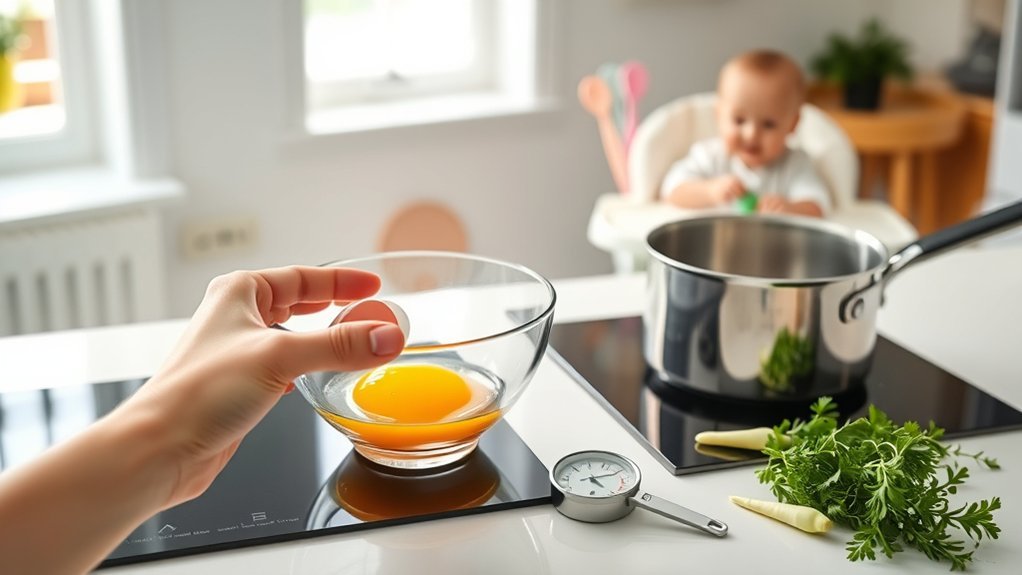
To serve eggs safely to babies, start by buying refrigerated, uncracked eggs from reputable sources. Once you’re ready, cook them thoroughly until both the yolk and white are firm, reaching an internal temperature of 160°F. Offer well-cooked eggs around 6 months, ensuring your baby can sit up and shows interest in food. Monitor for any allergic reactions, like rashes or gastrointestinal issues. Stick around to explore how to incorporate eggs into balanced meals for your little one.
Key Takeaways
- Purchase eggs from refrigerated cases and check for uncracked shells to minimize Salmonella risk.
- Cook eggs thoroughly until both yolk and white are firm, reaching an internal temperature of 160°F.
- Use pasteurized eggs for recipes that require raw or lightly cooked eggs to eliminate Salmonella risk.
- Introduce eggs around 6 months of age and monitor for any allergic reactions after serving.
- Consult your pediatrician if signs of allergies or gastrointestinal issues occur following egg introduction.
Nutritional Benefits of Eggs for Babies
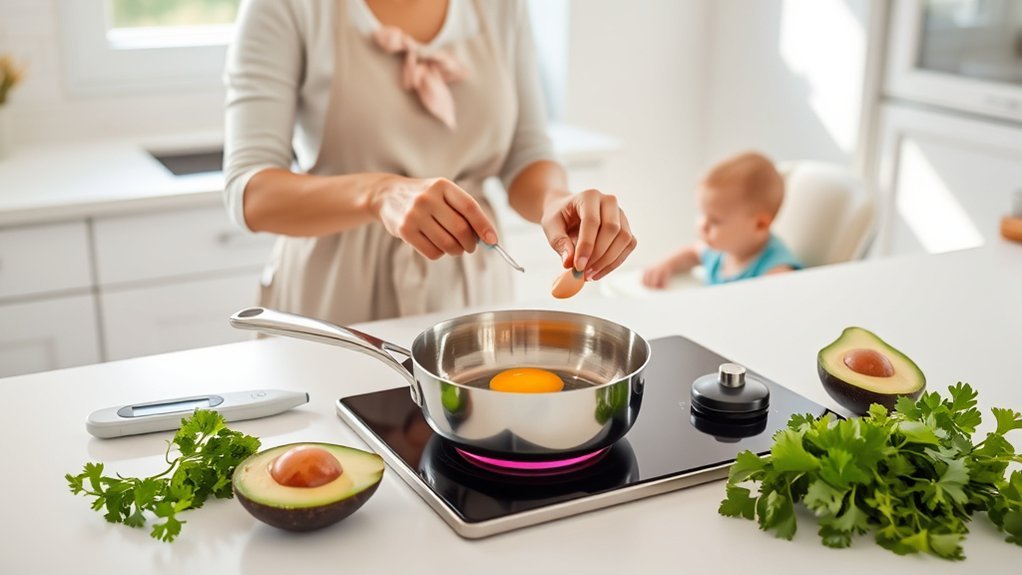
When you introduce eggs to your baby’s diet, you’re offering a powerhouse of nutrition that supports their growth and development.
Eggs provide around 6 grams of high-quality protein per large egg, essential for meeting your baby’s rapid growth needs. They’re rich in B vitamins like B12 and riboflavin, which boost energy metabolism and aid nervous system development.
With about 0.9 mg of iron per egg, they play a significant role in cognitive development and preventing anemia. Additionally, the antioxidants lutein and zeaxanthin in eggs support eye health, protecting against future vision problems.
When Is It Safe to Start Eggs?
Starting eggs in your baby’s diet is generally safe around 6 months of age, as long as they’re well-cooked.
Before you engage in egg introduction, look for signs of baby readiness, including:
- The ability to sit up with support.
- Showing interest in food during mealtimes.
- Ability to move food to the back of the mouth and swallow.
- No previous allergies to other foods.
Well-cooked eggs, like scrambled or hard-boiled, are best to minimize the risk of Salmonella.
Early exposure to eggs can help decrease the likelihood of developing an egg allergy, but keep a close eye for any allergic reactions, such as rashes or digestive issues.
Enjoy this exciting step in your baby’s nutritional journey!
Buying Eggs Safely

To guarantee your baby gets the safest eggs, always purchase them from refrigerated cases. This guarantees they’re kept at safe temperatures, greatly reducing Salmonella risk.
When you’re egg sourcing, check the cartons for cleanliness and guarantee the eggs have uncracked shells. Cracks can expose eggs to harmful bacteria. Opt for reputable sources and look for labels indicating Salmonella treatment, as this boosts quality assurance.
Always select eggs with a recent sell-by date to guarantee freshness and minimize contamination chances. Avoid any eggs stored at room temperature, as bacteria can thrive in those conditions.
Cooking Eggs Safely
When cooking eggs for your baby, always guarantee both the yolk and white are firm to eliminate any risk of Salmonella.
Aim for a safe internal temperature of 160°F, and consider using pasteurized eggs for recipes that need raw or lightly cooked eggs.
Explore different cooking methods like scrambling or hard-boiling to find what your little one enjoys while keeping it safe.
Cooking Temperature Guidelines
Ensuring eggs are cooked safely is essential for your baby’s health, as properly prepared eggs can prevent foodborne illnesses.
To achieve temperature safety and avoid Salmonella risk, follow these guidelines:
- Cook eggs until both the yolk and white are firm.
- Use a food thermometer to confirm casseroles reach at least 160°F.
- Avoid serving runny scrambled eggs; they can be undercooked.
- Hard-boil eggs for a minimum of 9-12 minutes for safety.
Safe Egg Preparation Techniques
Cooking eggs safely for your baby involves specific techniques that not only guarantee their health but also make mealtime enjoyable.
Start by sourcing high-quality eggs and verify they’re stored properly in the refrigerator. Always wash your hands and surfaces before and after handling raw eggs to prevent cross-contamination.
Cook eggs until both the yolk and white are firm, reaching an internal temperature of at least 160°F. Use a food thermometer for accuracy.
For recipes requiring raw or lightly cooked eggs, consider using pasteurized options to further reduce the Salmonella risk.
Remember to monitor your baby for any allergic reactions after introducing eggs, assuring that their experience with this nutritious food is both safe and delightful.
Tips for Serving Eggs
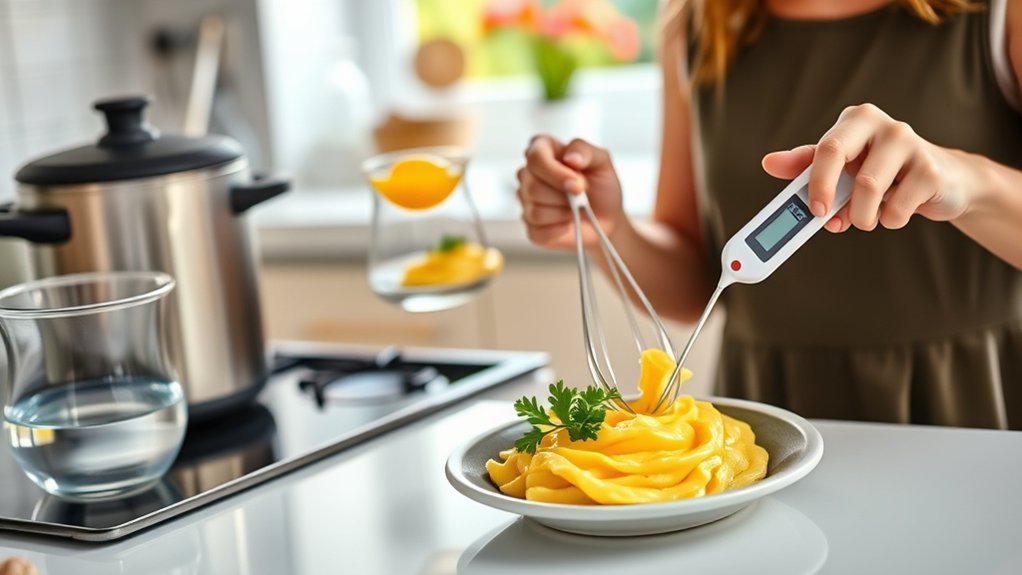
To serve eggs safely to your baby, make certain they’re well-cooked, with both the yolk and white firm to eliminate any risk of Salmonella.
Start introducing eggs around 6 months, and use these serving suggestions to guarantee a positive experience:
- Offer scrambled or hard-boiled eggs to find the texture your baby prefers.
- Introduce eggs in small amounts and monitor for any allergic reactions.
- Avoid adding salt or sugar during egg preparation, keeping their diet clean and natural.
- Be patient and encouraging, allowing your baby to explore and enjoy the taste of eggs.
How to Incorporate Eggs Into Balanced Meals
Introducing eggs into your baby’s diet opens up a world of nutritious meal possibilities. You can create delightful egg meal combinations by pairing well-cooked eggs with iron-rich foods like fortified cereals or pureed meats, enhancing iron absorption.
To help your little one explore different egg texture variations, serve scrambled or hard-boiled eggs. For a nutrient-dense meal, mix eggs with finely chopped vegetables like spinach or sweet potatoes, providing essential vitamins and minerals.
Whole grains, such as oatmeal or whole grain toast, complement eggs by adding proteins, carbohydrates, and fiber. Regularly offering these combinations helps your baby become familiar with the taste and texture of eggs, ensuring a balanced and enjoyable introduction to solid foods around six months.
Signs of Egg Allergies in Babies
How can you tell if your baby might be allergic to eggs?
It’s vital to watch for specific signs after introducing eggs. Allergic reactions can happen quickly, so keep an eye out for:
- Skin reactions, like hives or rashes on your baby’s skin
- Gastrointestinal issues, such as vomiting or diarrhea
- Respiratory symptoms, including wheezing or nasal congestion
- Swelling of the face, lips, or tongue
If you notice any of these symptoms, consult your pediatrician, especially if there’s a family history of allergies.
Frequently Asked Questions
Can Babies Eat Eggs Every Day?
Yes, babies can eat eggs daily, as they’re packed with essential egg nutrition. However, watch for any egg allergies, introducing them gradually to guarantee your little one’s tummy stays happy and healthy.
What if My Baby Refuses to Eat Eggs?
If your baby refuses eggs, try egg alternatives like mashed avocado, silken tofu, or banana. These options provide essential nutrients and can keep your baby’s diet varied and balanced, supporting their overall nutrition and development.
Are Organic Eggs Safer for Babies?
Organic eggs can be safer for babies, with studies showing they contain fewer harmful bacteria. For added benefits, choose eggs from trusted sources. Always check labels and prioritize organic for ideal nutrition and safety for your child.
Can I Freeze Cooked Eggs for Later Use?
Yes, you can freeze cooked eggs using proper freezing techniques. Store them in airtight containers or freezer bags to maintain quality. When you’re ready, thaw them in the fridge for safe and easy meal preparation.
How Do I Know if an Egg Is Fresh?
You can tell if an egg’s fresh by checking its quality. Freshness indicators include looking for a clean, uncracked shell and performing the float test—fresh eggs sink, while older ones float. Enjoy cooking confidently!
Conclusion
By following these guidelines, you can safely introduce eggs into your baby’s diet and enjoy their nutritional benefits. Did you know that eggs contain 13 essential vitamins and minerals, making them a powerhouse for your little one’s growth? Remember to always cook eggs thoroughly and watch for any signs of allergies. With a bit of care, you can create delicious, balanced meals that support your baby’s development while minimizing the risk of salmonella.