

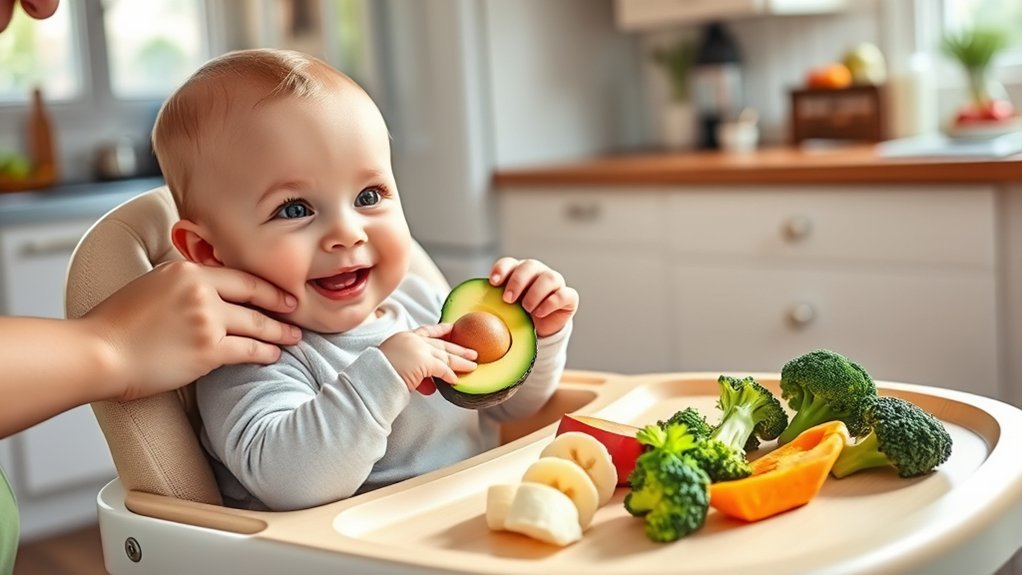
To start baby-led weaning, guarantee your baby shows signs of readiness like sitting up and good head control. Create a safe eating space with a sturdy highchair, and introduce soft, nutrient-dense foods cut into finger shapes. Encourage self-feeding, and monitor for cues of hunger and fullness. Remember, gagging is normal, so stay calm during mealtimes. As you explore this journey, you’ll discover helpful strategies to make the process smoother and more enjoyable.
Key Takeaways
- Ensure your baby shows readiness signs, such as good head control and interest in food, before starting baby-led weaning.
- Create a safe eating space with a sturdy highchair, distraction-free environment, and appropriate cleaning supplies.
- Start with soft, nutrient-dense foods cut into finger-sized pieces for easy gripping and safe self-feeding.
- Introduce allergenic foods one at a time, monitoring for reactions and encouraging exploration of different textures and flavors.
- Be patient with gagging and food refusals; allow your baby to explore food at their own pace while celebrating small successes.
What Is Baby-Led Weaning and Why Choose It?

When you choose baby-led weaning (BLW), you’re embracing an engaging way for your infant to explore solid foods. This method encourages your baby to self-feed with finger foods, promoting independence and sensory exploration.
A benefits overview reveals that BLW supports the development of self-regulation skills, allowing your child to recognize hunger and fullness cues. Research suggests that babies who practice BLW may experience lower obesity rates as they cultivate healthier eating habits.
Plus, it fosters family mealtime inclusion, letting your baby enjoy the same foods as everyone else. By opting for BLW, you empower your child to build a positive relationship with food while enjoying the journey of discovery together.
Signs Your Baby Is Ready for Baby-Led Weaning?
How can you tell if your baby is ready for baby-led weaning? Look for these key signs.
Typically, around 6 months, your baby should be able to sit with minimal support and show good head control. The disappearance of the tongue-thrust reflex is vital, as it allows them to move food to the back of their mouth without pushing it out.
If your little one reaches for food or watches you eat, they’re expressing their baby preferences and enthusiasm to explore new flavors.
Additionally, they should be able to bring their hands to their mouth, showing readiness for self-feeding. Even without teeth, babies can mash soft foods, indicating they’re developing the necessary feeding techniques.
Creating a Safe and Fun Eating Space for Your Baby
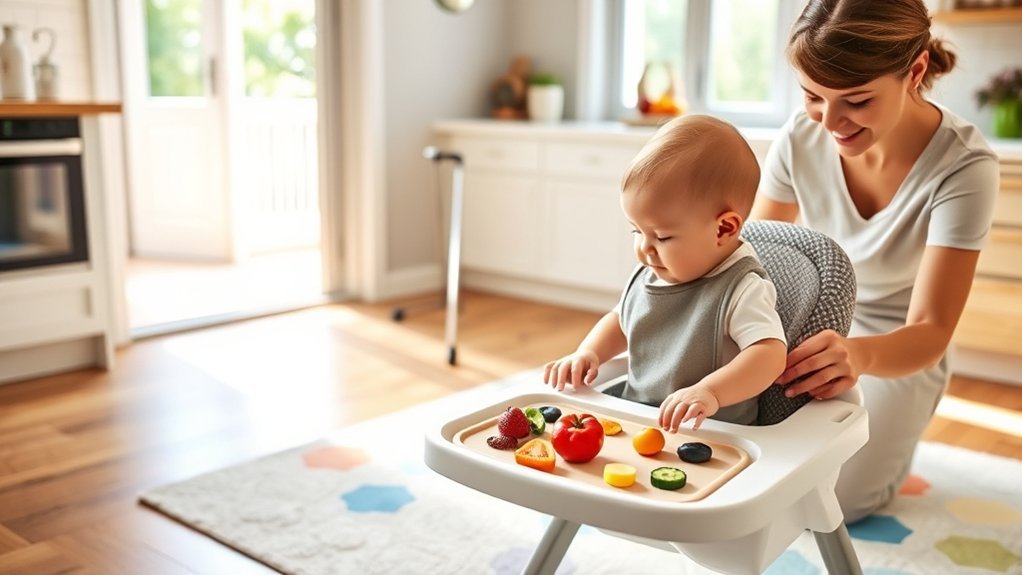
Once you’ve determined that your baby is ready for baby-led weaning, it’s important to create a safe and enjoyable eating space.
Start with a sturdy highchair setup that’s adjustable, guaranteeing your baby sits comfortably at the table height. To foster focus, establish a distraction-free environment by minimizing noise and visual clutter.
Consider using a splat mat or washable mat under the highchair to make cleanup easier and promote a relaxed atmosphere for food exploration.
Make sure the space is safe by removing choking hazards and cleaning up sharp objects or small items within reach.
Finally, incorporate family mealtimes to make eating a social, engaging experience, as babies learn best by observing those around them.
Step-by-Step Guide to Baby-Led Weaning
To successfully start baby-led weaning, you’ll want to look for signs of readiness in your baby, like sitting up on their own and showing interest in food.
Once they’re ready, focus on safe food choices that are nutrient-dense and easy to handle, such as ripe avocado or steamed sweet potatoes.
This approach not only supports their development but also makes mealtime an enjoyable exploration.
Signs of Readiness
As your baby approaches the six-month mark, you’ll want to look for specific signs that indicate they’re ready for baby-led weaning (BLW).
Key readiness indicators include the ability to sit upright with minimal support and good head control. You might notice your little one showing interest in food, reaching for items on the table, and successfully bringing their hands to their mouth.
The disappearance of the tongue thrust reflex is another vital milestone, allowing them to manage solid foods. Remember, your baby doesn’t need teeth to start; their gums can handle soft textures.
Always supervise mealtimes, as gagging is normal during this learning phase. These feeding milestones will help guarantee a safe and empowering start to their solid food journey.
Safe Food Choices
Knowing your baby is ready for baby-led weaning opens the door to exploring safe food choices. Start with soft, nutrient-dense foods that they can easily squish between their fingers, ensuring enjoyable food textures.
Here are some safe options to take into account:
- Ripe bananas
- Avocado
- Steamed sweet potatoes
Cut foods into finger-shaped pieces for easy gripping, using the pinky finger as a guide. Avoid small, round foods like grapes to reduce choking risks.
Introduce new foods one at a time, particularly allergenic foods like eggs and peanuts, around six months. Always supervise mealtime to distinguish between gagging and choking, and think about learning infant CPR for peace of mind.
Your baby’s safety is paramount during this liberating journey!
Choosing Safe and Nutritious First Foods for Your Baby
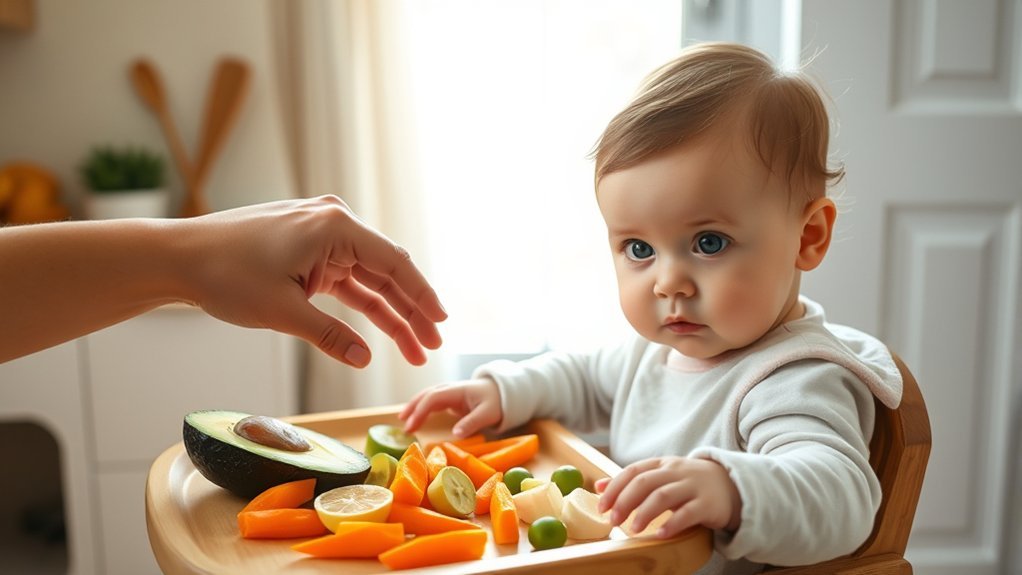
When choosing first foods for your baby, prioritize iron-rich options like meats, beans, and lentils to support their growth and brain development.
It’s important to prepare foods safely and introduce allergenic items gradually to monitor for any reactions.
Iron-Rich Food Options
Introducing iron-rich foods is essential for your baby’s development, especially as they begin solid foods around six months. Including these options in your baby-led weaning journey supports brain growth and oxygen transport.
Here are some excellent choices:
- Soft-cooked shredded meats like chicken and turkey
- Legumes such as black beans and lentils
- Iron-fortified cereals
Aim for iron-rich recipes at every meal, as babies often need more iron than what breast milk or formula provides.
Pairing these foods with vitamin C sources can enhance absorption; think cooked spinach with avocado or lentils served alongside oranges.
Safe Food Preparation Tips
As you explore iron-rich foods for your baby, it’s equally important to focus on safe food preparation to guarantee a positive and secure eating experience.
Start by offering soft fruits and vegetables—think ripe avocados and steamed sweet potatoes—cut into finger-sized pieces for easy grasping.
Prioritize meal timing, ensuring your baby is seated upright in a high chair, which minimizes choking risks. Avoid hard, round, or sticky foods like whole grapes and nuts; these can pose hazards.
Prepare foods without added salt or sugar, promoting healthy habits. Vary the food texture and flavors to encourage acceptance, and always supervise your baby during meals.
This way, you can support their independence while keeping mealtimes safe and enjoyable.
Introducing Allergenic Foods Gradually
To help your baby develop a tolerance to allergens, begin introducing allergenic foods around six months of age. This allergen introduction timing is essential for reducing the risk of food allergies and promoting acceptance.
Start with small portions of one allergenic food at a time, offering it for 3-5 days while monitoring for any allergic reactions.
- Choose safe preparation methods, like thinned peanut butter or pureed eggs, to make them manageable.
- Gradually introduce a variety of allergenic foods, as early exposure can help develop tolerance.
- Always consult with your pediatrician before starting, especially if there’s a family history of allergies.
Your attentive approach will empower your baby’s journey into solid foods!
Observing and Responding to Your Baby’s Cues
How can you tell if your baby is ready to plunge into the world of solid foods? Start by observing their cues.
Look for signs like sitting up unassisted, showing interest in food, and bringing their hands to their mouth around six months. Responding to hunger cues, such as reaching for food or opening their mouth, helps establish a positive relationship with eating and encourages feeding independence.
Look for key signs like sitting up unassisted and showing interest in food to gauge your baby’s readiness for solids.
Recognizing fullness cues, like losing interest or turning their head away, is essential to prevent overfeeding. Allow your baby to explore food at their own pace, fostering their independence and confidence in self-feeding.
This consistent cues recognition not only makes mealtime enjoyable but also helps reduce the likelihood of picky eating in the future.
Troubleshooting Common Challenges in Baby-Led Weaning
While initiating the journey of baby-led weaning can be exciting, it’s not without its challenges. You may encounter gagging concerns, food refusals, and self-feeding struggles.
Here are some strategies to help you navigate these hurdles:
- Understand that gagging is normal; it’s a protective reflex. Differentiate it from choking to ease your worries.
- If your baby refuses food, try presenting it in various textures and forms; it can take 10-15 exposures for acceptance.
- For self-feeding struggles, start with softer foods that are easier to grasp and gradually introduce more complex textures as your baby’s skills improve.
Frequently Asked Questions
Can I Mix Baby-Led Weaning With Traditional Spoon-Feeding?
Yes, you can mix baby-led weaning with traditional spoon-feeding. Balancing methods allows you to adapt feeding strategies that suit your baby’s needs while fostering independence and exploration during mealtime. It’s all about finding what works best!
What Should I Do if My Baby Refuses to Eat?
If your baby’s refusing to eat, trust their hunger cues. Observe their meal preferences, and remember that it’s normal for babies to have off days. Stay patient, and keep offering a variety of foods.
Are There Foods to Avoid During Baby-Led Weaning?
During baby-led weaning, avoid foods with choking hazards like whole grapes, nuts, and hard vegetables. Also, steer clear of common allergens like honey and cow’s milk until your baby’s ready to minimize risks safely.
How Long Does the Baby-Led Weaning Process Typically Take?
The baby-led weaning process usually spans about six months. During this weaning timeline, you’ll hit key feeding milestones, like self-feeding and diverse food choices, allowing your baby to develop healthy eating habits naturally.
When Can I Introduce Allergenic Foods in Baby-Led Weaning?
You can introduce allergenic foods around six months, following timing guidelines from health experts. Start with single-ingredient options, observing your baby’s reactions. This approach promotes gradual exposure and supports your baby’s adventurous eating journey.
Conclusion
As you commence on this exciting journey of baby-led weaning, picture your little one grasping a soft piece of avocado, their tiny fingers exploring textures and flavors. By fostering independence and a love for healthy foods, you’re not just feeding them; you’re nurturing their confidence and curiosity. Remember, every mealtime is an opportunity for growth. Stay patient and supportive, and soon enough, you’ll both be savoring this delicious adventure together, one bite at a time.