To use a drip coffee maker, first place a coffee filter in the brew basket. Measure 2 tablespoons of medium-ground coffee for every 6 ounces of filtered water and add it to the filter. Pour the water into the reservoir, then press the brew button. Wait for the cycle to finish, and serve your coffee immediately or store it in an insulated container. By fine-tuning your approach, you’ll uncover ways to enhance your brewing process.
Key Takeaways
- Place a coffee filter in the brew basket and add 2 tablespoons of medium ground coffee per 6 ounces of water.
- Fill the reservoir with cold, filtered water according to the markings for accurate measurement.
- Press the brew button and allow the coffee maker to complete its brewing cycle.
- Serve the coffee immediately or transfer it to an insulated container to maintain freshness.
- Clean and maintain the coffee maker regularly by rinsing parts and descaling every 3-6 months.
Essential Equipment for Your Drip Coffee Maker
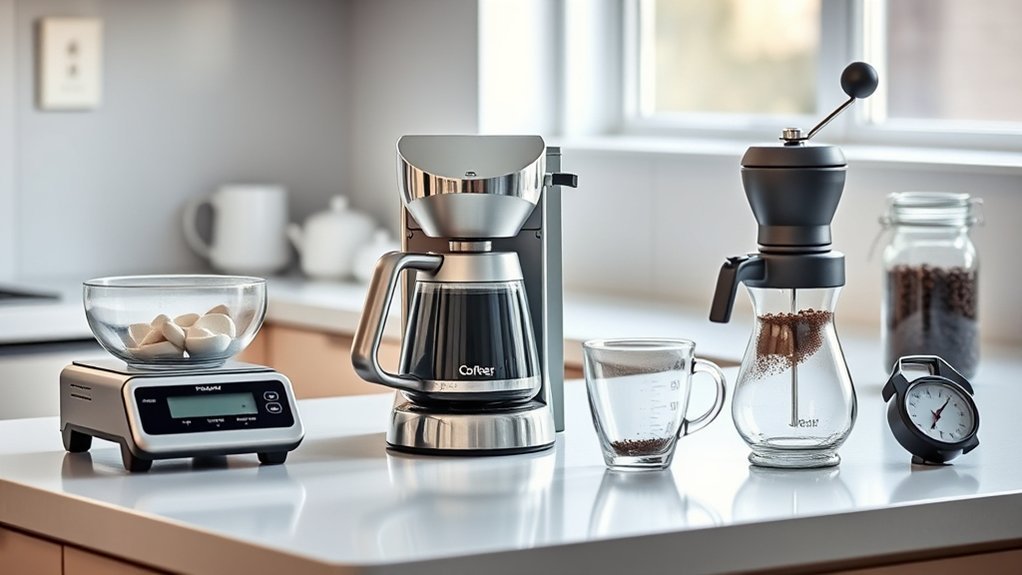
To brew the perfect cup of coffee, having the right equipment is vital. First, invest in a quality coffee grinder, preferably a burr grinder, to achieve a consistent grind size. This guarantees optimal flavor extraction from your freshly ground coffee beans.
Invest in a quality burr grinder for a consistent grind and optimal flavor extraction in your coffee.
Next, select an automatic drip coffee maker for convenience and consistent results. Don’t forget about coffee filters; whether you choose paper, metal, or bamboo, they play an important role in separating grounds from the brewed coffee, affecting flavor and clarity.
Additionally, prioritize water quality by using clean, filtered water free from impurities.
Finally, utilize measuring tools like a coffee scooper or scale to maintain the ideal coffee-to-water ratio, typically 2 tablespoons of coffee per 6 ounces of water.
Step-by-Step Guide to Brewing Drip Coffee
Now that you’ve gathered the necessary equipment for your drip coffee maker, it’s time to focus on the brewing process.
Start by placing a coffee filter into the brew basket to catch the coffee grounds. For ideal flavor, measure and add 2 tablespoons of medium ground coffee for every 6 ounces of cold, filtered water—this is essential for achieving the right coffee ratios.
Next, pour the measured water into the reservoir, ensuring it aligns with the markings for accurate brewing. Press the brew button to start the process and allow the machine to complete the cycle uninterrupted.
Once brewed, serve the coffee immediately or transfer it to an insulated container to preserve its freshness and flavor for later enjoyment.
Tips for Perfecting Your Brew
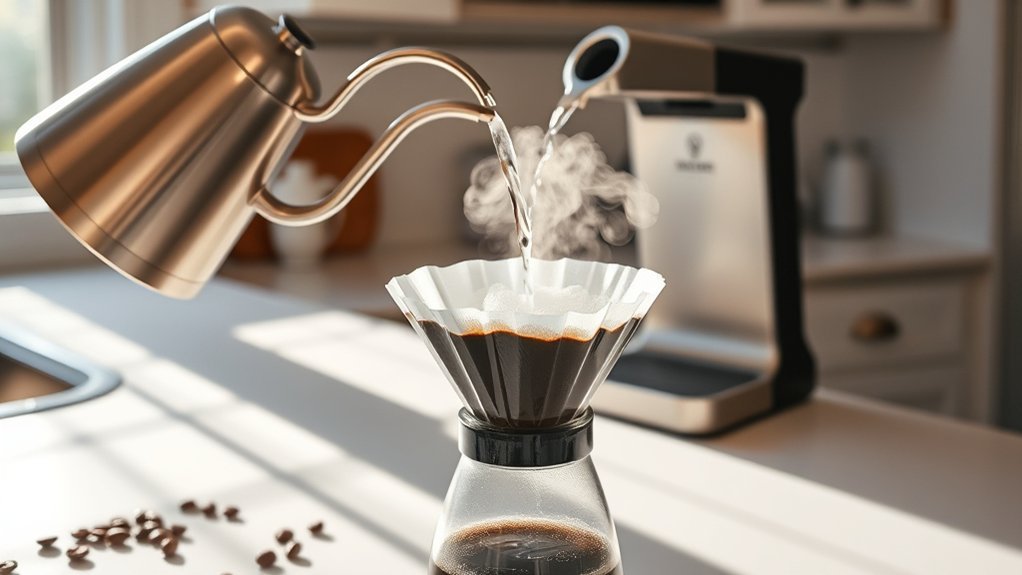
While brewing coffee can seem straightforward, small adjustments can drastically improve the flavor and aroma of your cup.
Start by using freshly ground coffee beans, measuring 1-2 tablespoons per 6 ounces of water. Maintaining a consistent coffee-to-water ratio is essential; aim for the golden ratio of 1 gram of coffee for every 17 grams of water.
Using freshly ground coffee beans and maintaining a precise coffee-to-water ratio enhances your brewing experience. Aim for 1-2 tablespoons per 6 ounces.
Pay attention to grind size—experimenting with coarseness can greatly affect your brew. Additionally, monitor your brewing time; the ideal range typically falls between 4 to 6 minutes.
Keep your water temperature between 195–205 °F (91–96 °C) for best extraction.
Finally, clean your coffee maker regularly with a vinegar solution to prevent mineral buildup and preserve taste quality.
Common Mistakes and How to Avoid Them
Many coffee enthusiasts unknowingly make common mistakes that can detract from their brewing experience. To elevate your coffee game, pay attention to these key factors:
| Mistake | Explanation | Solution |
|---|---|---|
| Using tap water | May contain impurities that affect flavor | Opt for fresh, cold, filtered water |
| Incorrect coffee-to-water ratio | Can lead to under or over-extraction | Use 2 tablespoons per 6 ounces of water |
| Reusing paper filters | Can impart a bitter taste | Use fresh filters each time |
| Grinding coffee too early | Freshly ground coffee loses flavor quickly | Grind just before brewing |
Additionally, verify your water temperature is ideal for extraction and grind your coffee just before brewing for the best results. Avoid these pitfalls, and enjoy a superior cup of coffee!
Cleaning and Maintenance for Longevity

To fully enjoy the benefits of a well-brewed cup of coffee, maintaining your drip coffee maker is just as important as avoiding common brewing mistakes.
Start with simple cleaning techniques: rinse the brewing basket and filter after each use to prevent coffee oil build-up. Wash removable parts, like the carafe, with hot, soapy water periodically to maintain hygiene.
To ensure optimal flavor, rinse the brewing basket and filter after each use, and wash the carafe regularly with hot, soapy water.
Every 3-6 months, descale your machine using equal parts white vinegar and water to eliminate mineral deposits affecting performance. Wipe down the hot plate after each use to avoid residue that can lead to unpleasant flavors.
Finally, always follow the manufacturer’s instructions for specific cleaning solutions and maintenance tips to guarantee your coffee maker lasts longer and brews better.
Frequently Asked Questions
Can I Use Pre-Ground Coffee Instead of Grinding My Own?
Yes, you can use pre-ground coffee instead of grinding your own. However, consider the freshness factor; pre-ground coffee may lack the rich flavor and aroma that freshly ground beans provide. Enjoy your brewing!
What Type of Coffee Beans Is Best for Drip Coffee?
For drip coffee, medium roast Arabica beans are best, offering balanced flavor profiles. You might also explore light roast for bright acidity or dark roast for bold, rich flavors, depending on your taste preferences.
How Often Should I Clean My Drip Coffee Maker?
Cleaning your drip coffee maker’s like polishing a fine gem; do it every month for ideal performance. Regular maintenance tips include descaling and washing removable parts, ensuring you savor fresh, flavorful coffee every time.
Can I Brew Tea in a Drip Coffee Maker?
Yes, you can brew tea in a drip coffee maker. Just use loose tea or tea bags instead of coffee grounds. This coffee crossover allows for convenient tea brewing, but make certain you clean the machine afterward to avoid flavor contamination.
What Should I Do if My Coffee Tastes Bitter?
If your coffee tastes bitter, consider adjusting your coffee brewing variables. Use coarser grounds, reduce brewing time, or lower water temperature. These taste adjustments can greatly enhance flavor, making your coffee more enjoyable.
Conclusion
By mastering these steps, you’re not just brewing coffee; you’re crafting a daily ritual that awakens the senses. As you refine your technique and embrace the nuances of flavor, each cup transforms into an experience rather than a mere beverage. Remember, consistent cleaning and maintenance will keep your drip coffee maker humming like a well-tuned instrument. So, experiment, learn, and savor the rich journey of coffee brewing, one delightful mug at a time.