A coffee maker can make dorm mornings easier, but you should not bring one until you confirm that your school allows it. Housing rules differ by campus, building, and room type. The safest approach is to check the current housing handbook, choose a permitted model, and follow basic electrical, burn, cleaning, and storage precautions every time you brew.
Quick Answer
Check your school’s current housing policy before bringing any coffee maker. Some residence halls allow residential models with enclosed heating systems and automatic shutoff, some permit only single-serve brewers, and others prohibit coffee makers in bedrooms. Use an approved model on a dry, stable surface, connect it as your school and manual require, supervise brewing, and unplug it after use.
Key Takeaways
- Your school’s current housing policy—not a general online wattage rule—determines whether a coffee maker is allowed.
- Check the exact model for required automatic shutoff, heating-element design, wattage, and safety-certification or listing requirements.
- Place the brewer on a stable, dry, heat-resistant surface away from bedding, curtains, papers, and the edge of a desk.
- Use only the electrical setup allowed by both your housing policy and brewer instructions, and avoid operating another heat-producing appliance on the same outlet.
- Supervise brewing, unplug the machine after use, and follow the model’s manual for cleaning and descaling.
- Stop using a brewer that leaks, sparks, smells burned, overheats, has a damaged cord, or is subject to a safety recall.
At a Glance
| Time Required | About 10–15 minutes for a policy check, label inspection, recall search, and safe setup |
| Difficulty | Easy |
| Tools Needed | Current housing handbook, coffee-maker manual, model number, dry cloth, and access to an approved electrical connection |
| Cost | No special setup cost if you already own a permitted brewer; otherwise, the cost depends on the approved machine and coffee supplies you choose |
How to Ensure Your Coffee Maker Complies With Dorm Regulations
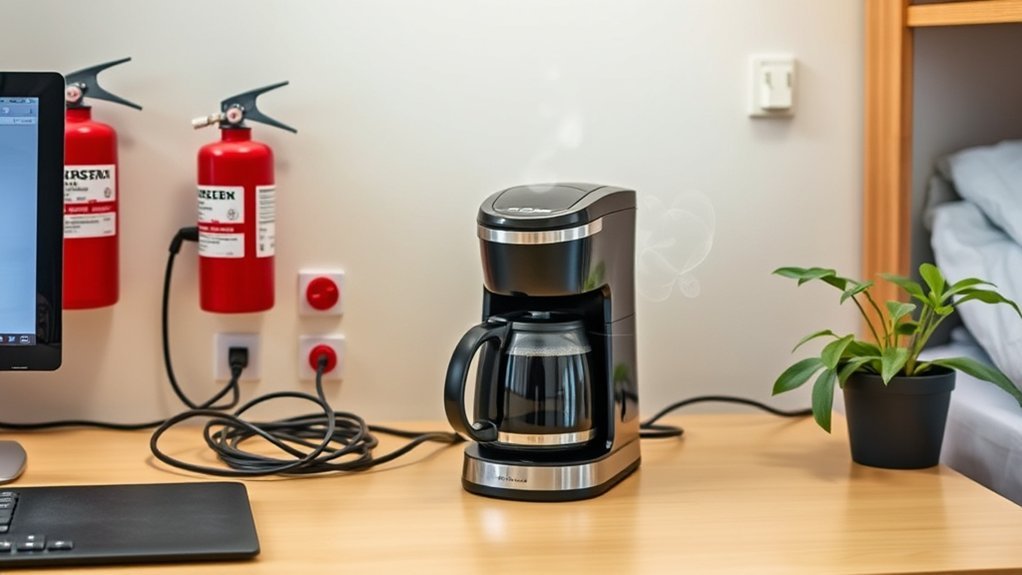
There is no single nationwide rule for coffee makers in dorm rooms. Current official policies show how much the requirements can differ. Brown University allows residential-style coffee makers in student rooms when they meet its requirements, including automatic shutoff. Illinois State University prohibits most heat-producing appliances in residence halls but makes an exception for single-serve auto-shutoff coffee makers. Texas Christian University lists automatic coffee makers among appliances prohibited in university housing.
Use this compliance checklist before buying, packing, or operating a brewer:
- Read the current housing handbook. Search for “coffee maker,” “appliances,” “heating element,” “automatic shutoff,” “cooking,” “extension cord,” “power strip,” and “wattage.”
- Check the exact location covered by the rule. An appliance may be prohibited in a bedroom but allowed in a community kitchen or apartment kitchen.
- Read the appliance rating label. Record the model number, wattage, voltage, current rating, and automatic-shutoff information. If the label gives volts and amps but not watts, approximate input power can be estimated as watts = volts × amps. Use the manufacturer’s listed wattage when one is provided.
- Look for the required safety mark. Some schools specify a UL, CE, or other recognized listing. UL Solutions explains its small-appliance testing and certification work, but a certification mark does not override your school’s housing rules.
- Check the exact model for recalls. Search the model number in the U.S. Consumer Product Safety Commission recall database, especially when buying or inheriting a secondhand machine.
- Ask Residence Life when the wording is unclear. Written confirmation is better than relying on another student’s experience from a previous year.
Note: Do not assume that every dorm uses an 800–1,000-watt limit. Some schools publish a specific maximum, some focus on heating-element design or automatic shutoff, and others prohibit coffee makers in student rooms regardless of wattage.
Choosing the Right Coffee Maker for Your Dorm Room
The best dorm coffee maker is not a particular brand. It is a specific model that meets your school’s policy, fits your available space, has an intact cord and plug, and includes every safety feature your housing rules require.
Before buying one, coordinate with your roommate. Two students rarely need two coffee makers in a small room, and sharing one approved brewer can reduce clutter, duplicate supplies, and the temptation to operate several heat-producing appliances at once.
| Brewing Method | Dorm Considerations | Main Trade-Off |
|---|---|---|
| Automatic drip maker | May be allowed only with required safety features, or may be prohibited because of its warming plate or other heat-producing design. | Makes several cups but takes more space and may keep a hot surface energized after brewing. |
| Enclosed single-serve brewer | Accepted by some schools that prohibit standard coffee pots, but approval is not universal. | Compact and convenient, but pods can cost more and create more waste. |
| French press | The press itself is not electric, but you still need an approved source of hot water. | Inexpensive and compact, but grounds require careful cleanup. |
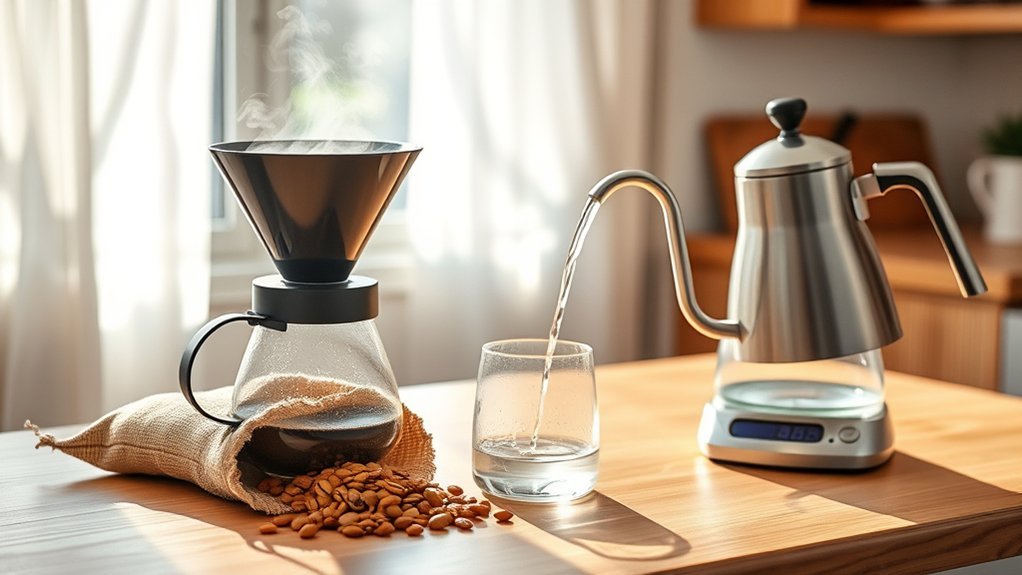
| Pour-over | Compact, but it also requires an approved kettle or hot water from a shared kitchen. | Easy to store but requires hands-on brewing. |
| Instant coffee | No coffee machine is needed, but the hot-water source must still follow dorm rules. | Minimal cleanup but less control over flavor. |
| Cold brew | Requires no heating appliance. You need a clean covered container and refrigeration if your prepared coffee or added ingredients require it. | Useful where heat-producing appliances are banned, but brewing takes several hours. |
Before using a new or secondhand machine, inspect the cord, plug, reservoir, lid, and base. Search the model number in the CPSC recall database. Do not use a recalled machine or one with a cracked reservoir, loose plug, exposed wire, missing required safety label, or signs of overheating.
What to Do if Coffee Makers Are Not Allowed in Your Room
If your housing policy prohibits coffee makers in bedrooms, do not try to work around the restriction with another unapproved heating appliance. Check whether your building has a community kitchen, beverage station, dining hall, or another approved location for brewing.
Manual methods such as a French press or pour-over still require hot water, so they do not solve the problem when electric kettles and other in-room water heaters are also banned. Cold brew is a practical no-heat alternative: prepare it in a clean covered container, follow food-storage rules, and refrigerate the finished drink when required.
How to Safely Set Up Your Coffee Maker
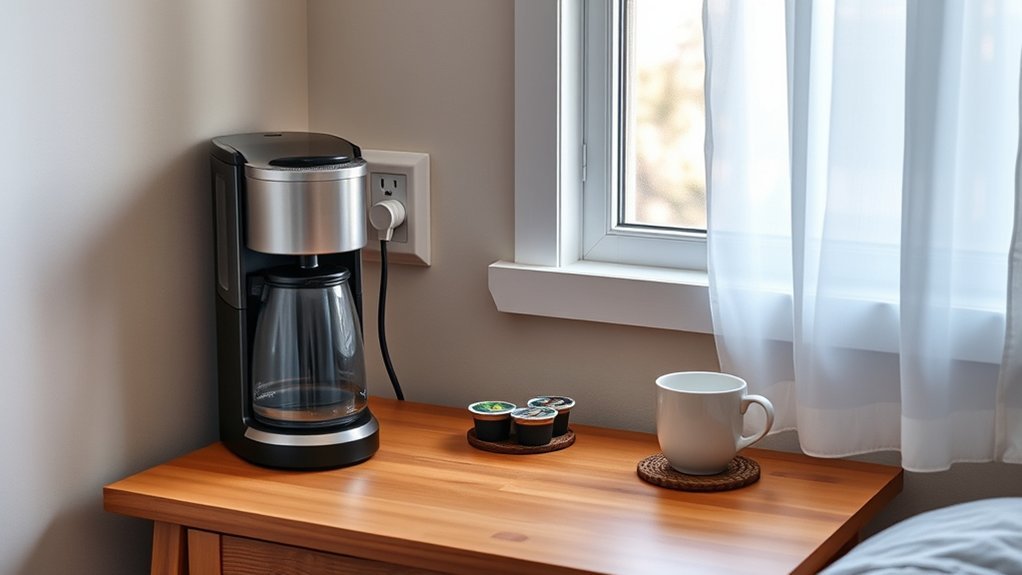
A safe setup reduces the risk of burns, spills, damaged furniture, overloaded electrical connections, and fire.
- Choose a hard, level surface. Do not place the machine on a bed, rug, upholstered chair, unstable cart, or stack of books.
- Keep it away from combustible items. Leave clear space around bedding, curtains, clothing, paper, posters, and other materials that could touch or fall onto a hot surface.
- Keep water away from electricity. Position the brewer where filling the reservoir will not splash the plug, outlet, power connection, or another electrical device.
- Leave room for steam. Do not operate the machine directly beneath a shelf, cabinet, smoke detector, or item that can trap heat or moisture.
- Route the cord safely. Keep it out of walkways, away from the desk edge, and out from under rugs, mattresses, doors, or furniture legs.
- Follow the approved electrical setup. U.S. Fire Administration guidance says to plug only one heat-producing appliance into an electrical outlet at a time and specifically lists coffee makers as an example. It also advises against using an extension cord for a heat-producing appliance. Check your housing policy and brewer manual separately for any rules concerning power strips or surge protectors.
- Inspect the outlet. Do not use an outlet that is loose, scorched, cracked, wet, buzzing, discolored, or unable to hold the plug firmly. Report the problem to campus facilities rather than moving the brewer from outlet to outlet.
For additional electrical-fire guidance, see the U.S. Fire Administration’s appliance and electrical safety guidance.
Warning: Stop using the coffee maker immediately if the plug becomes hot, the machine sparks, smoke appears, you smell burning insulation, water reaches the electrical connection, or the circuit repeatedly trips. Unplug it only when you can safely reach a dry, undamaged plug. If there is an active fire or continuing smoke, follow campus emergency and evacuation procedures. Never pour water on energized electrical equipment.
How to Use a Dorm Coffee Maker Safely Every Time
Run through a short safety check before each brew:
- Make sure your hands, the plug, and the surrounding surface are dry.
- Confirm that the carafe, mug, filter basket, pod holder, and reservoir are seated correctly.
- Do not fill the reservoir above its maximum line.
- Keep the lid closed as directed by the manufacturer.
- Do not move, open, or reach over the machine while hot water is flowing.
- Remain in the room while it brews.
- Keep the hot drink away from the desk edge and use a mug with a stable base.
- Do not operate another heat-producing appliance from the same outlet at the same time.
- Turn the machine off and unplug it after use, even when it has automatic shutoff.
- Let it cool before cleaning, moving, or storing it.
The U.S. Fire Administration recommends unplugging small appliances when they are not in use, avoiding overloaded outlets, replacing appliances with damaged cords, and keeping cords from being pinched or damaged.
Pro Tip: Fill the reservoir with a separate cup instead of carrying the entire brewer to a sink. This reduces the chance of splashing water around the machine’s cord, plug, and electrical connection.
How to Maintain Your Coffee Maker for Optimal Performance
Regular cleaning helps control coffee residue, slow brewing, mineral scale, odors, mold, and pests. The owner’s manual should control the exact method because removable parts, approved cleaners, descaling cycles, and rinse requirements vary by model.
- After each use: Discard grounds or pods, empty standing water when the manual recommends it, and rinse approved removable parts.
- Wash food-contact parts: Clean the carafe, filter basket, pod holder, drip tray, and reusable filter using the method listed in the manual. Dry them fully before reassembly.
- Wipe the exterior: Unplug the machine, let it cool, and use a soft damp cloth. Never immerse the electrical base in water.
- Descale as directed: Mineral deposits can slow flow and affect performance. The correct interval depends on the model, usage, and water hardness. For example, Keurig gives general descaling guidance of every three to six months for its brewers, while individual model instructions may be more specific.
- Use only a method approved for your model: Do not assume vinegar, a commercial descaler, or another cleaning solution is correct for every machine. Some official Keurig instructions permit white vinegar for certain brewers, while other model guidance uses a descaling solution. Follow the instructions for your exact model.
- Complete every rinse cycle: Fresh-water rinses remove cleaning or descaling residue. Do not return the machine to normal use until the required rinse process is complete.
- Inspect for damage: Check for leaks, cracks, loose parts, unusual sounds, a hot plug, or cord wear before returning the machine to service.
The right cleaning method is the one specified for your exact coffee-maker model—not a one-size-fits-all vinegar or descaling recipe.
How to Save on Coffee Costs and Energy Use
You can lower your cost per cup without ignoring dorm rules or creating unnecessary cleanup.
- Brew only what you will drink. A smaller batch wastes less coffee and water.
- Use an approved reusable filter. Check the manual before replacing a paper filter or pod with a reusable accessory.
- Buy a manageable amount of coffee. A large bag is not a bargain if it becomes stale before you use it.
- Share nonperishable supplies. Roommates can split the cost of filters, beans, stirrers, and shelf-stable add-ins.
- Use automatic shutoff as backup. It can limit unnecessary heating, but you should still turn the brewer off and unplug it after use.
- Use manual brewing only with approved hot water. A French press or pour-over does not make an unapproved kettle safe to use in a bedroom.
- Consider cold brew where heat appliances are restricted. It requires no brewing electricity, although prepared coffee and added milk or creamer still need proper food storage.
Storing Your Coffee and Supplies
A compact coffee station can keep supplies organized while reducing spills, odors, pests, and clutter around electrical equipment.
Airtight Storage Containers
Store beans or ground coffee in a clean, opaque, airtight container in a cool, dry area. Keep the container away from direct sunlight, steam, the brewer’s hot surfaces, and damp areas near a sink.
- Choose food-safe glass, metal, or durable plastic.
- Use a container that closes securely and is easy to clean.
- Label shared containers so roommates do not mix regular and decaffeinated coffee.
- Do not store coffee, sugar, or creamer in a container that has moisture, mold, or insect activity.
- Discard wet grounds promptly instead of leaving them in the filter basket overnight.
Organizing Coffee Supplies Efficiently
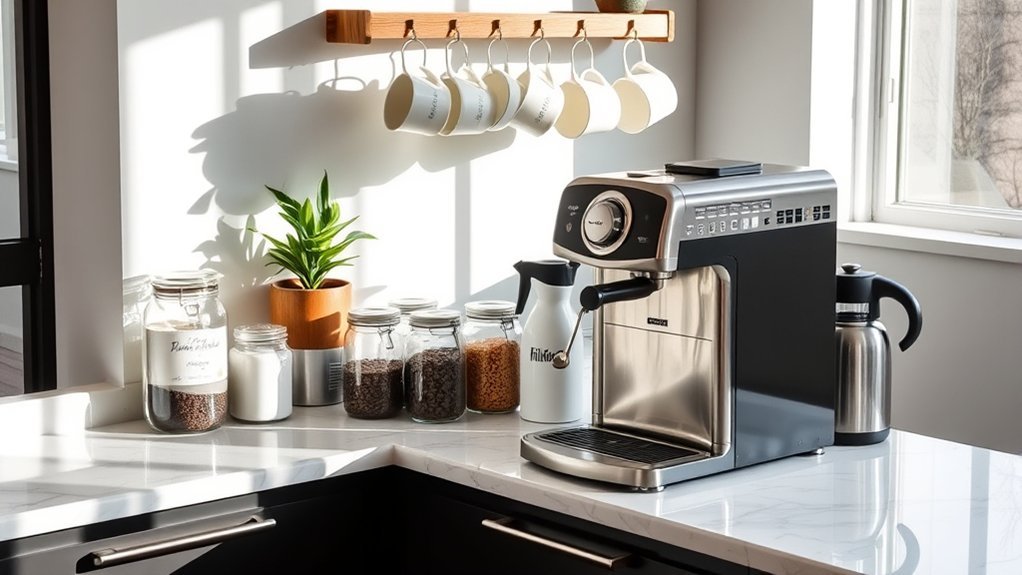
Create one designated coffee station rather than spreading cords, pods, filters, and mugs across the room. Keep frequently used items within reach without stacking them on top of the machine.
Vertical shelves or hooks can save space, but do not place loose objects where they can fall into the reservoir or onto a hot brewer. Keep the outlet, plug, automatic-shutoff control, and machine label visible and easy to reach.
Check creamers and other perishable add-ins for refrigeration requirements. Clean spills immediately so they do not attract ants, roaches, or other pests.
Preparing the Coffee Maker for School Breaks
Before leaving campus for an extended break, check both your housing instructions and the brewer manual. Unplug the machine, discard used coffee and pods, clean approved removable parts, and empty or drain stored water when the manufacturer directs you to do so. Let the machine and its parts dry before packing or storing them so trapped moisture does not encourage odors or mold.
Common Coffee Maker Mistakes to Avoid in Your Dorm
Ignoring Safety Regulations
Do not rely on a friend’s policy from another residence hall or a rule from a previous school year. Housing requirements can change and may differ between bedrooms, suites, apartments, and shared kitchens.
Common policy mistakes include:
- Assuming every automatic-shutoff brewer is permitted.
- Assuming every Keurig-style machine is either allowed or banned.
- Using an appliance above the school’s published wattage limit.
- Operating a bedroom-prohibited machine because it is allowed in a shared kitchen.
- Using an unapproved kettle simply because a French press or pour-over itself has no heating element.
- Removing a confiscated or tagged appliance and using it again without approval.
Overloading Electrical Outlets
Do not operate a coffee maker with another heat-producing appliance on the same electrical outlet. U.S. Fire Administration guidance specifically identifies coffee makers as heat-producing appliances and advises against using an extension cord for them.
Power-strip and surge-protector rules can differ by residence hall. Do not assume that a strip permitted for computers and chargers is also approved for a coffee maker. Follow both the housing policy and the brewer instructions.
Never run a cord under a rug, mattress, furniture leg, or doorway. Stop using the outlet if the plug fits loosely, the wall plate becomes warm, you hear buzzing, or you see discoloration. Report the outlet instead of repeatedly resetting a breaker or moving the brewer around the room.
Using Generic Cleaning Advice
Do not pour vinegar, bleach, soap, or another cleaner into the reservoir unless the manufacturer approves that substance and method for your exact brewer. The wrong cleaner or cycle can leave residue or damage parts.
Do not skip the fresh-water rinse cycles listed in the manual. A machine should be fully rinsed, correctly reassembled, and dry where required before normal brewing resumes.
Building a Coffee Culture in Your Dorm Community
A shared coffee routine can support study sessions and social time, but it works best when everyone follows the same housing, safety, and cleanup rules.
- Use the machine only in its approved location.
- Agree on who cleans the carafe, drip tray, filter area, and surrounding surface.
- Label personal supplies and ask before using someone else’s coffee or mug.
- Do not leave a shared machine brewing while everyone leaves the room.
- Empty wet grounds and wipe spills promptly to prevent odors and pests.
- Keep milk and refrigerated creamers in an approved refrigerator rather than on the coffee station.
- Do not crowd an approved outlet with unrelated heat-producing appliances.
- Report a tripped breaker, damaged outlet, smoke, or repeated overheating instead of quietly moving the machine to another outlet.
Coffee Maker Troubleshooting and Emergency Steps
| Problem | Safe Response |
|---|---|
| The machine has no power | Turn it off and unplug it. Check the manual for normal troubleshooting. If you suspect a tripped breaker or faulty dorm outlet, report it to housing or facilities rather than opening an electrical panel or repeatedly resetting the circuit yourself. |
| Water leaks from the reservoir or base | Unplug the brewer if the electrical connection is dry and safe to reach, allow it to cool, and dry the surrounding area. Check whether removable parts are seated correctly. Stop using it if the tank, seal, hose, body, or electrical base appears damaged. |
| Brewing is slow or the serving is smaller than normal | Clean the needle, filter area, or removable parts only as the manual directs. Run the model’s approved descaling process if mineral buildup is likely. |
| The plug or outlet feels hot | Stop brewing and unplug the unit if it is safe to reach the plug. Do not move the brewer to another outlet and continue using it. Report the condition and have the appliance and outlet checked. |
| There is smoke, sparking, or a burning smell | Stop using the machine. Unplug it only if you can reach a dry, undamaged plug safely. If there is active fire or continuing smoke, leave the area and follow campus fire-alarm, evacuation, and emergency-call procedures. |
| An electrical fire starts | Do not pour water on energized electrical equipment. Alert others and follow campus evacuation and emergency procedures. Only use an appropriate fire extinguisher if campus policy permits it, the fire is small, you have been trained, and you have a safe exit behind you. |
| Liquid reaches the outlet or plug | Do not touch the wet outlet, plug, or appliance. Keep others away and contact housing staff, facilities, campus security, or emergency services as appropriate. |
OSHA’s fire-extinguisher guidance identifies energized electrical equipment as a Class C fire hazard and warns against using water on an energized electrical fire.
Frequently Asked Questions
Can I use a coffee maker in my dorm’s shared kitchen?
Usually, you may use appliances that the housing policy permits in a shared kitchen, but you must follow that kitchen’s rules. Stay with the machine while it brews, clean the counter and removable parts, discard wet grounds, and remove your belongings when required.
What should I do if my coffee maker spills?
Turn the machine off and unplug it only if the plug and outlet remain dry and safe to touch. Keep liquid away from electrical parts, wipe the floor to prevent a fall, and let the machine cool. Do not reuse it if water entered the electrical base, plug, outlet, or internal wiring.
Are specific coffee-maker brands recommended for dorm use?
No brand is approved for every dorm. Compare the exact model with your current housing policy. Check its heating design, automatic shutoff, wattage, required safety mark, cord condition, dimensions, and recall status before bringing it to campus.
How can I make coffee without an electric coffee maker?
Instant coffee, a French press, and pour-over coffee are options if you have an approved source of hot water. If in-room heating appliances are prohibited, cold brew can avoid the hot-water issue entirely. Follow your dorm’s food-storage and refrigeration rules.
What should I do if my coffee maker stops working?
Unplug it and let it cool. Check the manual for an empty reservoir, blocked filter, incorrectly seated part, or required cleaning cycle. Do not open the electrical housing or repeatedly reset a tripped circuit. Replace or service the machine if its cord, plug, heating system, or internal electrical parts may be damaged.
Are Keurig machines allowed in dorm rooms?
It depends on the school and model. Illinois State currently makes an exception for single-serve auto-shutoff coffee makers, while other universities use different rules or prohibit coffee makers entirely. Check the current policy for your building rather than assuming every Keurig-style brewer is approved.
What wattage coffee maker can I use in a dorm?
There is no universal dorm wattage limit. Read the appliance label and compare it with your school’s current housing policy. If the label provides voltage and current but not wattage, watts can be approximated by multiplying volts by amps. Use the manufacturer’s listed wattage when it is available.
Can I plug a dorm coffee maker into a power strip?
Do not assume that a power strip approved for computers and chargers is approved for a coffee maker. U.S. Fire Administration guidance says a coffee maker should be the only heat-producing appliance on the outlet and should not be used with an extension cord. Check both your housing policy and brewer manual for any separate power-strip requirements.
Can I leave my coffee maker unattended while it brews?
No. Stay in the room or shared kitchen while it operates. Automatic shutoff is a backup safety feature, not a reason to leave a heat-producing appliance running without supervision.
What if my dorm bans all coffee makers?
Use an approved community kitchen or campus beverage area if one is available. Do not substitute an unapproved kettle or hot plate. Cold brew is another option because it does not require an in-room heating appliance, although normal food-storage and refrigeration rules still apply.
Conclusion
Using a coffee maker safely in a dorm starts with one simple step: check your school’s current housing policy for your specific building and room type. Once you know which models and locations are permitted, inspect the exact brewer, confirm its safety features and recall status, place it on a stable dry surface, and use the electrical connection required by your school and manufacturer. Supervise every brew, unplug the machine afterward, clean it according to its manual, and stop using it immediately if you notice leaking, damaged wiring, overheating, sparking, or burning odors. If coffee makers are prohibited in your room, use an approved shared location or a no-heat option rather than substituting another banned appliance.
Sources
- Brown University Residential Life — Restricted Items — Current example of a residence-hall policy permitting residential coffee makers with automatic shutoff while restricting other heat-producing appliances.
- Illinois State University Housing — Terms and Conditions — Current example of a residence-hall policy that distinguishes single-serve auto-shutoff coffee makers from other heat-producing appliances.
- Texas Christian University — Living in University Housing — Current example of a university policy prohibiting automatic coffee makers.
- U.S. Fire Administration — Appliance and Electrical Fire Safety — Supports unplugging small appliances, avoiding overloaded outlets, inspecting cords, and safe electrical use.
- U.S. Consumer Product Safety Commission — Recalls & Product Safety Warnings — Provides current recall searches for coffee makers and other consumer products.
- Occupational Safety and Health Administration — Portable Fire Extinguisher Basics — Explains Class C electrical fires and warns against using water on energized electrical equipment.