Questions about Beech-Nut baby food usually center on heavy metals, product testing, and recalls. Beech-Nut says it tests ingredients and finished foods, uses ISO-17025-accredited laboratories, and publishes batch-specific results for products made since January 1, 2025. Those steps improve transparency, but they do not mean every product is completely free of naturally occurring toxic elements.
Quick Answer
Beech-Nut reports extensive ingredient and finished-product testing, and its recall page listed no active baby or toddler food recalls as of July 22, 2026. However, no baby food brand can guarantee zero heavy metals. Check the product’s batch results and recall status, and give your child a varied, age-appropriate diet.
Key Takeaways
- Heavy metals and related toxic elements can enter fruits, vegetables, grains, and other foods through soil, water, air, and past pollution.
- A 2021 congressional report cited high results in historical Beech-Nut ingredient records, but those figures should not be described as the concentration in every finished product.
- Beech-Nut recalled one lot of Single Grain Rice Cereal in June 2021 and left the branded rice-cereal segment.
- California AB 899 requires recurring testing and public disclosure; it does not set maximum allowable heavy-metal limits.
- FDA lead action levels vary by food category, so baby-food results should not be compared casually with drinking-water standards.
- Dietary variety, recall checks, and lot-specific test results are more useful than relying on marketing terms or ingredient labels alone.
What the Evidence Says About Beech-Nut Baby Food Safety
Beech-Nut baby food can be part of a balanced infant diet, but the available evidence does not support calling any brand completely heavy-metal-free. The U.S. Food and Drug Administration explains that arsenic, lead, cadmium, and mercury may occur naturally in the environment or result from human activity. Crops can absorb small amounts as they grow.
Testing, careful sourcing, and manufacturing controls can reduce exposure. They cannot always remove every trace amount. The practical goal is to keep exposure as low as possible while preserving access to nutritious foods.
Note: “Detected” does not automatically mean that a product is unsafe. Risk depends on the element, its chemical form, the concentration, serving size, frequency of exposure, and the child’s age and body weight.
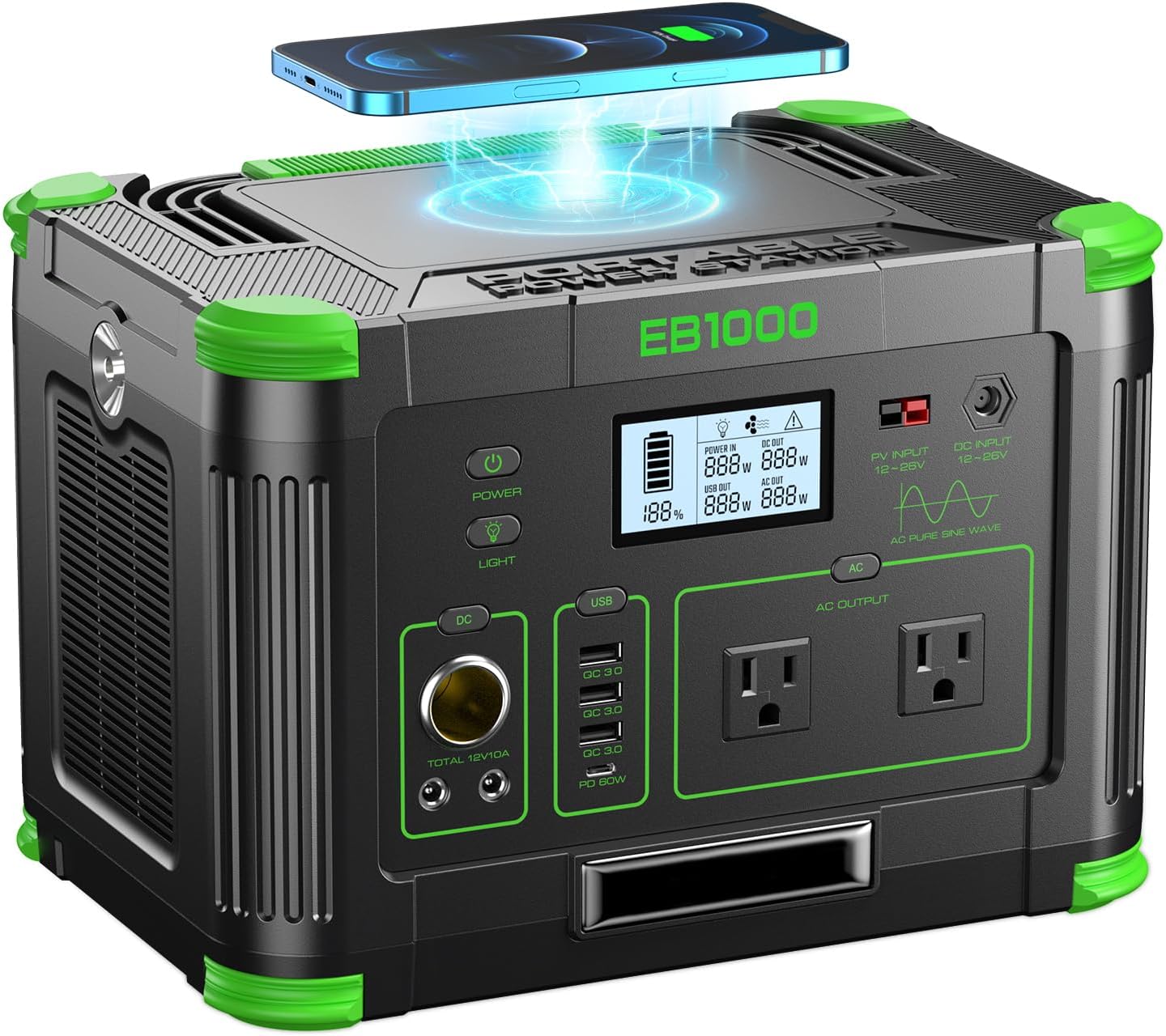
Power your essentials anywhere with a 999Wh pure sine wave power station delivering up to 1000W continuous with 2000W surge. It supports fast charging via USB-C PD 60W and USB-A QC 18W, plus simultaneous output for multiple devices through AC, USB, wireless, and car/DC ports. Recharge using AC, car, or solar with a built-in MPPT controller and dual cooling fans, while the upgraded battery management system protects against surges, short circuits, and overheating.
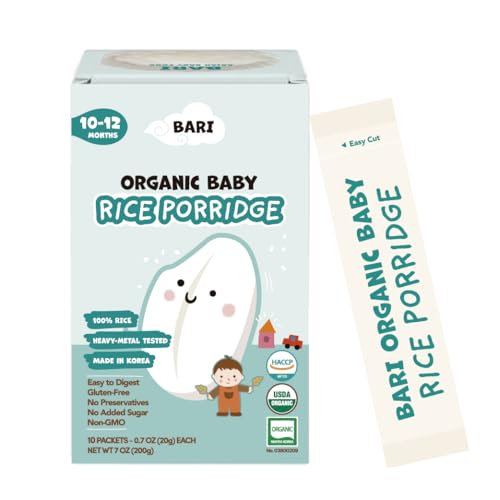
HEAVY METAL TESTED: A cleaner alternative to traditional baby rice cereal. Every batch independently third-party tested for arsenic, lead, cadmium, and mercury. Clean from the very first bite

Ready-to-Eat, Easy & Convenient: Serve straight from the pouch or warm gently in the microwave for up to 15 seconds. BPA & foil-free packaging suitable for busy parents, travel, daycare, and quick meals for 9 months and up
Understanding Heavy Metals in Baby Food
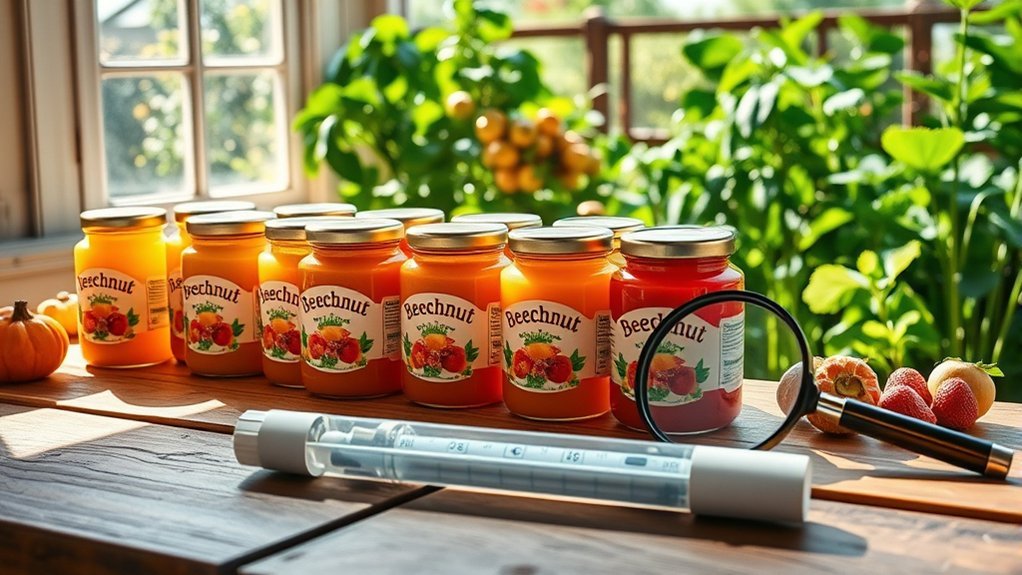
Lead, cadmium, mercury, and arsenic are often discussed together as heavy metals, although arsenic is technically a metalloid. These toxic elements are a concern because infants eat more food relative to their body weight than adults and because their brains and nervous systems are still developing.
The presence of a toxic element does not necessarily mean that a manufacturer added it. Plants can absorb elements from soil and water through the same root systems they use to absorb nutrients. Concentrations can vary by crop, region, growing conditions, and processing method.
The FDA uses action levels as one tool for deciding when food may be considered adulterated and when enforcement may be appropriate. An action level is not a guarantee that every concentration below it carries zero risk, and it is not a permitted amount that manufacturers should try to reach.
What the 2021 Congressional Report Found
A February 2021 congressional staff report reviewed internal records from several baby-food manufacturers. It reported that historical Beech-Nut ingredient records included results as high as approximately 886.9 parts per billion of lead, 913.4 ppb of arsenic, and 344.55 ppb of cadmium.
Those figures require careful context. They were reported from company ingredient-testing records and should not be described as proof that every finished Beech-Nut jar, pouch, or cereal contained those concentrations. The report also predates the FDA’s January 2025 lead guidance and California’s current batch-disclosure requirements.
Historical ingredient results raise legitimate questions, but they should not be presented as current measurements for every Beech-Nut product or production lot.
The report remains relevant because it helped increase pressure for stronger testing, lower action levels, and greater public access to results. It does not, by itself, determine whether a particular product on a shelf in 2026 is affected.
How Beech-Nut Says It Tests Baby Food
According to Beech-Nut’s current testing information, the company tests ingredient samples before production and rejects samples that do not meet its internal quality policies. It says ingredients used in its purees are tested for up to 255 pesticides, toxins, allergens, foreign materials, heavy metals, and other environmental elements.
Beech-Nut says that all laboratories it uses for heavy-metal testing are accredited to ISO/IEC 17025:2017. Its in-house laboratory received accreditation in 2022, and the company says it began finished-product testing that year to validate its ingredient results.
| Testing Step | What Beech-Nut Reports | What It Does Not Prove |
|---|---|---|
| Ingredient screening | Samples are tested before ingredient lots enter production. | That every crop or future ingredient lot will have identical results. |
| ISO-accredited laboratories | Laboratories follow a recognized competence and quality standard. | That a product contains zero contaminants or automatically meets every regulatory benchmark. |
| Finished-product testing | Packaged products are tested before distribution, according to the company. | That one batch result applies to a different lot, recipe, or production date. |
| Public batch results | Results are available for qualifying foods made on or after January 1, 2025. | That results for one product can be used to judge the entire brand. |
Note: These testing descriptions come from Beech-Nut. Laboratory accreditation supports reliable testing practices, but parents should still review government guidance, recalls, and product-specific results.
What California AB 899 Requires
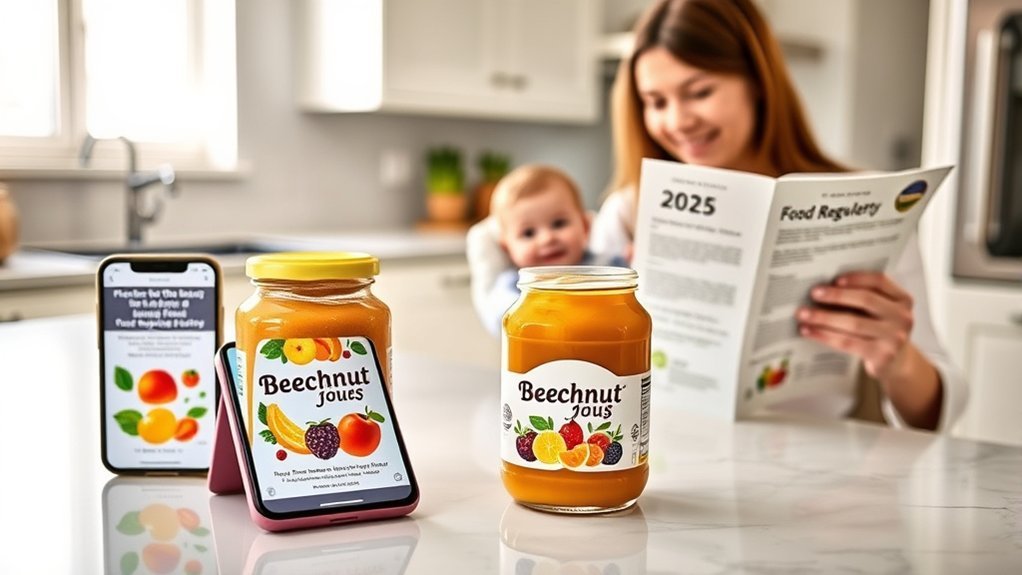
California Assembly Bill 899 changed baby-food transparency beginning January 1, 2025. Manufacturers that sell covered baby foods in California must regularly test final products for lead, arsenic, cadmium, and mercury and make the results publicly accessible. Packaging must direct consumers to the information through a QR code or other digital link.
The law is important, but it is often described incorrectly. According to the California Department of Public Health, AB 899 does not establish maximum allowable concentrations for the four toxic elements. It is a testing and disclosure law.
Beech-Nut says it applies its QR-code and batch-result program nationally, rather than restricting access to California consumers. Its product testing results page allows parents to search using information from the package.
How to Check a Beech-Nut Batch
- Keep the package. Locate the exact product name, UPC, lot code, and best-by date.
- Scan the QR code. Use the code printed on qualifying products made on or after January 1, 2025.
- Confirm the lot. Make sure the online result matches the product and production information in your hand.
- Review each element separately. Lead, arsenic, cadmium, and mercury have different toxicology and regulatory contexts.
- Check recall notices. A laboratory result does not replace an FDA or manufacturer recall check.
Pro Tip: Photograph the lot code and best-by date before discarding an empty jar, pouch, or carton. You may need that information to find a result or respond to a later recall notice.
Current FDA Action Levels Parents Should Know
In January 2025, the FDA finalized lead action levels for many processed foods intended for children younger than two:
- 10 ppb lead: Fruits, most vegetables, mixtures, yogurts, custards, puddings, and single-ingredient meats.
- 20 ppb lead: Single-ingredient root vegetables.
- 20 ppb lead: Dry infant cereals.
The FDA also has a 100 ppb action level for inorganic arsenic in infant rice cereal. Broader work on arsenic and cadmium action levels for baby and toddler foods remained part of the FDA’s 2026 priorities.
These category-specific values show why it can be misleading to compare a baby-food result directly with a drinking-water limit. Food categories have different serving sizes, consumption patterns, analytical methods, and regulatory frameworks.
The 2021 Beech-Nut Rice Cereal Recall
On June 8, 2021, Beech-Nut voluntarily recalled one lot of Stage 1 Single Grain Rice Cereal after Alaska’s sampling program found inorganic arsenic above the FDA’s infant-rice-cereal guidance level.
The affected cereal had UPC 52200034705, expiration date 01MAY2022, and product codes beginning with 103470 or 093470. The FDA notice stated that no illnesses had been reported and no other Beech-Nut products or production dates were included in that recall.
Beech-Nut also announced that it was leaving the Beech-Nut branded Single Grain Rice Cereal segment because it was concerned about consistently sourcing rice flour well below the FDA guidance level.
Current Status: Beech-Nut’s recall page, updated May 21, 2026, stated that the company had no active baby or toddler food recalls. Recall status can change, so check the FDA recall database and Beech-Nut’s recall page when you need current information.
What the Clean Label Project Award Means
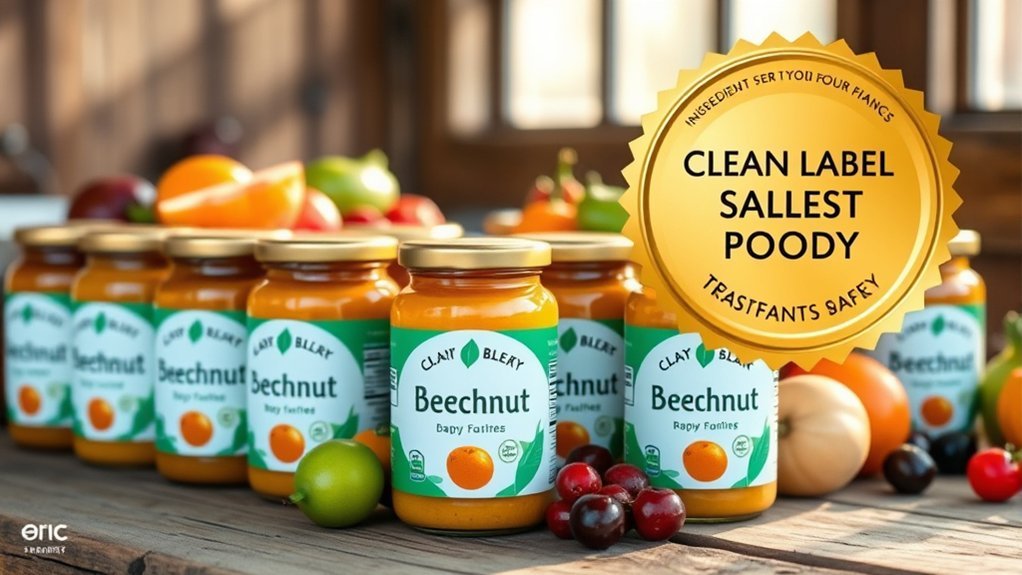
Some Beech-Nut products display a Clean Label Project® Purity Award or related certification. The organization tests products for contaminants such as heavy metals, pesticide residues, and plasticizers and compares results with others in the same category.
According to the Clean Label Project’s published methodology, a product may qualify for the Purity Award when its test results rank in the top 33% of the category and it meets supporting compliance requirements.
This is useful comparative information, but it does not mean that a product contains no detectable heavy metals. It also does not mean that every product made by the same brand holds the award. Check the certification on the exact item you are considering.
A certification can add useful evidence, but it should support—not replace—lot-specific testing, recall checks, and a varied diet.
How to Choose Baby Food and Reduce Repeated Exposure
No single brand, certification, or homemade recipe removes every source of environmental contaminants. The American Academy of Pediatrics recommends focusing on variety and avoiding repeated reliance on the same higher-risk foods.
Use Ingredient Labels to Check Variety
An ingredient list will not tell you how many parts per billion of lead or arsenic are present. It can, however, show whether several products marketed as different flavors rely on the same main ingredient.
For example, two blends with different names may both list sweet potato as the first ingredient. Rotating the main fruits, vegetables, grains, and protein sources can reduce repeated exposure from one crop.
Rotate Infant Grains
Rice can absorb more arsenic than many other grains. Rice cereal does not need to be a baby’s first or only cereal. Depending on age and feeding readiness, alternatives may include fortified oat, barley, or multigrain infant cereals.
Serve a Varied, Nutrient-Dense Diet
- Rotate fruit and vegetable types rather than serving the same puree every day.
- Include appropriate protein foods when your child is developmentally ready.
- Choose whole fruit instead of juice when age-appropriate.
- Wash produce under cool running water before preparing homemade food.
- Discuss feeding stages, allergies, iron needs, and texture progression with your child’s pediatrician.
Consider Water and Household Exposure
Food is only one possible source of lead or arsenic. Older paint, household dust, soil, some spices and imported products, older plumbing, and private well water may contribute to exposure. Contact your local health department if you are concerned about household lead or well-water arsenic.
What to Do After a Possible Exposure
Warning: Do not rely on symptoms to decide whether your child was exposed to lead. Most children with lead in their blood have no obvious immediate symptoms. Contact your pediatrician after a known recalled-product exposure or another credible exposure concern.
If your baby consumed a product covered by a recall or warning:
- Stop serving the affected product.
- Keep the packaging, lot code, best-by date, receipt, and any remaining food.
- Follow the disposal, return, or refund instructions in the official recall notice.
- Contact your child’s pediatrician and describe the product, amount, dates, and frequency of consumption.
- Ask whether a blood lead test or other evaluation is appropriate. A clinician should guide testing based on the substance and circumstances.
Symptoms such as vomiting, abdominal pain, unusual sleepiness, weakness, seizures, or loss of consciousness require prompt medical assessment, but their presence or absence cannot confirm a low-level toxic-element exposure.
This article provides general safety information and is not a substitute for medical advice, diagnosis, or treatment.
Frequently Asked Questions
Is Beech-Nut baby food safe?
Beech-Nut says it tests ingredients and finished products and publishes batch results for qualifying foods made since January 1, 2025. Its recall page listed no active recalls as of July 22, 2026. These measures support safety, but they do not prove that every product is free of naturally occurring toxic elements.
Which toxic elements does Beech-Nut test for?
Beech-Nut says its heavy-metal program includes lead, arsenic, cadmium, and mercury. It also reports testing puree ingredients for up to 255 contaminants and environmental elements, including pesticides, allergens, toxins, and foreign materials.
Are any Beech-Nut baby foods currently recalled?
Beech-Nut’s recall page, updated May 21, 2026, stated that there were no active baby or toddler food recalls. The company previously recalled one lot of Single Grain Rice Cereal on June 8, 2021. Always recheck the FDA and manufacturer recall pages for the latest status.
How can I check my Beech-Nut product’s test results?
Scan the QR code on qualifying packaging or use Beech-Nut’s testing-results page. You may need the exact product, lot code, UPC, and best-by date. Confirm that the displayed result matches the package in your hand.
Does a Clean Label Project award mean a product has no heavy metals?
No. The Purity Award is based on comparative testing and supporting requirements. Qualifying results rank within the top 33% of the relevant category, but the award does not mean that every tested element was absent or undetectable.
Can an ingredient label reveal lead or arsenic?
No. Lead, arsenic, cadmium, and mercury that enter food from the environment are not listed as recipe ingredients. Use ingredient labels to check dietary variety and allergens, and use batch-testing disclosures or recall notices to investigate contaminants.
What should I do if my baby ate a recalled product?
Stop serving it, keep the package and lot information, follow the official recall instructions, and contact your pediatrician. Do not wait for symptoms, because low-level lead exposure often produces no obvious immediate signs.
Is homemade baby food always lower in heavy metals?
Not necessarily. Homemade food avoids some manufacturing and packaging variables, but produce and grains can still absorb toxic elements from soil and water. Variety remains important whether food is homemade or commercially prepared.
Conclusion
Beech-Nut has added ingredient screening, finished-product testing, accredited laboratory work, and public batch disclosures to its safety program. Those practices are meaningful, but they should not be turned into a guarantee that every product contains no heavy metals.
The most reliable approach is to check the exact product and lot, review current recall notices, understand that California’s law is a disclosure requirement rather than a contaminant limit, and serve a varied, age-appropriate diet. Contact your child’s pediatrician if you have a credible exposure concern or your baby consumed a recalled product.
Sources
- FDA: Action Levels for Lead in Processed Food Intended for Babies and Young Children — current category-specific lead action levels.
- California Department of Public Health: AB 899 Frequently Asked Questions — testing, disclosure, and labeling requirements.
- FDA: Beech-Nut Single Grain Rice Cereal Recall — scope and reason for the June 2021 recall.
- U.S. House Staff Report on Toxic Elements in Baby Food — historical company records and ingredient-testing findings.
- Beech-Nut: Baby Food Testing Process — the manufacturer’s current description of its ingredient, laboratory, and finished-product testing.
- American Academy of Pediatrics: Heavy Metals in Baby Food — practical guidance on dietary variety and reducing exposure.