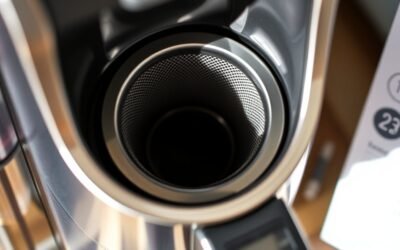


When choosing between paper and metal coffee filters, you’ll notice key differences in flavor, efficiency, cost, and environmental impact. Paper filters deliver a cleaner cup by absorbing oils, enhancing fruity notes in lighter roasts. In contrast, metal filters allow oils to pass through, creating a fuller-bodied taste, particularly in medium and dark blends. Additionally, metal filters save money over time and reduce waste. Discover more about how these factors can influence your coffee experience.
Key Takeaways
- Paper filters create a cleaner cup by absorbing oils and micro-sediments, enhancing fruity notes in light roasts.
- Metal filters allow oils and micro-grounds to pass, resulting in a fuller-bodied coffee, particularly in medium to dark roasts.
- Brewing efficiency favors metal filters, reducing brewing time by up to 30% compared to paper filters.
- Paper filters incur ongoing costs of $40 to $60 annually, while metal filters offer long-term savings with their reusable nature.
- Metal filters have a lower environmental impact, significantly reducing waste compared to the disposable nature of paper filters.
Understanding Paper vs. Metal Coffee Filters

When deciding between paper and metal coffee filters, it’s crucial to understand how each type affects the flavor and brewing process.
Paper filters, made from cellulose, absorb oils and micro-sediments, delivering a cleaner, brighter cup. This is particularly advantageous for highlighting fruity notes in light roasts.
In contrast, metal filters, typically crafted from stainless steel, allow oils and micro-grounds to pass through, resulting in a fuller-bodied coffee with richer flavors, ideal for medium and dark roasts.
Additionally, paper filters require pre-wetting to guarantee consistent extraction, which can slow down brewing time. Metal filters maintain steady water flow, enhancing brewing techniques.
Ultimately, your choice of filter materials will profoundly influence the taste profile of your coffee.
What Are the Practical Differences Between Paper and Metal Filters?
Choosing between paper and metal coffee filters involves several practical differences that can greatly impact your brewing experience.
Here are key factors to evaluate:
- Brewing Efficiency: Metal filters maintain consistent water flow, reducing brewing time by up to 30%, while paper filters require pre-wetting and can slow the process.
- Cost Analysis: Paper filters can cost $40-60 annually, whereas metal filters, though initially $15-40, can last a lifetime, offering long-term savings.
- Environmental Impact: Metal filters are reusable, minimizing waste, whereas paper filters create disposable waste with each use.
These practical differences highlight the importance of selecting a filter that aligns with your brewing preferences and financial evaluations, ultimately enhancing your coffee experience.
How Do Paper and Metal Filters Affect Coffee Flavor?

The type of coffee filter you use can greatly shape the flavor profile of your brew.
Paper filters excel in producing flavor clarity, absorbing oils and micro-sediments, which allows for a cleaner, brighter cup. This is particularly beneficial for highlighting fruity notes and acidity in light roasts.
Paper filters enhance flavor clarity by absorbing oils and sediments, resulting in a clean, bright cup that highlights fruity notes in light roasts.
In contrast, metal filters permit oils and micro-grounds to pass through, enhancing body richness and resulting in a fuller, richer flavor profile, especially with medium to dark roasts.
Switching from paper to metal can markedly alter your coffee’s taste experience, emphasizing the importance of filter choice.
While paper filters provide convenience and a clean taste, metal filters deliver bolder, more aromatic flavors due to the retention of natural oils.
How Does Water Flow Differ Between Paper and Metal Filters?
While selecting a coffee filter might seem like a minor detail, the difference in water flow between paper and metal filters greatly impacts the brewing process.
Understanding these variations can greatly influence your brewing efficiency and flavor profile.
- Paper filters slow water flow as they become saturated, potentially increasing brewing times.
- Pre-wetting paper filters is essential for achieving consistent water flow and extraction.
- Metal filters maintain steady water flow, allowing oils and micro-grounds to enrich the brew’s flavor.
Best Roast Levels for Paper vs. Metal Filters

Understanding the best roast levels for paper versus metal filters is essential for achieving your desired flavor profile in coffee.
Light roasts, particularly from high-altitude Central American regions, shine with paper filters, enhancing their fruity and floral notes while maintaining clarity.
Light roasts from high-altitude Central America excel with paper filters, highlighting their vibrant fruity and floral characteristics.
Conversely, metal filters excel with dark roasts, preserving rich oils and flavors that yield bold, chocolatey profiles.
For medium to dark roasts, filter compatibility is vital; metal filters allow more micro-grounds and oils to enrich the taste, while paper filters may strip away complexities.
Ultimately, pairing the right roast level with the appropriate filter enhances your coffee experience, emphasizing clarity with paper and body with metal, ensuring you enjoy the best roast possible.
Environmental Impact of Paper and Metal Coffee Filters
Choosing between paper and metal coffee filters not only affects flavor but also has significant environmental implications. When you consider sustainability benefits, the differences become clear:
- Paper filters generate significant waste, with an average household using over 365 filters annually.
- Metal filters are reusable, lasting a lifetime and drastically reducing disposable waste.
- Switching to metal filters saves money, approximately $40-60 annually, while promoting waste reduction.
The production of paper filters contributes to deforestation and resource consumption, whereas metal filters have a lower environmental footprint due to less frequent manufacturing.
By opting for metal, you minimize waste and retain beneficial compounds like Kahweol and Cafestol, further supporting both your health and the environment.
Your choice can lead to a more sustainable coffee experience.
How to Choose the Best Coffee Filter for Your Taste and Lifestyle?
How can you determine the best coffee filter for your taste and lifestyle? Start by analyzing your personal preferences in flavor.
If you enjoy a clean, crisp cup, paper filters are your best bet, especially for light roasts. However, if you prefer a fuller-bodied coffee, metal filters enhance richness, making them ideal for medium to dark roasts.
Consider your brewing methods as well; paper filters offer easy cleanup for daily use, while metal filters require maintenance but deliver richer flavors.
Don’t forget the environmental impact: metal filters are reusable, reducing waste and long-term costs.
For health-conscious individuals, metal filters allow beneficial compounds to pass through, providing added health benefits.
Choose wisely based on these factors!
Frequently Asked Questions
Can I Reuse Metal Coffee Filters?
Yes, you can reuse metal coffee filters. Their longevity contributes to brewing efficiency, allowing you to enjoy multiple cups without sacrificing flavor. Just rinse them thoroughly to maintain ideal performance and avoid residue buildup.
Are Paper Filters Biodegradable?
Yes, paper filters are biodegradable, making them eco-friendly options for coffee brewing. When considering filter disposal, remember that they break down more easily than metal filters, which can contribute to a more sustainable waste management approach.
Do Paper Filters Come in Different Sizes?
Yes, paper filters come in various sizes available for different brewing methods. It’s crucial to check the filter compatibility with your coffee maker to guarantee peak performance and prevent issues during the brewing process.
How Do I Clean a Metal Coffee Filter?
To clean a metal coffee filter, you’ll need to rinse it under hot water, scrubbing with a soft brush. Regular maintenance and these cleaning techniques guarantee peak performance, enhancing your brewing experience without the hassle of paper waste.
Can I Use Both Filter Types Together?
You can use both filter types together for enhanced filter compatibility and improved brewing efficiency. Combining them allows you to enjoy the flavor nuances of paper while benefiting from the durability of metal filters.
Conclusion
In choosing between paper and metal coffee filters, consider your taste preferences, brewing method, and environmental impact. While paper filters might remind you of simpler times with their clean, crisp flavor, metal filters can offer a richer, bolder experience. Ultimately, the right choice hinges on what you value most in your coffee ritual. So, whether you’re a coffee aficionado or just looking for that perfect cup, weigh the differences carefully to elevate your daily brew.