


When considering plastic vs. stainless steel coffee makers, weigh their pros and cons carefully. Stainless steel offers better aesthetics, durability, and hygiene, while plastic may save you some upfront costs but could compromise flavor and safety over time due to chemical leaching and odor retention. Stainless steel also typically lasts longer, providing better long-term value. Explore these factors further to find the coffee maker that best suits your needs and preferences.
Key Takeaways
- Stainless steel coffee makers offer superior design aesthetics and modern appeal, enhancing kitchen decor compared to less attractive plastic models.
- Stainless steel is easier to clean, more durable, and less prone to harboring bacteria, ensuring better hygiene and longevity.
- Plastic models may leach harmful chemicals and impart off-flavors to coffee, while stainless steel maintains a flavor-neutral environment for brewing.
- Although stainless steel options often come at a higher price, they provide long-term value due to their durability and lower replacement costs.
- User experience varies, with stainless steel catering to coffee enthusiasts seeking quality, while plastic models may attract budget-conscious consumers.
What Are the Key Differences Between Plastic and Stainless Steel Coffee Makers?

When choosing between plastic and stainless steel coffee makers, several key differences can greatly impact your coffee experience.
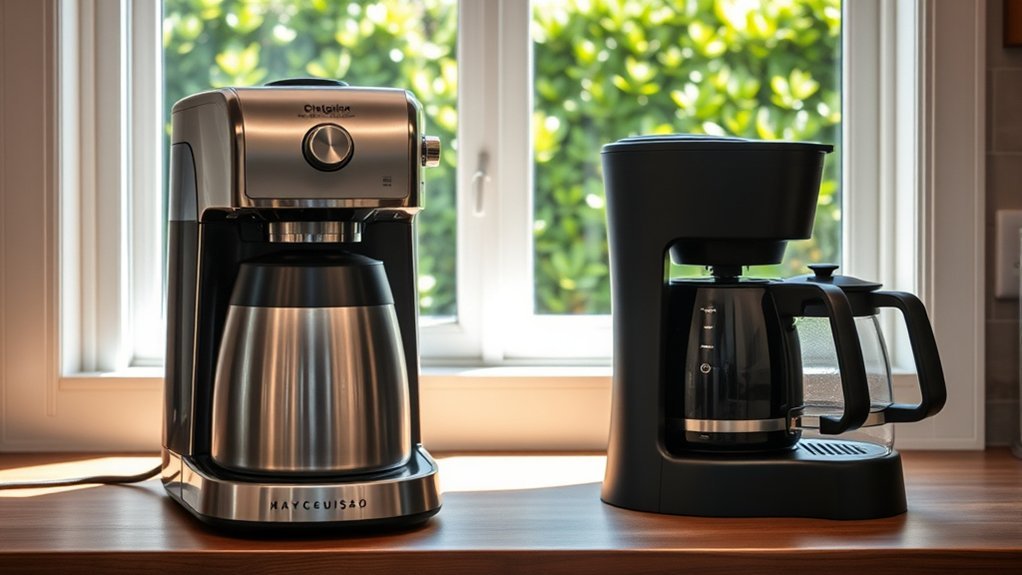
Stainless steel models often boast superior design aesthetics, adding a sleek, modern touch to your kitchen. In contrast, plastic makers may appear less appealing and can warp or degrade over time.
Maintenance requirements also differ considerably; stainless steel coffee makers are easier to clean and less prone to harboring bacteria or odors. They don’t impart any unwanted flavors to your coffee, ensuring a pure taste.
While plastic options are often cheaper initially, stainless steel’s durability means it could be more cost-effective in the long run, saving you from frequent replacements.
Ultimately, your choice will affect both the look and quality of your coffee.
Are Plastic Coffee Makers Safe for Your Health?
When considering plastic coffee makers, it’s vital to be aware of the potential risks of chemical leaching, particularly from materials like BPA and PFAS.
While some brands claim to offer BPA-free options, verifying these claims is important to guarantee your health isn’t compromised.
Exploring healthier material alternatives, such as stainless steel or glass, may provide peace of mind for health-conscious consumers.
Potential Chemical Leaching Risks
While many coffee enthusiasts appreciate the convenience of plastic coffee makers, concerns about potential chemical leaching can’t be ignored.
Research shows that certain plastics may leach harmful chemicals like BPA and PFAS, especially when exposed to the high temperatures during brewing. This raises significant health concerns for consumers who rely on these appliances daily.
The risk of chemical leaching increases with prolonged exposure to hot water, making it essential to scrutinize the materials used in the brewing path of coffee makers.
Although opting for BPA-free plastics can mitigate some risks, choosing stainless steel or glass components is generally recommended for those keen on minimizing potential health risks associated with plastic coffee makers.
Your health is worth considering these factors.
Healthier Material Alternatives Available
Although plastic coffee makers offer convenience, many consumers are increasingly concerned about their safety. Issues like BPA and PFAS leaching into your brew can raise health alarms, prompting you to contemplate healthier material alternatives.
Stainless steel coffee makers stand out as eco-friendly options that not only eliminate harmful chemicals but also preserve the rich flavors of your coffee. Experts advocate for devices with minimal plastic contact, especially in brew paths, to further mitigate health risks.
High-quality stainless steel models, such as the Aarke Drip Coffee Maker, emphasize the importance of using durable, non-toxic materials for a better brewing experience.
How Does Material Impact Coffee Flavor?

The material of your coffee maker greatly influences the flavor of your brew, as it can either enhance or detract from the coffee’s natural qualities.
Plastic coffee makers, especially those made from lower-quality materials, may impart a plastic taste, particularly if exposed to high brewing temperatures. This can lead to undesirable flavor extraction, negatively impacting your coffee experience.
In contrast, stainless steel coffee makers, particularly high-grade options, maintain a flavor-neutral environment that promotes a cleaner and more authentic flavor profile. The absence of plastic minimizes the risk of off-flavors and leaching of harmful substances.
Consequently, using stainless steel often results in a richer, more satisfying cup, allowing the true essence of your coffee to shine through.
Is Stainless Steel Coffee Maker Worth It?
When considering whether a stainless steel coffee maker is worth the investment, you should weigh its health benefits against its durability and flavor retention capabilities.
Unlike plastic, stainless steel doesn’t leach harmful chemicals, ensuring a safer brewing experience.
Additionally, its superior heat retention can greatly enhance the flavor of your coffee, making it a strong contender for your kitchen.
Health Benefits Of Stainless Steel
Choosing a stainless steel coffee maker offers numerous health benefits that make it a worthwhile investment for any coffee enthusiast. With a focus on health safety, you can enjoy your coffee knowing that stainless steel doesn’t leach harmful chemicals like BPA or phthalates, unlike plastic options.
The material benefits of stainless steel also enhance your brewing experience:
- Non-toxic, ensuring safer coffee preparation
- Better temperature retention, improving flavor extraction
- Environmentally friendly and recyclable, reducing plastic waste
These factors combine to create a healthier, richer coffee experience. Investing in a stainless steel coffee maker not only elevates your daily brew but also aligns with sustainable practices, making it a smart choice for health-conscious consumers.
Durability And Longevity Factors
Investing in a stainless steel coffee maker can markedly enhance your brewing experience due to its durability and longevity. Unlike plastic models, stainless steel coffee makers resist cracking and warping, often lasting several years longer.
They’re non-reactive, ensuring your coffee’s flavor remains unaltered over time. When it comes to maintenance tips, stainless steel units are easier to clean and often dishwasher safe, providing more convenience than their plastic counterparts.
Warranty comparison also highlights their superiority, as many stainless steel makers come with warranties ranging from 5 to 10 years, reflecting their durability.
While the initial investment may be higher, the long-term cost-effectiveness and performance make stainless steel a worthwhile choice for coffee enthusiasts.
Flavor Retention Comparison
Many coffee enthusiasts find that flavor retention is an essential factor in their brewing experience, and stainless steel coffee makers excel in this area. They provide superior flavor retention by avoiding chemical leaching, which is common in some plastic models. This leads to a cleaner taste that preserves the coffee’s intended flavor profile.
Here are some key benefits of stainless steel coffee makers:
- They don’t absorb oils or flavors, ensuring each cup tastes as it should.
- Their ability to retain heat enhances brewing temperature, optimizing flavor extraction.
- Users frequently report a significant improvement in taste, eliminating the plastic aftertaste found in cheaper alternatives.
Investing in a stainless steel coffee maker often translates to a noticeable enhancement in your coffee experience.
Which Coffee Maker Lasts Longer: Plastic or Stainless Steel?
When considering the longevity of coffee makers, the material plays an essential role in determining how long your appliance will last. Stainless steel coffee makers typically last several years longer than plastic models due to their durability and resistance to wear. User reviews consistently highlight that stainless steel withstands daily use better, while plastic can degrade over time, especially under heat. Maintenance tips for stainless steel include regular cleaning, which can further extend its lifespan. Warranty periods also reflect durability; stainless steel often comes with up to a 5-year warranty, whereas plastic usually has shorter ones.
| Material | Lifespan | Warranty Period |
|---|---|---|
| Stainless Steel | 10+ years | Up to 5 years |
| Plastic | 3-5 years | 1-2 years |
How Do Plastic and Stainless Steel Coffee Makers Affect the Environment?
While both plastic and stainless steel coffee makers serve the same purpose, their environmental impacts differ considerably.
- Plastic coffee makers often contribute to pollution, as they’re made from non-biodegradable materials that can take centuries to decompose in landfills.
- The production of plastic models relies heavily on fossil fuels, leading to greenhouse gas emissions and environmental degradation.
In contrast, stainless steel coffee makers are durable and recyclable, promoting resource conservation and reducing waste generation.
Ultimately, prioritizing environmental sustainability leans towards stainless steel options, which minimize harmful emissions and support a circular economy.
Which Type of Coffee Maker Meets Your Needs?
How can you determine which type of coffee maker best suits your needs? Start by evaluating your brewing preferences and user experience.
If durability and flavor are important to you, stainless steel models are a better choice. They resist leaching harmful chemicals like BPA and PFAS, which can affect your coffee’s taste.
Machines like the Aarke Drip Coffee Maker offer a high-quality brewing experience with a 10-cup capacity, though they come at a premium price.
The Aarke Drip Coffee Maker delivers premium brewing with a generous 10-cup capacity, perfect for coffee enthusiasts willing to invest.
For those seeking a balance between quality and cost, consider Bunn coffee machines, known for minimal plastic use.
Ultimately, prioritize stainless steel options for better flavor retention, safety, and longevity, ensuring a satisfying coffee-making experience.
Frequently Asked Questions
Can Plastic Coffee Makers Be Recycled After Use?
Yes, plastic coffee makers can be recycled, but it depends on local recycling processes. By recycling, you can reduce their environmental impact, ensuring that valuable materials are reused instead of ending up in landfills.
How Do I Clean a Stainless Steel Coffee Maker?
To keep your stainless steel coffee maker shining, use gentle cleaning techniques like vinegar and water. Regular maintenance tips include descaling monthly and wiping surfaces, ensuring your brewer remains in excellent condition for years.
Do Plastic Coffee Makers Have a Warranty?
Yes, plastic coffee makers typically come with warranty policies, though they may vary by brand. Consider the material durability; plastic may not last as long as stainless steel, potentially affecting your long-term satisfaction with the warranty.
What Is the Average Lifespan of Plastic Coffee Makers?
Plastic coffee makers typically have an average durability of 3 to 5 years. In material comparison, they’re less resilient than stainless steel options, which often last longer due to their sturdier construction and resistance to wear.
Are There Bpa-Free Plastic Coffee Maker Options Available?
Sure, you can find BPA-free plastic coffee makers! They’re marketed as “safe” alternatives, but it’s wise to scrutinize plastic safety in general. Always check for BPA alternatives to guarantee your coffee remains guilt-free and delicious.
Conclusion
Choosing between plastic and stainless steel coffee makers is like selecting the vessel for your morning ritual. Each material holds its own essence—plastic, lightweight and convenient, while stainless steel stands resilient, promising longevity. As you weigh health, flavor, and environmental impact, consider what truly matters to you. Your coffee maker isn’t just an appliance; it’s a companion in your daily journey. Ultimately, the right choice will enhance your experience, bringing warmth and comfort to each sip you take.


