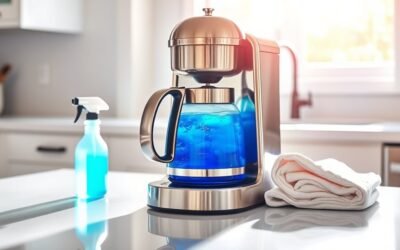
Choosing between a plastic and stainless steel coffee maker is less about the outer shell and more about the parts that touch hot water and brewed coffee. Plastic can reduce weight and price, while stainless steel often provides a sturdier structure. The best choice depends on the brew path, temperature control, cleaning access, warranty, repairability, and budget.
Quick Answer
A stainless-steel-heavy coffee maker is usually the better choice when you value durability, a thermal carafe, and reduced plastic contact. A plastic-heavy model can still be a practical and safe choice when its food-contact parts are designed for hot beverages, remain undamaged, and are easy to clean. Check the complete brew path, not just the exterior.
Key Takeaways
- A stainless steel exterior does not guarantee an all-metal water path; many brewers also contain plastic, silicone, glass, seals, and electronic parts.
- Food-contact plastic is not automatically unsafe. Material safety depends on the exact substance, intended temperature, manufacturing process, condition, and approved use.
- Brew temperature, water distribution, grind, coffee-to-water ratio, water quality, and cleanliness usually affect flavor more than the outer housing material.
- Stainless steel can resist cracking and physical wear, but pumps, heaters, switches, seals, and control boards may still determine the appliance’s useful life.
- For the best long-term value, compare warranty terms, replacement-carafe availability, removable parts, repair support, energy use, and local appliance-recycling options.
What Are the Key Differences Between Plastic and Stainless Steel Coffee Makers?

Plastic-heavy and stainless-steel-heavy coffee makers can both brew good coffee. Their main differences are weight, price, resistance to physical damage, heat management, appearance, and the amount of plastic in the hot-water path.
| Factor | Plastic-Heavy Brewer | Stainless-Steel-Heavy Brewer | What to Verify |
|---|---|---|---|
| Purchase price | Often lower, although premium plastic-bodied models also exist | Often higher because of materials, finish, and construction | Warranty, included carafe, filters, and replacement-part prices |
| Weight | Usually lighter and easier to move | Usually heavier and more stable on the counter | Actual product weight and cabinet clearance |
| Physical durability | May scratch, discolor, crack, or warp if damaged or misused | Resists cracking but can dent, scratch, or show fingerprints | Build quality, hinges, switches, reservoir design, and parts support |
| Hot-water contact | May use plastic reservoirs, tubes, baskets, or showerheads | May use a steel boiler or tank but still include plastic and silicone parts | Manufacturer material list, manual, parts diagram, and brew-path description |
| Cleaning | Light and removable parts may be convenient, but textured areas can retain residue | Smooth surfaces wipe clean, but fingerprints and inaccessible tanks may need extra care | Removable reservoir, dishwasher-safe parts, descaling access, and cleaning instructions |
| Coffee holding | Commonly paired with a glass carafe and hot plate | Often paired with an insulated stainless steel thermal carafe | How long coffee must stay hot and whether you prefer a hot plate |
Neither category wins every comparison. A well-designed plastic-bodied brewer can outperform a poorly designed metal brewer. Likewise, a stainless steel brewer may justify its higher price when it offers a durable frame, stable heating system, replaceable parts, and a useful warranty.
Power your essentials anywhere with a 999Wh pure sine wave power station delivering up to 1000W continuous with 2000W surge. It supports fast charging via USB-C PD 60W and USB-A QC 18W, plus simultaneous output for multiple devices through AC, USB, wireless, and car/DC ports. Recharge using AC, car, or solar with a built-in MPPT controller and dual cooling fans, while the upgraded battery management system protects against surges, short circuits, and overheating.

5-CUP* COFFEE MAKER: The Cuisinart 5-Cup* Coffee Maker offers a dripless pour spout, Brew Pause, and Keep Warm feature in a small, compact design to brew your favorite coffee blends with all the rich, delicious flavor and none of the fuss.
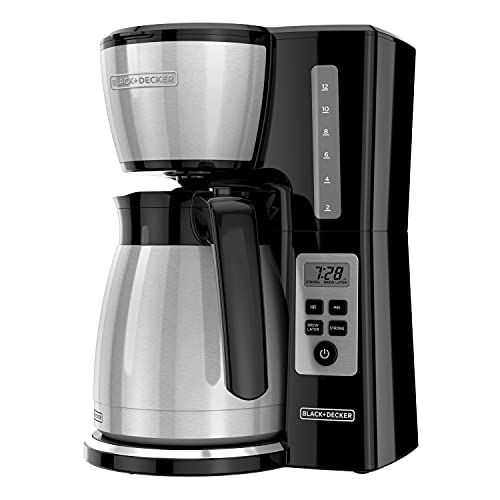
4-LAYER VACUUM SEALED THERMAL CARAFE: Double-walled 4-layer carafe keeps coffee hot for up to two hours—no warming plate needed. Preheat with hot water before brewing for best results.
What Does “Plastic” or “Stainless Steel” Actually Mean?
Product listings often describe the most visible material rather than every material inside the appliance. A brewer advertised as stainless steel may have a metal exterior but still use a plastic reservoir, silicone seals, plastic tubing, or a plastic brew basket.
Before buying, check the following components:
- Exterior housing: The shell affects appearance and physical protection but may never touch water.
- Water reservoir: This holds cold water and may be plastic, glass, or metal.
- Heating tank or boiler: Some brewers use stainless steel or aluminum, while others do not clearly disclose the material.
- Tubes and seals: Water lines, valves, and gaskets may use plastic, silicone, rubber, or metal.
- Showerhead: This distributes hot water over the coffee grounds.
- Brew basket: The basket may be plastic or metal and usually has direct contact with hot water and coffee.
- Carafe: Glass carafes are commonly paired with hot plates, while insulated stainless steel carafes hold heat without continued heating.
The current Aarke Coffee Maker shows why the full material list matters. Although it is sold as a stainless steel drip brewer, the manufacturer lists stainless steel, glass, silicone, and BPA-free food-grade plastic. Its 10-cup capacity and SCA certification may appeal to buyers, but it should not be described as completely plastic-free.
Pro Tip: Search the product page and manual for “materials,” “water tank,” “boiler,” “brew basket,” “showerhead,” and “BPA-free.” A stainless steel color or exterior finish does not reveal the entire hot-water path.
Are Plastic Coffee Makers Safe for Your Health?
A plastic coffee maker is not automatically unsafe. In the United States, the FDA evaluates food-contact substances by reviewing their intended use, expected migration, potential exposure, and toxicology data.
That does not mean every appliance is identical or that damage should be ignored. The practical goal is to choose a reputable brewer whose food-contact materials are intended for hot beverages, use it as directed, and replace parts that become cracked, warped, deeply scratched, or difficult to clean.
Potential Chemical Migration
Material migration is more complex than saying “plastic leaches chemicals.” It depends on the exact material, temperature, contact time, manufacturing process, age, condition, and intended use. The FDA requires manufacturers to comply with the specifications and limitations that apply to authorized food-contact substances.
Hot-water exposure is relevant when materials are evaluated, but it does not prove that a compliant coffee maker releases harmful amounts of a substance during normal use. A broad material label cannot replace model-specific evidence.
What Do BPA-Free and PFAS Claims Mean?
BPA is used in certain polycarbonate plastics and epoxy resins. A “BPA-free” label addresses BPA, but it does not mean that an appliance is plastic-free or made from only one material.
PFAS are a large group of substances with many different applications. It is inaccurate to assume that every plastic coffee maker contains PFAS or releases PFAS into coffee. The FDA explains that potential migration from an authorized PFAS-containing food-contact material depends on its molecular structure, manufacturing process, and intended use.
Shoppers who want less plastic contact can look for a disclosed stainless steel or glass reservoir, a metal heating tank, a metal showerhead, a stainless steel filter basket, and a glass or stainless steel carafe. Completely plastic-free automatic brewers are uncommon because seals, valves, controls, and other small parts often use polymers.
Warning: Stop using a food-contact part if it is cracked, badly warped, shedding material, or no longer comes clean. Check the manufacturer’s instructions for an approved replacement rather than gluing, coating, or heating a damaged part.
Can Certification Help?
Third-party certification can provide additional information, although no single mark answers every question. NSF P387 is a protocol for coffee makers that covers areas including regulatory compliance and food-contact material safety.
An SCA Certified Home Brewer has passed third-party brewing-performance tests for quality, consistency, and performance. SCA certification is useful for judging brewing ability, but it is not a promise that the machine contains no plastic.
How Does Material Impact Coffee Flavor?

Material can affect flavor when a component retains residue, develops an odor, reacts with a cleaner, or changes how the brewer manages heat. However, the outer shell alone does not determine whether coffee tastes good.
The strongest flavor factors usually include:
- Fresh coffee beans and the correct grind size
- The coffee-to-water ratio
- Water quality
- Brew-water temperature and contact time
- Even water distribution over the grounds
- A clean basket, showerhead, reservoir, carafe, and hot-water path
- How long the brewed coffee sits on a hot plate or in a carafe
A lower-quality or poorly rinsed plastic component may have a noticeable new-product odor. Mineral scale, old coffee oils, detergent residue, standing water, and a dirty carafe can also create stale, bitter, chemical, or plastic-like flavors.
Stainless steel is generally resistant to odor absorption, but it still needs cleaning. Coffee oils can form a film inside a metal basket or thermal carafe. Glass is also flavor-neutral when clean, although a hot plate can make brewed coffee taste cooked or bitter when it sits too long.
Note: A thermal stainless steel carafe can keep coffee warm without continuous heating. That may protect flavor better than leaving a glass carafe on a hot plate, but the result comes from the holding method rather than stainless steel automatically improving extraction.
What Should You Do If Coffee Tastes Like Plastic?
- Wash all removable parts according to the manufacturer’s instructions.
- Run the recommended initial rinse or setup cycles before brewing coffee.
- Use fresh water for every batch and avoid leaving water in the reservoir for long periods.
- Clean the brew basket, showerhead, lid, and carafe to remove coffee oils and detergent residue.
- Descale the brewer at the interval stated in its manual.
- Confirm that packaging film, plugs, or shipping materials have been removed.
- Contact the manufacturer if a strong odor or taste continues after the approved cleaning process.
Do not use unapproved solvents, abrasive cleaners, bleach mixtures, or very strong acids in the water path. These can damage seals, coatings, finishes, or internal components.
Is a Stainless Steel Coffee Maker Worth It?
A stainless-steel-heavy coffee maker can be worth the higher price when it has durable construction, accurate brewing performance, an insulated carafe, useful replacement parts, and a strong warranty. It is less compelling when “stainless steel” describes only a thin decorative panel over an otherwise ordinary machine.
Health and Material Safety
Stainless steel contains no BPA, so a stainless steel reservoir, boiler, basket, or carafe can reduce contact with BPA-containing plastic. This does not make the entire appliance automatically free of plastic, silicone, coatings, solder, seals, or other materials.
For a meaningful comparison, identify the parts that contact hot water and coffee. A metal outer shell that never touches water offers durability and appearance benefits, but it does not change the brew-path materials.
Durability and Longevity
Stainless steel resists cracking and warping better than many rigid plastics. Even so, the housing material is only one part of an electric brewer. Heating elements, pumps, thermostats, valves, switches, seals, hot plates, sensors, and control boards can fail first.
A durable machine should have:
- A stable base and solid hinges or lids
- Removable parts that can be cleaned without force
- A replacement carafe that remains available
- Replaceable filters, seals, baskets, or valves where practical
- A clear descaling process
- Accessible customer service and parts diagrams
- A written warranty with clear exclusions
Flavor Retention
Stainless steel does not guarantee better extraction, but a stainless steel thermal carafe can help maintain serving temperature without a hot plate. This is useful when you brew a full pot and drink it over an hour or more.
For immediate drinking, a well-designed glass-carafe brewer can perform just as well. For long holding times, a clean thermal carafe usually has an advantage because the coffee is not exposed to continued heat from below.
Long-Term Value
The better value is the machine that performs well and stays serviceable. A higher price may be justified by a long warranty, replaceable parts, a durable thermal carafe, and reliable temperature control. A costly metal exterior alone does not guarantee a longer life.
Which Coffee Maker Lasts Longer: Plastic or Stainless Steel?
There is no reliable industry-wide rule that a stainless steel brewer lasts 10 years or that a plastic brewer lasts only three to five. Product life varies with the heating system, electronics, daily use, water hardness, cleaning, accidental damage, and access to replacement parts.
| Longevity Factor | Why It Matters | What to Look For |
|---|---|---|
| Housing and frame | Protect internal parts from impact and daily handling | Rigid construction, stable feet, strong lid and basket supports |
| Water hardness | Scale can restrict flow and reduce heating performance | Descaling alert, accessible cleaning cycle, clear manual |
| Carafe availability | A broken carafe can make an otherwise working brewer unusable | Replacement carafes sold directly by the manufacturer |
| Electronic complexity | Displays, sensors, apps, and control boards add features and possible failure points | Features you will actually use and a useful parts warranty |
| Service support | Parts and technical help can prevent premature replacement | Published manuals, parts lists, support contacts, and repair guidance |
Warranty periods also vary by product rather than material. Aarke currently advertises a five-year warranty after registration for its coffee maker. The BUNN My Café, which has an internal stainless steel hot-water tank but also uses other materials, carries a two-year warranty. These examples show why warranty terms must be checked model by model.
Regular cleaning and descaling can support reliable operation, but follow the appliance manual. A fixed monthly descaling schedule is not appropriate for every brewer because water hardness, use frequency, filters, and manufacturer instructions differ.
How Do Plastic and Stainless Steel Coffee Makers Affect the Environment?
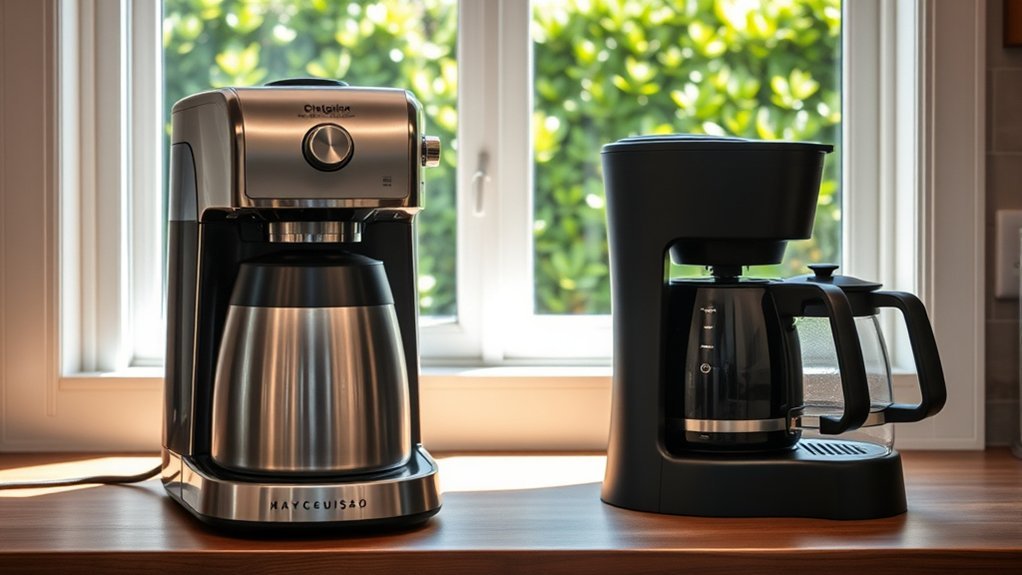
The environmental comparison is not as simple as “plastic bad, steel good.” Plastic production uses fossil resources, and many plastic parts are difficult to recycle. Stainless steel is recyclable and may tolerate physical wear well, but mining, refining, manufacturing, and transporting metal also require energy.
The most important environmental question is often how long the complete appliance remains useful. A durable brewer that can be cleaned, repaired, and fitted with a replacement carafe may create less waste than a machine that must be replaced after one failed part.
EPA’s latest posted national figures estimate that only 5.6% of the 2.2 million tons of small-appliance waste generated in 2018 was recycled. Electric coffee pots are included in that category.
A coffee maker is a mixed-material electrical appliance. Its metal, plastic, glass, wiring, circuit boards, and heating components may need to be separated before recovery. For that reason, placing the complete machine in a household plastic or metal recycling bin is usually inappropriate.
Before disposing of a brewer:
- Check whether the manufacturer offers repair, take-back, or replacement parts.
- Donate a clean, safe, working machine when reuse is practical.
- Ask your local solid-waste authority about small-appliance or electronic-waste collection.
- Remove a glass carafe only when your local program specifically accepts that type of glass.
- Do not place electrical cords, heating bases, or complete appliances in curbside recycling unless the local program clearly permits them.
Pro Tip: Check the price and availability of a replacement carafe before buying. A readily available carafe can keep a working coffee maker out of the waste stream after an accidental break.
Which Type of Coffee Maker Meets Your Needs?
Your best choice depends on which tradeoffs matter most in your kitchen.
Choose a Plastic-Heavy Coffee Maker When
- You need a lighter and more affordable appliance.
- You move the brewer often or store it between uses.
- The reservoir and basket are removable and easy to clean.
- The manufacturer clearly identifies its food-contact materials.
- The model has strong brewing performance, parts support, and warranty coverage.
Choose a Stainless-Steel-Heavy Coffee Maker When
- You value a rigid housing and premium finish.
- You want to reduce plastic in the hot-water path.
- You prefer an insulated thermal carafe instead of a hot plate.
- You are willing to pay more for verified construction and parts support.
- You have confirmed which internal parts are actually stainless steel.
Consider Glass or a Manual Brewer When
- You want a simple, visible water and coffee path.
- You do not need automatic scheduling or a warming plate.
- You are comfortable heating water separately.
- You accept the greater breakage risk of glass.
Automatic brewers such as the Aarke can combine stainless steel, glass, silicone, and food-grade plastic. Selected BUNN models use stainless steel internal hot-water tanks. These are useful construction details, but neither brand should be treated as universally plastic-free or judged by one model alone.
Coffee Maker Buying Checklist
Use this checklist to compare models without relying on appearance or vague marketing terms:
- Hot-water path: What materials are used in the reservoir, boiler, tubes, showerhead, basket, seals, and carafe?
- Performance: Does the brewer have independent testing, such as current SCA certification?
- Material testing: Does the product have relevant third-party certification, such as NSF P387?
- Cleaning: Can you remove and reach the parts that collect water, scale, grounds, and coffee oils?
- Carafe type: Do you want visible glass with a hot plate or a thermal carafe with no continued heating?
- Capacity: Is the stated “cup” size clear in ounces or milliliters?
- Warranty: Does registration change the warranty period, and which parts are excluded?
- Replacement parts: Are the carafe, basket, lid, seals, and filters sold separately?
- Energy use: Does the machine keep water continuously hot, use a hot plate, or shut off automatically?
- Counter space: Check the brewer’s height with the lid or reservoir fully open.
- Service support: Look for an official manual, parts diagram, customer-service channel, and repair guidance.
Frequently Asked Questions
Can plastic coffee makers be recycled after use?
A complete electric coffee maker usually should not go into a curbside plastic bin. It contains mixed materials, wiring, and heating components. Ask your local waste authority about small-appliance or electronic-waste collection, manufacturer take-back programs, or reuse options.
How do I clean a stainless steel coffee maker?
Wash removable parts and wipe the exterior according to the manufacturer’s manual. Clean coffee oils from the basket and carafe, rinse detergent completely, and use only the approved descaling method. Avoid steel wool, harsh abrasives, and unapproved chemical mixtures.
Do plastic coffee makers have a warranty?
Yes. Warranty length depends on the brand and model rather than the exterior material. Read what the warranty covers, whether registration is required, who pays shipping, and whether carafes, seals, removable parts, or scale-related damage are excluded.
What is the average lifespan of a plastic coffee maker?
There is no dependable material-wide average. Lifespan varies with the heating system, electronics, water hardness, cleaning, daily use, accidental damage, and replacement-part availability. A well-maintained plastic-bodied brewer may outlast a poorly supported metal model.
Are BPA-free plastic coffee makers available?
Yes. Many manufacturers identify food-contact plastic components as BPA-free. Remember that BPA-free does not mean plastic-free, and it does not describe every seal, tube, coating, or component in the machine. Review the complete material list when possible.
Does stainless steel make coffee taste better?
Not by itself. Stainless steel may resist odors and a thermal carafe can hold coffee without a hot plate, but extraction depends more on water temperature, contact time, grind, ratio, water distribution, water quality, and cleanliness.
Are stainless steel coffee makers completely plastic-free?
Usually not. Many automatic brewers use plastic or silicone in seals, valves, tubes, lids, reservoirs, baskets, or controls. Confirm the materials in the hot-water and coffee path instead of judging the machine by its exterior.
What should I do if a new coffee maker smells or tastes like plastic?
Wash removable parts, complete the manufacturer’s initial rinse cycles, use fresh water, and clean the basket, showerhead, reservoir, and carafe. If a strong odor or taste remains after the approved process, stop using the brewer and contact the manufacturer.
Conclusion
A stainless steel coffee maker is often worth considering when you want a rigid build, a thermal carafe, or less plastic in the hot-water path. A plastic coffee maker can still be an affordable, lightweight, and practical choice when its food-contact components are designed for brewing, remain in good condition, and are easy to clean.
Do not choose by exterior appearance alone. Compare the reservoir, heating system, tubing, showerhead, basket, seals, and carafe. Then weigh brewing performance, cleaning access, warranty coverage, replacement parts, and repair support. The best coffee maker is the one that brews consistently, fits your routine, and remains usable for years.
Sources
- U.S. Food and Drug Administration — Understanding How FDA Regulates Substances That Come into Contact With Food — food-contact authorization, migration, exposure, and safety review.
- U.S. Food and Drug Administration — BPA Use in Food-Contact Applications — BPA uses and regulatory context.
- U.S. Food and Drug Administration — Authorized Uses of PFAS in Food-Contact Applications — factors that influence PFAS migration from authorized uses.
- NSF — Home Products and Appliance Certification — NSF P387 coffee-maker certification and food-contact material evaluation.
- Specialty Coffee Association — Certified Home Brewers — independent brewing-quality and performance certification.
- U.S. Environmental Protection Agency — Durable Goods: Product-Specific Data — national small-appliance waste and recycling estimates.