

You should unplug your coffee maker after each use to minimize fire risks and reduce unnecessary energy costs. Keeping it plugged in can lead to overheating and standby power consumption, costing you $1 to $3 monthly. Even with automatic shut-off features, there’s still a risk due to potential delays. Establishing a routine for unplugging not only enhances safety but also contributes to energy savings. Curious about how this impacts other appliances? You might find the insights enlightening.
Key Takeaways
- Unplugging your coffee maker minimizes fire risks from overheating and malfunctioning, especially when left unattended.
- Keeping the coffee maker plugged in can add $1 to $3 to your monthly energy bill due to standby power.
- Automatic shut-off features do not eliminate all risks; older models may lack reliable safety mechanisms.
- Unplugging after use can save you $30 to $70 annually on electricity by reducing unnecessary energy consumption.
- Smart plugs do not fully prevent fire risks; manual unplugging offers a more reliable safety measure.
The Fire Risks of Keeping Your Coffee Maker Plugged In
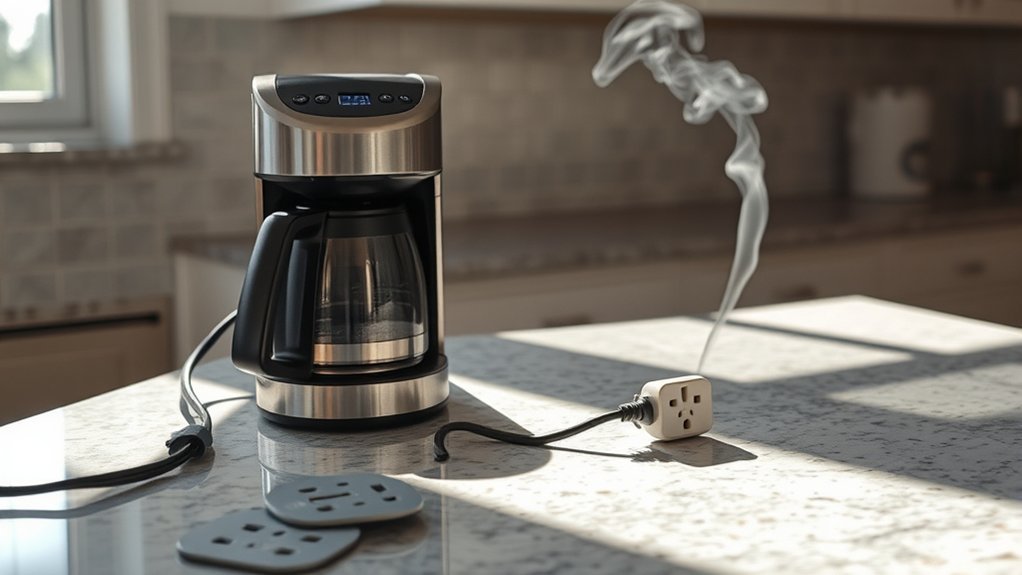
Although it might seem convenient to leave your coffee maker plugged in, doing so greatly increases the risk of fire. Fire hazard awareness is essential when it comes to small appliances like coffee makers.
The U.S. Fire Administration warns that these devices can overheat or malfunction, especially if left unattended. Residual heat from the warming plate can activate unexpectedly, raising safety concerns.
In addition, coffee makers with smart features draw standby power, which not only contributes to overheating but also leads to wasted energy costs. Statistics show that appliances like toasters and coffee makers are major fire causes, even during outages.
How Unplugging Reduces Standby Power Costs
Understanding how standby power works is essential for managing your energy costs effectively.
By keeping your coffee maker plugged in, you might be adding $1 to $3 to your monthly bill without even realizing it.
Unplugging after each use is a simple strategy that can greatly reduce these unnecessary expenses and enhance your home’s energy efficiency.
Understanding Standby Power Waste
When you leave your coffee maker plugged in, it continues to draw power even when not in use, contributing to what’s known as standby power or phantom load.
This hidden energy waste can account for about 10% of your household’s total energy bills. If your coffee maker has features like a display or timer, it could cost you an extra $1 to $3 each month.
By unplugging it after each use, you can greatly reduce this standby power drain, potentially saving $30 to $70 annually on electricity bills.
Increasing your energy awareness and adjusting your consumer habits can lead to substantial savings and less strain on power grids, especially during peak demand periods.
Cost Implications of Standby Power
Unplugging your coffee maker after each use can lead to significant savings on your energy bill, as it eliminates the ongoing costs associated with standby power.
Coffee makers left plugged in can add an extra $1 to $3 to your monthly electric bill due to phantom load. This standby power can account for roughly 10% of your total energy expenses.
By regularly unplugging, you could save approximately $30 to $70 annually, enhancing your energy savings.
Smart features in coffee makers might increase energy draw even when inactive, resulting in unnecessary costs.
Beyond financial benefits, unplugging also minimizes safety risks, reducing the chances of fire hazards linked to appliances left powered on.
Strategies to Minimize Costs
To effectively minimize costs associated with standby power, it’s essential to make unplugging your coffee maker a routine habit.
By doing so, you can eliminate unnecessary electricity costs that contribute an extra $1 to $3 to your monthly bill. These smart features, like displays and timers, continue to consume energy even when the coffee maker is off, leading to phantom loads.
Adopting this simple practice can save you $30 to $70 annually. Incorporating this into your energy efficient habits not only reduces your bills, but it also minimizes the risk of overheating and potential fire hazards.
Following these cost saving tips will lead to a more sustainable and economical household.
Are Automatic Shut-Off Features Enough for Safety?
How safe are automatic shut-off features in coffee makers? While many modern coffee makers include these safety mechanisms, they don’t fully eliminate risks.
Automatic shut-off functions can take time to activate, leaving your coffee maker plugged in and still drawing power. This delay can pose overheating risks and potential electrical malfunctions.
Older models may lack reliable shut-off features altogether, increasing safety concerns. Additionally, even when turned off, coffee makers can consume standby power, leading to unnecessary energy costs and risks.
The U.S. Fire Administration recommends unplugging small appliances to minimize fire hazards and electrical risks. Consequently, relying solely on automatic shut-off isn’t enough; unplugging your coffee maker after use is a safer practice.
Reasons People Choose to Unplug Appliances
Many people choose to unplug appliances like coffee makers for a variety of compelling reasons.
Unplugging not only enhances home safety but also promotes energy efficiency. Here are some reasons why you might consider this practice:
Unplugging appliances boosts safety and energy efficiency, making it a smart practice for every home.
- Prevents potential fire hazards from overheating elements.
- Reduces standby power consumption, saving you $1–$3 monthly.
- Aligns with recommendations from experts like the U.S. Fire Administration.
- Cultivates a habit rooted in personal experiences or family traditions.
- Contributes to lower utility costs over time.
Daily Benefits of Unplugging Your Coffee Maker
While you might enjoy that fresh cup of coffee each morning, unplugging your coffee maker offers daily benefits that extend beyond just your caffeine fix. By doing so, you can experience daily energy savings, potentially cutting $1–$3 from your monthly electricity bill.
Many coffee makers consume phantom power even when not in use, contributing to higher utility costs. Additionally, unplugging enhances home safety, as it reduces the risk of electrical fires—a crucial fire prevention tip.
Even turned off, plugged-in appliances can pose hazards. By making it a habit to unplug your coffee maker, you not only save money but also gain peace of mind, knowing you’ve minimized both energy waste and fire risks.
What Do Fire Safety Agencies Recommend?
Given the potential dangers associated with electrical appliances, fire safety agencies strongly recommend unplugging small devices like coffee makers when they’re not in use.
Fire safety agencies advise unplugging small appliances like coffee makers when not in use to prevent potential electrical hazards.
Keeping these appliances plugged in can lead to electrical hazards and increase the risk of fires.
Here are some key recommendations:
- Unplug appliances after each use to prevent overheating.
- Limit heat-producing devices to one per outlet to minimize risks.
- Be aware that warming plates can contribute to phantom energy consumption.
- Regularly check for faulty wiring or damaged cords.
- Follow safety guidelines to maintain energy efficiency and home safety.
How to Create a Routine for Unplugging Appliances
Creating a routine for unplugging appliances not only enhances safety but also helps reduce energy consumption in your home.
Start by designating a specific time each day, like after your morning coffee, to unplug your coffee maker and other small appliances.
After meals or activities, conduct a quick scan of your kitchen and living areas to verify all unused appliances, such as toasters and kettles, are unplugged.
Set reminders on your phone or place sticky notes near appliances to reinforce this habit, especially for those that use standby power.
Involve family members or housemates in this routine; making it a collective effort amplifies the unplugging benefits and contributes to an energy-efficient home.
Smart Plugs vs. Manual Unplugging: Which Is Safer?
When considering whether to use a smart plug or rely on manual unplugging for your coffee maker, you should weigh safety features, energy efficiency, and convenience.
Smart plugs offer automation and can reduce energy costs, but they don’t completely eliminate fire risks from faulty appliances.
On the other hand, manual unplugging guarantees your coffee maker is fully disconnected, offering the highest safety but requiring more effort on your part.
Safety Features Comparison
In comparing safety features, many people may wonder if smart plugs truly offer a safer alternative to manually unplugging coffee makers. While smart plugs provide convenience, their reliability in preventing hazards isn’t assured.
Here are key points to reflect on:
- Manual unplugging eliminates phantom energy consumption.
- Smart plugs can’t fully prevent overheating or fire risks.
- Unplugging guarantees total power down, enhancing safety.
- Smart plugs consume standby power, impacting energy efficiency.
- The National Fire Prevention Association recommends unplugging heat-producing appliances.
Ultimately, the manual safety benefits of unplugging outweigh the convenience of smart plugs. For those prioritizing safety, taking the extra step to unplug your coffee maker is a reliable choice to minimize risks.
Energy Efficiency Analysis
While smart plugs offer modern solutions for energy management, analyzing their effectiveness compared to manual unplugging reveals important considerations for safety and efficiency.
Smart plugs can automate your coffee maker’s energy consumption, reducing standby power draw and enhancing appliance safety through remote control. However, manually unplugging your coffee maker after each use remains a reliable method to eliminate phantom power, which can add $1–$3 to your monthly electric bill.
Additionally, using smart plugs equipped with energy monitoring can help you understand your coffee maker’s energy patterns.
Ultimately, combining both approaches provides a thorough strategy for optimizing energy efficiency while minimizing risks associated with heating elements. Prioritizing appliance safety is essential, making this balanced method worthwhile.
Convenience of Smart Plugs
Many homeowners find smart plugs to be a game-changer for convenience and safety in their daily routines.
These devices seamlessly integrate into your smart home, enhancing energy management while minimizing risks.
Here’s why you might consider them over manual unplugging:
- Control your coffee maker remotely, ensuring it’s off when you’re not home.
- Schedule brewing times, so you wake up to freshly brewed coffee.
- Automatically cut power after brewing, reducing fire hazards.
- Monitor energy consumption, helping to identify standby power costs.
- Enjoy peace of mind without the hassle of unplugging after each use.
Smart plugs not only simplify your life but also promote safety, making them an essential addition to any modern kitchen.
How Unplugging Contributes to Environmental Sustainability
Unplugging your coffee maker not only saves you money but also plays a significant role in promoting environmental sustainability.
By reducing standby power consumption, which accounts for about 10% of your energy bills, you contribute to energy conservation. When you and your neighbors unplug small appliances, households can collectively save substantial energy, easing the burden on power grids during peak times.
This simple act can lead to annual savings of $30 to $70 for certain devices, fostering sustainable practices. Additionally, unplugging helps lower the demand for energy production, often reliant on non-renewable sources.
What Other Appliances Should You Unplug?
Numerous household appliances can benefit from being unplugged when not in use, enhancing both safety and energy efficiency.
Here are some key appliances to evaluate:
- Electric kettles: Fire hazards and energy drain when left plugged in.
- Hair straighteners and curling irons: Major fire risks that should be unplugged immediately.
- Toasters: Crumb buildup can pose a significant fire hazard; unplug for safety and energy savings.
- Game consoles: They draw considerable standby power, costing you more monthly.
- Printers: Known as energy vampires, they consume unnecessary electricity when idle.
Frequently Asked Questions
Can Leaving a Coffee Maker Plugged in Affect Its Lifespan?
Leaving your coffee maker plugged in can shorten its lifespan due to constant heat exposure and potential electrical surges. Practicing proper coffee maker maintenance, like unplugging when not in use, promotes appliance longevity and efficiency.
What Are the Best Practices for Unplugging Appliances Safely?
To guarantee appliance safety, always unplug devices by grasping the plug, not the cord. Check for wear and tear regularly, and avoid using wet hands to minimize electrical hazards. Keep your appliances in good working condition.
How Does Unplugging Impact Energy Bills Over Time?
Unplugging your appliances is like closing the barn door after the horse has bolted. For energy conservation, it reduces phantom loads and leads to significant cost savings on energy bills over time, keeping your finances healthy.
Are There Any Exceptions to Unplugging Coffee Makers?
Yes, some coffee makers have built-in safety features that allow for safe, continuous use without unplugging. If convenience factors outweigh potential risks, leaving it plugged in might be acceptable, but always prioritize safety.
Can Using a Surge Protector Reduce Fire Risks With Plugged Appliances?
Using a surge protector can indeed enhance appliance safety; studies show that 60% of home fires result from electrical issues. By investing in surge protection, you greatly reduce the risk of fire hazards with plugged appliances.
Conclusion
To sum up, unplugging your coffee maker after each use can enhance safety, reduce power costs, and promote environmental sustainability. For instance, a family in California reported that by unplugging their appliances, including their coffee maker, they cut their energy bill by 15%. By creating a simple routine, you can mitigate fire risks and contribute to greener practices. Think about the impact of your habits—every little action counts towards a safer and more sustainable home.