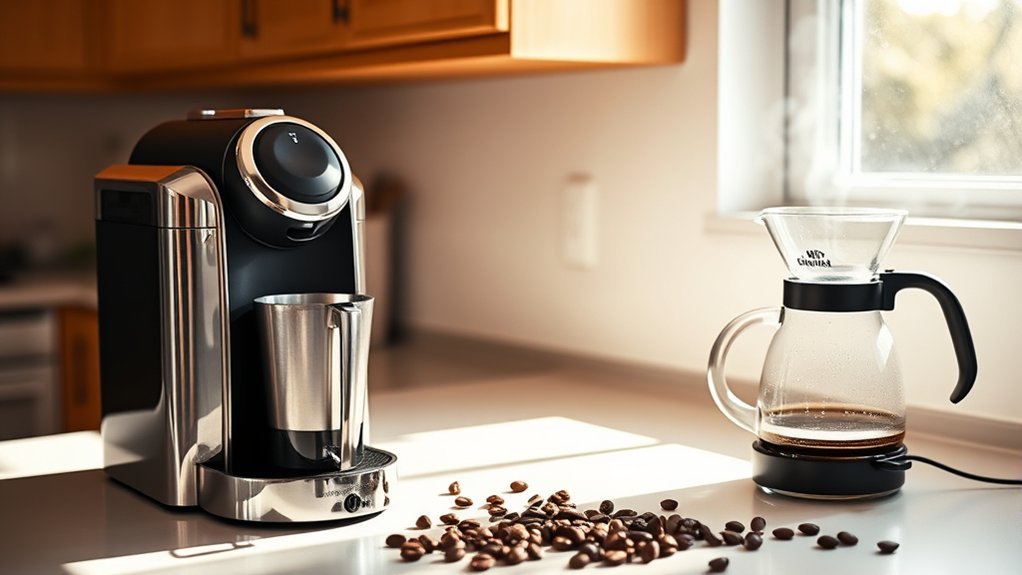
Single-serve and drip coffee makers differ mainly in brewing methods, flavor extraction, costs, and environmental impact. Single-serve machines use pods for quick brewing but often compromise flavor and customization. Drip coffee makers allow for better flavor extraction and can produce multiple cups, but require more time and cleanup. Cost-wise, single-serve options may seem convenient but can be more expensive per cup. If you’re curious about how these machines affect your lifestyle and the environment, there’s more to explore.
Key Takeaways
- Single-serve coffee makers use pods for quick brewing, while drip machines brew multiple cups, taking longer to enhance flavor.
- Drip coffee makers allow for greater customization in strength and flavor compared to the limited options of single-serve pods.
- Single-serve pods generate significant waste, while drip coffee makers produce biodegradable grounds and filters, leading to lower environmental impact.
- The cost per cup is higher with single-serve machines due to pod prices, making drip coffee more economical for regular drinkers.
- Regular maintenance is crucial for drip machines to ensure optimal brewing, while single-serve machines require minimal cleanup.
Understanding Single-Serve and Drip Coffee Makers
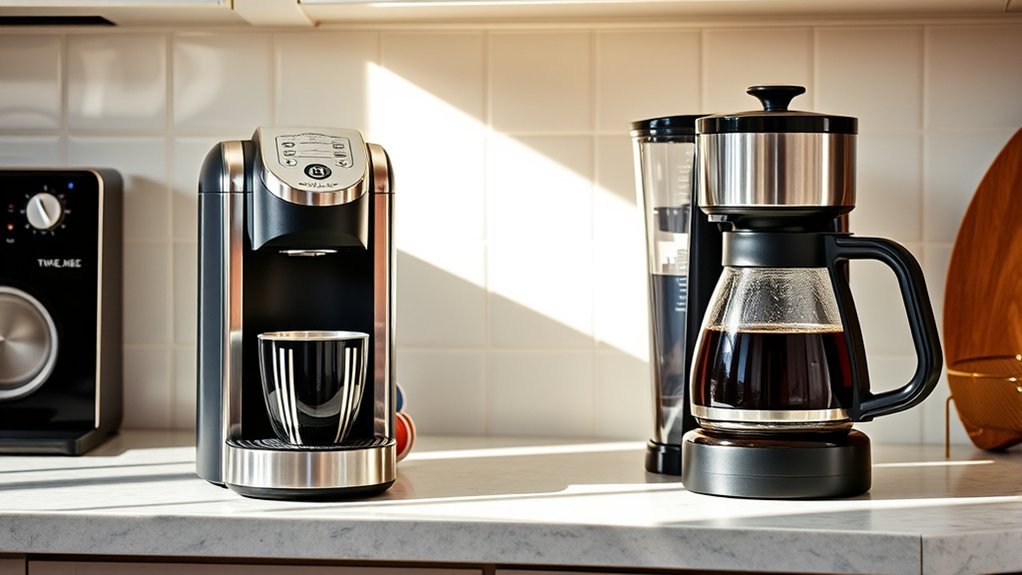
When you’re choosing between single-serve and drip coffee makers, it’s essential to understand their key differences and how they fit your needs.
Single-serve coffee makers use pre-packaged pods, allowing for quick coffee preparation with a brewing speed of just 30-60 seconds. This makes them perfect for those hectic mornings.
On the other hand, drip coffee makers brew multiple cups at once, typically taking 5-10 minutes. While single-serve machines offer limited pod selection with standardized flavors, drip coffee makers allow you to customize your brew through grind size, water temperature, and brew time.
Additionally, while single-serve machines require minimal cleanup, drip coffee makers necessitate more maintenance, including cleaning filters and carafes, which can impact your choice.
How Brewing Methods Differ Between Single-Serve and Drip Coffee Makers
Although single-serve and drip coffee makers both brew coffee, their methods markedly differ regarding process and outcome. Here’s how they compare:
- Brewing Speed: Single-serve machines brew a cup in 30-60 seconds, while drip coffee makers take 5-10 minutes to prepare multiple cups.
- Flavor Consistency: Single-serve systems offer a standardized taste due to pre-packaged pods, whereas drip coffee makers allow for customization in grind size, water temperature, and brew time.
- Cost Efficiency: Single-serve coffee averages $0.70 per cup, compared to $0.15-$0.30 for drip coffee brewed from grounds.
- Cleanup: Single-serve machines require minimal cleanup, just pod disposal, while drip coffee makers involve cleaning filters and carafes, increasing maintenance time.
How Brewing Methods Affect Coffee Maker Flavor Profiles

Brewing temperature and grind size considerably impact the flavor profile of your coffee.
In drip coffee makers, higher temperatures (195–205°F) extract more aromatic compounds and oils, resulting in a richer taste compared to the lower temperatures of single-serve machines.
Additionally, adjusting the grind size in drip brewing allows for tailored extraction, enhancing the complexity and depth of your cup.
Brewing Temperature Impact
The temperature at which coffee is brewed considerably influences the flavor profile, with single-serve and drip coffee makers demonstrating distinct differences.
Here’s how brewing temperature affects flavor extraction:
- Single-Serve Machines: Brew at around 190°F, limiting flavor extraction and often resulting in a less complex taste.
- Drip Machines: Heat water to 195°F-205°F, optimizing extraction of oils and aromatic compounds, enhancing flavor.
- Brewing Time: Single-serve machines brew in under 2 minutes, while drip machines take 5-10 minutes, allowing for richer flavor development.
- Freshness Impact: Drip makers with freshly ground beans yield 22% more aromatic compounds than pre-packaged pods, creating a more robust flavor experience.
Understanding these nuances helps you choose the right machine for your preferred coffee flavor.
Grind Size Variation
Grind size plays an essential role in the extraction process, directly influencing the flavor profile of your coffee.
For single-serve methods, a fine grind enhances flavor extraction during the short brew time, while drip coffee makers benefit from medium to medium-coarse grinds, allowing longer extraction for better flavor balance.
Grind consistency is important; finer grinds can lead to over-extraction in drip machines, resulting in bitterness, whereas coarser grinds in single-serve machines might yield weak flavors if brewed too quickly.
Using freshly ground coffee beans considerably boosts aromatic compounds—up to 22% more than pre-packaged pods.
As a result, adjusting grind size based on your coffee maker type is essential for achieving the ideal flavor profile you desire.
Compare Costs: Single-Serve vs. Drip Coffee Makers
When considering the costs of single-serve versus drip coffee makers, you’ll notice significant differences in both initial purchase and long-term savings.
Single-serve machines generally range from $50 to $150 upfront, while drip coffee makers average around $120.
However, the ongoing costs for single-serve systems can add up quickly, leading to substantial savings with drip coffee over time.
Initial Purchase Costs
Choosing between single-serve and drip coffee makers often hinges on initial purchase costs. Here’s a cost comparison to help you decide:
- Single-Serve Machines: Typically priced between $50 to $150.
- Drip Coffee Makers: Average around $120 for standard models.
- Pod Costs: Single-serve pods range from $0.60 to $1.20 per cup.
- Ground Coffee Costs: Drip coffee averages just $0.15 to $0.30 per cup.
While the initial investment for single-serve machines can be lower, the ongoing costs of pod purchases often accumulate quickly.
In contrast, drip coffee makers may require a higher upfront cost but offer a more economical solution over time, particularly for frequent coffee drinkers.
Long-Term Savings Potential
After weighing the initial purchase costs, it’s important to contemplate the long-term savings potential of both coffee maker types.
Single-serve coffee makers typically cost around $0.70 per cup, accumulating significant expenses over time, especially if you drink coffee daily.
In contrast, drip coffee makers offer a cost-effective range of $0.15 to $0.30 per cup using ground coffee. This leads to annual savings of up to $310 for frequent drinkers.
Additionally, the bulk purchasing of coffee enhances the long-term benefits of drip machines, while minimizing landfill waste.
Cleaning and Maintenance Tips for Your Coffee Maker

To guarantee your coffee maker consistently delivers a great brew, regular cleaning and maintenance are essential. Here are some key tips to follow:
- Daily Cleaning: For drip coffee makers, clean the carafe and filter basket daily to prevent buildup and maintain flavor quality.
- Monthly Descaling: Descale your drip coffee maker monthly using a vinegar and water solution to remove mineral deposits, especially if you use hard water.
- Water Reservoir Care: Regularly clean the water reservoir of both single-serve and drip coffee makers to avoid mold and bacteria growth.
- Manufacturer Guidelines: Always refer to the manufacturer’s guidelines for specific cleaning recommendations and maintenance importance to prolong your coffee maker’s lifespan.
Maintaining a proper cleaning frequency guarantees peak brewing performance and a better coffee experience.
Choosing the Right Coffee Maker for Your Lifestyle
Regular cleaning and maintenance set the stage for ideal coffee brewing, but the right coffee maker can greatly enhance your daily experience.
When choosing between single-serve and drip coffee makers, consider your lifestyle preferences and coffee habits. Single-serve machines are perfect for quick mornings, brewing one cup in just 30-60 seconds, ideal for small kitchens.
However, if you often entertain or have a family, a drip coffee maker that brews 4-12 cups in 5-10 minutes may be more suitable. Drip models also offer customizable strength settings, while single-serve machines limit variation due to standardized pods.
Keep in mind the cost per cup; drip coffee makers are considerably more economical in the long run, especially for frequent drinkers.
How Do Coffee Makers Impact the Environment?
While enjoying your daily cup of coffee, it’s essential to reflect on how your brewing method affects the environment. Your choice between single-serve and drip coffee makers can greatly impact sustainability practices and waste reduction.
Here are some key points to take into account:
- Single-serve pods create about 9.4 billion non-recyclable capsules annually, taking 500 years to decompose.
- Drip coffee makers primarily generate biodegradable coffee grounds and paper filters, decomposing in around six months.
- Reusable coffee pods can cut waste by up to 98%, promoting a sustainable approach.
- While drip makers consume 20% more energy per brew, their lower waste production may favor environmental impact.
Frequently Asked Questions
Can Single-Serve Coffee Makers Use Ground Coffee Instead of Pods?
Yes, many single-serve coffee makers let you use ground coffee with pod alternatives, like reusable filters. Just verify your machine supports this feature for ideal brewing, and enjoy a fresh cup tailored to your taste.
How Long Do Single-Serve and Drip Coffee Makers Typically Last?
Single-serve coffee makers typically last 3-5 years, while drip coffee makers can last 5-10 years. For better longevity, follow maintenance tips like regular cleaning and descaling. This lifespan comparison helps you make informed decisions.
Are There Any Health Concerns With Using Single-Serve Coffee Pods?
You might face health risks from certain coffee pods, like chemical leaching. Additionally, consider the environmental impact; single-serve pods contribute to waste, raising concerns about sustainability and proper disposal, which can affect overall health.
Which Type of Coffee Maker Is More Energy-Efficient?
If you’re looking for energy efficiency, drip coffee makers typically have lower energy consumption due to their brewing efficiency. They heat water once, while single-serve makers may use more energy per cup brewed.
Can I Brew Tea With a Drip Coffee Maker?
Yes, you can brew tea with a drip coffee maker. Simply use tea bags or loose leaf in the filter basket, adjusting water temperature and steeping time for ideal tea brewing. It’s an effective coffee alternative!
Conclusion
In your quest for the perfect cup of coffee, understanding the differences between single-serve and drip coffee makers is vital. While single-serve offers convenience and speed, drip machines excel in flavor depth and cost-effectiveness. So, ask yourself: do you prioritize speed or rich taste? Ultimately, the right choice aligns with your lifestyle and coffee preferences, ensuring that every sip savored is a reflection of your unique taste. Choose wisely, and elevate your daily brew.