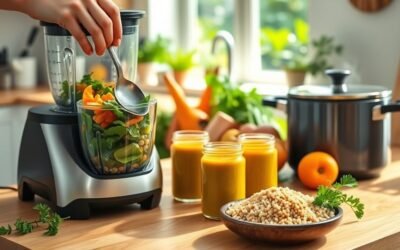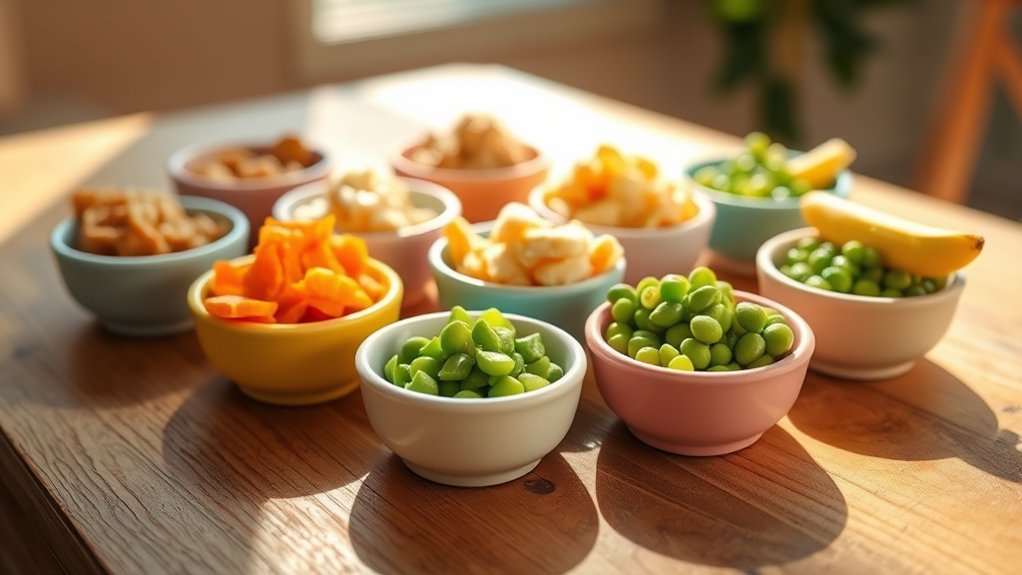
Baby food stages can make starting solids feel simpler, but the numbers on jars and pouches are only general texture guides—not medical rules. Most babies begin solid foods at about 6 months when they show the right feeding skills. They then move from smooth or mashed foods to thicker textures, soft finger foods, and modified family meals at their own pace.
Quick Answer
Most babies start solid foods at about 6 months, once they can control their head, sit with support, bring objects to their mouth, and swallow food. Use baby food stages as a flexible texture roadmap: smooth or mashed foods first, followed by thicker foods, soft finger foods, and safely modified family meals.
Key Takeaways
- Stage 1, Stage 2, Stage 3, and Stage 4 are commercial texture labels, not strict developmental requirements.
- Most babies are ready for solids at about 6 months. Starting before 4 months is not recommended.
- Progress from smooth or mashed foods to soft lumps and finger foods as your baby develops safe swallowing and self-feeding skills.
- Offer nutrient-dense foods, especially sources of iron and zinc, rather than relying only on fruit and vegetable purées.
- Introduce common allergens in safe forms at about 6 months unless your baby’s clinician recommends a different plan.
- Prevent choking by supervising every meal, seating your baby upright, and changing the shape and texture of hazardous foods.
At a Glance
| Time Required | About 10–20 minutes to prepare and serve a simple meal |
| Difficulty | Moderate because texture, allergy, and choking safety require close attention |
| Tools Needed | Upright high chair, baby spoon, bowl, fork or masher, cutting board, and optional blender |
| Cost | Low to moderate; safely modified family foods can reduce the need for separate baby products |
Note: This guide provides general education and does not replace advice from your baby’s pediatrician. Ask for individual guidance if your baby was born prematurely, has poor growth, severe eczema, a known food allergy, swallowing problems, or another medical condition.
Understanding Baby Food Stages
Baby food companies often use numbered stages to describe texture and serving style. There is no universal medical standard requiring every baby to follow the same four steps at the same ages.
The more useful question is whether your baby can safely manage the next texture. Age ranges can help you plan, but feeding skills, posture, swallowing, and interest in food matter more than the number on a package.
| Common Label | Approximate Timing | Typical Texture | Examples |
|---|---|---|---|
| Stage 1 | About 6 months, when ready | Smooth, mashed, or softly puréed | Mashed beans, puréed meat, oatmeal, avocado, banana, or sweet potato |
| Stage 2 | Often around 6–9 months | Thicker mashed food, soft lumps, and combinations | Mashed lentils with squash, oatmeal with fruit, or yogurt with mashed pear |
| Stage 3 | Often around 9–12 months | Soft chunks, minced food, and graspable finger foods | Soft pasta, shredded meat, ripe fruit, cooked vegetables, and egg strips |
| Stage 4 | Usually after 12 months | Safely modified family foods | Tender meat, rice, beans, pasta, soft vegetables, eggs, yogurt, and fruit |
The Dietary Guidelines for Americans, 2025–2030 recommend introducing a varied range of nutrient-dense foods in developmentally appropriate textures. They do not require foods to be served in a fixed order.

Power your essentials anywhere with a 999Wh pure sine wave power station delivering up to 1000W continuous with 2000W surge. It supports fast charging via USB-C PD 60W and USB-A QC 18W, plus simultaneous output for multiple devices through AC, USB, wireless, and car/DC ports. Recharge using AC, car, or solar with a built-in MPPT controller and dual cooling fans, while the upgraded battery management system protects against surges, short circuits, and overheating.

7G OF PROTEIN FOR BABY: Beech-Nut Meat Baby Food is a savory blend of real pureed chicken & chicken broth. Each jar contains 7 grams of protein to help keep baby full.

ON THE GO BABY FOOD: Gerber Stage 1 Baby Food Puree Tubs are designed for ease and convenience. These tubs are the perfect on the go baby food, made in a portable and easy-to-store format for busy parents
When to Start Solid Foods
Most babies can begin complementary foods at about 6 months. The CDC advises against introducing solids before 4 months.
Look for a combination of these readiness signs:
- Your baby can sit alone or with support and remain upright during feeding.
- Your baby has steady head and neck control.
- Your baby reaches for objects and brings them to the mouth.
- Your baby opens the mouth when food is offered.
- Your baby moves food from the front of the tongue toward the back of the mouth.
- Your baby swallows food instead of automatically pushing it back out.
Interest in watching others eat can be encouraging, but it is not enough by itself. Teething, body weight, and age alone also do not prove that a baby is ready.
Breast milk or iron-fortified infant formula should continue while solid foods are introduced. It remains the main nutrition source through the first year, while solid foods gradually add nutrients, textures, and feeding practice.
Warning: Do not add cereal or puréed food to a bottle unless your baby’s clinician has prescribed it for a specific medical reason. Thickened bottles can create feeding and calorie-control problems and do not teach spoon-feeding skills.
Stage 1: Smooth and Mashed First Foods
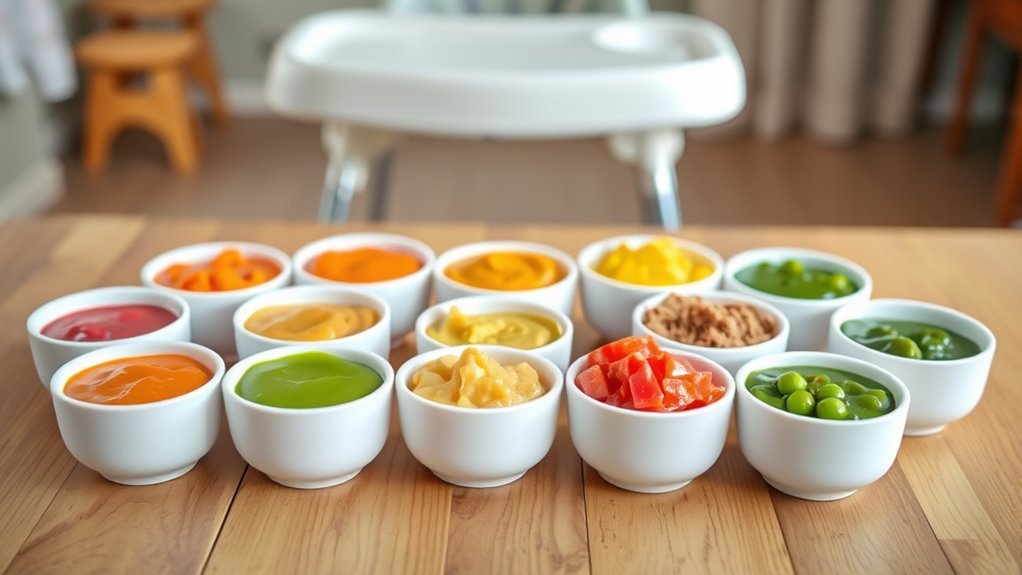
Stage 1 foods are commonly smooth, mashed, or puréed. They should be moist and easy to move around the mouth, but they do not have to be watery or completely liquid.
Start with a small amount on a soft spoon while your baby sits upright. Stop when your baby closes the mouth, turns away, pushes the spoon away, becomes distracted, or loses interest.
Good first foods include:
- Finely puréed beef, chicken, turkey, fish, or other tender protein foods
- Mashed beans, lentils, chickpeas, or tofu
- Well-cooked egg
- Iron-fortified oatmeal, barley cereal, multigrain cereal, or rice cereal
- Plain full-fat yogurt without added sugar
- Mashed avocado, banana, pear, peas, carrots, squash, or sweet potato
Fruit and vegetables provide useful nutrients and flavors, but they should not crowd out iron-rich foods. At about 6 months, babies—especially babies fed human milk—need dependable dietary sources of iron.
Pro Tip: Offer an iron-rich food at meals and pair plant-based iron sources, such as beans or fortified cereal, with a vitamin C food such as mashed berries, tomato, broccoli, or fruit.
Stage 2: Thicker Textures and Flavor Combinations
Once your baby swallows smooth foods comfortably, begin making foods thicker. Mash with a fork instead of blending completely, or leave very soft, small lumps.
You can also combine foods your baby has already tolerated. Combinations help expand flavor and nutrient variety, but the goal is not to hide every vegetable under a sweet fruit. Let your baby taste savory, bitter, tart, and naturally sweet foods.
| Combination | What It Adds |
|---|---|
| Oatmeal with mashed banana and smooth peanut butter thinned safely | Iron-fortified grain, fruit, fat, protein, and allergen exposure |
| Mashed lentils with soft squash | Iron, protein, fiber, and a thicker texture |
| Plain yogurt with mashed pear | Protein, fat, dairy exposure, and a mild fruit flavor |
| Mashed avocado with finely flaked fish | Healthy fat, protein, and a soft savory combination |
A baby may need to see or taste a new food several times before accepting it. A refusal today does not mean the food must disappear from the menu.
Offer unfamiliar foods without pressure. The 2025–2030 Dietary Guidelines note that it may take roughly 8 to 10 exposures before a young child is willing to try a new food.
Stage 3: Soft Chunks and Finger Foods
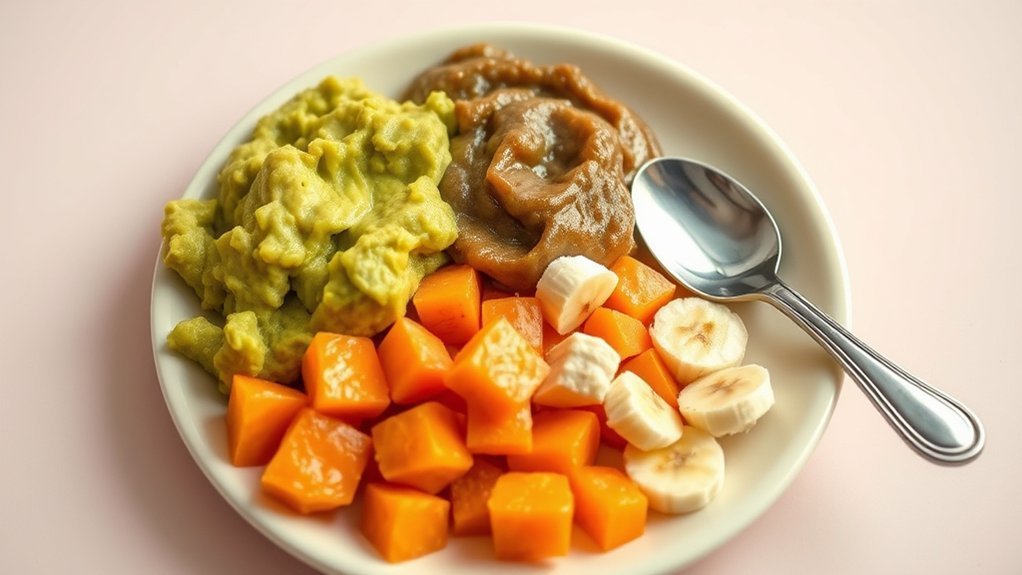
Stage 3 foods include soft lumps, minced foods, shredded foods, and finger foods that break apart easily. Many babies reach this stage between 9 and 12 months, but the transition should follow feeding skills rather than a fixed birthday.
Appropriate options can include:
- Soft pasta cut into manageable pieces
- Thick oatmeal or mashed beans with soft lumps
- Shredded tender meat or finely flaked fish with all bones removed
- Soft-cooked broccoli florets, squash, carrots, or green beans
- Ripe avocado, banana, peach, pear, or mango
- Well-cooked egg strips or small pieces
- Soft toast strips spread thinly with avocado, hummus, or safely thinned nut butter
- Low-sodium soup or stew ingredients removed from excess broth and cut safely
Finger foods help babies practice grasping, bringing food to the mouth, biting, and chewing. Babies can chew soft foods with their gums even before they have many teeth.
Stage 4: Modified Family Meals
After the first birthday, many children can eat much of the same food as the rest of the family. The food may still need to be cooked until tender, shredded, mashed, or cut into safer shapes.
A balanced family meal might include:
- Protein: Tender chicken, fish, egg, beans, lentils, tofu, or ground meat
- Vegetables or fruit: Soft cooked vegetables or ripe, safely cut fruit
- Grain or starchy food: Rice, pasta, oatmeal, quinoa, potato, or whole-grain bread
- Fat or dairy: Avocado, olive oil, plain yogurt, cheese, or whole milk after 12 months
Whole cow’s milk can become a drink after 12 months. Before then, cow’s milk may be used in food preparation, and plain yogurt or cheese may be offered, but cow’s milk should not replace breast milk or infant formula as the main drink.
Continue breastfeeding beyond 12 months for as long as it is mutually desired. Children can also practice using a spoon, fork, and open or straw cup while an adult supervises.
How to Know When Your Baby Is Ready for the Next Texture
Your baby may be ready to advance when they:
- Swallow the current texture without frequent coughing or distress
- Move food around the mouth and attempt chewing motions
- Reach for food and bring it to the mouth accurately
- Sit upright and remain stable throughout the meal
- Manage soft lumps without repeatedly pushing them out
- Pick up food with the whole hand or developing pincer grasp
- Show interest in self-feeding
It is fine to mix textures during a transition. For example, you can serve a familiar smooth food beside a thicker mash or soft finger food. There is no need to finish one entire commercial stage before offering the next texture.
Do not force advancement if your baby coughs repeatedly, seems unable to swallow, becomes distressed, or consistently refuses every textured food. Ask your pediatrician whether a feeding or swallowing evaluation is needed.
How to Introduce New Foods Safely
At the beginning of solid feeding, offering one new single-ingredient food at a time can make a reaction easier to identify. Some caregivers wait three to five days between the earliest new foods, especially when advised by a clinician.
Once your baby has tolerated several foods, you do not have to delay every ordinary new ingredient for multiple days. Continue building variety while keeping a written note of any suspected reaction.
Use these steps:
- Offer the food when your baby is healthy and an adult can observe them.
- Start with a small amount in an age-appropriate texture.
- Do not introduce several new common allergens in the same meal.
- Watch for symptoms during and after eating.
- If the food is tolerated, offer it again as part of the normal diet.
Introducing Common Food Allergens
Current guidance recommends introducing potentially allergenic foods with other complementary foods at about 6 months rather than delaying them without a medical reason.
Common allergens include peanut, tree nuts, egg, cow’s milk, wheat, soy, sesame, fish, and shellfish. Serve them in safe forms:
- Mix smooth peanut or tree-nut butter with warm water, breast milk, formula, yogurt, or cereal until it is thin enough to swallow safely.
- Offer well-cooked egg that is mashed, finely chopped, or cut into a soft strip.
- Use plain yogurt or cheese rather than cow’s milk as the main drink before 12 months.
- Offer wheat in soft bread, pasta, or infant cereal.
- Serve fish or shellfish fully cooked, finely flaked, and free of shells or bones.
- Offer soy as smooth tofu or another soft, age-appropriate form.
If your baby has severe eczema, an egg allergy, or both, follow the NIAID peanut-allergy prevention guidance and speak with your baby’s clinician before peanut introduction. A supervised introduction or allergy testing may be recommended, and peanut may be introduced as early as 4 to 6 months in selected high-risk infants.
Warning: Call 911 for trouble breathing, swelling of the tongue or throat, sudden severe lethargy, collapse, or symptoms involving more than one body system after eating. For a mild isolated rash or another possible reaction without breathing trouble, stop the food and contact your child’s clinician promptly.
Gagging, Choking, and Safe Food Shapes
Gagging is a protective reflex that helps move food forward. It is often noisy and may include coughing, retching, watery eyes, or a red face. Choking means the airway is blocked and requires immediate action.
| Gagging | Choking |
|---|---|
| Usually noisy; the baby may cough, sputter, or retch | May be silent; the baby cannot cough, cry, or breathe effectively |
| Air is still moving | The airway is partly or fully blocked |
| Allow the baby to work the food forward while watching closely | Begin age-appropriate choking first aid and have someone call 911 |
The CDC choking-hazard guidance recommends changing the size, shape, and texture of risky foods. Avoid serving:
- Whole nuts or seeds
- Thick spoonfuls or sticky globs of nut or seed butter
- Popcorn, chips, pretzels, hard crackers, or hard candy
- Whole grapes, cherries, berries, or cherry tomatoes that require safer cutting
- Hot-dog or sausage rounds
- Hard raw carrot, apple, or other hard vegetable or fruit pieces
- Large chunks of meat, cheese, or firm food
- Marshmallows, gum, chewy candy, or gummy snacks
- Fish with bones
Seat your baby upright in a high chair, remain within arm’s reach, and keep toys and screens away from the eating area. An infant CPR and choking-response course can help every regular caregiver prepare for an emergency.
Baby-Led Weaning and Combination Feeding
Baby-led weaning allows a developmentally ready baby to pick up and self-feed soft foods instead of receiving only spoon-fed purées. It can be combined with mashed foods and responsive spoon-feeding.
Possible practical benefits include more practice grasping food, joining family meals, and exploring textures. Research has not established that baby-led weaning guarantees less picky eating, better weight control, or superior self-regulation.
For safer baby-led feeding:
- Wait until your baby shows the full readiness signs and can remain upright.
- Offer food soft enough to squash easily between your fingers.
- Use pieces that are easy for your baby’s current grasp to hold.
- Include an iron-rich food regularly.
- Do not place food in your baby’s mouth or remove food with a blind finger sweep.
- Supervise every bite and learn the difference between gagging and choking.
A combination approach can work well. You might offer mashed lentils by spoon, a soft broccoli floret for self-feeding, and a preloaded spoon your baby can bring to the mouth.
Foods and Drinks Babies Should Avoid
Some foods are unsafe during infancy or need modification:
- Honey before 12 months: Honey can contain spores that cause infant botulism. This includes honey added to food, water, formula, or a pacifier.
- Cow’s milk as the main drink before 12 months: Continue breast milk or infant formula instead. Plain yogurt and cheese can be offered earlier.
- Unpasteurized food or drinks: Avoid raw milk, unpasteurized juice, and foods made with unpasteurized dairy.
- Undercooked animal foods: Cook meat, poultry, seafood, and eggs thoroughly.
- Added sugars: Babies do not need sweetened yogurt, desserts, syrups, sweet drinks, or sweetened cereals.
- Excess sodium: Limit processed meats, salty snacks, instant noodles, salty sauces, and heavily salted family food.
- Juice during infancy: Offer whole fruit and appropriate milk feeds rather than juice.
- Unsafe choking shapes: Modify round, hard, sticky, chewy, and tough foods before serving.
Making and Storing Homemade Baby Food
Homemade baby food can be simple. Cook foods until tender, then mash, mince, shred, or blend them to match your baby’s current skills.
Follow these food-safety steps:
- Wash your hands, preparation surface, utensils, and produce.
- Cook meat, poultry, seafood, and eggs thoroughly.
- Use clean water and clean feeding equipment.
- Transfer the serving to a separate bowl instead of feeding directly from the storage container.
- Discard food left in the serving bowl after the meal because saliva can introduce bacteria.
- Cool cooked food promptly and store it in shallow, covered containers.
- Thaw frozen portions in the refrigerator, not on the counter.
- Stir reheated food well and test the temperature before serving.
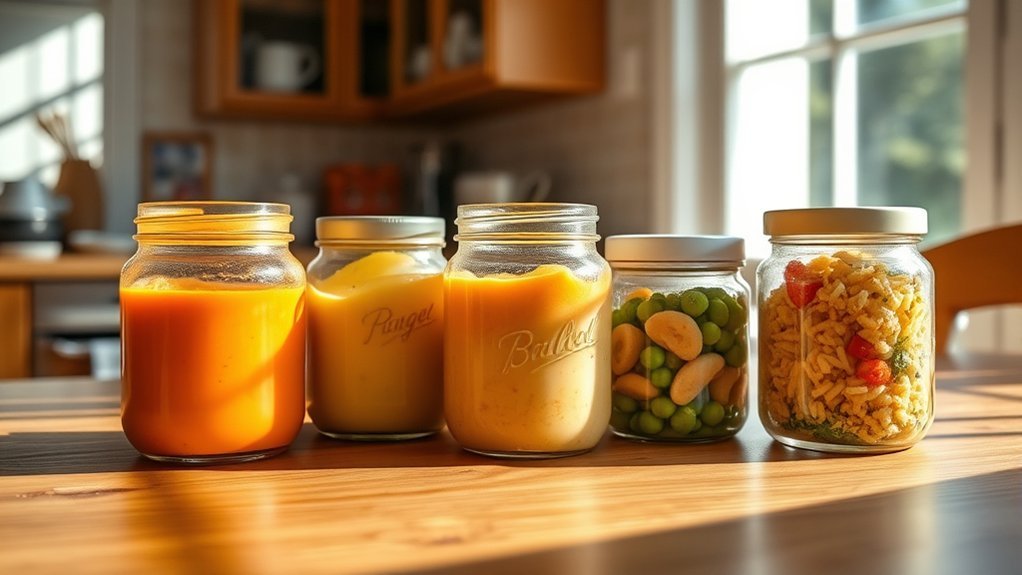
According to FoodSafety.gov, homemade baby food should generally be kept in the refrigerator for only 1 to 2 days or in the freezer for approximately 1 to 2 months. Storage times can be shorter for opened meats, eggs, and mixed dishes.
Ice-cube trays can help create small portions, but transfer frozen cubes to a labeled freezer-safe container once solid. Include the preparation date and discard food that has an unusual smell, color, texture, or damaged container.
Store-Bought Versus Homemade Baby Food
Both commercial and homemade foods can fit a healthy feeding plan. Neither option is automatically more nutritious in every situation.
Commercial food offers convenience, consistent texture, sealed packaging, and ingredient labels. Homemade food gives you more control over texture, seasoning, and the use of ordinary family ingredients.
For either option:
- Offer foods from different food groups rather than relying heavily on one fruit, vegetable, or grain.
- Choose products without added sugar and with little added sodium.
- Check the package for damage and follow storage instructions.
- Do not let a pouch replace regular practice with spoons, cups, lumps, and finger foods.
- Serve food in a bowl rather than allowing repeated sucking directly from a pouch at every meal.
Responsive Feeding and Mealtime Cues
Responsive feeding means the caregiver decides what safe foods are offered, while the baby decides whether and how much to eat.
Possible hunger cues include leaning toward food, reaching, opening the mouth, becoming excited when food appears, or making sounds for more. Fullness cues include closing the mouth, slowing down, turning away, pushing food away, dropping food repeatedly, or becoming distracted.
Do not pressure your baby to finish a jar, pouch, bowl, or preset portion. Appetite changes from day to day. During the early weeks, the goal is learning and nutrient exposure rather than replacing an entire milk feeding immediately.
Keep meals calm and reasonably brief. Sit together when possible, model eating, and offer water in an open or straw cup once solids are established, while continuing breast milk or formula as the primary drink through 12 months.
When to Get Professional Feeding Help
Contact your baby’s pediatrician if you notice:
- Frequent coughing, choking, wheezing, or color changes during meals
- A wet or gurgly voice or breathing sound after swallowing
- Repeated vomiting, pain, arching, or severe distress with food
- Poor weight gain or a significant drop in milk intake
- Consistent refusal of all lumps or textured food after repeated gentle practice
- Food remaining in the mouth long after the meal
- Very long meals or extreme fatigue while eating
- Signs of dehydration
- Suspected food allergy
A pediatrician may recommend support from a registered dietitian, allergist, speech-language pathologist, occupational therapist, or multidisciplinary feeding team.
Frequently Asked Questions
Are baby food stages standardized?
No. Stage numbers are commercial labels used to describe texture and serving style. Definitions and age recommendations can differ by brand. Use the label as a general guide and progress according to your baby’s developmental skills.
Can I mix different stages of baby food together?
Yes. Mixing a familiar smooth food with a thicker mash can make texture changes gradual. You can also serve a purée beside a safe finger food. Make sure the final texture matches your baby’s swallowing and chewing skills.
How do I know if my baby is ready for the next texture?
Look for comfortable swallowing, chewing motions, stable upright sitting, interest in self-feeding, and the ability to manage soft lumps without repeatedly pushing them out. Age alone should not determine the transition.
What are good first foods for a baby?
Good options include puréed meat, mashed beans or lentils, well-cooked egg, tofu, plain yogurt, iron-fortified cereal, avocado, banana, squash, peas, carrots, and sweet potato. Include iron-rich foods regularly.
How long should I wait before introducing allergens?
Introduce one new common allergen at a time when your baby is healthy and you can observe them. There is no benefit to delaying allergens beyond developmental readiness without medical advice. Babies with severe eczema or egg allergy need an individualized peanut-introduction plan.
What is the difference between gagging and choking?
Gagging is usually noisy and may involve coughing or retching while air continues to move. Choking may be silent because the baby cannot breathe, cry, or cough effectively. Choking requires immediate age-appropriate first aid and emergency help.
Are store-bought baby foods as nutritious as homemade foods?
Either can be nutritious. Commercial food is convenient and consistently textured, while homemade food offers more control over ingredients and texture. Choose varied, nutrient-dense foods without added sugar or excess sodium, regardless of how they are prepared.
Conclusion
Baby food stages are most useful as a flexible guide to texture—not a schedule every child must follow. Begin solids at about 6 months when your baby shows developmental readiness, continue breast milk or formula through the first year, and offer a growing variety of iron-rich foods, produce, grains, proteins, and safe allergens.
Move forward when your baby can manage the current texture comfortably, and step back temporarily when a texture causes repeated difficulty. Upright seating, close supervision, responsive feeding, safe food shapes, and individual medical guidance matter more than finishing a particular jar or stage by a certain age.
Sources
- Dietary Guidelines for Americans, 2025–2030 — current federal guidance on starting solids, readiness, allergens, nutrient-dense foods, milk feeding, and added sugars
- CDC: When, What, and How to Introduce Solid Foods — starting age, developmental readiness, food variety, and milk guidance
- CDC: Choking Hazards — unsafe foods, preparation methods, and choking prevention
- CDC: Foods and Drinks to Avoid or Limit — honey, milk, juice, added sugars, sodium, and food-safety restrictions
- NIAID Addendum Guidelines for the Prevention of Peanut Allergy — peanut introduction for infants at different allergy-risk levels
- FoodSafety.gov: Children Under Five — preparation, storage, refrigeration, freezing, reheating, and contamination safety