

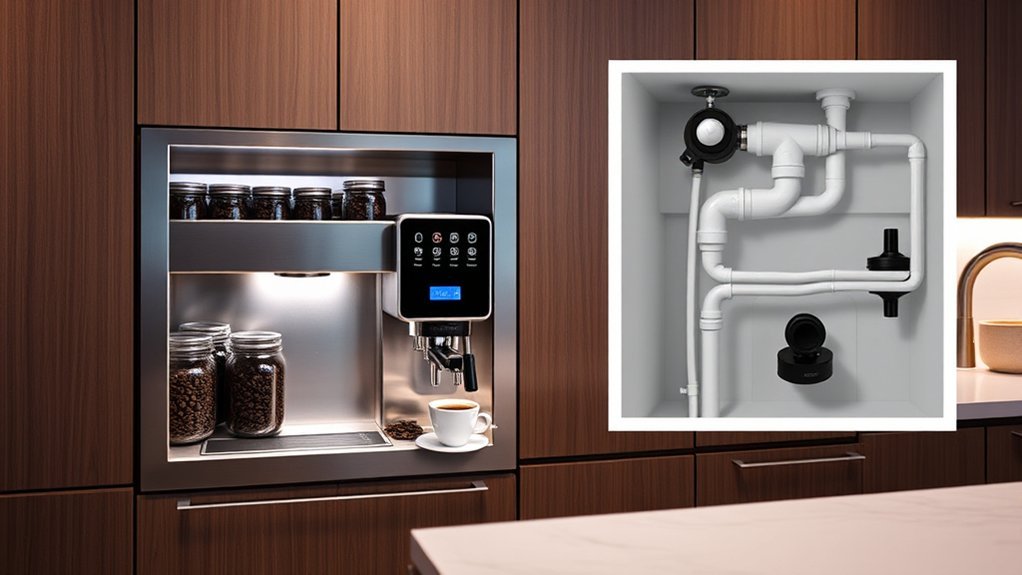
A built-in coffee maker is a sophisticated appliance that integrates seamlessly into your kitchen cabinetry, maximizing counter space and enhancing your coffee brewing experience. It works by automatically grinding beans, heating water, and brewing beverages like espresso or cappuccino, all while offering customizable settings. Installation requires proper plumbing and electrical connections, along with adequate space. To guarantee peak performance and longevity, it’s essential to understand maintenance practices and common troubleshooting techniques, which you’ll discover next.
Key Takeaways
- A built-in coffee maker is an integrated kitchen appliance that offers various coffee beverages while saving counter space.
- It features an internal grinder, programmable settings, and automatic cleaning for optimal brewing and maintenance.
- Installation requires adequate ventilation, plumbing connections, and a dedicated electrical outlet for seamless operation.
- Proper setup involves ensuring the machine fits within cabinetry dimensions and meets plumbing and electrical requirements.
- Regular maintenance includes cleaning components, monitoring for mineral buildup, and replacing filters to ensure consistent performance.
What Is a Built-In Coffee Maker?
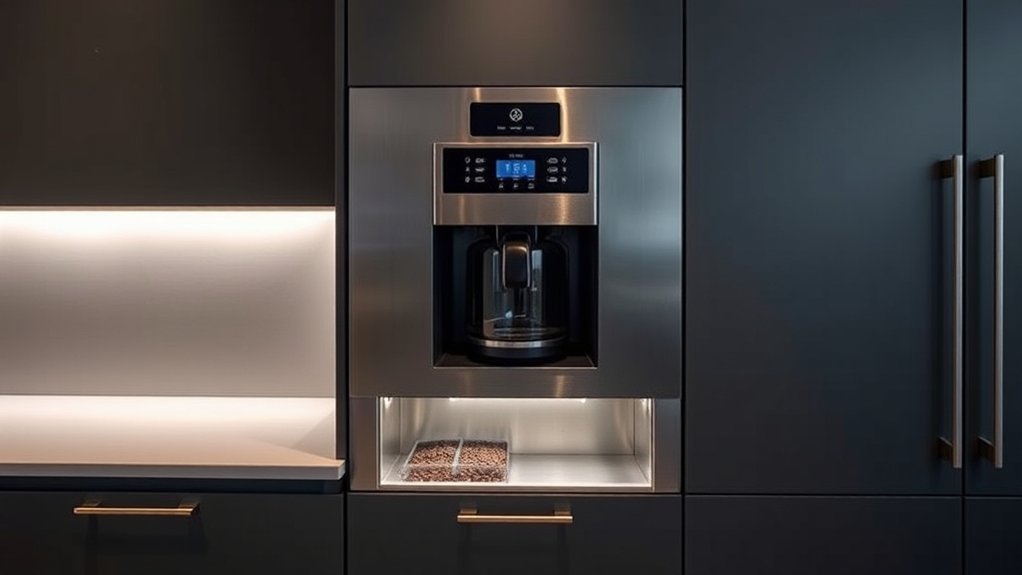
A built-in coffee maker is an innovative kitchen appliance seamlessly integrated into cabinetry, designed to enhance your coffee brewing experience while saving valuable counter space.
It offers built-in advantages, such as a variety of beverage options, allowing you to brew espresso, cappuccino, and more at the touch of a button. You’ll appreciate customizable settings for grind size, coffee strength, and milk frothing, catering to your unique preferences.
With automatic cleaning and maintenance features, it guarantees peak performance with minimal effort. Additionally, the sleek design contributes to your kitchen’s coffee aesthetics, creating a sophisticated look that elevates the overall ambiance.
Automatic cleaning ensures optimal performance with ease, while the sleek design enhances your kitchen’s sophisticated ambiance.
For installation, proper electrical and plumbing connections are essential, so it’s wise to hire a professional plumber or electrician.
How Does a Built-In Coffee Maker Work?
A built-in coffee maker operates through a combination of key components and a precise brewing process.
You’ll connect it to your home’s plumbing for continuous water supply, while the integrated grinder guarantees fresh coffee grounds.
Understanding installation considerations is essential to maximize functionality and efficiency in your kitchen.
Key Components Overview
Built-in coffee makers are sophisticated appliances designed to deliver high-quality coffee with convenience and efficiency.
Understanding their key components helps you appreciate how they work:
- Whole Bean Grinder: Guarantees freshly ground coffee for enhanced flavor and aroma.
- Programmable Settings: Lets you select different beverage types, brewing strengths, and cup sizes.
- Dual Spouts: Allows you to prepare two identical beverages simultaneously for convenience.
- Automatic Cleaning Programs: Maintains hygiene and reduces your maintenance efforts.
- Removable Components: Features like water tanks and drip trays simplify refilling and cleaning.
These components work together, leveraging various grinder types and customizable brewing strengths to tailor your coffee experience.
Brewing Process Explained
To brew a perfect cup of coffee, the built-in coffee maker employs a precise sequence of steps that optimize flavor extraction.
First, it uses an internal grinder to freshly grind your coffee beans, ensuring maximum freshness. You can customize your brewing experience through programmable settings, adjusting coffee strength, temperature, and beverage type.
Once set, the machine heats water to the ideal temperature, then forces it through the coffee grounds using advanced brewing techniques, efficiently extracting flavor and aroma.
Many models feature dual spouts, allowing you to brew two identical beverages simultaneously, which is great for entertaining.
After brewing, automatic cleaning and rinsing programs simplify maintenance, ensuring consistent performance over time.
Enjoy your expertly crafted coffee!
Installation Considerations Explained
When considering installation for a built-in coffee maker, several key factors come into play to guarantee perfect functionality and aesthetic integration.
You’ll need to make sure proper ventilation and address plumbing considerations for a seamless experience. Here are some essential points to keep in mind:
- Assess the space for adequate clearance around the unit.
- Make sure a dedicated electrical outlet is within reach.
- Install a water supply line for continuous access.
- Verify ventilation requirements to prevent overheating.
- Follow manufacturer guidelines for best setup.
Essential Features to Look for in Built-In Coffee Makers
When choosing a built-in coffee maker, consider the beverage variety options it offers; customizable settings can enhance your coffee experience.
Look for user-friendly controls, such as intuitive interfaces with color displays, to streamline your brewing process.
Additionally, easy maintenance features like automatic cleaning programs will help you keep your machine in top shape with minimal effort.
Beverage Variety Options
As you explore the world of built-in coffee makers, you’ll quickly realize that beverage variety is an essential feature to reflect upon.
The ability to customize your drinks enhances your coffee experience by catering to diverse coffee preferences. Here are key aspects to contemplate:
- Multiple Beverage Options: Access up to 10 different drinks, including espresso, cappuccino, and americano.
- Customizable Settings: Adjust grind levels and coffee strength for personalized taste.
- Recipe Storage: Some models can store up to eight unique beverage recipes for convenience.
- Adjustable Dispensers: Accommodate various cup sizes effortlessly.
- One Touch Feature: Brew one or two cups quickly, enhancing ease of use.
These features guarantee you enjoy a wide range of beverages tailored to your specific desires.
User-Friendly Controls
User-friendly controls are essential for an enjoyable experience with built-in coffee makers, and you’ll want to look for several key features.
Many models now offer touch interfaces, which simplify operation and make adjusting settings intuitive. A color LCD display enhances this experience, providing clear visualization of options and brew settings.
Customizable settings, such as adjustable coffee strength, allow you to tailor each cup to your taste preferences, ensuring satisfaction every time. Additionally, One Touch features enable quick preparation of one or two cups with minimal effort, perfect for busy mornings or entertaining guests.
Finally, easyclick systems for milk attachments streamline the frothing process, making it convenient to create a variety of milk-based beverages with ease.
Easy Maintenance Features
Maintaining a built-in coffee maker doesn’t have to be a chore, especially with the right features designed to simplify upkeep.
Look for these easy maintenance features:
- Automatic cleaning programs that handle rinsing and cleaning with minimal effort.
- Removable components, like the water tank and drip tray, for straightforward cleaning.
- Mineral build-up monitoring systems that alert you when descaling is needed, ensuring peak performance.
- Easyclick milk systems that allow for quick attachment and removal of milk containers, cutting down on cleaning time.
- Customizable settings for coffee strength and grind size that require minimal maintenance due to user-friendly controls.
These features not only enhance convenience but also help extend the lifespan of your coffee maker.
Benefits of Installing a Built-In Coffee Maker
Installing a built-in coffee maker not only elevates your kitchen’s aesthetic but also maximizes functionality by saving valuable counter space.
These appliances seamlessly integrate into your cabinetry, enhancing your kitchen’s design aesthetics while providing a sleek, modern look.
With customizable settings, you can easily prepare a variety of beverages, from espresso to cappuccinos, tailored to your preferences.
Advanced models, like those from Thermador and Wolf, feature built-in grinders and adjustable strength settings, ensuring a personalized coffee experience.
The one-touch operation simplifies the brewing process, making it user-friendly for everyone.
Additionally, built-in coffee makers often include self-cleaning features, minimizing maintenance efforts and ensuring peak performance over time, making them a smart choice for space optimization and convenience.
How to Choose the Best Built-In Coffee Maker for Your Needs?
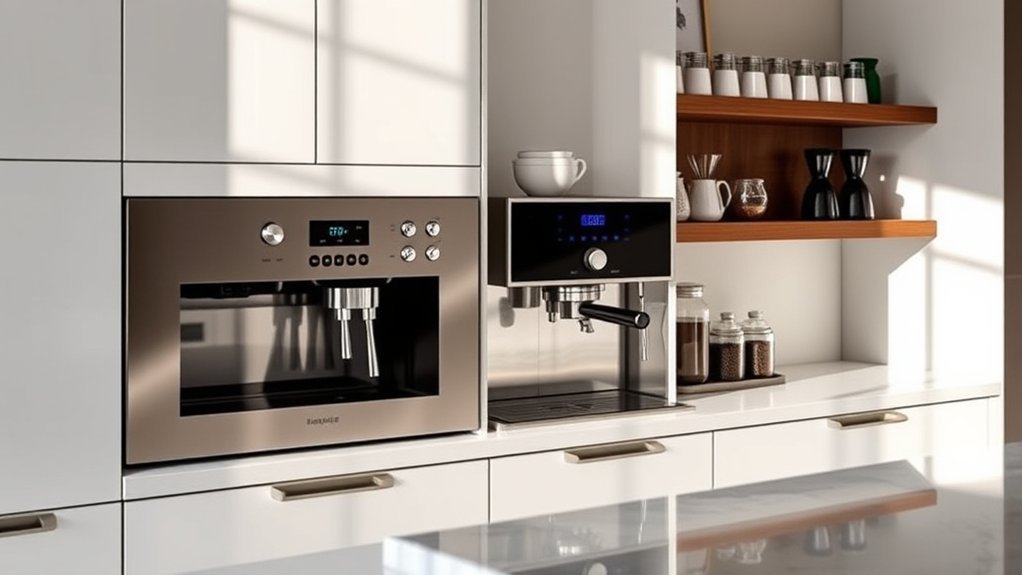
How can you guarantee that you select the perfect built-in coffee maker for your kitchen?
Start by evaluating key features that align with your brewing techniques and preferences.
Consider the following:
- Beverage Variety: Look for models that offer multiple drink options; some brands allow for up to 10 types.
- Size and Dispensing: Confirm the machine fits your space and can accommodate various cup sizes.
- Advanced Features: Dual spouts for simultaneous brewing, like in the Thermador, enhance guest entertaining.
- Maintenance Ease: Opt for systems with automatic cleaning features, such as the Ma Coffee System.
- Customization: Choose a model with adjustable grind settings and coffee strength, as seen in the Wolf Coffee System.
Installation Process for Built-In Coffee Makers
Choosing the right built-in coffee maker is just the beginning; proper installation guarantees it performs at its best. Start by confirming you have a dedicated space within your cabinetry that meets the machine’s dimensions and allows for ventilation.
Here are some essential installation tips:
| Task | Details |
|---|---|
| Water Line Connection | Verify plumbing requirements are met for direct supply. |
| Electrical Outlet | Use a dedicated outlet for safe power needs. |
| Leveling | Proper leveling prevents malfunction. |
| Manufacturer Guidelines | Follow specific instructions for accurate placement. |
How to Maintain Your Built-In Coffee Maker?

Maintaining your built-in coffee maker is essential for guaranteeing it consistently delivers the best flavor and performance.
Regular upkeep prevents coffee oil and mineral buildup that can compromise your brewing experience.
Here are key maintenance tips:
- Clean the drip tray and water reservoir frequently to avoid residue.
- Utilize the automatic rinsing and cleaning programs for hygiene.
- Monitor and descale your machine periodically, especially when alerted to mineral buildup.
- Replace water filters as the manufacturer recommends to guarantee quality brewing water.
- Wipe down the exterior and control panel regularly to prevent sticky residues.
Troubleshooting Common Issues With Built-In Coffee Makers
When faced with issues in your built-in coffee maker, pinpointing the root cause is essential for restoring its functionality and guaranteeing a satisfying brewing experience.
If your machine isn’t brewing, first check that the water tank is filled and properly seated; lack of water is a common issue.
Regular coffee maker troubleshooting involves keeping the coffee grinder clean to prevent clogs that can affect your brew’s quality.
For weak or sour coffee, adjust the grind settings or coffee strength options.
Don’t ignore mineral buildup; if alerted, descale your machine to maintain performance.
Finally, for milk frothing issues, verify the milk container is attached correctly and the frothing system is clean, following these maintenance tips for ideal results.
Frequently Asked Questions
What Is the Average Lifespan of a Built-In Coffee Maker?
A built-in coffee maker typically has an average durability of 5 to 15 years, depending on usage and maintenance. Regular cleaning and care can greatly enhance your coffee machine’s lifespan, ensuring consistent performance throughout its years.
Can I Install a Built-In Coffee Maker Myself?
You can install a built-in coffee maker yourself, but it’s like crafting a fine piece of furniture; precision matters. Consider installation tips and DIY considerations carefully to guarantee a seamless, functional addition to your kitchen.
Are Built-In Coffee Makers Energy-Efficient?
Yes, built-in coffee makers often provide energy savings through advanced consumption efficiency features. They typically use less power than traditional models, allowing you to enjoy your coffee while reducing your overall energy footprint.
Do Built-In Coffee Makers Require Special Maintenance Supplies?
Think of your built-in coffee maker as a cherished vintage car; it needs the right maintenance tips and cleaning supplies to keep running smoothly. You don’t need anything special, just regular descaling and cleaning solutions.
What Brands Are Most Reliable for Built-In Coffee Makers?
Bosch models and Miele options are among the most reliable built-in coffee makers. Their advanced technology guarantees consistent brewing quality, while durable construction minimizes maintenance needs, making them excellent choices for coffee enthusiasts like you.
Conclusion
To conclude, a built-in coffee maker can elevate your kitchen experience, blending convenience with style. As you navigate your options, remember that choosing the right model is akin to selecting the perfect blend of coffee beans—each choice impacts the final brew. With proper installation and maintenance, you’ll enjoy fresh coffee at your fingertips, just like a barista in a bustling café. Embrace this modern marvel, and transform your daily routine into a gourmet experience.


