

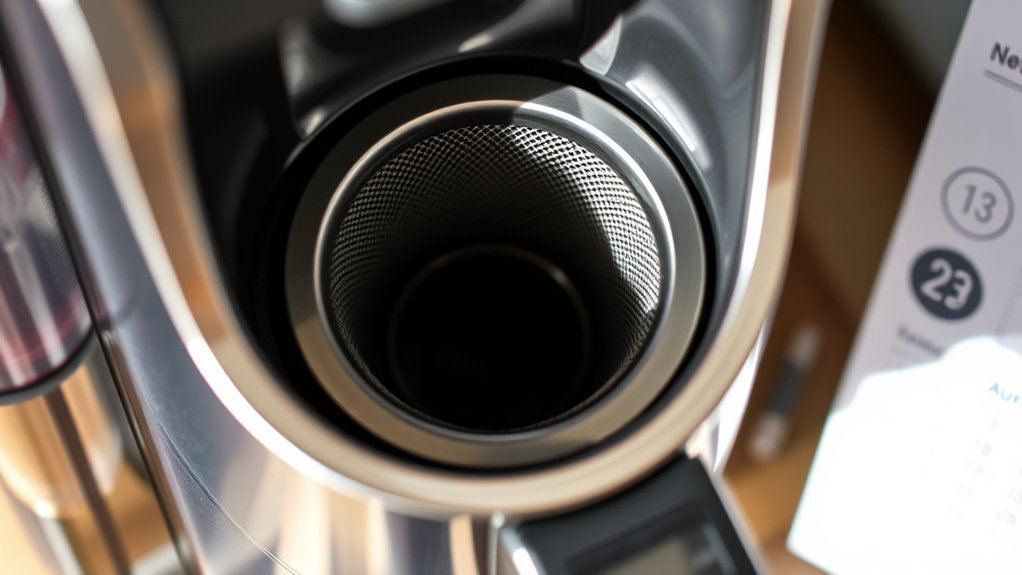
A coffee maker water filter purifies your tap water by removing impurities like chlorine and sediments, enhancing your brewing experience and preventing scale buildup in your machine. It typically needs replacing every 60 to 90 days, depending on your usage. Regular changes not only protect your coffee maker but also guarantee a consistent flavor profile. To learn more about different filter types and maintenance tips, keep exploring this topic.
Key Takeaways
- A coffee maker water filter purifies tap water to enhance the brewing experience and improve coffee flavor.
- It uses activated carbon and fine mesh systems to remove impurities like chlorine and sediments, protecting machines from scale buildup.
- Regular replacement is essential; filters should be changed every 60 to 90 days based on usage to maintain optimal performance.
- High usage environments may require more frequent changes, as often as every three weeks, to prevent mineral buildup affecting taste.
- Monitoring filter lifespan with tools like an Aqua Meter can help ensure timely replacements and prevent costly repairs.
What Is a Coffee Maker Water Filter and How Does It Work?

A coffee maker water filter is an essential component designed to enhance your brewing experience by purifying tap water.
Its filter functionality primarily relies on activated carbon and fine mesh filtration systems. This filtration process effectively removes impurities like chlorine, sediments, and other unwanted substances, ensuring that your coffee tastes better while protecting your machine from scale buildup.
To maintain ideal performance, it’s vital to replace the filter regularly, typically every 60 to 90 days, based on usage and water quality. Advanced coffee makers often come equipped with indicators or built-in meters to alert you when it’s time for a replacement.
Different Types of Coffee Maker Water Filters: Pros and Cons
When choosing a coffee maker water filter, understanding the various types available can help you make an informed decision. Here’s a quick overview of common filter types, their materials, and compatibility:
| Filter Type | Pros & Cons |
|---|---|
| Activated Carbon | Affordable, improves taste; requires replacement every 2-3 months. |
| Reverse Osmosis | Highest purification level; more expensive and complex installation. |
| Proprietary Filters | Better compatibility with specific brands; typically pricier than universal options. |
Each filter type offers unique benefits, impacting your coffee’s flavor and machine performance. Consider your coffee maker’s filter compatibility and your budget when selecting the right filter materials for your needs.
Why Is Water Quality Important for Coffee Brewing?
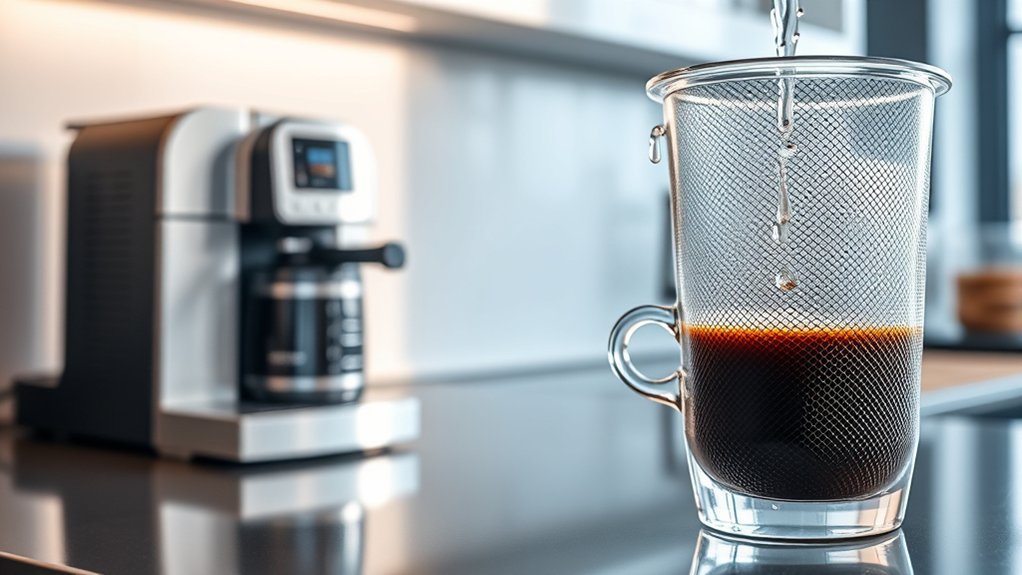
Water quality is essential for brewing coffee because it directly impacts flavor and aroma; impurities can create unpleasant tastes.
Additionally, using poor-quality water can lead to mineral buildup in your coffee maker, shortening its lifespan and requiring expensive repairs.
Flavor Profile Enhancement
Many coffee enthusiasts mightn’t realize that the quality of water plays an essential role in flavor profile enhancement during brewing.
Impurities in water can mask the coffee’s true taste, while hard water contributes to mineral buildup in your coffee maker, interfering with brewing temperature and flavor extraction.
Using filtered water removes chlorine, sediment, and other contaminants, resulting in a cleaner taste and enhanced aroma in your brew.
Regularly changing water filters guarantees that you maintain a consistent flavor profile; stale or contaminated water can lead to off-tasting coffee.
Studies show that filtered water greatly improves the overall sensory experience, making your coffee smoother and more enjoyable.
Prioritizing water quality is key to revealing the full potential of your coffee.
Equipment Longevity Assurance
Maintaining high-quality water isn’t just about enhancing flavor; it’s also vital for the longevity of your coffee brewing equipment. Hard water and lime scale buildup can wreak havoc on your machines, leading to costly repairs and reduced lifespan.
Regular filter maintenance is essential for peak performance, as it prevents impurities from accumulating. Depending on your usage, you might need to change filters every three weeks in high-usage environments or up to once a year for lighter use.
Installing an Aqua meter can help you track filter lifespan effectively, ensuring timely replacements.
Prioritizing water quality not only improves your coffee’s taste but also supports your equipment care, ultimately safeguarding your investment in brewing technology.
Contamination Prevention Measures
Maintaining high water quality is essential for brewing a great cup of coffee, as impurities can greatly alter flavor and aroma profiles.
To maintain ideal quality, consider these contamination prevention measures:
- Regularly replace your coffee maker water filter to avoid filter contaminants and maintain a clean brew.
- Assess local water quality to determine hardness levels, which influence replacement frequency.
- Track filter lifespan with an aqua meter for a precise quality assessment, preventing costly repairs from scale buildup.
- Keep an eye out for common contaminants like chlorine, sediment, and heavy metals that can compromise your coffee’s purity.
How Often to Replace Your Coffee Maker Filter?

When it comes to replacing your coffee maker filter, timing is vital for peak performance and taste. The minimum recommended filter replacement frequency is once a year, but this can change based on water hardness and usage volume.
If you’re in a high usage environment, consider replacing your filter every three weeks to prevent bacteria buildup and guarantee maximum brewing. Conversely, in lower volume settings, you can stick to annual changes without sacrificing quality.
Regular replacements are important to avoid scale buildup, which affects coffee taste and odor. To help track your filter’s lifespan, consider installing an Aqua Meter. It provides reminders for timely replacements, minimizing the risk of overchanging or underchanging your filters.
How to Know When to Change Your Coffee Maker Water Filter?
Recognizing the signs that it’s time to change your coffee maker water filter is key to maintaining ideal brewing conditions.
Pay attention to these filter lifespan indicators:
- Frequency of Use: If you brew coffee frequently, consider changing the filter every 3 weeks.
- Water Quality: Notice any changes in taste or odor, signaling impurities.
- Scheduled Maintenance: Set reminders to change the filter at least once a year, adjusting for local water hardness.
- Buildup Signs: Look for limescale or hard water buildup, which can impair performance.
Why You Should Consider a Water Filter Monitoring System?
Considering a water filter monitoring system can greatly enhance your coffee brewing experience.
An Aqua Meter tracks water quality and filter lifespan, providing precise data on when to replace filters based on actual usage. This eliminates the uncertainty of replacement schedules, preventing costly repairs caused by scale buildup or bacteria growth.
With a countdown to filter changes, you reduce the risk of overchanging or underchanging filters, ensuring maximum machine performance. Regular monitoring can also enhance espresso quality by maintaining filtration effectiveness, improving taste and odor.
In addition, installing a filter monitoring system leads to better resource management, ensuring that filters are used efficiently and changed only when necessary. This proactive approach keeps your coffee maker running smoothly and efficiently.
Essential Maintenance Tips for Your Coffee Maker and Water Filter
To guarantee your coffee maker and water filter perform at their best, regular maintenance is essential.
Implementing effective maintenance routines will enhance both performance and flavor. Here are four essential tips:
- Change your water filter at least once a year or every 3 weeks in high usage environments to prevent hard water buildup.
- Monitor filter lifespan using an Aqua Meter to avoid costly repairs from scale accumulation.
- Choose quality filters, like the Vivo C300, to guarantee peak taste and prevent clogging.
- Clean your coffee maker regularly to prevent bacteria buildup, safeguarding both the safety and flavor of your coffee.
Frequently Asked Questions
Can I Use Tap Water Instead of Filtered Water for Coffee Brewing?
You can use tap water for brewing coffee, but its quality affects the taste. If your tap water has high mineral content or impurities, it might negatively impact your coffee’s flavor profile. Consider filtering for better results.
What Happens if I Don’T Replace the Water Filter?
If you don’t replace the water filter, water quality declines, leading to sediment buildup and potential taste issues in your coffee. Filters have a lifespan; ignoring replacements can negatively impact your brew and machine performance.
Are There Any Health Benefits to Using a Water Filter?
“An ounce of prevention is worth a pound of cure.” By using a water filter, you gain health advantages through effective water purification, reducing contaminants that could affect your well-being and enhance your coffee’s flavor.
Can I Clean and Reuse My Coffee Maker Water Filter?
Yes, you can clean and reuse your coffee maker water filter. Regular filter maintenance extends its lifespan. Consider reusable options, as they’re designed for multiple uses, providing both convenience and cost-effectiveness while ensuring your coffee tastes great.
Do All Coffee Makers Require a Water Filter?
Not all coffee makers require a water filter, but using one is like adding a secret ingredient to elevate your brew. Filter benefits include enhancing flavor and prolonging your machine’s life, especially for various coffee types.
Conclusion
So, if you think your coffee maker’s water filter is just a fancy accessory, think again! It’s not merely a decorative piece but an essential player in your coffee’s flavor symphony. Neglect it, and you might as well be brewing with pond water. Remember, a clean filter means a clean cup. Stay vigilant—replace it regularly, or risk turning your morning joe into a chemistry experiment gone wrong. Now that’s a bitter brew you don’t want!


