


A coffee maker water reservoir is the component that holds the water needed for brewing coffee. Its proper care is essential for peak performance and quality. Regular cleaning prevents mineral buildup, eliminates harmful bacteria, and maintains the coffee’s flavor. You should clean it monthly using a vinegar-water solution or descaler. Monitor for signs like residue buildup or unpleasant tastes to know when it needs attention. Discover more tips to keep your coffee maker running efficiently.
Key Takeaways
- The coffee maker water reservoir holds water needed for brewing coffee, ensuring consistent and efficient operation of the machine.
- Regular cleaning prevents mineral buildup and grime, maintaining coffee quality and machine performance.
- A mixture of equal parts white vinegar and water effectively cleans the reservoir and eliminates old water residues.
- Monthly maintenance and thorough rinsing after cleaning enhance hygiene and prevent unpleasant tastes in brewed coffee.
- Signs of needed cleaning include visible residue, unpleasant coffee taste, and excess water remaining after brewing.
How to Clean Your Coffee Maker Water Reservoir Effectively

Cleaning your coffee maker’s water reservoir is essential for maintaining both the machine’s performance and the quality of your brew.
To effectively clean the reservoir, use a mixture of equal parts white vinegar and water. Pour this solution into the reservoir and let it sit for 15-20 minutes to break down mineral buildup and grime.
After soaking, rinse the reservoir thoroughly with fresh water, repeating the process if necessary to eliminate any vinegar taste. For hard-to-reach areas, employ specialized brushes to guarantee a thorough clean.
Incorporating these cleaning techniques into your monthly maintenance schedule will prolong your coffee maker’s lifespan and enhance your coffee’s flavor, ensuring every cup is as good as it can be.
Why You Should Clean Your Reservoir Regularly
Maintaining a clean coffee maker water reservoir isn’t just about aesthetics; it greatly impacts your coffee’s quality and your machine’s performance.
Regular reservoir maintenance guarantees:
- Prevention of mineral buildup: Regular cleaning prevents the accumulation of deposits that can affect brewing.
- Bacteria control: A clean reservoir reduces the risk of harmful bacteria, guaranteeing safe coffee preparation.
- Optimal flavor: Cleaning every month helps preserve the coffee’s taste by eliminating old water residues that can impart unwanted flavors.
- Improved performance: Neglecting cleaning can lead to blockages and inefficient brewing, affecting your coffee quality.
Best Cleaning Solutions for Coffee Maker Reservoirs
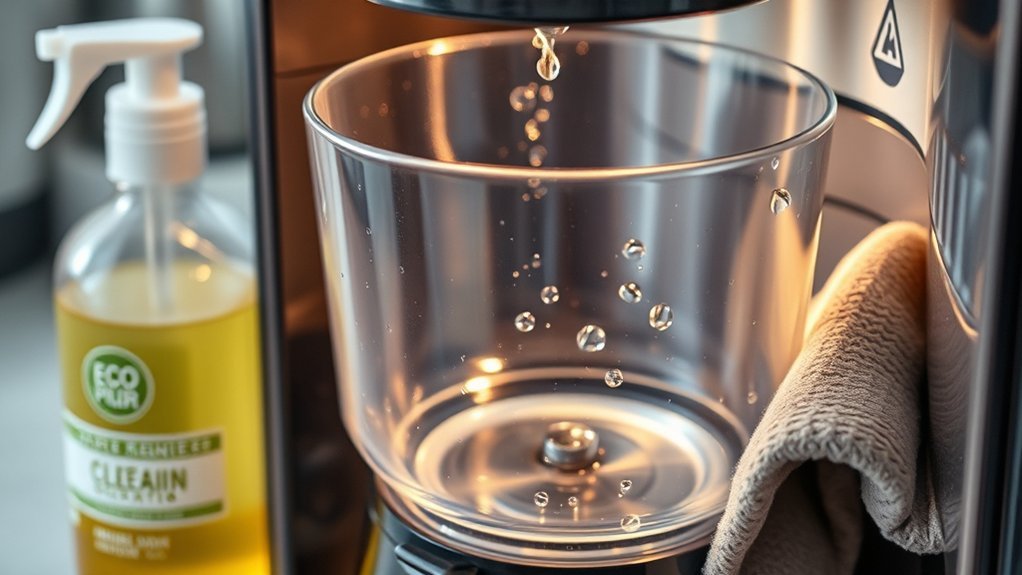
To keep your coffee maker reservoir in top shape, you’ll want to choose the best cleaning solutions available. A mixture of equal parts white vinegar and water is highly effective for removing mineral buildup and grime. This solution should be used regularly, ideally every month, to maintain peak performance and flavor.
If you prefer commercial products, specialized coffee machine descaler liquids serve as excellent vinegar alternatives, offering convenience and effectiveness. For manual cleaning, consider using a sponge or E-Cloth to reach hard-to-clean areas within the reservoir.
After cleaning, it’s vital to rinse the reservoir thoroughly to eliminate any residue that could affect the taste of your future brews. Regular maintenance will guarantee your coffee remains delicious and fresh.
Tips for Preventing Build-Up and Maintaining Reservoir Hygiene
While it might be tempting to overlook the water reservoir after brewing your morning coffee, neglecting its upkeep can lead to unwanted buildup and hygiene issues.
To maintain ideal hygiene and extend your coffee maker’s lifespan, follow these tips for preventive maintenance:
- Clean the reservoir monthly with a mixture of equal parts white vinegar and water to remove mineral buildup.
- Empty the reservoir after each use to prevent coffee residue from hardening.
- Rinse thoroughly with fresh water post-cleaning to eliminate any vinegar taste.
- Use specialized brushes for hard-to-reach areas inside the reservoir to guarantee a thorough clean.
How to Recognize When Your Reservoir Needs Cleaning?

You can recognize when your reservoir needs cleaning by checking for visible residue buildup inside.
If your coffee tastes off or has an unpleasant flavor, it’s often a sign that the reservoir hasn’t been properly cleaned.
Address these issues promptly to guarantee your coffee remains fresh and enjoyable.
Visible Residue Buildup
Recognizing visible residue buildup in your coffee maker’s water reservoir is vital for maintaining the quality of your brew.
Look out for these indicators of residue types that signal it’s time to clean:
- Dark spots on the reservoir walls.
- A cloudy film forming inside the reservoir.
- Hard mineral deposits accumulating over time.
- Difficulty cleaning corners and sides due to grime.
If you notice any of these signs, it’s important to clean your reservoir.
A routine cleaning frequency, ideally once a month, can prevent excessive buildup and guarantee peak performance.
Regular inspections not only enhance the hygiene of your coffee maker but also contribute to the longevity of the appliance, keeping your coffee tasting fresh.
Unpleasant Coffee Taste
Visible residue buildup in the water reservoir can directly impact the taste of your coffee. If you’re experiencing bitter coffee or a sour aftertaste, mineral deposits or old coffee residue might be to blame.
Check for a noticeable film or discoloration inside the reservoir; these are clear signs it needs cleaning. Regularly inspect for black marks, as they can harbor bacteria and degrade coffee quality.
Additionally, if you notice a persistent aftertaste, leftover cleaning solutions might require a thorough rinsing. An unusual amount of leftover water post-brewing can also signal a blockage, indicating that the reservoir and other components need cleaning.
Taking these steps guarantees your coffee tastes fresh and enjoyable.
Common Issues With Coffee Maker Reservoirs and How to Fix Them
Although coffee maker reservoirs are essential for brewing your favorite beverage, they can develop several issues over time that impact performance and taste.
Here are common problems and how to address them:
- Mineral Buildup: Accumulation can affect taste; clean regularly with a vinegar-water solution.
- Black Marks: These indicate grime; use a soft brush to reach corners during cleaning.
- Excess Water: If water lingers after brewing, check for reservoir blockages in the spray head or brew basket.
- Internal Tubing: Inspect for blockages; routine maintenance helps prevent persistent issues.
FAQs About Coffee Maker Reservoir Care
What steps should you take to guarantee your coffee maker reservoir remains in top condition?
First, consider the reservoir materials; some may require specific cleaning methods. Regular cleaning frequency is essential—aim for at least once a month to prevent mineral buildup and bacteria.
A simple mixture of equal parts white vinegar and water works effectively; soak the reservoir for 15-20 minutes. After soaking, rinse thoroughly with fresh water to remove any residual vinegar taste, ensuring your coffee remains flavorful.
Additionally, inspect the reservoir regularly for any blockages or buildup that could affect performance.
Frequently Asked Questions
Can I Use Distilled Water in My Coffee Maker Reservoir?
Yes, you can use distilled water in your coffee maker reservoir. Distilled water benefits include reduced mineral buildup and enhanced coffee flavor, ensuring a cleaner brew that highlights the true taste of your favorite beans.
How Often Should I Replace My Coffee Maker Reservoir?
You should replace your coffee maker reservoir every six months for ideal reservoir maintenance. Regularly check for cracks or buildup, as these can affect your coffee’s taste and the machine’s overall performance.
Are There Any Specific Brands of Reservoirs Recommended?
For coffee maker reservoirs, consider brands like Cuisinart, Breville, and Keurig. These brands offer durable reservoirs, easy-to-clean features, and precise measurements, ensuring you enjoy consistent brewing with every cup you make.
What Materials Are Coffee Maker Reservoirs Usually Made From?
Coffee maker reservoirs are typically made from durable plastic, although you might find glass and stainless steel alternatives. These materials guarantee longevity and resistance to staining, while also being lightweight for easy handling during refills.
Can a Damaged Reservoir Affect Coffee Taste?
A damaged reservoir can wreak havoc on your coffee quality. You’ll notice taste differences, from stale to downright bitter. So, unless you enjoy mystery brews, keep that reservoir in tip-top shape!
Conclusion
To keep your coffee maker running smoothly, remember that about 60% of coffee drinkers neglect to clean their water reservoirs regularly. By incorporating routine maintenance, you can greatly enhance the taste of your brew and extend the lifespan of your machine. Regular cleaning, using effective solutions, and understanding when to address issues will guarantee your coffee maker remains in top condition. Stay proactive, and you’ll enjoy consistently delicious coffee every time.