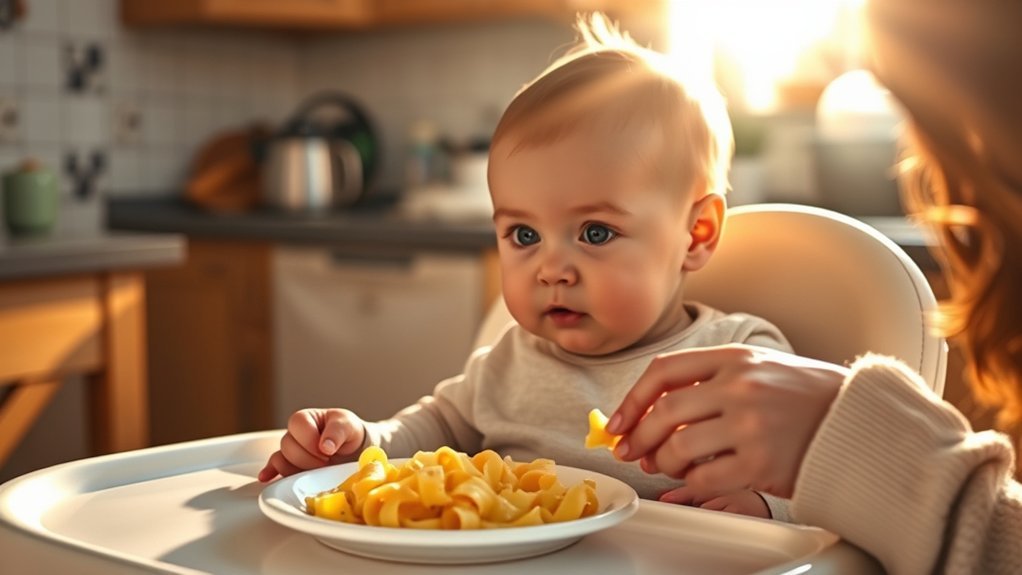
Most babies can try pasta at about 6 months old, once they are developmentally ready for solid foods. The pasta should be cooked until very soft and served in a shape, size, and texture your baby can manage. Age is only a guide, so base each serving on your child’s current feeding skills.
Quick Answer
Babies can usually eat pasta from about 6 months, provided they can sit upright with support, control their head and neck, reach for food, and swallow it instead of pushing it out. Cook pasta well beyond al dente, adapt its shape to your baby’s skills, and supervise every bite.
Key Takeaways
- Most babies can try pasta at about 6 months when they show the signs of readiness for solid foods.
- Cook pasta until it is soft enough to flatten easily between your fingers or mash with a fork.
- Choose the serving style according to your baby’s grasp and eating ability rather than following a rigid shape-by-age schedule.
- Wheat is a common food allergen, and some pastas also contain egg, so check the ingredient label before serving.
- Keep your baby upright and directly supervised, and learn the difference between gagging and choking.
- Pair pasta with protein, vegetables, and healthy fat instead of treating plain pasta as a complete meal.
At a Glance
| Time Required | About 10–15 minutes, depending on the pasta shape |
| Difficulty | Easy, with close supervision |
| Tools Needed | Saucepan, colander, fork, knife or kitchen shears, and a supportive highchair |
| Cost | Low; varies by pasta type and toppings |
Warning: Pasta can still become a choking hazard if it is firm, clumped together, served in an unsuitable shape, or eaten without supervision. Seat your baby upright, stay within arm’s reach, and do not let a baby eat while lying down, crawling, walking, riding in a vehicle, or playing.
Medical Note: Ask your pediatrician or feeding specialist for individual advice if your baby was born prematurely or has poor head control, delayed oral-motor skills, frequent coughing during meals, difficulty swallowing, poor growth, severe eczema, or a known food allergy.
Best Pasta Shapes and Serving Styles for Different Stages
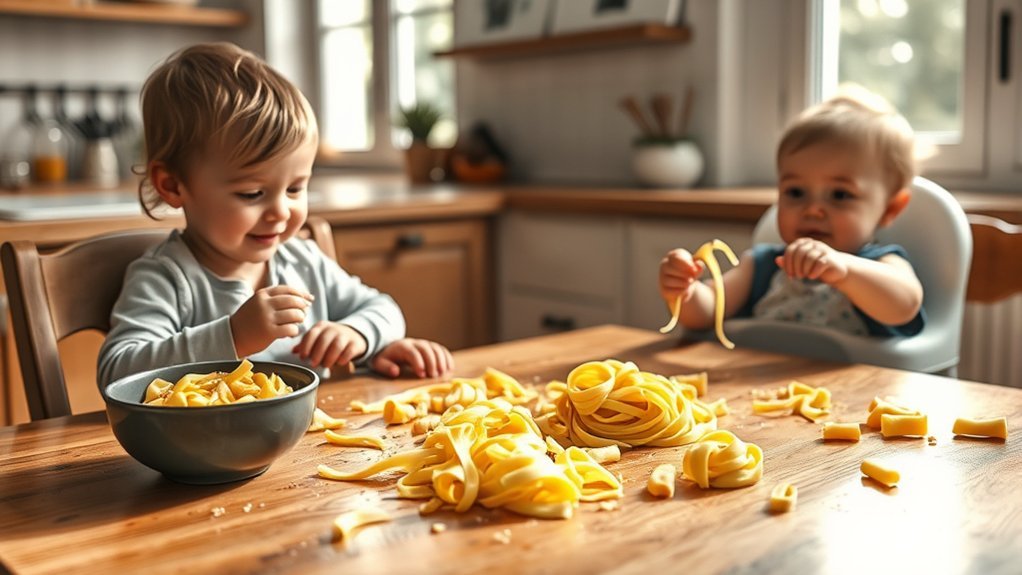
The best pasta shape depends more on your baby’s feeding skills and the pasta’s softness than on an exact birthday. The current federal dietary guidance recommends textures that match each child’s development rather than a fixed food-shape calendar.
| Approximate Stage | Practical Serving Ideas |
|---|---|
| Starting solids, often around 6 months | Mash or finely chop very soft pasta into a thick sauce for spoon-feeding. A baby who already self-feeds may manage one very soft, wide strip or large ridged piece that is easy to grasp and collapses under gentle pressure. |
| Developing a pincer grasp, often around 9 months | Offer small, soft pieces or shapes such as well-cooked rotini, fusilli, bow tie, macaroni, or chopped noodles. Thick tubes may be cut lengthwise or into shorter pieces. Tiny pasta such as orzo can be mixed into a thick sauce and offered on a preloaded spoon. |
| More experienced eaters, often 12 months and older | Serve soft bite-sized shapes or short sections of long, thin noodles. Continue cutting slippery or difficult-to-manage noodles and supervise throughout the meal. |
Age can suggest a starting point, but your baby’s posture, grasp, chewing movements, swallowing ability, and the food’s texture determine how pasta should be served.
There is no single “best” pasta shape for every baby. Large lasagna strips, wide noodles, spaghetti, rotini, bow tie pasta, macaroni, and orzo can all be adapted, but each serving must be very soft and appropriate for the child in front of you.
When Can Babies Start Eating Pasta?
According to the current Dietary Guidelines for Americans, 2025–2030, infants may begin solid foods at about 6 months. Breast milk or iron-fortified infant formula should remain the main source of nutrition up to 12 months while complementary foods are introduced.
Look for several signs of readiness together. Your baby should generally be able to:
- Sit upright alone or with support.
- Control their head and neck.
- Reach for or grasp food and other objects.
- Bring objects to their mouth.
- Open their mouth when food is offered.
- Move food from the front of the mouth toward the back to swallow.
- Swallow food instead of consistently pushing it back out with the tongue.
A baby does not need teeth to eat well-cooked pasta. Babies can mash soft foods with their gums, but the food still must be prepared in a manageable texture.
Pro Tip: Begin with a small serving and follow your baby’s appetite cues. Turning away, closing the mouth, dropping food repeatedly, or becoming upset may mean the baby is finished. There is no need to persuade a baby to clear the tray or bowl.
How to Prepare Pasta Safely for Your Baby
- Check the ingredients. Look for wheat, egg, milk, soy, or other allergens before cooking.
- Cook it beyond al dente. Follow the package directions, then continue cooking until the pasta is much softer than an adult serving.
- Test the texture. The pasta should mash easily with a fork or flatten between your thumb and forefinger without springing back.
- Adapt the shape. Mash, chop, cut lengthwise, or shorten the pasta according to your baby’s feeding method and skills.
- Add moisture. Mix dry or sticky pasta with an age-appropriate sauce, olive oil, unsalted butter, plain full-fat yogurt, or another tolerated moist ingredient.
- Cool it before serving. Check the temperature carefully, especially inside thick pasta tubes or baked pasta.
- Seat and supervise. Keep your baby upright in a supportive highchair and remain close enough to respond immediately.
Avoid serving pasta that has developed a firm skin, dried-out edges, hard baked corners, or dense clumps. Separate tangled noodles before placing them on the tray.
Gagging Versus Choking
Gagging can happen as babies learn to move food around their mouths. It is usually noisy and may include coughing, retching, watery eyes, tongue movement, or a red face. Choking occurs when the airway is partly or completely blocked and requires immediate attention.
| Gagging | Possible Choking |
|---|---|
| Often noisy; the baby may cough, retch, cry, or bring food forward. | The baby may have a weak or absent cough, make little or no sound, or be unable to cry or breathe. |
| The face may become red while the baby continues moving air. | Skin, lips, gums, or nail beds may become pale, gray, or blue, and the baby may become limp. |
Emergency: If your baby cannot breathe, cough effectively, cry, or make sound, call 911 and begin age-appropriate choking first aid if you know how. For an infant, recognized guidance uses back blows and chest thrusts rather than abdominal thrusts. Do not perform a blind finger sweep. Consider taking an infant CPR and first-aid course before starting finger foods.
Nutritional Benefits of Pasta for Infants
Pasta can provide carbohydrates for energy and can help a baby practice handling new textures. Its nutritional value depends on the flour, enrichment, ingredients, serving size, and foods served with it.
Essential Nutrients Provided
- Carbohydrates: Pasta supplies energy, but it should be one part of a varied diet.
- Fiber: Whole-grain and some legume pastas usually provide more fiber than refined pasta. Fiber may support regular bowel movements as part of an adequate overall diet, but pasta alone cannot prevent constipation.
- Iron and B vitamins: Enriched pasta may contain added iron, folic acid, and other B vitamins. Check the Nutrition Facts panel because amounts vary.
- Protein: Wheat pasta contains some protein, while lentil, chickpea, bean, or pea pasta often contains more. These products may also have a firmer texture, so cook them until suitably soft.
Energy Source for Growth
Pasta can contribute useful energy during a period of rapid growth, but plain pasta is not a complete infant meal. Add a protein or iron-rich food, a vegetable or fruit, and an age-appropriate fat when possible.
| Pasta Type | What to Know |
|---|---|
| Whole grain | Usually provides more fiber and whole-grain nutrients, but it may need extra cooking to become soft enough. |
| Enriched | May contain added iron, folic acid, and B vitamins; compare labels. |
| Legume-based | Often higher in protein and fiber, though ingredients, iron content, taste, and texture vary. |
| Regular refined pasta | Provides energy-rich carbohydrates and is often easy to cook to a very soft texture. |
| Vegetable-colored pasta | May add color and variety, but it should not automatically be counted as a full serving of vegetables. |
| Gluten-free | Useful when medically required, but not inherently more nutritious or easier to digest. Compare protein, iron, fiber, and ingredients. |
How to Build a More Balanced Pasta Meal
Try combining well-cooked pasta with one or more of the following:
- Finely minced meat, poultry, fish, egg, tofu, beans, lentils, or smooth bean sauce for protein and iron.
- Soft vegetables such as peas, spinach, zucchini, carrots, pumpkin, or broccoli.
- Tomato, bell pepper, or another vitamin C-rich ingredient alongside plant-based iron sources.
- A small amount of olive oil, avocado, unsalted butter, full-fat plain yogurt, or pasteurized cheese for energy and moisture.
Is Pasta Safe for Babies? What to Know About Allergens
Pasta can be safe for babies who are ready for solids, but its ingredient list may include common allergens. The FDA identifies wheat and egg as major food allergens.
- Wheat: Most conventional pasta is made from durum wheat or semolina.
- Egg: Fresh pasta, egg noodles, filled pasta, and some dried products contain egg, but not every pasta does.
- Milk or soy: These may appear in filled pasta, sauces, cheese powders, or prepared pasta meals.
- Cross-contact: Families managing a diagnosed allergy should follow the product’s allergen and facility statements.
Current federal guidance supports introducing potentially allergenic foods, including wheat and egg, with other complementary foods at about 6 months. For a first exposure, serve a small amount when your baby is healthy and you can observe them. A simple meal that does not combine several unfamiliar allergens can make a reaction easier to identify.
Food-allergy symptoms can begin within minutes or several hours and may include:
- Hives, flushing, itching, or a new rash.
- Swelling of the lips, face, tongue, or throat.
- Repeated vomiting, diarrhea, or abdominal discomfort.
- Coughing, wheezing, hoarse sounds, or difficulty breathing.
- Sudden sleepiness, limpness, dizziness, or loss of consciousness.
Warning: Trouble breathing, throat or tongue swelling, widespread symptoms, blue or gray coloring, sudden limpness, or loss of consciousness may indicate a severe allergic reaction. Call 911 immediately and follow your child’s emergency allergy plan, if one has been prescribed.
Does a Baby Need Gluten-Free Pasta?
Most babies do not need to avoid gluten. A diagnosed wheat allergy, celiac disease, or another medically evaluated condition may require a different pasta. The National Institute of Diabetes and Digestive and Kidney Diseases advises speaking with a doctor before beginning a gluten-free diet when celiac disease is suspected because avoiding gluten before testing can affect the results.
Tips for Encouraging Self-Feeding With Pasta
Self-feeding gives babies a chance to explore taste, temperature, texture, and hand-to-mouth coordination. It can be messy, but the goal is skill-building rather than eating a large portion.
Creating Engaging Meal Experiences
- Place one or two manageable pieces on the highchair tray at a time instead of serving a large pile.
- Offer a preloaded spoon with mashed pasta or tiny pasta mixed into a thick sauce.
- Use moist sauces so pasta is tender without becoming excessively slippery.
- Let your baby touch, squeeze, smell, and taste the food without pressure.
- Eat alongside your baby and model slow, relaxed chewing.
A very light coating of fine breadcrumbs, finely ground hemp hearts, grated pasteurized cheese, or another already tolerated ingredient can sometimes improve grip. Avoid loose spoonfuls of dry coatings and check each added ingredient for allergens.
Promoting Exploration and Independence
Choose pasta that your baby can pick up without becoming frustrated. Larger, soft pieces may be easier for a beginner using a whole-hand grasp, while smaller shapes can suit a baby who has developed a pincer grasp.
Continue offering a spoon even if your baby prefers their hands. Utensil skills develop gradually, and repeated low-pressure practice is more useful than expecting neat eating.
Pro Tip: A young child may need to see or taste a food repeatedly before accepting it. Keep portions small, pair unfamiliar pasta or sauce with familiar foods, and avoid forcing another bite.
Nutritious Ways to Dress Up Baby’s Pasta
Plain pasta can be combined with mild, moist ingredients to add flavor and nutritional variety. Suitable ideas include:
- A drizzle of olive oil or a small amount of unsalted butter.
- Low-sodium tomato sauce with no added sugar.
- Mashed avocado, peas, beans, lentils, pumpkin, carrots, spinach, or sweet potato.
- Plain full-fat yogurt, ricotta, or finely grated pasteurized cheese after dairy has been introduced.
- Finely minced meat, fish, chicken, tofu, or cooked egg.
- Mild herbs and spices such as basil, oregano, parsley, garlic, cinnamon, or mild paprika.
Avoid very salty sauces, added sugar, whole nuts, hard cheese chunks, large meat pieces, and spicy sauces that cause discomfort. The current Dietary Guidelines advise avoiding added sugars during infancy and early childhood.
Storing, Freezing, and Reheating Baby Pasta
Cool cooked pasta promptly and place it in a covered, shallow container. The USDA Food Safety and Inspection Service advises refrigerating leftovers within two hours and using refrigerated leftovers within three to four days. Frozen leftovers are generally safe for three to four months, although pasta quality may decline sooner.
- Freeze small portions so you only thaw what your baby needs.
- Thaw frozen pasta in the refrigerator, during reheating, or with a microwave’s defrost setting rather than on the counter.
- Reheat the portion thoroughly, stir well to remove hot spots, and let it cool before serving.
- Add a little water or sauce if reheated pasta has become dry or firm.
- Do not save food left in the baby’s bowl or on the tray after the meal because it may contain saliva.
- Do not repeatedly cool and reheat the same portion.
Frequently Asked Questions
Can babies eat pasta with sauce or seasoning?
Yes. Use a moist, mild sauce with no added sugar and little sodium. Tomato sauce, mashed vegetables, olive oil, plain yogurt, smooth bean sauce, and mild herbs can work well. Check every packaged sauce for allergens and large or firm pieces.
How often can I give my baby pasta?
There is no required weekly number. Pasta can appear regularly as part of a varied diet, but rotate it with other grains and carbohydrate foods. Pair it with vegetables, fruits, protein foods, and healthy fats so it does not crowd out iron-rich and nutrient-dense options.
Is my baby gagging or choking on pasta?
Gagging is usually noisy and may involve coughing, retching, watery eyes, or pushing food forward. A choking baby may be unable to breathe, cough effectively, cry, or make sound and may become pale, gray, blue, or limp. Choking is an emergency.
What should I do if my baby chokes on pasta?
Call 911 if your baby cannot breathe, cough effectively, cry, or make sound. Begin age-appropriate choking first aid if trained. The American Red Cross recommends back blows followed by chest thrusts for a conscious choking infant. Do not use infant abdominal thrusts or perform a blind finger sweep.
Can I freeze cooked pasta for my baby?
Yes. Cool it promptly, divide it into small airtight portions, and freeze it. USDA guidance allows most cooked leftovers to be frozen for three to four months, although the texture may be best when used sooner. Reheat thoroughly and cool it to a safe serving temperature.
Should I choose whole-grain or regular pasta for my baby?
Either can fit. Whole-grain pasta often provides more fiber, while regular enriched pasta may be softer and may contain added iron and B vitamins. Alternate types or choose the one your baby can manage, then compare ingredient and Nutrition Facts labels.
Can babies eat egg noodles or gluten-free pasta?
Egg noodles can be offered after your baby is ready for solids, but egg is a common allergen, so introduce it thoughtfully and watch for reactions. Gluten-free pasta is appropriate when medically needed, but it is not automatically healthier or easier to digest. Compare its protein, iron, fiber, and texture.
Conclusion
Most babies can begin exploring pasta at about 6 months when they show the signs of readiness for solid foods. Cook it until very soft, adapt the shape to your baby’s current skills, and keep every meal upright and closely supervised. Check labels for wheat, egg, and other allergens, and pair pasta with protein, vegetables, and healthy fat for a more balanced meal.
Development varies from one baby to another. A shape that works well today may need to be mashed, shortened, or served on a spoon another day. Following your baby’s cues and adjusting the texture is more useful than relying on a rigid month-by-month pasta schedule.
Sources
- Dietary Guidelines for Americans, 2025–2030 — starting solids, developmental readiness, complementary foods, allergens, whole grains, and added sugars.
- CDC: Choking Hazards — developmentally appropriate food preparation and choking prevention.
- U.S. Food and Drug Administration: Food Allergies — major allergens, symptoms, and severe allergic reactions.
- NIDDK: Eating, Diet, and Nutrition for Celiac Disease — medically indicated gluten-free diets and testing considerations.
- USDA FSIS: Leftovers and Food Safety — refrigeration, freezing, thawing, and reheating guidance.
- American Red Cross: Infant Choking First Aid — choking signs, emergency response, back blows, and chest thrusts.