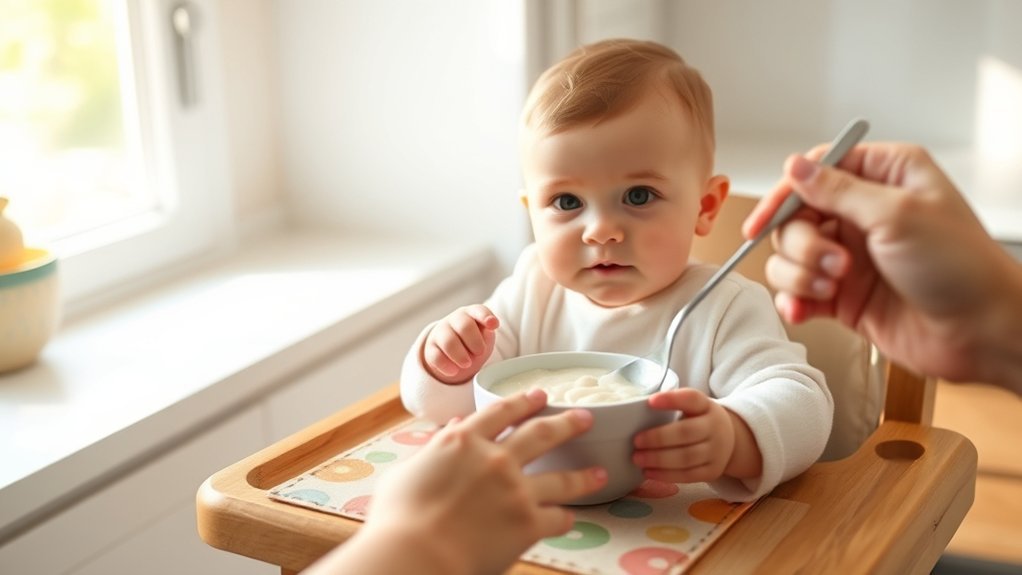
Rice can be introduced when your baby is ready for solid foods, usually at about 6 months. It can be a useful part of a varied diet, but it does not need to be the first food or the only grain. The safest approach is to serve rice very soft, match the texture to your baby’s skills, and limit repeated exposure to arsenic by rotating grains.
Quick Answer
Most babies can eat rice at about 6 months once they can sit with support, control their head and neck, open for food, and swallow instead of pushing food out. Begin with smooth rice porridge or iron-fortified infant cereal, supervise every bite, and rotate rice with oats, barley, quinoa, and other grains.
Key Takeaways
- Introduce rice at about 6 months only after your baby shows developmental readiness for solids.
- Start with smooth, moist rice porridge or properly prepared iron-fortified infant rice cereal.
- Do not serve dense sticky rice balls, mochi, rice cakes, or dry clumps that are hard to break apart.
- Rice should be one grain among many because rice absorbs more inorganic arsenic than most other grains.
- Repeated vomiting, pallor, or unusual sleepiness 1 to 4 hours after rice may signal FPIES and needs prompt medical attention.
- Breast milk or iron-fortified formula remains the main source of nutrition from 6 to 12 months while solid foods gradually increase.
At a Glance
| Time Required | About 20–35 minutes for homemade rice porridge; a few minutes for instant infant cereal |
| Difficulty | Easy, with careful texture adjustment and direct supervision |
| Tools Needed | Saucepan, spoon, fork or blender, and a safe high chair |
| Cost | Usually less than $1 per baby-size serving |
Note: This article provides general feeding information and does not replace advice from your child’s pediatrician, especially for babies born prematurely or children with swallowing problems, poor growth, severe eczema, known food allergy, or a history of FPIES.
When Is the Right Time to Introduce Rice to Your Baby?
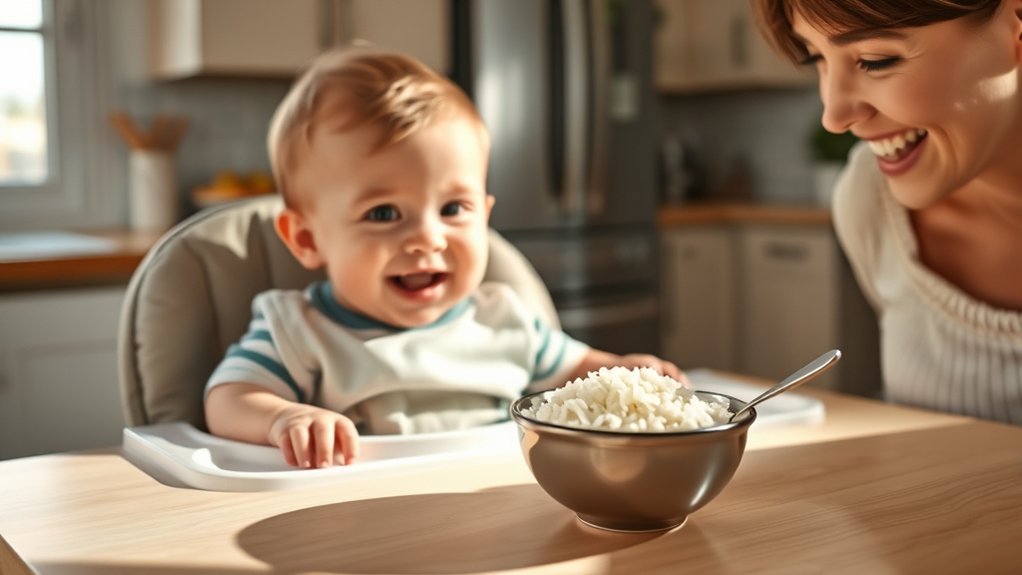
The CDC recommends introducing solid foods at about 6 months. Starting before 4 months is not recommended. Age alone is not enough, though; your baby also needs the physical skills to sit safely and move food from the front of the mouth to the back to swallow.
Rice does not have to be the first solid food. There is no required order for first foods, and your baby should gradually receive foods from several groups, including iron-rich foods, vegetables, fruit, protein foods, dairy foods such as plain yogurt, and different grains.
Signs Your Baby Is Ready for Rice
Look for several readiness signs together rather than relying on age alone. Your baby may be ready when they:
- Sit upright alone or with support and remain stable in a high chair.
- Control their head and neck.
- Open their mouth when food is offered.
- Swallow food instead of pushing it back out with the tongue.
- Bring objects to the mouth and show interest in food.
- Reach for or grasp food and other small objects.
Readiness is a combination of age, posture, head control, swallowing skills, and interest in food—not a single milestone.
Ask your pediatrician before starting solids if your baby was born prematurely, has low muscle tone, has a swallowing or airway problem, is not gaining weight as expected, or has already reacted to a food. These babies may need an individual feeding plan.
How to Prepare Rice for Infants
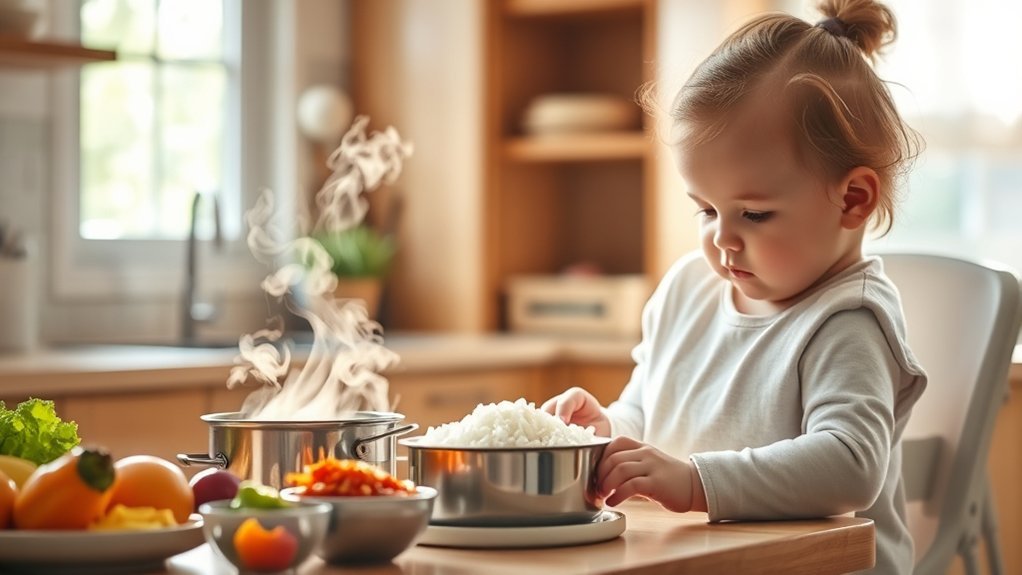
The goal is a moist texture that your baby can easily move and swallow. At first, smooth or well-mashed rice porridge is easier to manage than loose, dry grains.
Suitable Rice Varieties
FDA sampling of infant cereals has found higher average inorganic arsenic in brown-rice cereal than in white-rice cereal, although levels vary widely among products. Brown rice contains more fiber and some additional nutrients, but arsenic can be concentrated in the outer layers that remain on brown rice.
There is an important difference between plain cooked rice and iron-fortified infant rice cereal:
| Option | What It Provides | Best Use |
|---|---|---|
| Plain cooked rice | Mostly carbohydrate, with amounts of fiber and micronutrients depending on the type | Serve with iron-rich and nutrient-rich foods |
| Iron-fortified infant rice cereal | Added iron and other nutrients listed on the label | One convenient iron source, rotated with oat, barley, and multigrain infant cereals |
How to Make Soft Rice Porridge
- Choose the rice. Use plain white or brown rice without added salt, sugar, or seasoning.
- Cook until very soft. Simmer the rice in plenty of water until the grains break apart easily when pressed with a fork.
- Mash or blend. For a new eater, blend or mash the cooked rice with water until it is smooth and moist. Make it thicker as your baby’s skills improve.
- Cool before serving. Test the temperature carefully. If desired, stir in a little expressed breast milk or correctly prepared infant formula after cooking and cooling; do not cook or boil breast milk or prepared formula.
- Serve a small amount. Offer a spoonful or two and follow your baby’s hunger and fullness cues. There is no need to make your baby finish a set portion.
Avoid adding salt, sugar, honey, or salty broth. Honey is unsafe before 12 months because of infant botulism risk, and salty ingredients are unnecessary for babies. Unsweetened coconut milk may be used in a small amount for flavor, but it is not a substitute for breast milk or infant formula.
Safe Serving Techniques by Stage
| Developmental Stage | Safer Rice Texture |
|---|---|
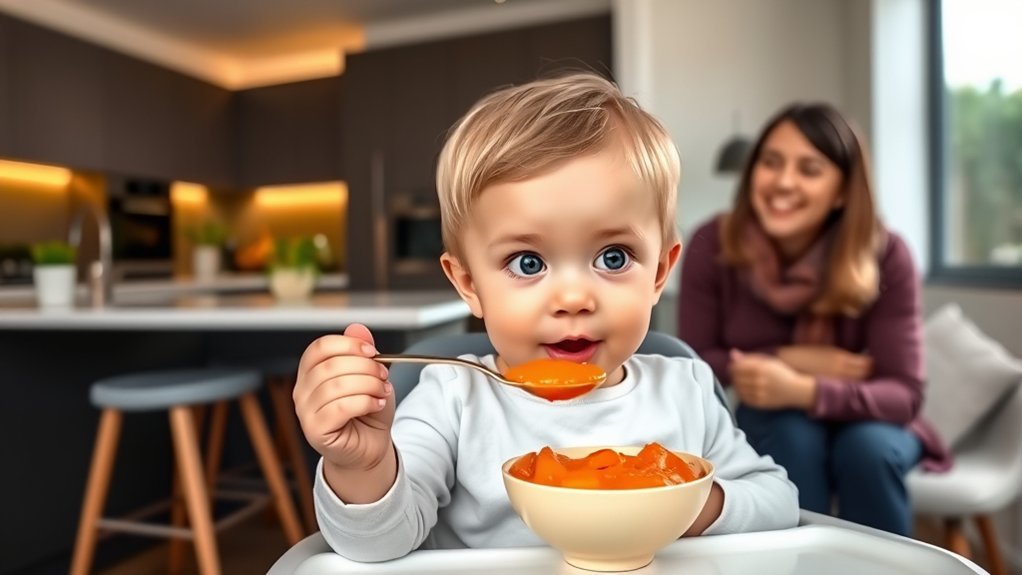
| New to solids | Smooth rice porridge or infant cereal that is moist enough to slide off a spoon |
| Managing thicker textures | Mashed or lumpy rice mixed with beans, lentils, vegetables, yogurt, egg, fish, or meat in a moist consistency |
| Using a pincer grasp and chewing well | Soft individual grains mixed into moist foods and offered by spoon or in small, manageable portions |
Pro Tip: A preloaded spoon lets a self-feeding baby practice bringing soft rice porridge to the mouth without creating a dense sticky lump.
Is Rice a Choking Hazard for Babies?
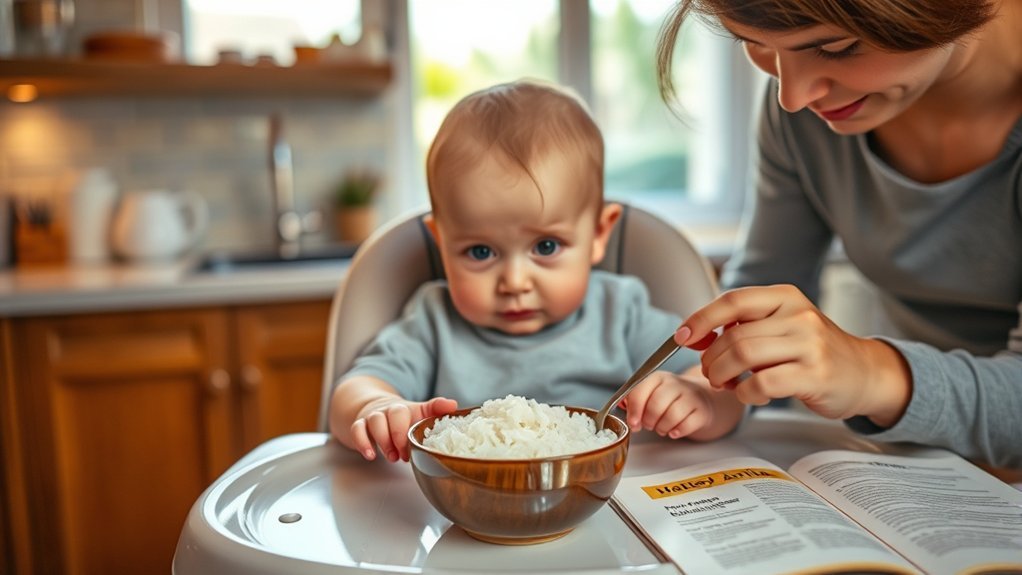
Soft rice porridge is generally easier for a baby to manage than dry grains or sticky clumps, but no food is completely free of choking risk. The CDC advises matching food texture to the child’s development, serving small portions, and watching continuously while the child eats.
Avoid mochi, glutinous rice cakes, compressed rice balls, hard rice crackers, and dry or chewy rice products. These foods can be sticky, dense, or difficult to break apart.
Gagging Versus Choking
| Gagging | Choking |
|---|---|
| May be noisy; baby may cough, retch, or push food forward | May be silent; baby may be unable to cough, cry, or breathe |
| Often part of learning new textures | A life-threatening emergency requiring immediate action |
Warning: If your baby cannot breathe, cough, or cry, call 911 and begin age-appropriate choking first aid. Caregivers should learn infant CPR and choking response from a certified course before starting finger foods.
Can Babies Be Allergic to Rice?
Immediate rice allergy appears to be uncommon, but any food can cause a reaction. Rice and oats are also recognized triggers of Food Protein-Induced Enterocolitis Syndrome (FPIES), a delayed food allergy that mainly affects babies and young children.
When first introducing rice, serve it as a single-ingredient food during a time when you can observe your baby. The CDC suggests offering one new food at a time at first and waiting 3 to 5 days before adding another new food.
Immediate Allergy Versus FPIES
| Feature | Immediate Food Allergy | FPIES |
|---|---|---|
| Typical timing | Usually within minutes to about 2 hours | Usually 1 to 4 hours after eating |
| Common signs | Hives, swelling, coughing, wheezing, vomiting, or trouble breathing | Repeated forceful vomiting, pallor or color change, lethargy, weakness, and sometimes diarrhea |
| Main concern | Anaphylaxis can occur | Dehydration and shock can occur in severe reactions |
Symptoms to Watch For and What to Do
The American Academy of Allergy, Asthma & Immunology states that FPIES symptoms usually begin 1 to 4 hours after the trigger food and may include repetitive vomiting, lethargy, color change, and diarrhea. Rice is a recognized pediatric trigger.
Warning: Call 911 for trouble breathing, facial or tongue swelling, blue or gray color, collapse, or difficulty waking your baby. Seek urgent medical care for repeated forceful vomiting with pallor, marked sleepiness, weakness, or signs of dehydration, especially when symptoms begin 1 to 4 hours after rice.
Do not retry a suspected trigger food at home after a serious reaction. Contact your pediatrician or an allergist for an evaluation and a safe plan.
Nutritional Benefits of Rice for Babies
Rice supplies carbohydrate for energy and can carry other nutritious foods in a soft, easy-to-eat meal. Its value depends on the form you serve. Plain white rice is not an especially rich source of iron, protein, or fiber, while iron-fortified infant cereal contains added iron.
Iron matters during the second half of infancy. The CDC advises offering iron-containing foods from about 6 months. Pair homemade rice with foods such as mashed beans or lentils, finely minced meat, egg, fish, tofu, or an iron-fortified food. Vitamin C-rich foods such as sweet potato, broccoli, berries, or tomato can help the body absorb non-heme iron.
Breast milk or iron-fortified infant formula remains the main source of nutrition from 6 to 12 months. Rice and other solids complement milk feeds rather than replace them suddenly.
Brown Rice Versus White Rice for Babies
| Factor | White Rice | Brown Rice |
|---|---|---|
| Texture | Usually cooks softer and smoother | Chewier and may need longer cooking and more mashing |
| Fiber and nutrients | Lower fiber; enriched varieties may contain added B vitamins and iron | More fiber and some naturally occurring nutrients |
| Arsenic | Generally lower than brown rice | Often higher because arsenic accumulates in the outer layers |
Neither type needs to be banned. White rice may be a practical first texture, while brown rice can be served occasionally when cooked very soft. The most important step is to vary grains rather than serving any rice product every day.
How to Reduce Arsenic Exposure From Rice
Arsenic occurs naturally in soil and water, and rice tends to absorb more of it than many other crops. The goal is to reduce repeated exposure while still offering a varied diet.
The FDA action level for inorganic arsenic in infant rice cereal is 100 parts per billion. Rice cereal can still be used, but it should not be a baby’s only cereal.
- Rotate grains. Offer oat, barley, multigrain, quinoa, millet, corn, and other grains instead of relying on rice at most meals.
- Choose white rice more often than brown rice when lowering arsenic is the priority. FDA sampling shows substantial variation among products, so no type is guaranteed to be low.
- Do not rely on rinsing alone. The FDA reports that rinsing has only a minimal effect on arsenic and can wash away iron, folate, thiamine, and niacin from enriched rice.
- Use extra water when appropriate. Cooking rice like pasta in 6 to 10 parts water per 1 part rice and draining the excess can reduce inorganic arsenic by about 40% to 60%, depending on the rice. This method can also remove 50% to 70% of added nutrients from enriched rice, so pair the meal with iron-rich foods.
- Check well water if needed. Families using private wells in areas with arsenic concerns should contact the local health department about testing.
The FDA’s 100-ppb action level applies to all infant rice cereals, including white-rice, brown-rice, organic, and conventional products.
How Much Rice Can a Baby Eat?
There is no single required serving. Begin with one or two small spoonfuls and let your baby decide whether to continue. Babies have small stomachs, and intake can vary from meal to meal.
Rice can be offered occasionally as part of a rotating menu rather than on a rigid schedule. A practical pattern is to alternate it with other grains and include an iron-rich food at meals. Stop when your baby turns away, closes their mouth, pushes food away, or loses interest.
Safe Storage and Reheating
Cooked rice can support the growth of bacteria if it sits at room temperature too long. Following USDA leftover-safety guidance, refrigerate it in a shallow covered container within 2 hours of cooking, or within 1 hour when the temperature is above 90°F (32°C). Use refrigerated leftovers within 3 to 4 days.
Reheat only the portion you plan to serve until steaming hot, then stir and cool it thoroughly before feeding. Discard food left in the baby’s bowl after the spoon has gone into the baby’s mouth because saliva can introduce bacteria.
Note: Never leave cooked rice, congee, or infant cereal at room temperature for more than 2 hours.
Easy Rice Combinations for Babies
Once rice has been tolerated on its own, mix it with familiar foods to improve flavor and nutrition. Keep every combination soft and moist.
- Rice porridge with mashed lentils and sweet potato.
- Soft rice with mashed beans and finely chopped tomato.
- Rice mixed with plain full-fat yogurt and fruit purée.
- Rice with well-cooked egg and mashed avocado.
- Rice with finely minced chicken, fish, or tofu and soft vegetables.
- Rice porridge with pear, prune, peach, or berry purée.
When adding a food your baby has not eaten before, introduce it separately first so any reaction is easier to identify.
Frequently Asked Questions
Can I mix rice with other foods for my baby?
Yes. After your baby tolerates rice by itself, combine it with vegetables, fruit, beans, lentils, yogurt, egg, fish, meat, or tofu. Keep the mixture moist and use textures your baby can manage.
What types of rice are safest for infants?
No rice type is guaranteed to be lowest in arsenic. White rice generally has less than brown rice, but levels vary. Cook it until very soft, serve it moist, and rotate it with oat, barley, multigrain, quinoa, millet, and other grains.
How often can I give rice to my baby?
Rice can be part of the menu, but it should not be the only grain or appear at every meal. Rotate it with other grains and serve a range of iron-rich foods, vegetables, fruits, and protein foods.
What should I do if my baby refuses rice?
Do not pressure your baby. Offer a small amount again another day or serve a different grain such as oat, barley, quinoa, millet, or corn. Babies often need repeated, calm exposure before accepting a new taste or texture.
Can rice cause constipation in babies?
White rice is low in fiber and may contribute to firmer stools in some babies, but it does not cause constipation in every child. Offer varied fruits, vegetables, whole grains, and appropriate fluids. Contact a pediatrician for painful, bloody, or persistent hard stools.
Conclusion
Most babies can try rice at about 6 months when they show clear readiness for solid foods. Begin with a soft, moist texture, keep your baby seated and supervised, and avoid sticky or dense rice products. Rice can provide energy and variety, but homemade rice should be paired with iron-rich foods and rotated with other grains. Sensible preparation, prompt storage, and awareness of allergy and FPIES symptoms make rice a safer part of a balanced infant diet.
Sources
- CDC: When, What, and How to Introduce Solid Foods — timing, readiness signs, first-food variety, and texture guidance.
- CDC: Iron for Infants and Toddlers — iron needs and food sources from about 6 months.
- FDA: What You Can Do to Limit Exposure to Arsenic — rinsing limits, excess-water cooking, and nutrient tradeoffs.
- FDA: Action Level for Inorganic Arsenic in Infant Rice Cereal — the 100-ppb action level.
- AAAAI: Food Protein-Induced Enterocolitis Syndrome — FPIES timing, symptoms, triggers, and treatment.
- USDA FSIS: Leftovers and Food Safety — refrigeration timing and storage length.