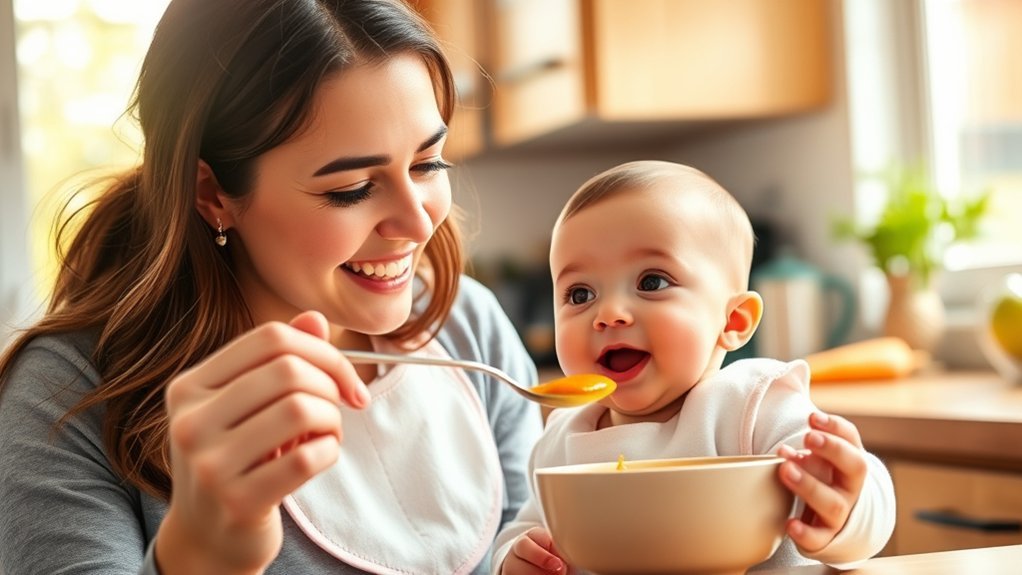
Most babies are ready to start baby food at about 6 months, but age is only part of the decision. Your baby should also be able to sit upright with support, hold their head steady, bring objects to their mouth, and swallow food instead of pushing it back out. Breast milk or iron-fortified infant formula should remain the main source of nutrition through the first year.
Quick Answer
Most babies can start solid foods at about 6 months, once they show clear developmental readiness. Begin with small amounts of soft, iron-rich food, continue breast milk or infant formula, introduce one new food at a time, and always seat and supervise your baby upright while eating.
Key Takeaways
- Start solids at about 6 months when your baby shows readiness; introducing food before 4 months is not recommended.
- Choose iron-rich first foods, such as iron-fortified infant cereal, meat, beans, lentils, eggs, or tofu, along with fruits and vegetables.
- Offer textures that match your baby’s skills, moving from smooth or mashed foods toward thicker, lumpy foods and soft finger foods.
- Introduce common allergens in baby-safe forms rather than delaying them, unless your baby’s clinician recommends a different plan.
- Prevent choking by keeping your baby upright, preparing foods safely, and supervising every bite.
At a Glance
| Time Required | Brief, unhurried meals; stop when your baby shows fullness |
| Difficulty | Easy once developmental readiness is present |
| Tools Needed | Upright high chair, baby spoon or soft finger foods, bib, and clean serving dish |
| Cost | Varies; ordinary family foods can often be adapted safely |
Note: This guide offers general feeding information, not individual medical advice. Ask your pediatric healthcare provider for a personalized plan if your baby was born prematurely, has poor growth, swallowing problems, severe eczema, a known food allergy, or another medical condition.
What Age Is Best to Start Baby Food?
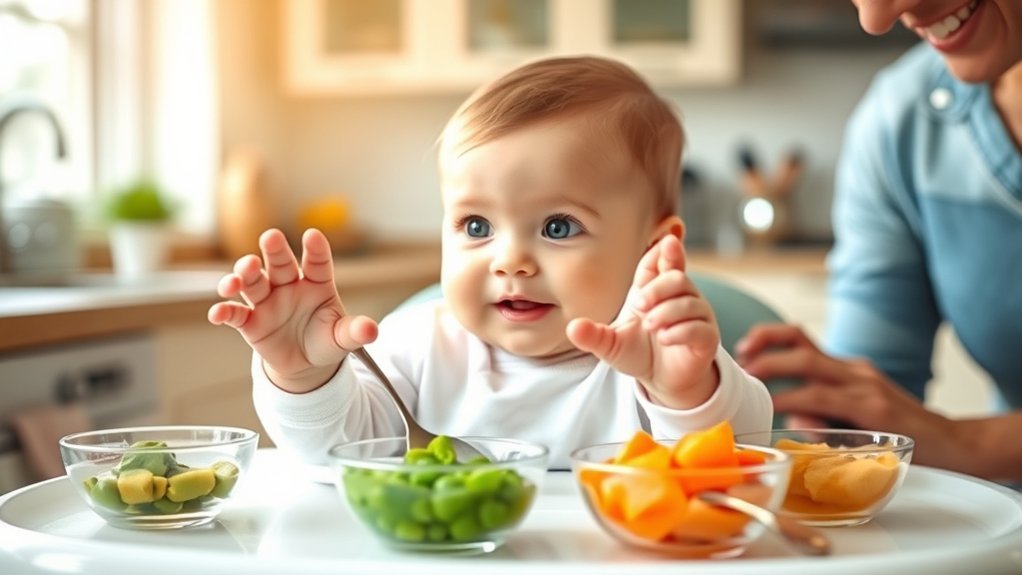
The Centers for Disease Control and Prevention says children can begin solid foods at about 6 months. Starting before 4 months is not recommended. Some babies reach feeding milestones a little sooner or later, so readiness matters more than choosing an exact day on the calendar.
Solid foods are complementary foods. They add iron, zinc, energy, flavor, and texture to breast milk or infant formula rather than replacing milk feeds right away. During the first year, continue breastfeeding as desired or use iron-fortified infant formula as your baby’s main milk drink.
You do not need to begin with one special food. Purées can work well, but mashed foods and soft finger foods can also be appropriate when prepared to match your baby’s eating skills.
Signs Your Baby Is Ready for Solid Foods
Look for several readiness signs together. A baby is usually ready to explore solid food when they can:
- Sit upright alone or with support and stay stable in a high chair.
- Control their head and neck throughout the meal.
- Open their mouth or lean toward food when it is offered.
- Swallow food instead of automatically pushing it out with the tongue.
- Bring hands and objects to the mouth.
- Reach for and grasp food or other small objects.
Interest in your food alone is not enough. Waking more often, chewing fists, or reaching for a parent’s plate can happen before a baby has the posture and swallowing skills needed for solids.
Pro Tip: Pick a calm time when your baby is alert and not overly hungry or tired. A small milk feed first can reduce frustration while your baby learns a new skill.
If your baby has not developed these skills by about 7 to 8 months, or if feeding causes frequent coughing, choking, pain, vomiting, or poor weight gain, contact your pediatric healthcare provider.
Best First Foods for Your Baby: What to Choose
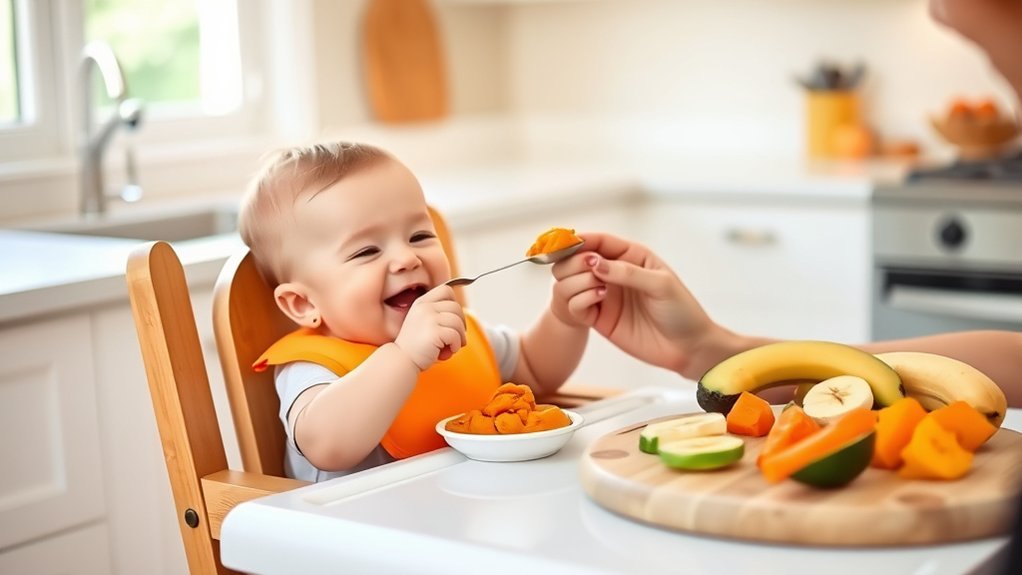
Good first foods are nutrient-dense, soft, and easy to swallow. Include an iron-rich option regularly because a baby’s iron needs rise during the second half of the first year.
Start With Iron-Rich Foods
Suitable choices include iron-fortified infant cereal, finely puréed or minced meat, mashed beans or lentils, egg, tofu, and smooth nut or seed butter thinned into another food. Pair plant sources of iron with foods rich in vitamin C, such as mashed strawberries, broccoli, tomato, or sweet potato.
If you use infant cereal, offer different grains such as oat, barley, and multigrain instead of relying only on rice cereal. The CDC notes that feeding only infant rice cereal can increase arsenic exposure.
Add Fruits, Vegetables, and Adapted Family Foods
Avocado, banana, pear, peas, squash, sweet potato, plain pasteurized yogurt, well-cooked egg, flaky low-mercury fish, and soft strips of meat or vegetables can all fit. Avoid adding sugar or salt. Plain family foods can often be mashed, shredded, or cut into a baby-safe shape before seasoning the rest of the family’s meal.
Introduce Common Food Allergens Safely
Once your baby is ready for solids, introduce common allergens—such as cooked egg, peanut, dairy, wheat, soy, sesame, fish, and shellfish—in developmentally safe forms. There is no benefit to delaying these foods for most babies. Offer a small amount at home earlier in the day, when your baby is healthy and you can watch for a reaction.
Introduce one new food at a time at first. Waiting 3 to 5 days between new foods can make it easier to identify a problem, although this pace may be shortened later once your baby has tolerated several foods. If your baby has severe eczema, an egg allergy, or a previous reaction, ask the child’s clinician how and when to introduce peanut and other allergens.
Warning: Stop feeding and call 911 for trouble breathing or swallowing, swelling of the lips or tongue, blue or very pale skin, sudden severe sleepiness, collapse, or symptoms affecting more than one body system. If your child has prescribed epinephrine, use it immediately according to the emergency plan. Antihistamines do not replace epinephrine for anaphylaxis.
Progress From Purées to More Texture
Begin with a texture your baby can manage, then gradually make food thicker and lumpier. Move toward soft finger foods as sitting, grasping, chewing, and swallowing skills improve. Staying on smooth purées for too long can limit practice with new textures.
| Stage | Suitable Texture | Examples |
|---|---|---|
| Starting out | Smooth, mashed, or very soft | Iron-fortified cereal, mashed beans, avocado, yogurt |
| Building skills | Thicker, lumpy, minced, or shredded | Mashed lentils, minced meat, soft scrambled egg, lumpy vegetables |
| Self-feeding | Soft finger-length pieces or small soft bites | Ripe pear slices, soft-cooked broccoli, toast strips, shredded chicken |
Preparing and Serving Baby Food Safely
Babies are more vulnerable to foodborne illness and choking than older children. Clean preparation, safe storage, the right texture, and close supervision all matter.
Safe Food Preparation Tips
- Wash your hands before preparing or serving food.
- Wash fruits and vegetables under running water. Organic produce is optional; washing is still required.
- Cook meat, poultry, fish, and eggs thoroughly, and avoid raw or unpasteurized foods.
- Use clean cutting boards, utensils, blenders, and containers.
- Do not add honey, sugar, salt, or low-calorie sweeteners.
- Serve food lukewarm, not hot. Stir heated food and test the temperature before feeding.
| Food Preparation Tip | Why It Matters |
|---|---|
| Wash produce and hands | Reduces dirt and harmful germs |
| Cook food until soft and safe | Improves texture and lowers foodborne-illness risk |
| Avoid added sugar and excess salt | Leaves room for nutrient-dense foods |
| Use a separate serving dish | Prevents saliva from contaminating stored food |
| Refrigerate promptly | Slows bacterial growth |
Store Homemade and Opened Baby Food Correctly
The U.S. Food and Drug Administration recommends refrigerating freshly made baby food promptly. As a conservative rule, use homemade baby food within 1 to 2 days. Strained meat or egg dishes should be used within 1 day. Freeze extra portions in clean, dated, airtight containers.
Do not leave baby food at room temperature for more than 2 hours. Spoon the amount you expect your baby to eat into a separate dish, and discard leftovers from that dish. Do not return food touched by a used spoon to the original jar or storage container.
Supervision During Mealtime
Seat your baby upright in a stable high chair with good head and trunk support. Stay within arm’s reach, keep the meal calm, and allow your baby to set the pace. Never feed a baby while they are lying down, crawling, walking, riding in a car, or playing.
The CDC’s choking-prevention guidance recommends changing the size, shape, and texture of risky foods. Avoid whole grapes, whole nuts, popcorn, hard raw vegetables, chunks of meat or cheese, hot dog rounds, spoonfuls of nut butter, hard candy, and other firm round foods.
- Quarter grapes and cherry tomatoes lengthwise.
- Cook firm vegetables until soft.
- Shred or finely chop meat.
- Spread nut butter thinly or mix it into another food.
- Remove fish bones and fruit pits.
Warning: Gagging can be noisy and may involve coughing or a red face. Choking may be silent because air cannot move. Learn infant CPR and choking first aid from a qualified instructor before your baby starts solids, and call 911 immediately if your baby cannot breathe, cry, or cough effectively.
Feeding Schedules by Age
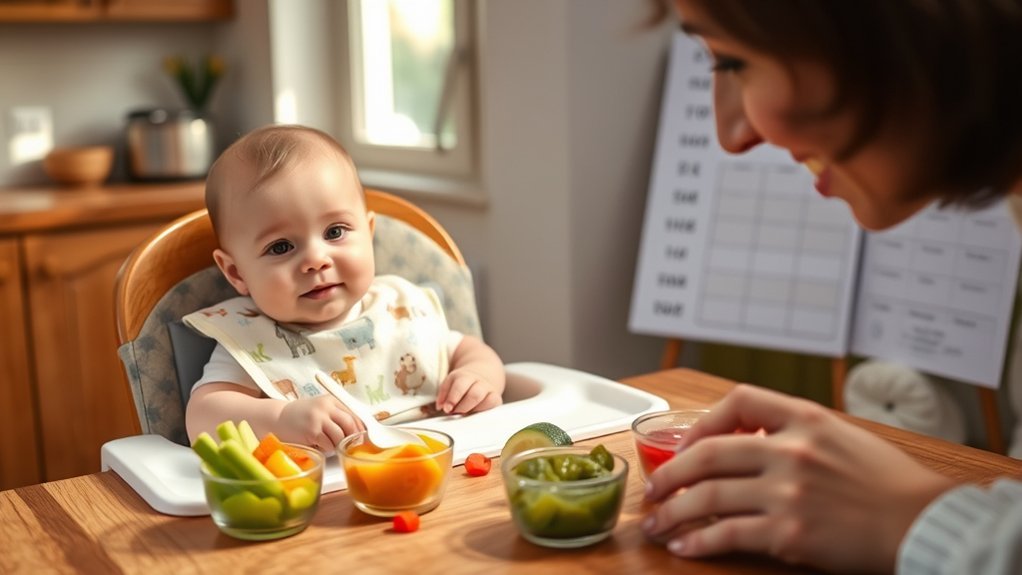
A feeding schedule should be flexible. Babies differ in appetite, milk intake, growth, sleep, and feeding skills, so rigid ounce and tablespoon targets are less useful than hunger and fullness cues.
| Developmental Stage | Practical Feeding Pattern | Main Goal |
|---|---|---|
| Around 6 months | Offer a small amount once daily, then add a second opportunity as interest and skills grow. Continue usual breast milk or formula feeds. | Learn to sit, accept a spoon or grasp food, and swallow safely |
| About 7 to 9 months | Build toward two or three eating opportunities with several food groups while milk feeds remain important. | Increase variety, iron-rich foods, and texture |
| About 9 to 12 months | Offer three meals on many days, plus milk feeds. Add a snack if your baby’s routine and appetite support it. | Practice self-feeding and join family meals |
Begin with a small taste or a few spoonfuls, then offer more only when your baby shows hunger and accepts food comfortably. Stop when your baby turns away, closes their mouth, pushes food away, slows down, or becomes distracted.
Drinks and Foods to Avoid Before Age One
The CDC lists several foods and drinks to avoid or limit during infancy:
- Honey before 12 months: Honey can cause infant botulism, including honey baked into foods or added to a pacifier.
- Cow’s milk as the main drink before 12 months: Breast milk or infant formula should remain the main milk drink. Pasteurized yogurt and cheese can be offered earlier if tolerated.
- Unpasteurized foods and drinks: Avoid raw milk, unpasteurized juice, and foods made with unpasteurized dairy.
- Added sugars and high-sodium foods: Skip sweet drinks, desserts, salty snacks, processed meats, and heavily salted family food.
- High-mercury fish: Choose lower-mercury fish and avoid shark, swordfish, king mackerel, orange roughy, marlin, Gulf tilefish, and bigeye tuna.
- Choking hazards: Avoid whole nuts, popcorn, hard candy, spoonfuls of nut butter, and firm round foods unless safely modified.
From about 6 to 12 months, the CDC says small amounts of water can be offered along with breast milk or infant formula. Juice is not needed for babies.
How to Encourage Healthy Eating Habits in Babies
Healthy eating habits grow from repeated, low-pressure practice. You choose what foods are offered, when, and where. Your baby decides whether to eat and how much.
| Mealtime Tip | Benefit |
|---|---|
| Eat together when possible | Lets your baby watch and copy family eating |
| Allow safe self-feeding | Builds coordination, confidence, and texture experience |
| Repeat foods without pressure | Gives your baby time to accept unfamiliar tastes |
| Follow hunger and fullness cues | Supports responsive eating instead of forcing bites |
| Offer variety across food groups | Provides a broader mix of nutrients, flavors, and textures |
Mess is part of learning. Avoid using food as a reward, distracting your baby into taking bites, or forcing the spoon into a closed mouth. A calm ending is better than turning the meal into a struggle.
The goal of early feeding is not to finish a jar. It is to build safe eating skills, provide key nutrients, and help your baby become comfortable with many foods.
Frequently Asked Questions
Can I mix baby food with breast milk or formula?
Yes. You can use a small amount of breast milk or correctly prepared infant formula to thin cereal or purée and make the texture familiar. Mix only the portion you plan to serve, and discard food left in the baby’s dish after the meal.
How do I know if my baby is allergic to a food?
Possible signs include hives, facial swelling, coughing, wheezing, repeated vomiting, diarrhea, unusual sleepiness, or sudden behavior changes. Stop the food and contact your pediatric healthcare provider for mild symptoms. For breathing trouble, trouble swallowing, lip or tongue swelling, collapse, or a severe multi-system reaction, use prescribed epinephrine and call 911.
What should I avoid when preparing baby food?
Avoid honey before age 1, unpasteurized foods, undercooked meat or eggs, added sugar, excess salt, unsafe food shapes, and cross-contamination from raw meat. Do not feed directly from a storage jar if you plan to save the rest.
How often should I introduce new foods?
At first, offer one new food at a time and consider waiting 3 to 5 days before another new food so reactions are easier to trace. After your baby has safely tried several foods, you can continue expanding variety at a practical pace.
Is homemade baby food safe?
Yes, when ingredients, hands, equipment, cooking, and storage are handled safely. Refrigerate homemade food promptly, use it within 1 to 2 days, and freeze extra portions. Use meat or egg dishes within 1 day.
How much baby food should a 6-month-old eat?
There is no single required amount. Start with a small taste or a few spoonfuls and offer more if your baby remains interested. Breast milk or infant formula still supplies most nutrition at this stage, so focus on skill-building and hunger cues rather than finishing a set portion.
Is gagging the same as choking?
No. Gagging is a protective reflex and is often noisy. Choking blocks airflow and may be silent. Never leave a baby alone with food, and learn infant choking first aid and CPR from a qualified instructor.
Can I use baby-led weaning instead of purées?
A self-feeding approach can be used when your baby is developmentally ready and foods are soft, safely shaped, and nutrient-dense. Purées and finger foods can also be combined. Whichever approach you choose, include iron-rich foods and supervise every meal.
Conclusion
Most babies can start baby food at about 6 months when they can sit upright with support, control their head, reach for food, and swallow safely. Begin with small amounts of iron-rich, developmentally appropriate food while continuing breast milk or infant formula. Build variety and texture gradually, introduce allergens safely, and let your baby’s hunger and fullness cues guide the meal.
Early feeding will be messy, slow, and sometimes unpredictable. That is normal. A calm routine, safe food preparation, close supervision, and repeated exposure matter more than how much your baby eats on any one day.
Sources
- CDC: When, What, and How to Introduce Solid Foods — starting age, readiness signs, allergens, textures, and grain variety
- CDC: Foods and Drinks to Encourage — food-group variety, texture, breast milk or formula, and water
- CDC: Foods and Drinks to Avoid or Limit — honey, added sugars, sodium, unpasteurized foods, cow’s milk, and mercury
- CDC: Choking Hazards — food preparation and high-risk shapes and textures
- FDA: Once Baby Arrives — baby-food preparation, storage, reheating, and contamination prevention
- American Academy of Pediatrics: Anaphylaxis in Infants and Children — severe allergy symptoms, epinephrine, and emergency response