
Quick Answer
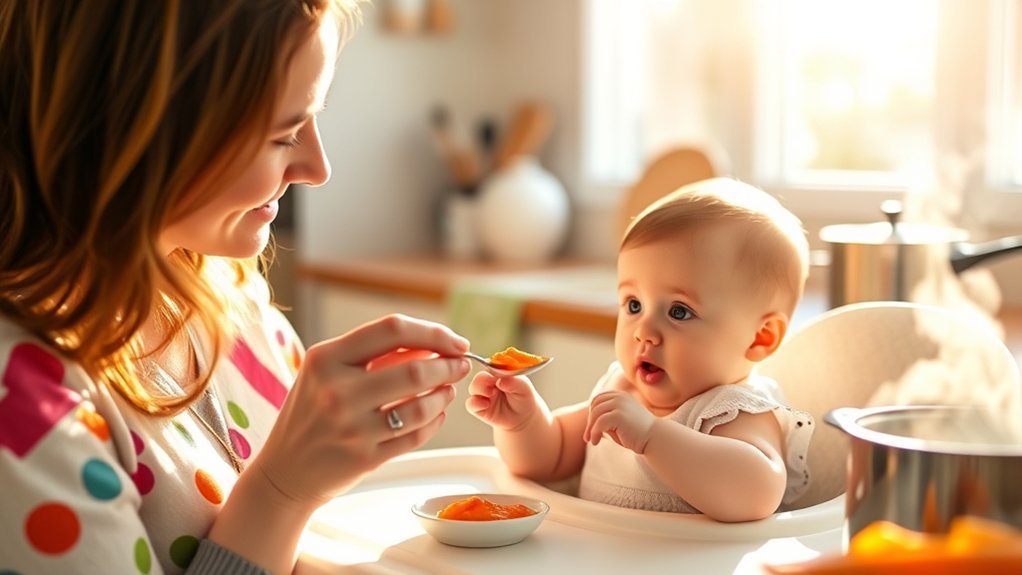
Most babies can start solid foods at about 6 months, once they show developmental readiness. Begin with small amounts of soft, nutrient-dense food, including iron-rich choices. Introduce one new food at a time, use safe textures, watch for allergic reactions and keep breast milk or infant formula as your baby’s main drink.
Note: This article provides general feeding information, not individualized medical advice. Talk with your baby’s pediatrician before starting solids if your baby was born prematurely, has poor growth, has trouble swallowing, has severe eczema or has reacted to a food.
Key Takeaways
- Start at about 6 months when your baby shows developmental readiness; introducing solids before 4 months is not recommended.
- Breast milk or infant formula remains the main source of nutrition from 6 to 12 months.
- Begin with small portions of soft, nutrient-dense foods, especially foods rich in iron and zinc.
- Introduce common allergens in baby-safe forms without unnecessary delay, but seek medical guidance first for babies at higher allergy risk.
- Prevent choking by matching each food’s texture, shape and size to your baby’s feeding skills and supervising every meal.
- Avoid honey and juice before 12 months, and wait until 12 months before using cow’s milk as your baby’s main drink.
At a Glance
| Time Required | A short, calm feeding session; texture and meal progression continues over several months |
| Difficulty | Moderate; preparation must match your baby’s feeding skills |
| Tools Needed | Upright high chair, shallow bowl, soft spoon, open or straw cup, fork or optional blender |
| Cost | Varies; many suitable first foods are ordinary family foods prepared without added salt or sugar |
When Is the Right Time to Start Solid Foods?

The Centers for Disease Control and Prevention and the American Academy of Pediatrics recommend introducing foods other than breast milk or infant formula at about 6 months. Starting before 4 months is not recommended.
Readiness is based on your baby’s development, not on reaching one exact weight or birthday.
Complementary foods become important around this time because your growing baby needs more nutrients, including iron and zinc. However, breast milk or iron-fortified infant formula should remain the main source of nutrition throughout the first year.
If your baby is about 6 months old but cannot hold their head steady, sit upright with support or safely move food toward the back of the mouth, speak with your pediatrician before starting.

Power your essentials anywhere with a 999Wh pure sine wave power station delivering up to 1000W continuous with 2000W surge. It supports fast charging via USB-C PD 60W and USB-A QC 18W, plus simultaneous output for multiple devices through AC, USB, wireless, and car/DC ports. Recharge using AC, car, or solar with a built-in MPPT controller and dual cooling fans, while the upgraded battery management system protects against surges, short circuits, and overheating.

ON THE GO BABY FOOD: Gerber Stage 1 Baby Food Puree Tubs are designed for ease and convenience. These tubs are the perfect on the go baby food, made in a portable and easy-to-store format for busy parents

Weaning your baby and transitioning to solid foods
What Signs Indicate My Baby Is Ready for Solids?
Look for several readiness signs together. One sign by itself—such as watching you eat—does not necessarily mean your baby is ready.
| Readiness Sign | What It Looks Like |
|---|---|
| Head and neck control | Your baby can hold their head steady while seated. |
| Upright sitting | Your baby can sit alone or with support in a safe feeding seat. |
| Interest in food | Your baby opens their mouth when food is offered or reaches toward food. |
| Swallowing ability | Your baby swallows food instead of automatically pushing it out with the tongue. |
| Hand-to-mouth coordination | Your baby brings objects to the mouth and begins trying to grasp food. |
Start With These First Foods for Your Baby
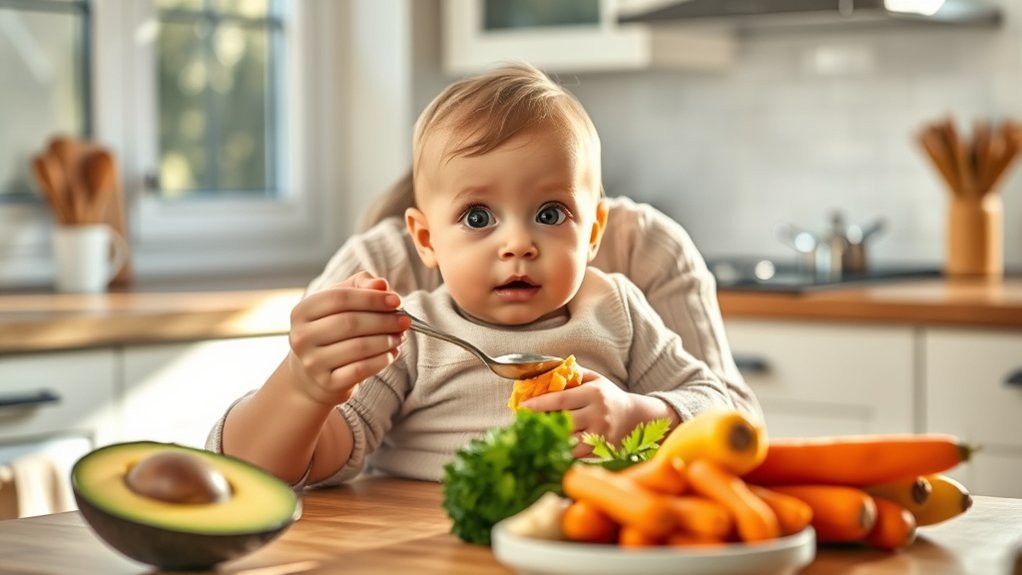
There is no required order for first foods. Aim for variety and choose foods that provide useful nutrients rather than offering only fruit or cereal. At first, serving one single-ingredient food at a time can make it easier to identify a reaction.
Recommended First Foods
Include iron- and zinc-rich foods from the beginning, especially if your baby is breastfed. Suitable choices include iron-fortified infant cereal, finely puréed meat, mashed beans, lentils, well-cooked egg, tofu and soft fish with every bone removed.
| Food | Why It Works | Safe Preparation |
|---|---|---|
| Iron-fortified infant oatmeal | Provides iron and is easy to adjust in thickness. | Mix with breast milk, formula or water until smooth. |
| Meat, poultry or fish | Provides protein, iron and zinc. | Cook thoroughly; remove skin, fat and bones; then purée, mince finely or shred until very soft. |
| Beans or lentils | Provides plant protein, iron and fiber. | Cook until very soft and mash with liquid. |
| Avocado | Provides energy and healthy fats. | Mash until smooth or serve as a soft strip when your baby has self-feeding skills. |
| Banana, pear or peach | Offers different flavors and textures. | Mash ripe fruit; cook firmer fruit until soft. |
| Peas, carrots or sweet potato | Adds vegetables, color and varied flavors. | Cook until easily crushed with a fork, then mash or purée. |
| Plain pasteurized yogurt | Provides protein and introduces dairy. | Choose an unsweetened product and offer it by spoon. |
If you use infant cereal, the CDC recommends varying fortified grains such as oat, barley and multigrain rather than serving only rice cereal. This helps provide variety and can reduce unnecessary arsenic exposure from relying heavily on rice.
Preparing Safe Textures
Begin with textures your baby can manage. Smooth purées are one option, but they are not the only option. Soft mashed foods and appropriately prepared finger foods may also be suitable once your baby can sit upright and bring food to the mouth.
- Cook firm fruits and vegetables until they can be crushed easily with a fork.
- Remove bones, pits, tough peels, seeds and gristle.
- Thin thick cereal or nut butter before serving.
- Finely mince, shred or purée meat instead of serving dense cubes.
- Grate cheese or offer a soft thin strip instead of a hard cube.
- Change textures gradually as chewing and swallowing skills improve.
Monitoring Allergic Reactions
At first, introduce one new food at a time and wait 3 to 5 days before another new food. Offer the food at home, earlier in the day and when your baby is healthy so you can observe them afterward.
Once your baby has tolerated a few foods, introduce common allergens such as well-cooked egg, peanut, dairy, wheat, sesame, soy, fish and shellfish in developmentally safe forms. Delaying these foods does not prevent food allergy.
Warning: Never offer whole nuts or a thick spoonful of peanut butter. Thin smooth peanut butter with warm water, breast milk, formula, cereal or a familiar purée. Ask your pediatrician before introducing peanut if your baby has severe eczema, an egg allergy or a previous immediate food reaction.
How to Introduce Solid Foods to Your Baby
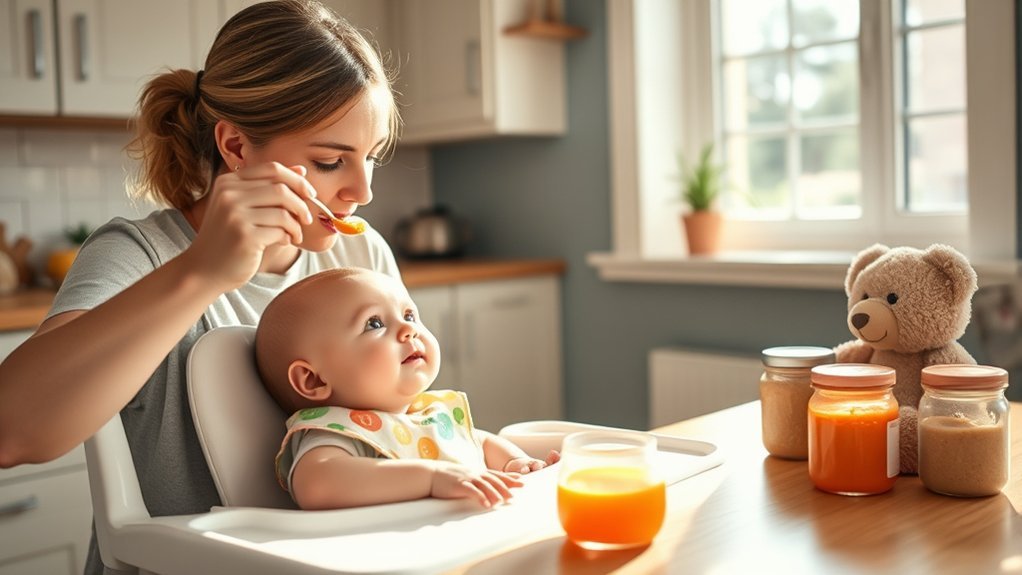
- Seat your baby upright. Use a secure high chair or feeding seat with good head and trunk support.
- Choose a calm time. Avoid starting when your baby is extremely hungry, tired or upset.
- Start small. Offer about 1 or 2 tablespoons and allow your baby to decide whether to eat more.
- Use one simple food. A single-ingredient food makes reactions easier to identify.
- Follow your baby’s cues. Continue when your baby leans forward, opens their mouth or reaches for food. Stop when they turn away, close their mouth or lose interest.
- Advance gradually. Move from smooth or mashed food to thicker, lumpier and soft finger-food textures as skills improve.
- Keep milk feeds. Breast milk or infant formula remains the main source of nutrition during the first year.
Pro Tip: Let your baby touch, smell and explore food. Mess is part of learning. Avoid scraping the spoon against the upper lip or forcing another bite after your baby shows fullness.
Tips for Preparing Solid Foods for Your Baby
Good food preparation lowers both choking and foodborne-illness risks. Wash your hands, clean utensils and surfaces, rinse produce and keep raw meat away from ready-to-eat foods.
- Cook meat, poultry, fish and eggs thoroughly.
- Use only pasteurized milk products and juice products.
- Do not taste food with your baby’s spoon and return the spoon to the bowl.
- Place a small serving in a separate bowl instead of feeding directly from a storage container.
- Refrigerate prepared food promptly and discard food left at room temperature for an extended period.
- Throw away food from your baby’s bowl after the meal because saliva can introduce bacteria.
- Thaw frozen portions in the refrigerator or with a safe reheating method, not on the counter.
- Stir heated food and test the temperature before serving to avoid hot spots.
The CDC’s food-safety guidance for young children recommends avoiding raw or undercooked meat and eggs, unpasteurized dairy products and unwashed produce.
Monitoring for Allergies in Your Baby
A food reaction can appear within minutes or develop later. Stop serving the suspected food and note what your baby ate, how much they ate and when symptoms began.
Mild or Moderate Symptoms
- A small area of hives or redness
- Mild swelling around the lips or eyes
- Vomiting, diarrhea or stomach discomfort
- A sudden flare of eczema
Contact your child’s pediatrician for advice if these symptoms occur. Do not serve the suspected food again until you receive guidance.
Emergency Symptoms
- Trouble breathing, wheezing or repeated coughing
- Swelling of the tongue, mouth or throat
- Difficulty swallowing or a weak, hoarse cry
- Widespread hives combined with vomiting or breathing symptoms
- Sudden limpness, extreme sleepiness, paleness or poor responsiveness
Warning: Call emergency services immediately if your baby has trouble breathing, throat or tongue swelling, sudden weakness or symptoms affecting more than one body system. Use prescribed epinephrine immediately if your child has an allergy action plan that directs you to do so.
The American Academy of Pediatrics provides additional guidance on introducing egg, peanut and other common allergens. Once an allergenic food is tolerated, continue offering it regularly in a safe form unless your child’s clinician tells you otherwise.
The Importance of Texture in Baby Food
Texture helps your baby develop chewing, tongue movement and hand-to-mouth coordination. Staying with completely smooth purées for too long may limit opportunities to practice these skills.
Progress according to ability rather than following a strict calendar:
- Early stage: Smooth purées, thin cereal and soft mashed foods.
- Developing stage: Thicker mash, soft lumps and finely minced foods.
- Self-feeding stage: Soft pieces or strips your baby can pick up and bring to the mouth.
- Later infancy: Chopped versions of suitable family foods with no added sugar and little or no added salt.
Some coughing, spitting or gagging can occur while babies learn new textures. Slow down and reassess the food if your baby repeatedly struggles.
Gagging Versus Choking
| Gagging | Choking |
|---|---|
| Often noisy, with coughing, retching or a red face. Air is still moving. | May be quiet. The baby may be unable to cry, cough effectively or breathe. |
| Stay calm and allow the baby to work the food forward while watching closely. | Begin age-appropriate choking first aid and call emergency services. |
Review the CDC’s detailed list of choking hazards and prevention steps. Parents and caregivers should also consider taking an infant CPR and first-aid course.
When Can Baby Start Eating Finger Foods?
There is no single age that fits every baby. Finger foods can be offered once your baby can sit upright with good head control, grasp food, bring it to the mouth and manage soft textures. For many babies, these skills appear between about 6 and 9 months.
Appropriate choices may include:
- A ripe banana or avocado strip that squashes easily
- Very soft cooked vegetable strips
- Soft scrambled egg pieces
- Finely shredded tender meat
- Soft pasta pieces
- Mashed beans spread thinly on a soft spoon
- Grated pasteurized cheese
Avoid whole grapes, whole nuts, popcorn, hard raw vegetables, apple chunks, hot-dog rounds, thick nut butter, meat cubes, cheese cubes, hard candy and other small, sticky, round or firm foods.
Always seat your baby upright and supervise continuously. Do not let a baby eat while crawling, walking, riding in a stroller or traveling in a moving car.
How to Keep Your Baby Hydrated During Solid Food Transition
Breast milk or infant formula supplies most of the fluid your baby needs during the first year. Once solids begin, you may offer a small amount of plain water in an open or straw cup with meals.
Importance of Hydration
For babies ages 6 to 12 months, the CDC advises that approximately 4 to 8 ounces of water may be offered per day while breast milk or formula remains the main drink. Your baby does not need juice, sweetened drinks, flavored water or sports drinks.
Contact your pediatrician if you notice significantly fewer wet diapers, a very dry mouth, no tears when crying, unusual sleepiness or concern that your baby is not taking enough fluid.
Appropriate Liquid Options
| Drink | Guidance |
|---|---|
| Breast milk or infant formula | Continue as the main drink throughout the first year. |
| Plain water | Offer approximately 4 to 8 ounces daily from 6 to 12 months, usually with meals. |
| Cow’s milk as a drink | Wait until your child is at least 12 months old. Plain yogurt and pasteurized cheese may be introduced earlier. |
| Fruit or vegetable juice | Do not offer before 12 months. Whole fruit is a better everyday choice after that age. |
| Sweetened or caffeinated drinks | Avoid during infancy and early childhood. |
How to Help Your Baby Develop Healthy Eating Habits
A positive feeding relationship is based on responsive feeding. You decide which safe foods to offer, when to offer them and where the meal happens. Your baby decides whether to eat and how much.
- Seat your baby with the family when practical.
- Offer different colors, flavors and textures without pressure.
- Allow touching and self-feeding when developmentally appropriate.
- Watch for hunger and fullness cues instead of trying to empty the bowl.
- Avoid using food to stop every cry or as a reward.
- Do not add sugar or salt to persuade your baby to eat.
- Offer a refused food again on another day without forcing it.
- Model eating a variety of nutritious foods yourself.
Your job is to provide safe, nourishing choices. Your baby’s job is to decide whether and how much to eat.
Foods and Drinks to Avoid During the First Year
The CDC identifies several foods and drinks that are unsafe or unsuitable for babies. Review the complete foods and drinks to avoid or limit guidance when planning meals.
- Honey before 12 months: Honey can cause infant botulism, including honey cooked into food or placed on a pacifier.
- Cow’s milk as the main drink before 12 months: It does not provide the right nutrient balance for an infant and may increase the risk of intestinal bleeding.
- Juice before 12 months: Babies do not need juice. Offer whole fruit in a safe form instead.
- Added sugar: Avoid sweetened yogurt, desserts, sugary cereal and sweet drinks.
- High-sodium food: Limit processed meats, salty snacks and heavily salted family foods.
- Unpasteurized food or drink: Avoid raw milk, unpasteurized cheese and unpasteurized juice.
- Raw or undercooked animal foods: Cook meat, poultry, seafood and eggs thoroughly.
- High-mercury fish: Avoid shark, swordfish, king mackerel, marlin, orange roughy, Gulf of Mexico tilefish and bigeye tuna.
- Choking hazards: Avoid whole nuts, popcorn, hard candy, whole grapes, raw carrot pieces, thick nut butter and firm round foods.
What to Do if Your Baby Refuses Solids
Refusing a food is common and does not always mean your baby dislikes it. A new smell, temperature or texture may be surprising. Some babies need repeated, pressure-free exposure before accepting a food.
- Try again on another day rather than forcing a bite.
- Offer the food beside something familiar.
- Change the texture while keeping it safe.
- Keep portions small so the meal feels manageable.
- Let your baby touch or hold a spoon.
- End the meal calmly when your baby shows fullness.
Contact your pediatrician if your baby repeatedly coughs or chokes during meals, has a wet or gurgly voice after swallowing, vomits often, seems to be in pain, is not gaining weight, has blood in the stool or remains unable to manage any solid texture.
Frequently Asked Questions
Can I mix puréed foods with breast milk or formula?
Yes. Breast milk or correctly prepared infant formula can thin cereal, vegetables, meat or fruit to a texture your baby can swallow. Place only the amount needed for the meal in a separate bowl so saliva from the spoon does not contaminate stored milk or food.
How do I know if my baby dislikes a food?
Turning away, closing the mouth or pushing the spoon away means your baby is finished for that meal. A surprised face, brief gag or temporary refusal does not always mean dislike. Wait and offer the food again on another day without pressure.
What utensils should I use for feeding my baby?
Use a shallow, soft-tipped spoon, a stable bowl and a secure upright high chair. An open cup or straw cup can help your baby practice drinking water. Avoid utensils with loose pieces or sharp edges.
Can I introduce a new food while traveling with my baby?
You can, but familiar foods are often easier while traveling. A first exposure is best offered when you can monitor your baby, store food safely and reach medical care if needed. Keep cold foods chilled, wash your hands and avoid food that has been left at an unsafe temperature.
What if my baby refuses to eat solid foods?
Stop when your baby turns away or closes their mouth, then try again another day. Keep the experience calm and continue normal breast milk or formula feeds. Contact your pediatrician if refusal persists, feeding seems painful or your baby has trouble swallowing or gaining weight.
Is gagging the same as choking?
No. Gagging is usually noisy and may include coughing or retching because air is still moving. Choking may be silent, and the baby may be unable to cry, breathe or cough effectively. Choking requires immediate first aid and emergency help.
Should I start with purées or baby-led feeding?
Either approach can work when foods are prepared safely and your baby is developmentally ready. Many families combine spoon-fed mashed foods with soft self-feeding options. The best approach is one that supplies needed nutrients, advances texture skills and keeps your baby upright and closely supervised.
How much food should I offer at first?
Start with about 1 or 2 tablespoons. Some babies eat less and some want more. Follow hunger and fullness cues rather than aiming for a fixed serving. Solids will gradually become a larger part of the diet while breast milk or formula remains the main nutrition during the first year.
Conclusion
Starting solid foods is a gradual learning process, not a test your baby must pass in one meal. Begin at about 6 months when readiness signs are present, offer small amounts of nutrient-dense food and build textures according to your baby’s skills. Keep breast milk or formula as the main nutrition, introduce allergens safely and treat choking prevention as part of every meal.
Patience matters. Your baby may eagerly accept one food and reject another, eat more on one day and less on the next or need several tries before becoming comfortable with a texture. A calm, responsive approach helps your baby develop feeding skills and a healthy relationship with food.
Sources
- CDC: When, What, and How to Introduce Solid Foods — starting age, readiness signs, first foods, allergens and food preparation.
- CDC: Choking Hazards — safe eating positions, food preparation and high-risk foods.
- CDC: Foods and Drinks to Encourage — food variety, water intake and cow’s-milk timing.
- CDC: Foods and Drinks to Avoid or Limit — honey, juice, added sugar, sodium, raw milk and high-mercury fish.
- American Academy of Pediatrics: Introducing Common Food Allergens — timely allergen introduction and high-risk infant guidance.
- CDC: Safer Food Choices for Children Under 5 — cooking, pasteurization and foodborne-illness prevention.