
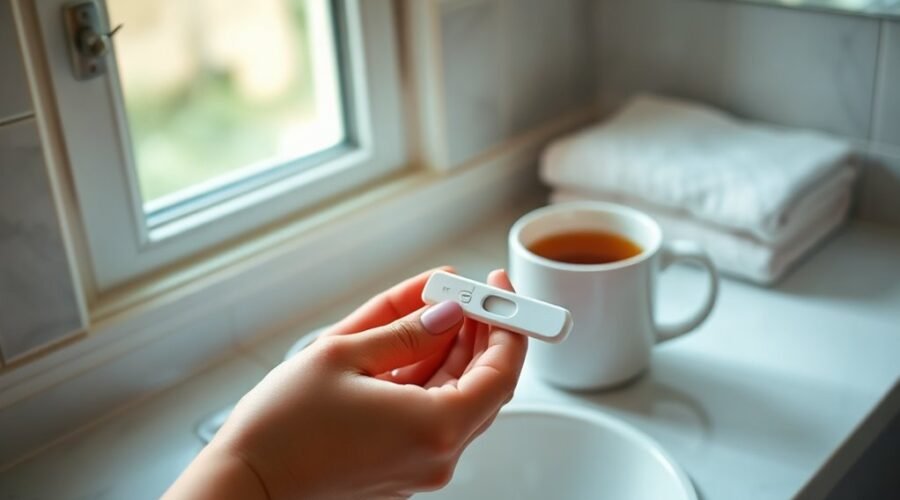
Deciding when to take an ovulation test morning or night depends on the type of kit you use. For most standard luteinizing hormone (LH) test strips, late morning through early evening (roughly 10 a.m. to 8 p.m.) is often preferred because LH typically begins rising in the bloodstream in the early morning and takes several hours to concentrate in urine. However, many digital ovulation tests specifically instruct using first-morning urine, so always check your brand’s package insert first.
When to Take an Ovulation Test Morning or Night: Timing Comparison
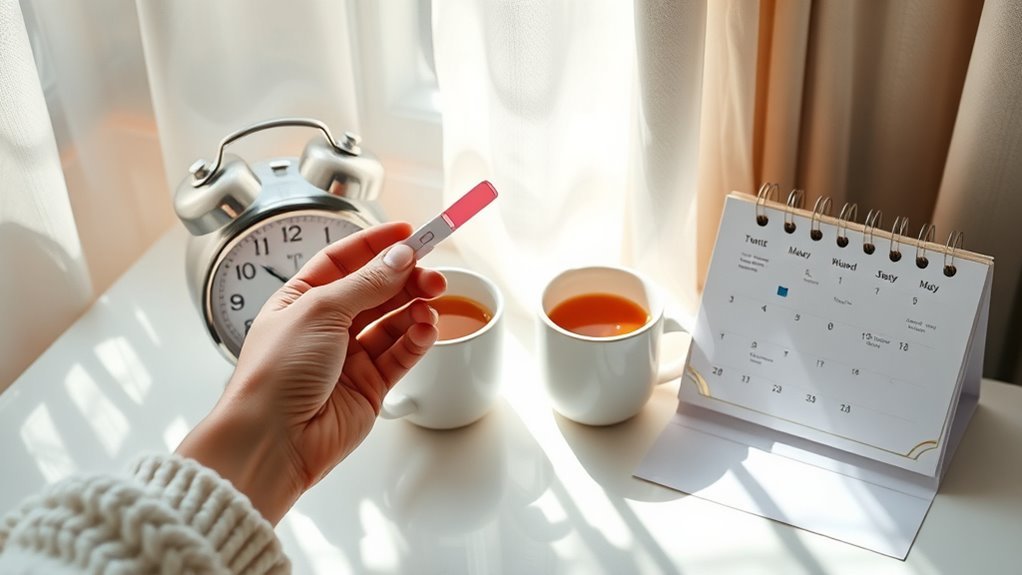
Ovulation predictor kits (OPKs) detect a surge in luteinizing hormone, which signals your ovary to release an egg—typically within 12 to 36 hours of a positive result. Because LH surges can be brief, picking the right time of day helps you avoid false negatives.
| Testing Window | Best Kit Type | Pros | Limitations |
|---|---|---|---|
| First-Morning Urine (Upon Waking) | Digital ovulation tests (e.g., dual-hormone monitors) and brands that specify FMU | Concentrated sample; easy daily habit; less affected by daytime fluid intake | May miss a strip-detected LH surge that just began in the bloodstream at dawn |
| Late Morning to Early Evening (10 a.m.–8 p.m.) | Standard paper LH test strips | Matches the daytime window when morning bloodstream LH appears in urine | Requires limiting fluids for ~2 hours beforehand to avoid diluted urine |
| Twice Daily (Midday + Early Evening) | Standard LH strips as the test line starts darkening | Reduces the chance of missing a rapid, short-lived LH surge | Uses more strips and requires two consistent testing windows |
How to Time Ovulation Tests Step by Step
- Find your starting cycle day: Count day 1 as the first day of full menstrual flow. A common rule of thumb is subtracting 17 from your shortest recent cycle length (for example, starting around cycle day 11 for a 28-day cycle, or day 9 for a 26-day cycle).
- Test at the same time each day: Pick a consistent window—such as midday or late afternoon for strips, or upon waking for digital kits—so you can compare line progression accurately across days.
- Limit fluids for 2 hours beforehand: You do not need to dehydrate yourself, but avoiding large glasses of water or coffee right before testing prevents diluted urine from masking an LH rise.
- Read within the exact window: Check the strip at the exact minute listed on the box (commonly 3 to 5 minutes). Reading too late can show misleading dry marks.
- Increase to twice daily as lines darken: Once the test line approaches the shade of the control line, testing around midday and again in the early evening helps catch a brief surge.
How to Read a Positive Ovulation Test
Unlike home pregnancy tests—where even a light colored line inside the window can indicate pregnancy—standard LH strips are only positive when the test line is as dark as or darker than the control line. Most people have small baseline amounts of LH throughout the month, so a faint second line on an ovulation strip is normally negative. (If you are later taking a pregnancy test during the two-week wait, read our guides on reading a very faint line on a pregnancy test and telling a faint positive from an evaporation line.)
Testing With Irregular Cycles and Key Limitations
If your cycles vary widely in length, start testing based on your shortest cycle over the past six months and pair OPKs with secondary fertility signs such as fertile cervical mucus or basal body temperature tracking. Keep these important limitations in mind:
- PCOS and elevated baseline LH: Conditions like polycystic ovary syndrome (PCOS) can cause persistently high LH levels, leading to multiple or false-positive readings without ovulation.
- Anovulatory surges: An LH surge signals that the body is trying to ovulate, but it does not guarantee an egg is released.
- Hormone medications: Fertility injections containing hCG or prescription hormone therapies can alter readings; check with your clinician before relying on home strips.
If you track for several cycles without seeing a clear surge—or if you are trying to conceive for 12 months under age 35 (or 6 months at age 35 or older)—consult a healthcare provider. Once you confirm ovulation and reach your missed period, see our overview of how accurate home pregnancy tests are before testing for pregnancy.
Frequently Asked Questions
Can medications affect ovulation test results?
Yes. Fertility medications containing hCG or certain hormones can trigger false positives, while hormonal contraceptives suppress ovulation. Always review your medication list with a clinician if ovulation strips give confusing results.
Do different ovulation test brands have different timing rules?
Yes. Many paper LH test strips recommend late morning through early evening (roughly 10 a.m. to 8 p.m.), while several digital fertility monitors specifically require first-morning urine. Always follow the package insert for your brand.
Can an ovulation test predict the exact hour of ovulation?
No. An ovulation predictor kit detects the luteinizing hormone (LH) surge that triggers ovulation, which typically occurs about 12 to 36 hours after a positive test. It identifies your most fertile window rather than an exact hour.
Should I take an ovulation test right after drinking a lot of water?
No. Drinking large amounts of fluid right before testing dilutes urine and can lower LH concentration below the strip threshold, causing a false negative. Limiting fluids for about 2 hours before testing gives a clearer reading.
Does basal body temperature confirm a positive ovulation test?
Yes, used together they complement each other. An ovulation test predicts ovulation before it happens by detecting the LH surge, while a sustained rise in basal body temperature (BBT) afterward confirms that ovulation likely occurred.

[…] provides the most concentrated urine sample of the day. (Tracking your cycle closely? Our guide on when to take an ovulation test explains how timing differs for LH vs. […]