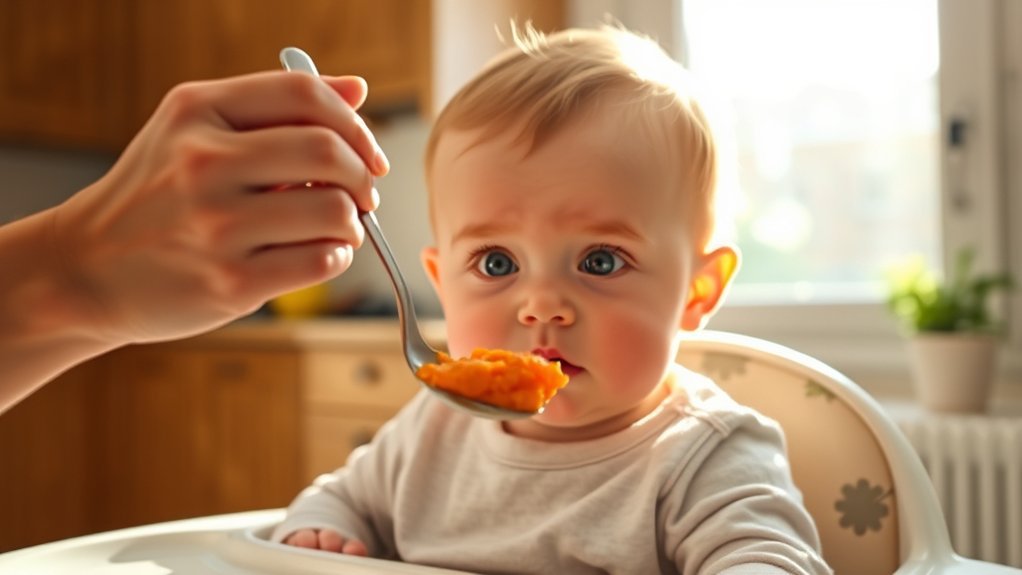
When a baby refuses solid foods, the reason is often simple: they may not be developmentally ready, they may be tired or too hungry, or they may still be learning how to move unfamiliar textures around their mouth. A brief setback during teething or illness can also happen. The goal is not to force bites, but to keep meals safe, calm, and responsive while watching for warning signs.
Quick Answer
Most babies start solids at about 6 months when they can sit with support, control their head, open for food, and swallow instead of pushing food out. Offer tiny amounts without pressure, keep breast milk or formula as the main nutrition source, and contact a pediatrician if refusal is persistent or comes with pain, coughing, vomiting, breathing trouble, dehydration, or poor growth.
Key Takeaways
- Current guidance recommends starting complementary foods at about 6 months; introducing them before 4 months is not recommended.
- Turning away, closing the mouth, or pushing food away are fullness or refusal cues—not a reason to force another bite.
- Start with small amounts of soft, age-appropriate food and include iron-rich choices as skills improve.
- Gagging can occur while learning, but choking, breathing trouble, repeated coughing, or a wet-sounding voice needs urgent attention.
- Persistent refusal, painful meals, vomiting, dehydration, or poor weight gain should be discussed with your baby’s health care professional.
At a Glance
| Practice Time | About 10–20 minutes per meal; stop sooner if your baby becomes upset or tired |
| Difficulty | Usually easy to moderate; learning may take days or weeks |
| Tools Needed | Upright high chair, baby spoon, bib, open cup or trainer cup, and soft age-appropriate food |
| Cost | Low; many suitable foods can be mashed from the family meal before salt or sugar is added |
Medical note: This article provides general education and cannot diagnose feeding, swallowing, growth, digestive, or allergy problems. A pediatrician can assess your baby’s individual development and nutrition needs.
Why Your Baby May Be Refusing Solid Foods

Food refusal is not always a sign that something is wrong. Eating from a spoon, bringing food to the mouth, moving it with the tongue, chewing, and swallowing are new skills. Early meals are practice, and a baby may lick, smear, spit out, or ignore more food than they swallow.
Your Baby May Not Be Ready Yet
The CDC recommends introducing solid foods at about 6 months, once developmental signs are present. Starting before 4 months is not recommended. A baby who still pushes most food out, slumps in the seat, or cannot control their head may need more time.
New Textures and Oral Skills Take Practice
The tongue-thrust reflex helps protect young babies by pushing unfamiliar material forward. Pushing food out does not necessarily mean your baby dislikes it or feels pain. It may mean they have not yet learned to move food from the front of the mouth toward the throat. Pause and try again later with a smoother or thinner texture.
Timing, Hunger, and Tiredness Can Work Against You
A baby who is extremely hungry may want the faster, familiar flow of breast milk or formula. A baby who just finished a full milk feed may not be interested in food. Tiredness, skipped naps, distractions, and long meals can also lead to refusal. Aim for a calm time when your baby is alert and mildly hungry.
Teething, Illness, Constipation, or Pain May Reduce Interest
Tender gums, a stuffy nose, a sore throat, constipation, reflux, mouth sores, or another illness can make eating less comfortable. Offer softer or cool foods that are already safe for your baby, but do not assume fever, severe diarrhea, repeated vomiting, or marked sleepiness is “just teething.” Contact your pediatrician when symptoms are significant or do not improve.
Pressure Can Create a Negative Mealtime Pattern
Repeatedly pushing the spoon toward a closed mouth, distracting a baby into taking bites, or insisting on “one more bite” can make meals stressful. Your job is to offer safe food in a supportive setting. Your baby decides whether to eat and how much.
Medical, Sensory, or Feeding-Skill Problems Can Cause Refusal
Some babies refuse food because chewing or swallowing is hard, certain textures feel overwhelming, or eating causes pain. Reflux, food allergy, oral-motor delay, prematurity, heart or lung conditions, and other medical issues can contribute. Persistent refusal deserves an individual assessment rather than more pressure at the table.
Developmental Readiness for Solid Foods
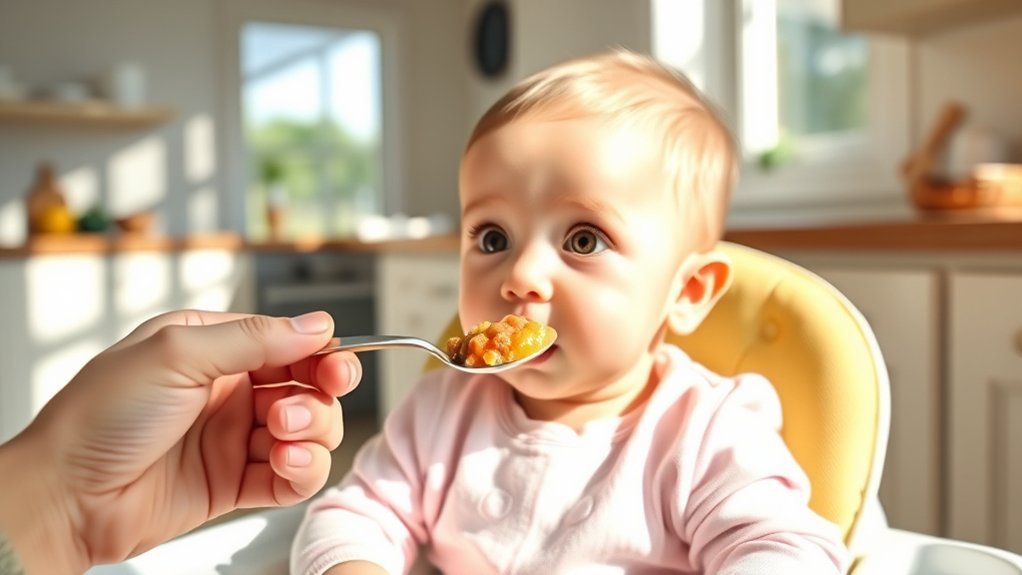
Age matters, but readiness is based on a group of skills. Most babies are ready at about 6 months, not simply on the day they reach a certain age or weight.
Signs Your Baby Is Ready
- Sits upright alone or with support and stays stable in the feeding seat.
- Controls the head and neck throughout the meal.
- Opens the mouth or leans toward food when it is offered.
- Brings hands and objects to the mouth.
- Swallows some food instead of pushing nearly all of it onto the chin.
- Can move food from the front toward the back of the tongue.
Interest in your plate is useful, but it is not enough by itself. Waking more at night, chewing hands, or reaching a certain weight does not replace the full readiness checklist.
How Feeding Skills Progress
Early food may be smooth and easy to swallow. As your baby gains control, gradually move toward thicker mashed foods, soft lumps, and safe finger foods. Self-feeding can begin before the pincer grasp develops; babies often pick up larger soft pieces with the whole hand first. The later pincer grasp helps with smaller pieces, but it is not required for accepting solids.
A baby’s first meals are skill-building sessions. A few tastes, touches, or licks can still count as progress.
How to Encourage Your Baby to Eat Solid Foods
1. Choose a Calm, Alert Time
Seat your baby upright in a secure high chair with good trunk and head support. Turn off screens, reduce noise, and avoid feeding while your baby is lying down, crawling, walking, riding in a stroller, or riding in a car.
2. Take the Edge Off Extreme Hunger
If your baby becomes frantic at meals, offer a small amount of breast milk or formula first, then try a few tiny spoonfuls or safe finger foods. At first, breast milk or infant formula remains the main source of nutrition, so do not withhold milk to make a baby hungry enough to eat.
3. Start With Very Small Portions
Begin with a half-spoonful or a teaspoon or two. A large bowl can make caregivers feel that the baby “should” finish it. Small servings keep expectations realistic, and you can offer more when the baby opens their mouth, reaches for food, or shows excitement.
4. Follow Hunger and Fullness Cues
Offer another bite when your baby opens their mouth, leans forward, or reaches for food. Stop when they close their mouth, turn away, push food aside, arch away, or become upset. The CDC advises letting children decide how much they want rather than requiring them to empty a jar or plate.
5. Offer Safe Variety Without Overwhelming Them
Pair one familiar food with one newer taste or texture. Let your baby touch, smell, mash, and self-feed when safe. Repeated calm exposure can improve acceptance, but there is no required number of tries and no need to keep serving a food that causes a reaction or significant distress.
6. Model Eating Together
Sit with your baby and eat when practical. Smile, talk, and show chewing without turning the meal into a performance. Babies learn through watching, and shared meals make food feel like a normal family activity.
7. Keep Meals Brief and End Neutrally
Most practice meals do not need to last more than about 10 to 20 minutes. If your baby repeatedly cries, shuts down, or throws everything away, end the meal calmly and try again at the next planned opportunity. Avoid praise that depends on the amount eaten; praise curiosity and participation instead.
Pro Tip: Keep a simple three-day note of meal time, milk timing, food texture, symptoms, and your baby’s response. Patterns such as refusal only when tired, coughing with thin liquids, or pain after certain foods can help your pediatrician identify the next step.
Gagging vs. Choking: Know the Difference
Gagging is a protective reflex and can happen as babies learn new textures. A gagging baby may make noise, cough, push the tongue forward, or become red in the face. Stay calm, stop offering more food, and let the baby recover while watching closely.
Choking means the airway is blocked. A choking baby may be unable to cry, cough effectively, or breathe, and may become pale or blue. This is an emergency.
Warning: Call 911 immediately if your baby cannot breathe, cry, or cough effectively. Learn age-appropriate infant choking first aid before starting solids, supervise every meal, and follow current CDC choking-prevention guidance.
What Foods and Textures Should You Offer?
There is no required order for first foods. Focus on nutrient-dense choices that match your baby’s skills. Make food soft enough to mash between your fingers or with a fork, remove bones and pits, and adjust size and shape to reduce choking risk.
Include Iron-Rich Foods Regularly
At about 6 months, iron-rich foods become especially important. Options include smooth or finely shredded meat, mashed beans or lentils, tofu, egg, and iron-fortified infant cereal. Serve plant sources with a vitamin C-rich food such as soft broccoli, tomato, strawberry, or sweet potato when appropriate.
Try More Than One Safe Texture
- Smooth: thin mashed beans, plain yogurt, iron-fortified cereal, or pureed meat and vegetables.
- Mashed: avocado, banana, sweet potato, soft-cooked vegetables, or egg.
- Soft finger foods: strips or pieces that are developmentally appropriate, soft enough to squash easily, and shaped to reduce choking risk.
If one method is not working, you can combine spoon-feeding and self-feeding. The safest approach is the one that matches your baby’s posture, oral skills, and supervision.
Introduce Common Allergens Safely
Once your baby is ready for solids, common allergens such as well-cooked egg, dairy foods, peanut in a thinned smooth form, wheat, soy, sesame, fish, and shellfish can be introduced in baby-safe textures. Offer one new allergen at a time when your baby is healthy and you can watch for a reaction. Never give whole nuts or a thick spoonful of nut butter.
If your baby has severe eczema, an existing food allergy, or a previous reaction, ask the pediatrician how and when to introduce allergens. The American Academy of Pediatrics lists possible food-allergy symptoms, including hives, swelling, vomiting, coughing, wheezing, trouble swallowing, and changes in alertness or skin color.
Warning: Call 911 for breathing trouble, throat or tongue swelling, blue or very pale skin, collapse, or symptoms affecting more than one body system after eating. Use prescribed epinephrine immediately if your child has an allergy action plan that directs you to do so.
Foods and Drinks to Avoid or Limit
- No honey before 12 months because of infant botulism risk.
- Do not use cow’s milk or plant-based beverages as the main drink before 12 months; continue breast milk or iron-fortified infant formula.
- No juice before 12 months, and avoid added sugars and high-sodium foods.
- Avoid unpasteurized milk, juice, yogurt, or cheese.
- Avoid whole grapes, whole nuts, popcorn, hard raw vegetables, chunks of meat or cheese, sausages, sticky candy, and thick spoonfuls of nut butter.
- Do not put cereal or other solid food in a bottle unless your baby’s clinician has given a specific medical instruction.
See the CDC’s current list of foods and drinks to avoid or limit for infants.
When to Get Help for Your Baby’s Eating Issues
There is no single age cutoff that diagnoses a feeding problem. What matters is the pattern, your baby’s safety, growth, hydration, comfort, and progress with age-appropriate skills.
| When to Act | Signs |
|---|---|
| Call 911 now | Cannot breathe, cry, or cough effectively; turns blue; collapses; or develops signs of a severe allergic reaction. |
| Contact a clinician promptly | Repeated coughing or choking during meals, breathing changes, a wet or gurgly voice, repeated vomiting, blood in stool or vomit, significant pain, or signs of dehydration. |
| Schedule an evaluation | Poor weight gain, meals regularly lasting more than about 30 minutes, refusal of nearly all age-appropriate textures, loss of skills, extreme distress, or little progress after several weeks of calm practice. |
A pediatrician can check growth, mouth pain, reflux, constipation, allergies, and medical causes. Depending on the concern, the care team may include a pediatric dietitian, speech-language pathologist, occupational therapist, gastroenterologist, or allergist. The American Speech-Language-Hearing Association identifies coughing, choking, prolonged meals, texture refusal, vomiting, and poor growth as possible feeding-disorder signs.
Creating a Positive Mealtime Environment for Your Baby

A positive mealtime is safe, predictable, and free from pressure. It does not require a clean plate or a certain number of bites.
- Connect first: Make eye contact, talk calmly, and sit close enough to supervise.
- Offer manageable choices: Present one familiar item and one newer item rather than a crowded tray.
- Allow exploration: Touching, smelling, licking, and squashing food are part of learning.
- Accept the mess: Use a bib or floor mat, but do not wipe your baby’s face after every bite unless needed for safety or comfort.
- Respect “all done”: End the meal when your baby repeatedly turns away, closes their mouth, or becomes distressed.
- Keep a routine: Offer food at regular opportunities while continuing normal breast milk or formula feeds.
Consistency matters more than any single meal. Some days your baby may eat several spoonfuls; on other days, they may only touch the food. Look for gradual progress across weeks, not perfection at every sitting.
Frequently Asked Questions
Can teething make my baby refuse solid foods?
Yes. Tender gums may briefly make chewing or textured foods less comfortable. Offer familiar soft or cool foods and avoid forcing bites. Contact your pediatrician if your baby also has high fever, repeated vomiting, severe diarrhea, marked sleepiness, dehydration, or symptoms that seem more serious than mild teething discomfort.
How can I tell if my baby is ready for solids?
Most babies are ready at about 6 months when they can sit upright with support, control their head and neck, open for food, bring objects to the mouth, and swallow some food instead of pushing nearly all of it out. Readiness is based on the full skill set, not age or weight alone.
Is it normal for babies to have days when they reject everything?
An occasional low-interest day can happen, especially with tiredness, teething, constipation, or mild illness. Continue breast milk or formula and offer another calm food opportunity later. Seek medical advice when refusal persists, fluid intake drops, wet diapers decrease, eating appears painful, or growth is a concern.
What are good first foods for a baby who refuses solids?
Try tiny amounts of smooth, iron-rich food such as iron-fortified infant cereal, pureed meat, mashed beans, tofu, or well-cooked egg. You can also offer mashed avocado, banana, sweet potato, or plain yogurt. Choose a texture your baby can manage and gradually make it thicker as skills improve.
How can I tell if my baby is allergic to a food?
Possible signs include hives, swelling, vomiting, diarrhea, coughing, wheezing, trouble swallowing, unusual paleness, or sudden limpness. Stop the food and contact your pediatrician for mild symptoms. Call 911 for breathing trouble, throat or tongue swelling, blue or very pale skin, collapse, or a severe multi-system reaction.
Should I offer solids before or after breast milk or formula?
There is no single schedule that works for every baby. Early on, try solids when your baby is alert and mildly hungry. If they become frantic, give a little breast milk or formula first. Do not reduce needed milk feeds simply to create hunger; breast milk or infant formula remains the main nutrition source during the early transition.
When is gagging a reason to call the pediatrician?
Occasional gagging can happen while learning. Call the pediatrician when gagging is frequent, severe, happens with most textures, causes repeated vomiting, or comes with coughing, choking, breathing changes, a wet-sounding voice, long meals, distress, or poor growth. Call 911 if your baby cannot breathe, cry, or cough effectively.
Conclusion
A baby refusing solid foods usually needs more time, a better-timed meal, a safer texture, or less pressure—not a battle over bites. Start at about 6 months when readiness signs are present, keep portions small, continue breast milk or formula, and let your baby guide how much they eat. Seek professional help when refusal is persistent, eating seems painful or unsafe, hydration or growth is affected, or your instincts tell you something is not right.
Sources
- CDC: When, What, and How to Introduce Solid Foods — readiness, timing, texture progression, and allergen introduction.
- CDC: Signs Your Child Is Hungry or Full — responsive feeding and fullness cues.
- CDC: Choking Hazards — safe positioning, supervision, preparation, and high-risk foods.
- CDC: Foods and Drinks to Avoid or Limit — honey, cow’s milk, juice, sodium, added sugar, and unpasteurized foods.
- American Academy of Pediatrics: Food Allergies in Children — allergy symptoms, early introduction, and emergency response.
- American Speech-Language-Hearing Association: Signs of Pediatric Feeding Disorder — feeding and swallowing red flags and referral guidance.