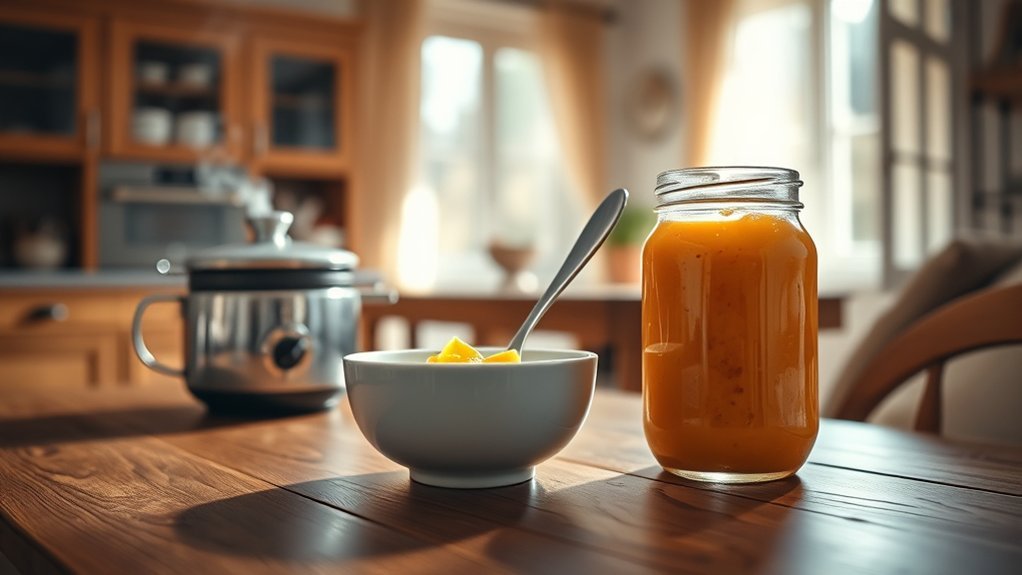
If you are wondering whether to warm baby food, you usually do not have to. Ready-to-eat baby food can be served cold, at room temperature, or lukewarm if your baby accepts it. The bigger safety issues are clean handling, correct storage, even reheating, and preventing hot spots before a spoon reaches your baby.
Quick Answer
You do not need to warm baby food just because it is for a baby. Serve ready-to-eat food at a safe temperature your baby accepts. If you reheat previously cooked food, heat it thoroughly, stir well, then cool it until lukewarm before feeding.
At a Glance
| Time Required | About 15 seconds for 4 ounces in a microwave, plus stirring and a 30-second stand; other methods take longer |
| Difficulty | Easy |
| Tools Needed | Clean spoon, microwave-safe dish or small saucepan, and an optional food thermometer |
| Cost | Usually no additional cost |
Does Baby Food Need to Be Warm?
No. Baby food does not need to be warm for it to be acceptable to serve. Some babies prefer refrigerated food, while others are more comfortable with room-temperature or lukewarm puree.
Warming can soften a thick refrigerated puree and release more aroma, which may make the food more appealing. It is still a preference step, not something every serving needs.
Try safe temperatures that fit your routine and watch your baby’s response. A baby who refuses a cold puree may accept the same food when it is slightly warm, while another may prefer it chilled.
Baby food may be served cold, at room temperature, or lukewarm. Safety depends more on clean handling, correct storage, and proper reheating than on making every meal warm.
Note: This guide covers general food-safety practices for solid baby food. Ask your pediatrician for individualized advice if your baby was born prematurely, has a weakened immune system, has swallowing difficulties, or requires a medically prescribed diet.
How to Warm Baby Food Safely
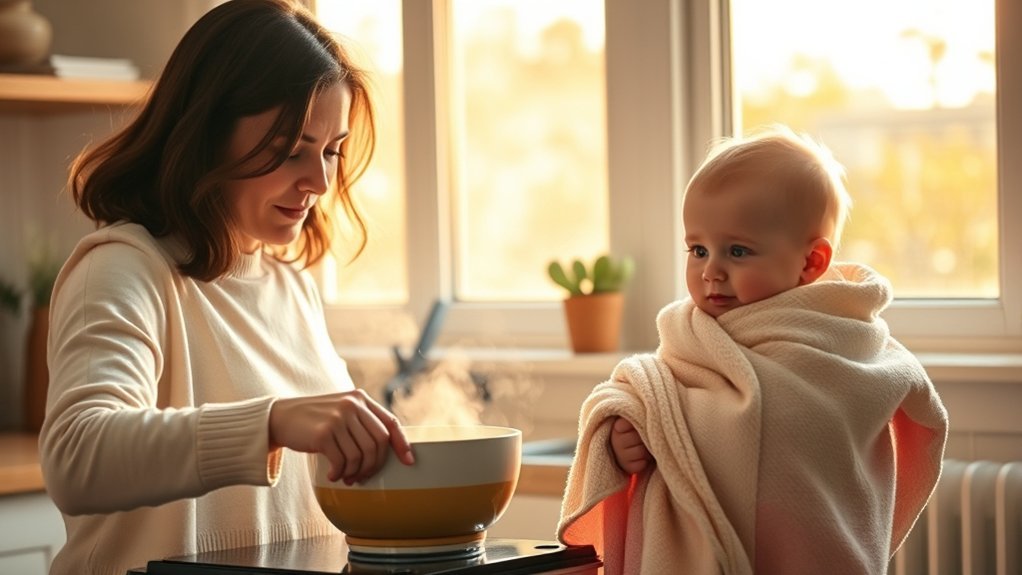
Warm only one serving at a time, use a clean dish, and stir before testing the temperature. Ready-to-eat puree only needs gentle warming for preference, while previously cooked refrigerated food should be reheated thoroughly and then cooled before your baby eats it.
- Wash your hands and use clean utensils. Clean the feeding dish, spoon, preparation surface, and any equipment you will use.
- Remove only one serving. Keep the remaining food refrigerated so the full container is not repeatedly warmed and cooled.
- Transfer the food to a suitable dish. Do not microwave baby food in a commercial jar or pouch. Put one serving in a microwave-safe dish so you can stir and check it evenly.
- Choose a heating method. Use a microwave, stovetop, or warm-water bath as described below.
- Heat according to the food’s history. Gently warm ready-to-eat puree until lukewarm if desired. Heat previously cooked and chilled food thoroughly, then let it cool before serving.
- Stir thoroughly. Scrape around the sides and across the bottom so hotter and cooler areas mix together.
- Let microwaved food stand for at least 30 seconds. The standing time helps heat spread more evenly.
- Test with a separate clean spoon. The serving portion should feel lukewarm, not hot. Do not judge the food by the temperature of the container.
- Stay with your baby while feeding. Discard food left in the feeding bowl after the meal.
Warning: These microwave instructions apply to solid baby food only. Do not microwave breast milk or infant formula. The FDA warns that uneven heating can create hot spots capable of burning a baby’s mouth or throat.
FoodSafety.gov’s solid baby-food guidance says to transfer food to a separate dish, stir it, let it stand for 30 seconds, and taste-test before feeding. It describes food that is ready for a baby as lukewarm.
What Temperature Should Baby Food Be?
There is no universal federal serving-temperature range for baby food. FDA and FoodSafety.gov guidance uses a practical standard: food that reaches the baby should feel lukewarm, not hot, after thorough stirring and testing.
Reheating temperature is different from serving temperature. For previously cooked leftovers, FoodSafety.gov lists 165°F (74°C) for reheating leftovers. After reheating, cool the baby’s portion until it is comfortable to eat.
- Ready-to-eat puree warmed for preference: Serve it lukewarm, not hot.
- Previously cooked refrigerated food: Reheat it thoroughly; 165°F (74°C) is the general U.S. leftover standard. Then cool it before serving.
- Microwaved food: Stir well, let it stand for at least 30 seconds, and test more than one area because hot spots can remain.
A food thermometer can confirm that reheated food reached the target temperature. You should still stir, cool, and test the portion because one reading does not prove every spoonful is the same temperature.
Pro Tip: After stirring, spread the warmed food into a thinner layer in the bowl. It will cool faster and make unusually hot areas easier to notice before feeding.
Benefits of Serving Warm Baby Food
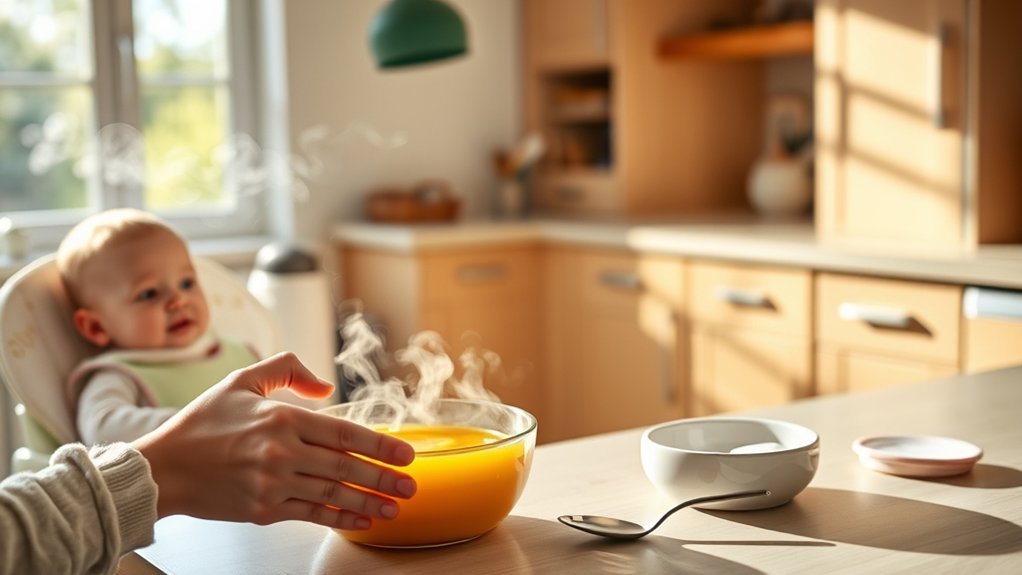
Warm food is not automatically healthier than cold food, but gentle warming can make some foods easier for a baby to accept. The main benefits are changes in texture, aroma, and familiarity rather than a special nutritional advantage.
- Familiarity: Some babies find lukewarm food more familiar than refrigerator-cold food.
- Softer texture: Refrigerated puree may thicken. Gentle warming and stirring can restore a smoother consistency.
- Stronger aroma: Warmth can release more aroma, which may make a food more appealing.
- Easier mixing: Foods containing natural fats may blend more evenly once they are no longer refrigerator-cold.
- Greater acceptance: A baby who refuses a cold food may accept it when served lukewarm.
These benefits vary by baby. They do not mean every meal needs heating, and they do not make safely stored cold baby food unsuitable.
Drawbacks of Warming Baby Food
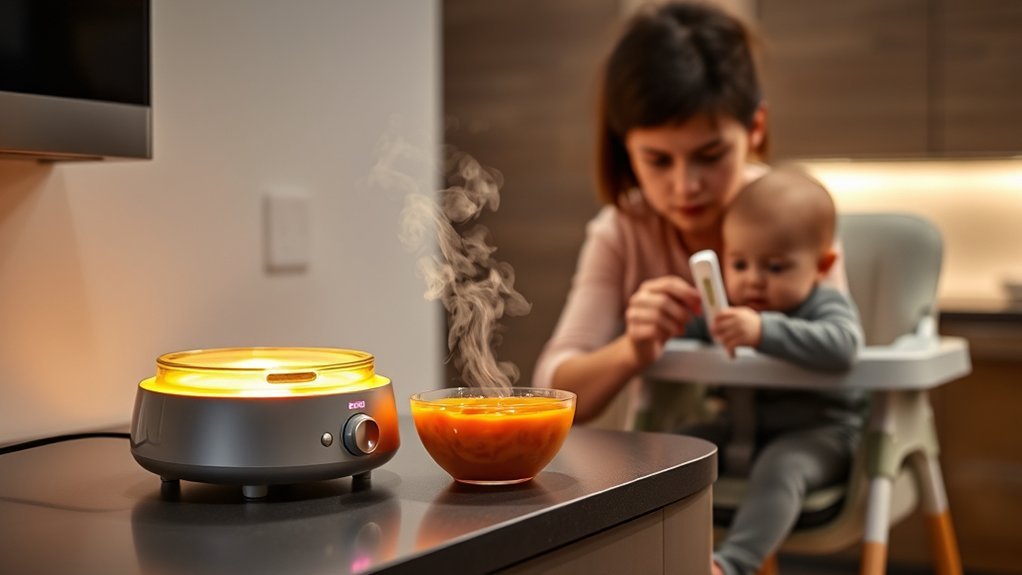
The main downsides of warming baby food are burns, extra handling, and reduced convenience. Overheating can also dry a puree or change its texture, so the goal is safe, even warming rather than making the food very hot.
- Hot spots: Uneven microwave heating can burn a baby’s mouth.
- Repeated reheating: Warming the same portion several times adds handling and can lower food quality.
- Extra handling: Every transfer, spoon, and container is another point where contamination can occur if equipment is not clean.
- Loss of moisture: Excessive heating can make puree thick, dry, or less pleasant to eat.
- Temperature dependence: If a baby becomes used to every meal being warm, feeding can be less convenient when safe heating is unavailable.
Warm only what you expect your baby to eat. That keeps the untouched portion cold, reduces waste, and makes it easier to discard anything contaminated during feeding.
Safe Methods for Heating Baby Food
You can warm baby food in a microwave, on the stovetop, or in a warm-water bath. The safest method is the one that lets you heat evenly, stir thoroughly, and test the final serving before it reaches your baby.
| Method | How to Use It | Important Caution |
|---|---|---|
| Microwave | Transfer the food to a microwave-safe dish. For 4 ounces of solid food, FoodSafety.gov gives about 15 seconds on high power, followed by stirring. | Let it stand for at least 30 seconds, then stir and test. Microwave power and portion size vary, so do not rely on the container temperature. |
| Stovetop | Place the serving in a small saucepan over low heat. Stir often and remove it from the heat when it is evenly warmed or fully reheated. | The pan can stay hot after the burner is off. Transfer the food to a feeding bowl and test it before serving. |
| Warm-Water Bath | Put one serving in a heat-safe bowl, then set that bowl in a larger bowl of hot water. Stir the food as it warms. | Keep water out of the food and use a bowl made to tolerate warm water. |
Use the stovetop for baby-food meats, meat sticks, and egg-based foods. FoodSafety.gov advises against microwaving these foods because their higher fat content can lead to rapid overheating and splattering.
How to Avoid Hot Spots When Microwaving Baby Food
A microwave can warm solid baby food safely only if you account for uneven heating. The center of food heated in a jar can become much hotter than food near the glass, so touching the container is not a reliable safety check.
- Transfer one serving to a shallow microwave-safe dish.
- Cover it loosely so steam can escape.
- For about 4 ounces of solid food, microwave for about 15 seconds on high power.
- Stir from the center outward, scraping the bottom and sides.
- Let the food stand for at least 30 seconds.
- Stir again and test several areas with a separate clean utensil.
- If it is still too cool and needs more heating, use a brief additional interval, then repeat the stir, stand, and test routine before serving.
The FDA’s solid baby-food microwave guidance recommends transferring food out of the jar, stirring, allowing a 30-second standing period, and taste-testing before feeding.
What Baby Food Temperatures Do Babies Prefer?
Babies do not share one preferred food temperature. Some readily eat food cold from the refrigerator, while others are more willing to eat the same puree at room temperature or lukewarm.
Start with a safe temperature that is convenient for you. If your baby turns away but otherwise appears hungry, try the same food at a different safe temperature during another feeding.
Previously cooked food may be steaming hot during reheating, but it should not still be steaming when you feed it. Stir and cool it first, then test the serving from more than one area.
How to Serve Baby Food Cold Safely
Cold baby food can be safe when it has been stored correctly and your baby accepts it. Keep perishable food at 40°F (4°C) or below, portion it with clean utensils, and discard food from the feeding bowl after the meal.
If you are taking meals away from home, our baby food travel packing tips explain how to keep perishable food cold until feeding time.
| Step | Safe Practice |
|---|---|
| Keep It Cold | Store perishable baby food in a refrigerator set to 40°F or below. |
| Check the Date | Follow the package instructions or the food-specific storage limits in the next section. |
| Portion It First | Spoon one serving into a clean feeding bowl instead of feeding from the storage container. |
| Stir Well | Mix the food to restore an even consistency and check for ice crystals if it was recently thawed. |
| Discard the Serving | Throw away food remaining in the feeding bowl once the meal is over. |
Best Practices for Storing and Reheating Baby Food
Storage matters as much as warming. Babies and children under five have a higher risk of foodborne illness, so refrigerate perishable foods promptly, keep feeding utensils clean, and avoid saving food contaminated by saliva. The CDC recommends extra care with food prepared for young children.
Baby Food Refrigerator and Freezer Times
The following limits come from the FoodSafety.gov baby-food storage chart. Use the package label when it gives a shorter storage period.
| Opened or Freshly Made Food | Refrigerator | Freezer |
|---|---|---|
| Strained fruits and vegetables | 2–3 days | 6–8 months |
| Strained meats and eggs | 1 day | 1–2 months |
| Meat-and-vegetable combinations | 1–2 days | 1–2 months |
| Homemade baby food | 1–2 days | 1–2 months |
Key Takeaways
- Cold, room-temperature, and lukewarm ready-to-eat baby food can all be workable choices when storage and handling are safe.
- For microwaved solid food, transfer it out of the jar, stir well, let it stand 30 seconds, and test before feeding.
- FoodSafety.gov lists 165°F (74°C) as the general reheating temperature for leftovers; cool the baby’s portion before serving.
- Opened or freshly made baby food has short refrigerator limits that vary by food type, from 1 day to 2–3 days in the federal chart.
- Discard anything left in the feeding bowl and keep untouched food separate so it can remain safely refrigerated.
Cooling, Thawing, and Reheating Rules
For batch-cooked baby food, cool, chill, thaw, and reheat in a way that limits time at unsafe temperatures. The NHS gives extra baby-specific guidance, including a one-reheat rule for cooked food and tighter handling rules for rice.
- Cool cooked food promptly: The NHS recommends cooling batch-cooked baby food ideally within one to two hours before refrigerating or freezing it.
- Keep the refrigerator cold: Set it to 40°F (4°C) or below.
- Thaw safely: Defrost frozen baby food in the refrigerator or use a microwave’s defrost setting. Do not thaw it on the counter.
- Use thawed food promptly: NHS guidance recommends using fully defrosted food within 24 hours.
- Reheat cooked baby food only once: Reheat a single portion and keep the rest chilled.
- Heat throughout: Previously cooked food should be steaming hot throughout before it is cooled for serving.
- Discard contaminated portions: Do not save food that has touched your baby’s spoon, mouth, or feeding bowl.
- Follow special rice precautions: Cool cooked rice within one hour, refrigerate it promptly, use it within 24 hours, and reheat it no more than once.
The NHS provides additional guidance on storing, defrosting, and reheating baby food, including the one-reheat rule and the need to discard half-eaten portions.
Pro Tip: Freeze homemade baby food in single-meal portions and label each container with the food and preparation date. Smaller portions thaw faster and prevent the full batch from being warmed unnecessarily.
Frequently Asked Questions
Does baby food need to be warmed?
No. Ready-to-eat baby food can be served cold, at room temperature, or lukewarm if it has been stored and handled safely. Warming is mainly a matter of your baby’s preference.
Can I microwave baby food in its jar?
No. Transfer one serving to a microwave-safe dish before heating it. Stir thoroughly, let it stand for at least 30 seconds, then test several areas so a hidden hot spot does not burn your baby.
How long can I store warmed baby food?
Do not save food from your baby’s feeding bowl after the meal. For untouched perishable food, the general U.S. rule is no more than two hours at room temperature, or one hour when the temperature is above 90°F (32°C).
Is it safe to reheat baby food multiple times?
For cooked baby food, the NHS recommends reheating only once. Portion out only what you expect your baby to eat and keep the rest refrigerated so you do not repeatedly warm and cool the same food.
What are signs that baby food is too hot?
Do not serve baby food while it is still steaming or feels hot rather than lukewarm after stirring. Let it cool, stir again, and test more than one area because microwaved food can contain hotter pockets.
Can I add water to baby food when warming it?
Yes. A small amount of safe drinking water can thin a puree that becomes too thick during refrigeration or heating. Add a little at a time and stir well, but never dilute infant formula beyond the exact mixing directions on its label.
Conclusion
You do not need to warm baby food simply because it is for a baby. For ready-to-eat food, choose a safe temperature your baby accepts; for previously cooked food, reheat thoroughly, stir, and cool it until lukewarm before serving.
The simplest routine is to portion first, heat only what you need, test more than one area, stay with your baby during the meal, and discard leftovers from the feeding bowl.
Sources
- FoodSafety.gov — Children Under Five — baby-food storage limits, safe microwaving, lukewarm serving guidance, and stovetop guidance for meats and eggs
- FoodSafety.gov — Safe Minimum Internal Temperatures — 165°F (74°C) reheating temperature for leftovers
- U.S. Food and Drug Administration — Once Baby Arrives — safe microwave handling of solid baby food and the warning against microwaving milk or formula
- NHS — Storing and Reheating Baby Food — cooling, thawing, reheating once, rice precautions, and discarding half-eaten portions
- NHS — Children’s Food Safety and Hygiene — food preparation, refrigeration, reheating, and serving precautions
- FoodSafety.gov — Four Steps to Food Safety — refrigerator temperatures, two-hour limits, and safe reheating temperatures
- Centers for Disease Control and Prevention — Safer Food Choices for Children Under Five — why young children require extra food-safety precautions