


If your baby coughs while eating solids, it’s usually a normal reflex to help clear their airway. Stay calm and reassure your baby as they learn to manage their gagging reflex. Remember, gagging is different from choking; watch for signs of distress or an allergic reaction. Positioning your baby upright and offering appropriate food textures can help reduce gagging incidents. Discover more essential tips and guidelines to support your baby’s feeding journey.
Key Takeaways
- Stay calm and reassure your baby during coughing episodes, allowing them to self-regulate and learn to manage their gag reflex.
- Monitor for signs of distress or allergic reactions and avoid inserting fingers into the baby’s mouth to prevent choking.
- Ensure the baby is seated upright in a high chair with a secure harness and slightly forward head position for safe swallowing.
- Start with soft purees and introduce new foods gradually, observing for any allergic reactions over a few days.
- Consider first aid training for parents to confidently handle emergencies like choking and understand CPR and choking management techniques.
Why Babies Cough While Eating Solids: Understanding the Causes
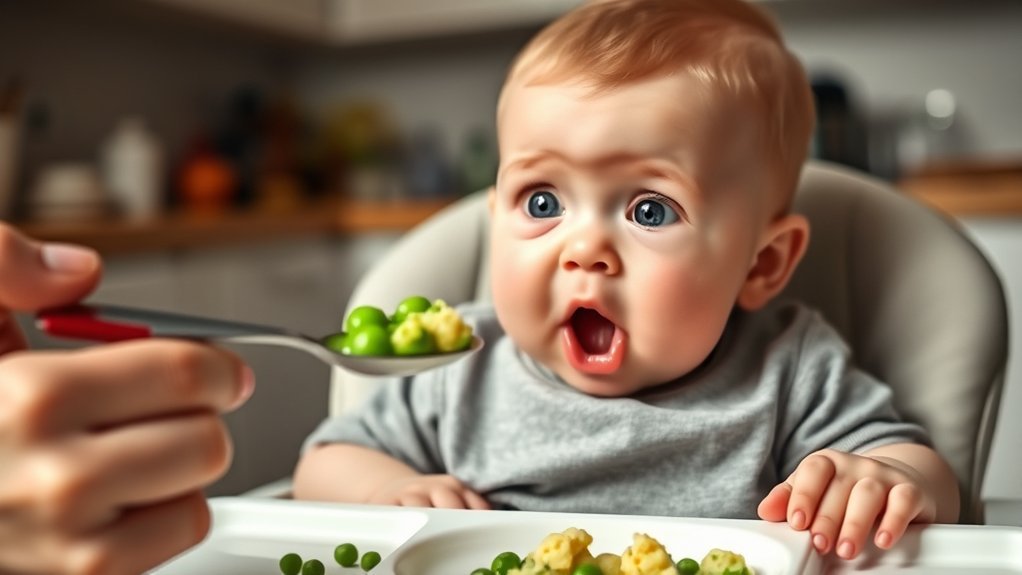
When your baby starts eating solids, you might notice them coughing occasionally, and that’s perfectly normal. This cough reflex is a natural response that helps clear their airway when food or liquid doesn’t go down smoothly.
Coughing is a normal reflex for babies starting solids, helping to clear their airway when food doesn’t go down smoothly.
As your little one reaches important feeding milestones, they may struggle with coordination between their oral motor skills and swallowing, especially with textured foods or larger pieces requiring more chewing.
It’s essential to remember that some coughing may occur with free-flowing liquids, too. If you find your baby frequently coughs, particularly with signs of distress, it might be time for a professional assessment of their swallowing abilities.
Staying calm during these moments encourages your baby to explore solid foods confidently.
Recognizing the Difference Between Gagging and Choking
Understanding the distinction between gagging and choking is essential for parents as their babies explore solid foods.
Gagging is a protective reflex, allowing your baby to manage food by pushing it forward. You’ll notice gagging signs like coughing, retching, or sputtering. This is normal and should decrease as your baby gains oral motor control.
In contrast, choking occurs when an object blocks the airway, resulting in silence and potentially a bluish color around the lips or face — these are choking indicators.
While gagging may cause discomfort, your baby will typically continue to cough. However, choking demands immediate action, such as back blows and chest thrusts.
Staying calm during gagging is vital; panic can escalate the situation.
Top Reasons Babies Gag While Eating: What to Know

Gagging is a common experience for babies as they navigate the world of solid foods. This reflex is designed to protect their airway, pushing food forward when it stimulates the back of the throat.
Babies often gag while learning to manage different food textures, especially with larger or chunkier pieces that challenge their developing oral motor skills. New tastes and temperatures can also trigger gagging, making it an expected part of their progression to solids.
As your baby gains experience, you’ll notice the frequency of gagging decreases as they learn to regulate their intake. If you notice excessive gagging accompanied by distress, it’s wise to consult a pediatrician or feeding specialist to rule out any underlying issues.
What to Do if Your Baby Gags on Food?
When your baby gags on food, it’s essential to stay calm and reassure them with your presence.
Allow your little one to self-regulate during these moments, as it’s a natural reflex that helps them learn.
Keep an eye out for any signs of distress or allergic reactions, and trust your instincts to seek help if needed.
Stay Calm And Reassure
As your baby explores the world of solid foods, it’s natural to feel anxious if they gag on something. Remember, gagging is a normal reflex designed to protect their airway while they learn.
Stay calm and use soothing techniques, like gentle words and a comforting presence, to reassure your little one. Kneeling beside them allows you to support while gravity helps them manage the gagging reflex independently.
Avoid inserting your fingers into their mouth; this can increase choking risks and doesn’t help resolve the situation.
Consistent gagging is common in the early stages of introducing solids, but it typically decreases as your baby’s oral motor skills improve. Your calm presence will help them feel secure during this learning process.
Allow Baby To Self-Regulate
It’s important to understand that allowing your baby to self-regulate during mealtimes can considerably enhance their ability to manage different food textures and develop essential oral motor skills. Gagging is a natural reflex, and it’s vital for you to let your baby handle it on their own. This builds confidence and encourages self-feeding techniques. Watch for their hunger cues, and provide appropriate finger foods to make mealtimes enjoyable.
| Self-Regulation Techniques | Benefits |
|---|---|
| Allowing gagging | Promotes self-confidence |
| Encouraging self-feeding | Enhances sensory experience |
| Maintaining calm demeanor | Reduces anxiety around food |
Monitor For Allergic Reactions
Monitoring for allergic reactions is essential, especially as your baby starts exploring solid foods. Watch for allergy signs like hives, vomiting, or lip swelling within 10-15 minutes after introducing a new food.
To effectively identify potential allergies, introduce one new food every few days. If your baby frequently gags or coughs, it may indicate difficulty with textures or a possible allergy; consult your pediatrician for guidance.
If your baby has moderate to severe eczema or known allergies, they’re at higher risk for food allergies, so keep a food diary. This will help you track new foods and any reactions, making it easier to discuss your baby’s eating habits with healthcare providers.
Your awareness is key in ensuring their safety.
How to Create a Positive Eating Environment
Creating a positive eating environment is essential for your baby’s mealtime experience, as it fosters comfort and exploration of new foods. To achieve this, consider the following:
| Action | Purpose | Sensory Exploration Activities |
|---|---|---|
| Create a calm atmosphere | Helps your baby feel secure | Encourage touching different textures |
| Minimize distractions | Allows focus on eating | Introduce various flavors |
| Sit at the same level | Promotes bonding and engagement | Self-feeding with soft foods |
| Offer a variety of foods | Enhances motor skills | Experiment with different shapes |
| Maintain consistent routines | Builds positive associations | Use fun utensils for exploration |
When to Seek Medical Help?
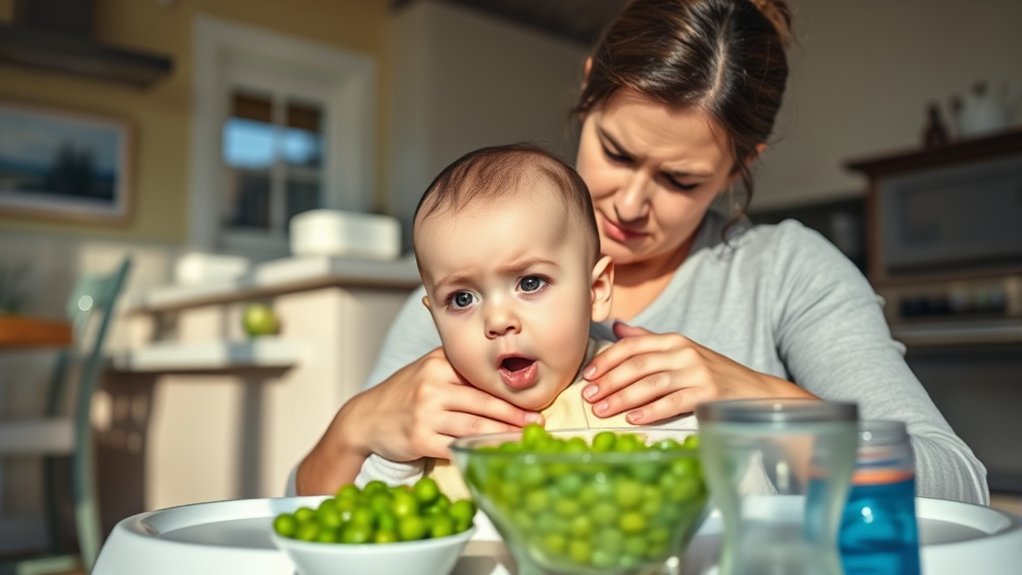
When your baby coughs during mealtime, it’s important to recognize when to seek medical help to guarantee their safety and well-being.
If your baby shows difficulty breathing, that’s a serious issue requiring immediate attention. Watch for signs of distress, like pulling at their neck, excessive drooling, or refusing to eat; these warrant a visit to the doctor.
A persistent cough lasting longer than a week or worsening symptoms should also prompt you to consult a pediatrician.
If you notice bluish skin around your baby’s lips or face during coughing episodes, this is an emergency response situation.
Frequent gagging or coughing during meals may indicate swallowing difficulties or gastroesophageal reflux, and a healthcare professional should evaluate these concerns.
Tips for Preventing Gagging During Feeding
When introducing solids, it’s essential to choose appropriate food textures that match your baby’s developmental stage.
Make sure your little one is seated upright and supervised during meals to help reduce the risk of gagging.
Choose Appropriate Food Textures
Choosing the right food textures is essential for your baby’s safety and comfort during the change to solids. Start with soft foods like ripe avocados and bananas, which are easy to mash and swallow. As your baby grows accustomed to solids, gradually progress to thicker textures and small, soft chunks. Cut foods into fingertip-sized pieces to minimize choking risks while encouraging self-feeding. Avoid hard, round, or sticky foods that can increase the risk of gagging.
Here’s a quick guide to help you with texture progression:
| Stage | Examples |
|---|---|
| Stage 1: Purees | Avocados, bananas |
| Stage 2: Mashed | Soft-cooked carrots, peas |
| Stage 3: Chunks | Soft-cooked sweet potatoes |
| Stage 4: Mixed | Small food combinations |
Encouraging variety will help your baby develop oral motor skills and reduce gagging.
Monitor Baby’s Positioning
Proper positioning during feeding is essential for your baby’s safety and can greatly reduce the risk of gagging. Always seat your little one upright in a high chair to promote safe swallowing.
Use a secure harness to keep them properly positioned and prevent any sliding, which can pose choking hazards. Position your baby’s head slightly forward to encourage a natural swallowing motion. This simple adjustment minimizes the likelihood of gagging.
Additionally, create a focused environment by avoiding distractions during mealtime; this helps your baby concentrate on chewing and swallowing.
Finally, regularly check the size and texture of the food you offer to guarantee it aligns with their developmental stage, as inappropriate food can increase the risk of gagging.
The Importance of First Aid Training for Parents
First aid training is a vital resource for parents, equipping you with the skills needed to handle emergencies effectively. Understanding first aid benefits and being prepared can make all the difference during critical moments.
First aid training empowers parents with essential skills to manage emergencies effectively, ensuring safety during critical moments.
Here are four reasons why you should prioritize first aid training:
- Confidence: You’ll feel empowered to act decisively in emergencies.
- Timely Intervention: Knowledge of CPR and choking management can save your child’s life.
- Updated Techniques: Regular courses keep you informed about the latest protocols.
- Peace of Mind: Being prepared fosters a reassuring environment for both you and your child.
Investing in first aid education not only enhances child safety during meals but also strengthens your ability to respond calmly when it matters most.
When to Introduce Solid Foods and What to Start With
Around 6 months old, your baby may show signs that they’re ready for solid foods, like sitting up with support and expressing interest in what you eat.
Starting with soft foods like avocados and bananas can make the shift smoother and safer for them.
It’s important to introduce one new food every few days to monitor how well they tolerate each option and to watch for any allergic reactions.
Ideal Age For Solids
At about 6 months old, most infants are ready to start their journey with solid foods, marked by signs like sitting up independently and showing interest in what you’re eating.
Recognizing these developmental milestones is essential for ensuring solid food readiness. Here are some tips to help you navigate this exciting shift:
- Look for signs of readiness, such as reaching for food.
- Start with soft foods like avocados and bananas.
- Introduce one new food every few days to check for allergies.
- Allow your baby to explore food through self-feeding.
First Food Recommendations
Introducing solid foods is an exciting milestone for both you and your baby, typically starting around 6 months of age.
Look for signs of readiness, like sitting up with support and showing interest in food. Begin with soft foods such as avocados, bananas, unsweetened apple sauce, and well-cooked sweet potatoes—these first food choices facilitate easy swallowing and digestion.
Introduce one new food every few days to monitor for allergies, especially if your baby is high-risk. Avoid added salt and sugar to foster healthy eating habits.
Encourage your baby to explore textures through self-feeding or baby-led weaning, which not only enhances their experience but also builds confidence in their eating journey.
Enjoy this liberating adventure together!
Resources for Supporting Your Baby’s Feeding Journey
As you commence your baby’s feeding journey, tapping into reliable resources can make all the difference in steering the introduction of solids.
Here are some valuable options to reflect upon:
- Consult with pediatricians or registered dietitians for expert advice on feeding techniques and baby nutrition.
- Join local parenting groups or online forums to share experiences and gain support from fellow parents.
- Access educational materials like books on baby-led weaning to understand developmental stages and textures.
- Attend workshops on infant CPR and first aid, ensuring you’re prepared for any emergencies that may arise during feeding.
Frequently Asked Questions
How Can I Tell if My Baby Is Allergic to Certain Foods?
You can tell if your baby has a food allergy by watching for symptoms like hives, swelling, or gastrointestinal issues after introducing allergens. Keep track of reactions and consult your pediatrician for guidance.
What Age Is Appropriate for Introducing Allergenic Foods?
Most experts recommend introducing allergenic foods around six months to reduce allergy risk. You’ll want to follow safe food practices, ensuring your baby tries these foods one at a time for better observation.
How Can I Encourage My Baby to Try New Textures?
Encourage your baby to try new textures through food exploration and sensory play. Offer a variety of foods, let them touch and explore, and create a relaxed atmosphere. Celebrate their curiosity and make mealtime fun!
Is It Normal for Babies to Refuse Certain Solid Foods?
It’s normal for babies to refuse certain solid foods; studies show around 25% of infants develop food preferences early. Embrace this phase, as it often leads to picky eaters later, fostering their independence and taste exploration.
What Signs Indicate My Baby Is Ready for More Complex Foods?
You’ll know your baby’s ready for more complex foods when they show strong feeding cues, like reaching for food, and can handle varied food textures without gagging. Trust your instincts and enjoy this exciting culinary journey together!
Conclusion
Steering your baby’s journey with solid foods can feel like walking a tightrope, balancing between excitement and concern. Understanding the reasons behind coughing and gagging is essential for creating a safe and enjoyable mealtime experience. By fostering a positive eating environment and being prepared for any situation, you can help your little one thrive. Remember, every baby is unique; stay patient and observant as you guide them toward confident, happy eating.