

If your baby develops a mouth rash after eating, it might be perioral contact dermatitis triggered by acidic foods like citrus or tomatoes. Clean the area gently with mild soap and warm water, then pat dry. If the rash persists beyond 24 hours, or if you notice severe symptoms like trouble breathing, consult a pediatrician. To prevent future rashes, wash your baby’s face after meals and consider minimizing trigger foods. More tips and insights await you.
Key Takeaways
- Clean the affected area with mild soap and warm water to remove food residues immediately after the rash appears.
- Apply 1% hydrocortisone cream if itching lasts more than six hours and rinse with warm water after meals.
- Monitor for severe allergic symptoms, such as difficulty breathing or widespread hives, and seek medical attention if these occur.
- Identify and avoid common trigger foods like citrus fruits and tomatoes to prevent future rashes.
- Consult a pediatrician if the rash persists for over 24 hours or if additional concerning symptoms develop.
What Is Perioral Contact Dermatitis in Babies?
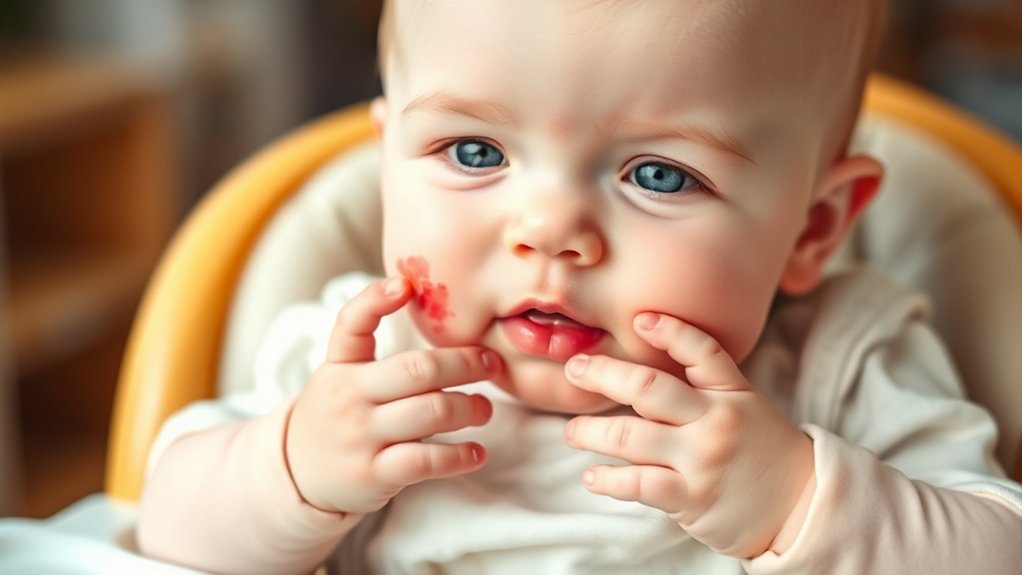
Perioral contact dermatitis in babies is a common localized rash that appears around their mouth and chin, often triggered by contact with certain foods. This rash typically manifests as red spots or raised hives, mainly affecting children aged 6 months to 3 years.
A causes overview reveals that frequent triggers include acidic foods like citrus fruits, tomatoes, and berries, though the specific culprit can sometimes be unknown.
For treatment options, it’s essential to wash the affected area with soap and water after meals. If itching persists beyond 6 hours, you can apply a 1% hydrocortisone cream.
Fortunately, the rash usually resolves on its own within 6 hours, and avoiding the offending food can help prevent future occurrences.
Signs and Symptoms of a Mouth Rash From Food
When your baby develops a rash around their mouth after eating, it can be concerning. This rash, known as perioral contact dermatitis, typically appears as red spots or raised hives between the mouth and chin.
You might notice it within 1–2 hours after your little one eats allergenic foods like citrus fruits or berries. Symptoms often include redness, irritation, and itchiness, but they usually don’t indicate a food allergy.
To manage the rash effectively, remove the triggering food and focus on skin hydration to soothe the affected area. Most rashes resolve on their own within 6 hours, but stay alert for severe allergic symptoms like difficulty breathing—those require immediate medical attention.
Foods That Might Cause Your Baby’s Mouth Rash
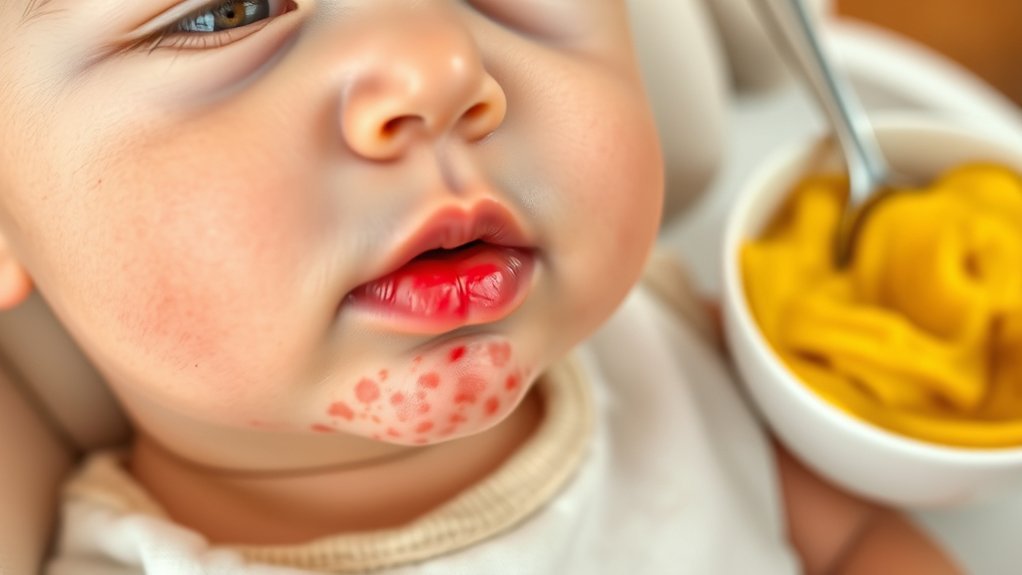
If your baby has developed a rash around their mouth, certain foods might be to blame.
Common culprits include acidic options like citrus fruits, tomatoes, and berries, which can irritate the skin.
It’s essential to identify these trigger foods and consider avoiding them to prevent further irritation.
Common Allergenic Foods
Certain foods can cause mouth rashes in babies, particularly those that are acidic or high in allergens.
Citrus fruits, tomatoes, and berries are common culprits that may irritate the delicate skin around your baby’s mouth. High-acidity foods like strawberries can trigger localized rashes, often mistaken for true food allergies.
To minimize the risk, introduce one allergenic food at a time, especially if there’s a family history of allergies. While signs of irritation usually resolve quickly, persistent reactions warrant a consultation with a healthcare professional.
You can also apply a barrier, such as petroleum jelly, around the mouth before mealtime to help reduce irritation from these foods.
Stay vigilant and compassionate as you navigate your baby’s dietary needs.
Acidic Foods Effects
Acidic foods like citrus fruits, tomatoes, and berries can easily irritate your baby’s delicate skin, leading to rashes around the mouth. These rashes often appear as red spots or raised hives where the acidic food has touched the skin. To prevent this, you can take proactive steps.
| Acidic Food | Rash Potential | Rash Prevention |
|---|---|---|
| Citrus Fruits | High | Wash face after eating |
| Tomatoes | Moderate | Apply petroleum jelly beforehand |
| Berries | Moderate | Limit frequency of consumption |
Using a pacifier can trap food residues, worsening irritation. Immediate washing of your child’s face with soap and water after meals is essential for rash prevention.
Identifying Trigger Foods
Understanding what foods may trigger rashes around your baby’s mouth can help you manage and prevent discomfort. Common irritants include citrus fruits, tomatoes, berries, and other acidic foods.
Rashes often develop where food contacts the skin, particularly in little ones aged 6 months to 3 years. You might notice that frequent pacifier use can worsen rashes by trapping food residues.
For effective trigger food identification, consider avoiding suspected foods for 1-2 months, then reintroducing them slowly to observe reactions.
Additionally, a simple rash prevention tip is to clean your baby’s face with warm water right after meals, which helps remove food particles and reduce rash occurrence.
Keeping track of these factors can empower you in caring for your baby’s sensitive skin.
First Aid Steps for Treating Your Baby’s Mouth Rash
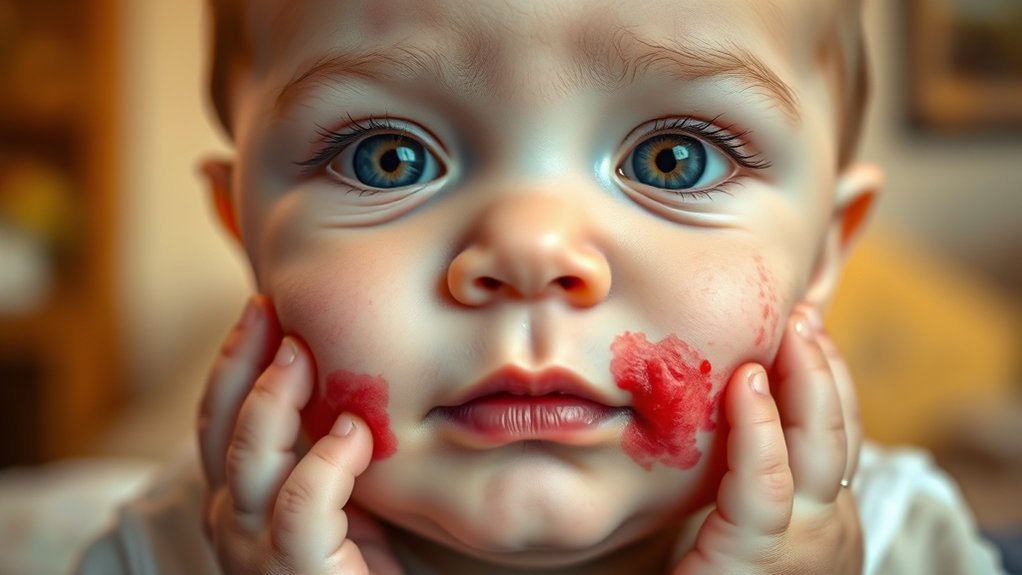
When your baby develops a mouth rash, quick and gentle cleaning is essential.
Start by washing the affected area with mild soap and water to remove any irritants.
Afterward, you can consider using a skin care treatment to soothe the rash and ease your baby’s discomfort.
Immediate Cleaning Measures
If your baby develops a rash around their mouth after eating, it’s essential to act quickly to soothe the skin and prevent further irritation.
Here are some immediate cleaning measures you can take:
- Wash the area gently with mild soap and warm water to remove food residues.
- Pat the skin dry with a clean towel, avoiding any harsh rubbing.
- If the rash is itchy and lasts more than six hours, apply a thin layer of 1% hydrocortisone cream.
- Rinse your baby’s face with warm water after meals to aid rash prevention.
- Monitor the rash closely; if it persists for more than 24 hours or worsens, seek medical advice.
Using these cleaning techniques can help your baby feel more comfortable.
Skin Care Treatment Options
After you’ve taken immediate cleaning measures to address your baby’s rash, it’s important to focus on effective skin care treatment options.
First, gently wash the affected area with mild soap and water to remove any food residues. If the rash persists beyond six hours, apply a thin layer of 1% hydrocortisone cream to relieve itching.
Avoid heavy moisturizers or topical steroids, as they can worsen irritation. Rinsing your baby’s face with warm water after meals can also help prevent irritant contact dermatitis.
Consider using natural remedies like aloe vera or coconut oil for soothing relief. If the rash doesn’t improve within 24 hours or worsens, consult a healthcare professional for further guidance and treatment options.
When to Consult a Pediatrician About a Mouth Rash?
Wondering whether to consult a pediatrician about a mouth rash? It’s important to stay vigilant. Here are some key signs that warrant a pediatrician consultation:
- If the rash lasts more than 24 hours or worsens over time.
- Trouble breathing, swallowing, or drooling occurs alongside the rash.
- You notice widespread hives or symptoms of anaphylaxis, like swelling.
- The rash develops regularly, suggesting possible food allergies that may require testing.
- Accompanying symptoms like vomiting or significant behavioral changes arise.
Taking action promptly can make a difference.
Trust your instincts—if something feels off, don’t hesitate to reach out for help. Your child’s health is a priority, and clear communication with a pediatrician is crucial.
Food Allergies vs. Skin Irritation: What’s the Difference?
When it comes to rashes in babies, it’s essential to distinguish between food allergies and skin irritation.
Allergies can trigger immediate, systemic reactions, while skin irritation usually results from direct contact with certain foods. Understanding the common triggers and symptoms can help you determine whether your child needs medical attention or simple aftercare.
Common Rash Triggers
Understanding the difference between rashes caused by food allergies and those due to skin irritation is essential for parents. Recognizing common triggers can help you respond appropriately. Here are some key points to take into account:
- Food Allergies: Often triggered by allergens like citrus fruits, tomatoes, and berries, leading to redness and swelling.
- Skin Irritation: Typically caused by acidic foods, resulting in temporary redness without allergy indicators.
- Food Residue: Frequent exposure can exacerbate skin irritation, so wipe your baby’s mouth after meals.
- Irritant Exposure: Prolonged pacifier use can also contribute to irritation.
- Allergic Reactions: These rashes may be more widespread and can require immediate medical attention.
Symptoms Comparison
Identifying whether your baby’s rash stems from a food allergy or skin irritation is essential for proper care.
Allergy symptoms typically include hives, swelling of the lips or tongue, and gastrointestinal distress, often appearing shortly after exposure to allergenic foods like peanuts or shellfish.
In contrast, irritation symptoms manifest as localized redness or a rash, usually developing hours later due to contact with acidic foods like citrus or tomatoes.
While food allergies can also lead to respiratory issues, skin irritation doesn’t.
If your child shows signs of an allergic reaction, such as difficulty breathing or widespread hives, seek immediate medical attention.
Meanwhile, localized irritation can often be managed easily at home.
Stay vigilant and responsive to your baby’s needs.
Diagnosis and Testing
How can you tell if your baby’s rash is due to a food allergy or just skin irritation? Understanding the difference is essential.
Skin irritation often appears after consuming acidic foods and may resolve quickly. In contrast, food allergies can lead to more severe, systemic reactions.
Here are key points to take into account:
- Skin irritation is localized, while food allergies affect multiple systems.
- Food allergies show immediate or delayed reactions, like hives or swelling.
- Monitor for refusal to eat after initial bites; this can signal an allergy.
- Food testing, including skin prick or blood tests, may be necessary.
- Beware of allergy myths; false positives can lead to unnecessary dietary restrictions.
Stay attentive, and consult your pediatrician for guidance.
Effective Aftercare for Baby’s Mouth Rash
When your baby develops a rash around the mouth, effective aftercare is essential for relief and recovery.
Start by gently washing the area with soap and water to remove food residue, but don’t overdo it to avoid drying out the skin. If the rash itches and persists beyond six hours, consider applying a 1% hydrocortisone cream for comfort.
Gently wash the rash area with soap and water, and if itching persists, apply a 1% hydrocortisone cream for relief.
Rinsing your baby’s face with warm water after meals can prevent recurrence by removing irritants. Minimize pacifier use, as it can prolong the rash.
For added relief, try soothing balms or home remedies like coconut oil.
Remember to avoid the suspected trigger food for 1-2 months before reintroducing it gradually, monitoring for any reactions.
Preventing Future Rashes Around the Mouth
To keep future rashes around your baby’s mouth at bay, it’s important to establish a few preventive measures.
By adopting these strategies, you can help protect your baby’s delicate skin and maintain a healthy skin barrier:
- Gently wash your child’s face with soap and water after meals to remove food residues.
- Reduce or phase out pacifier use to minimize skin contact and irritation.
- Avoid common trigger foods, like citrus fruits and tomatoes, for 1-2 months.
- Apply a thin layer of petroleum jelly around the mouth before meals to create a protective barrier.
- Use fragrance-free, soap-free cleansers and moisturizers to maintain skin health.
Implementing these preventive measures can make a significant difference in avoiding future rashes.
How to Handle an Allergic Reaction to Foods
Recognizing an allergic reaction to foods can be essential for your baby’s safety, especially since reactions often appear as rashes around the mouth.
If you notice a rash after eating, immediately stop giving the food and observe for further symptoms. Mild reactions can sometimes be managed at home with soothing home remedies and skin moisturizers to alleviate discomfort.
If advised, you can administer antihistamines for mild symptoms, but always keep a close watch for any worsening. In severe cases, such as anaphylaxis, use an epinephrine auto-injector if available and call 911.
Document any reactions to discuss with your healthcare provider, as this will help identify potential food allergies and guide future dietary choices.
Eczema and Mouth Rashes: What’s the Connection?
Understanding the relationship between eczema and mouth rashes can help you manage your baby’s skin sensitivities more effectively. Eczema triggers can lead to rashes around the mouth, especially after consuming certain acidic foods.
Here are key points to keep in mind:
- Eczema affects up to 25% of children, often reacting to foods like dairy and eggs.
- Rashes don’t always signal a food allergy; sensitive skin can react without one.
- Moisturizing with fragrance-free emollients is essential for skin care.
- Regularly introducing small amounts of problematic foods may help reduce sensitivities.
- Eczema flare-ups can worsen after eating specific foods, so monitor your baby closely.
Frequently Asked Questions
Can I Introduce New Foods if My Baby Has a Rash?
You should wait if your baby has a rash. Food introduction timing is essential, and consider allergy testing methods to identify triggers. It’s best to guarantee their safety before introducing new foods. Trust your instincts.
Are There Specific Foods to Avoid if My Baby Has Allergies?
If your baby’s showing signs of allergies, avoid common allergenic foods like peanuts, tree nuts, dairy, eggs, soy, wheat, fish, and shellfish. Prioritize baby food safety by introducing new foods gradually and watching for reactions.
How Can I Differentiate Between a Rash and an Infection?
Distinguishing between a rash and an infection is like reading a map; look for clues. Skin irritation often appears red and itchy with allergy symptoms, while infections may show swelling and discharge. Trust your instincts.
What Home Remedies Can I Use for My Baby’s Mouth Rash?
For your baby’s mouth rash, try natural treatments like coconut oil or aloe vera. Soothing balms can also help relieve discomfort. Always keep the area clean and monitor for any worsening symptoms. Trust your instincts!
Can Teething Cause a Similar Rash Around the Mouth?
Yes, teething can cause a rash around your baby’s mouth. The drool often seen with teething symptoms can irritate the skin, creating rash similarities. Keep the area clean and moisturized to provide relief.
Conclusion
In steering through the delicate landscape of your baby’s food allergies, remember that knowledge is your best ally. Like a vigilant gardener tending to fragile blooms, you can nurture your little one’s skin by identifying triggers and providing care. With swift action and preventive measures, you can help guarantee their comfort and well-being. Trust your instincts, stay informed, and don’t hesitate to reach out for guidance when needed; after all, even the wisest parents seek the counsel of trusted advisors.