
Creating a baby food allergy plan for daycare is essential for your child’s safety. Start by detailing specific allergens in an Allergy Action Plan, including symptoms and management steps. Share this plan with daycare staff and make sure they know how to recognize reactions and administer medications. Monitor your child’s food reactions and teach them about food safety, like checking labels. Access resources and support from organizations focused on food allergies. There’s so much more to explore on this important topic.
Key Takeaways
- Create a detailed Allergy Action Plan, specifying allergens, symptoms, and management steps, and ensure it is shared with daycare staff.
- Ensure daycare staff receive training to recognize allergy symptoms and administer necessary medications promptly.
- Keep a food diary to track your child’s food exposures and any reactions, sharing this information with daycare staff.
- Emphasize the importance of hand hygiene and preventing cross-contamination in the daycare environment to minimize allergen exposure.
- Utilize resources like FARE and Capital Area Pediatrics for support and tailored allergy management plans for your child.
Essential Facts About Food Allergies for Parents
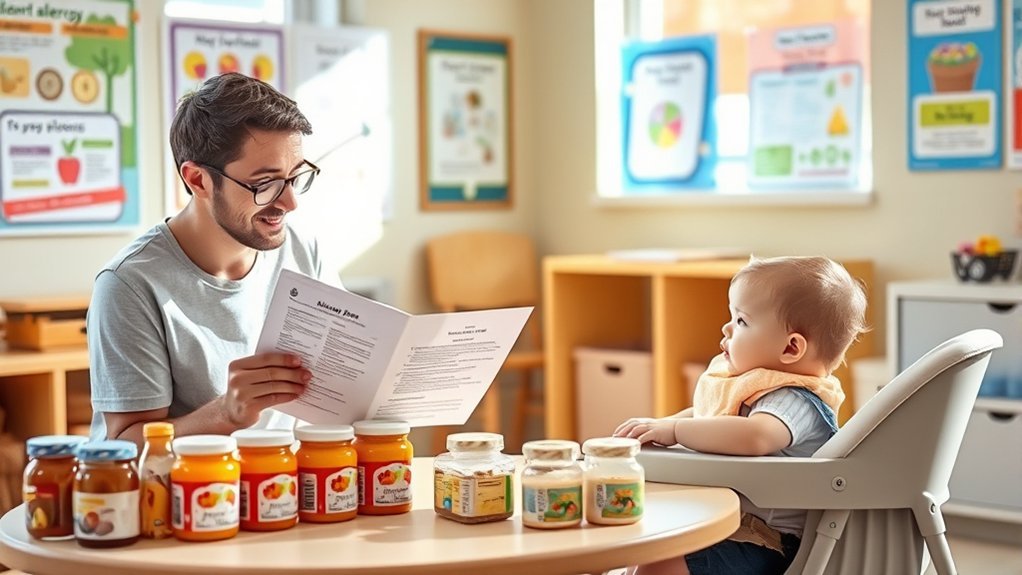
When it comes to food allergies, understanding the facts is essential for parents traversing daycare environments. Approximately 4% to 8% of children in the U.S. are affected, with common allergens like milk, eggs, peanuts, and tree nuts.
Over 60% of food allergy reactions occur in preschools and childcare facilities, making allergy awareness important for your child’s safety. The Americans with Disabilities Act mandates that childcare centers accommodate dietary restrictions, ensuring inclusion.
Symptoms can range from mild hives to severe anaphylaxis, which requires immediate medical attention. Collaborating with healthcare providers to establish a written allergy action plan is critical, empowering you to manage food allergies effectively in daycare settings and protect your child’s health and well-being.
Creating a Solid Allergy Action Plan
To keep your child safe in a daycare environment, a well-crafted Allergy Action Plan is a must. Start by detailing your child’s specific food allergens and the allergy triggers to watch for.
Include symptoms that could indicate an allergic reaction and the necessary steps for immediate management. It’s essential to provide a written plan from your pediatrician or allergist, specifying required medications and emergency procedures.
Include allergy symptoms and immediate management steps in your plan, along with a written directive from your healthcare provider.
Make sure daycare staff are trained to recognize symptoms and know how to administer medications, like epinephrine, when needed. Regularly review and update the plan to reflect any changes in your child’s allergies or medication management.
Clear communication with daycare personnel about the action plan, including emergency contacts, is critical for your child’s safety.
Communicating Food Allergies to Daycare Staff
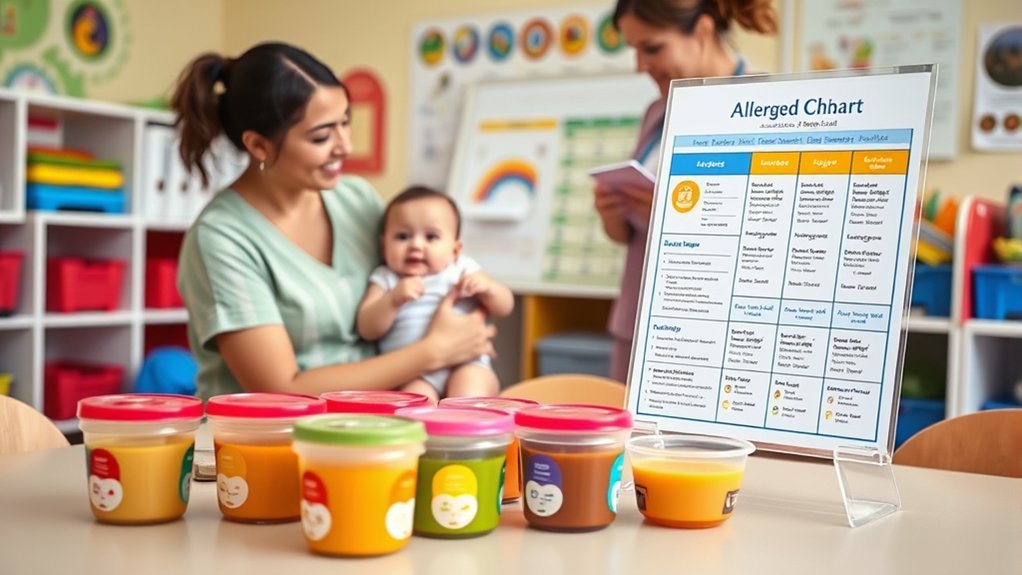
You need to clearly share your child’s specific food allergies with daycare staff to minimize risks.
Discuss emergency procedures together, ensuring everyone knows how to respond in case of an allergic reaction.
Providing a written Allergy Action Plan will help keep everyone informed and prepared.
Share Allergy Details Clearly
Communicating your child’s specific food allergies to daycare staff is essential for ensuring their safety and well-being. Start by clearly informing them of your child’s allergens and the symptoms to watch for, as over 60% of food allergy reactions occur in childcare settings.
Share your child’s Allergy Action Plan, developed with a healthcare provider, outlining steps for managing reactions. Discuss how your child communicates discomfort, so staff can recognize signs promptly.
Regularly review these details to reinforce allergy awareness among staff, using effective communication strategies to enhance understanding. Encourage open dialogue about any observed reactions to foster a collaborative approach, ensuring your child’s safety remains a top priority in their daycare environment.
Discuss Emergency Procedures Together
Building on the importance of sharing allergy details, discussing emergency procedures with daycare staff is essential for your child’s safety. Make sure the staff understands the emergency protocols and can handle various reaction scenarios. Regular communication fosters trust and preparedness. Use the table below to outline key information:
| Key Element | Details | Action Steps |
|---|---|---|
| Specific Allergies | List of your child’s allergens | Avoid these foods |
| Symptoms of Reactions | Hives, swelling, difficulty breathing | Monitor closely |
| Emergency Medication | Location of epinephrine devices | Administer immediately if symptoms occur |
| Staff Training | Recognition of allergy signs | Regularly review procedures |
Ensure the daycare staff feels confident in managing your child’s allergies. Regular check-ins will reinforce this significant knowledge.
Provide Written Allergy Action Plan
To guarantee the safety and well-being of your child with food allergies, providing a detailed written Allergy Action Plan is essential. This plan should clearly outline specific allergens to avoid, symptoms to watch for, and emergency procedures to follow.
Include instructions for administering medications, like epinephrine, and specify who’s trained to give them within the daycare. Sharing thorough allergy documentation with all relevant staff—teachers and kitchen personnel—promotes a safer environment.
Regular communication is key; review the Allergy Action Plan with daycare staff to ascertain everyone understands their roles in managing your child’s allergies. Encourage staff to ask questions, fostering caregiver training that empowers everyone to act confidently in case of an allergic reaction.
Monitoring Your Child’s Food Reactions
To keep your child safe from food allergies, you need to recognize symptoms early and document any reactions.
Start by introducing one new food at a time, and watch for signs like hives or gastrointestinal issues.
Keeping a food diary not only helps you track exposures but also aids in communicating effectively with daycare staff when concerns arise.
Recognizing Allergic Symptoms Early
Recognizing allergic symptoms early in your child is essential for ensuring their safety and well-being, especially in a daycare setting.
Watch for early signs like hives, rashes, gastrointestinal distress, or respiratory issues, as these can indicate a food allergy. Common triggers include dairy, eggs, nuts, and wheat.
It’s vital to educate daycare staff on these symptoms, enabling them to respond swiftly if your child shows any reactions. Encourage open communication about what foods your child has eaten and any resulting symptoms.
Familiarizing caregivers with your child’s allergy action plan can streamline responses and enhance safety. Vigilant monitoring during meal times is key to preventing serious reactions that might require immediate medical attention.
Documenting Food Exposure Events
Monitoring your child’s food reactions through diligent documentation is essential for effective allergy management. Keeping a food diary allows you to track what your child eats and any resulting symptoms, helping you identify allergy triggers. Note the brand names, ingredients, and timing of each meal, as well as the severity of any reactions. Collaborate with daycare staff to maintain a shared documentation system, ensuring everyone is informed about your child’s food history.
| Date | Food Consumed |
|---|---|
| 2023-10-01 | Peanut Butter Toast |
| 2023-10-02 | Dairy Yogurt |
| 2023-10-03 | Wheat Pasta |
Regularly review this log to adjust dietary plans and emergency strategies, empowering you to manage your child’s allergies effectively.
Teaching Your Child About Food Safety
As your child grows, it’s essential to teach them about food safety, particularly when it comes to managing their allergies.
Start by educating them on allergen recognition, helping them identify common allergenic foods like nuts and dairy in their whole form. Encourage your child to always stop and check with an adult before eating anything.
Teach them to read food labels, focusing on the “Contains” statement to spot allergens and emphasize the importance of not sharing food with others. Reinforce the habit of asking adults if the food is safe, empowering them to communicate their dietary needs.
Finally, engage your child in simple food safety practices, like washing hands before meals, to further reduce the risk of allergen exposure.
Where to Find Support and Resources for Food Allergies
Finding support and resources for food allergies can feel overwhelming, but numerous organizations and communities are ready to help. Organizations like FARE provide free allergy action plan forms, while Capital Area Pediatrics offers tailored consultations for families. Connecting with online support communities can empower you, allowing you to share experiences and strategies.
| Resource Type | Description |
|---|---|
| Allergy Action Plans | FARE offers free templates for effective management. |
| Professional Consultations | Capital Area Pediatrics tailors plans for your child. |
| Online Communities | Connect with families facing similar challenges. |
| Educational Materials | National health organizations offer essential guidance. |
Staying informed about research is fundamental, too. Embrace these allergy resources and find the community support you need to navigate your journey confidently.
Frequently Asked Questions
How Can I Ensure Staff Understands My Child’s Allergies?
To guarantee staff understands your child’s allergies, provide thorough allergy education and advocate for staff training. Share detailed information, facilitate discussions, and encourage regular updates to create a safe environment for your child.
What Should I Include in the Allergy Care Plan?
Include allergy symptoms, emergency protocols, and clear medication instructions in your care plan. Make sure staff knows how to respond to reactions, and provide contact information for you and your child’s healthcare provider.
Can Daycare Provide Allergy-Safe Snacks?
When it comes to allergy-safe snacks, you can bet your bottom dollar daycare can provide allergy-friendly options. Just discuss snack preparation with them, ensuring they know your child’s specific needs for safety and wellness.
How Often Should We Review the Allergy Action Plan?
You should review the allergy plan every six months or whenever there’s a significant change. Regular updates guarantee the plan reflects your child’s needs and keeps daycare staff informed about any potential risks.
What Should I Do if My Child Has an Allergic Reaction?
If your child shows allergy symptoms, act fast—time’s of the essence. Follow emergency procedures: administer an epinephrine auto-injector, call 911, and track symptoms until help arrives. Your child’s safety is your top priority.
Conclusion
Maneuvering food allergies in daycare can feel like walking a tightrope, but with the right preparation, you can guarantee your child stays safe and healthy. By creating a solid allergy action plan and communicating clearly with daycare staff, you’re setting the stage for success. Remember, knowledge is your best ally; teach your child about food safety and stay informed on resources available to you. With vigilance and support, you can turn potential challenges into manageable steps for a worry-free experience.